E154| A ‘dropped’ cell phone, distorted evidence & deliberate deception.
28 min
Listen through the publisher, then discuss the episode here or arrange an in-person Roundtable. Your city determines where to meet.
Roundtables are designed for groups of four, with a shared subject and room for everyone to speak. Come for discussion, with no dating expectation.
Provide your feedback here. In this episode, Mike discusses the Ontario Superior Court of Justice decision R. v. Seymour, 2026 ONSC 6138 (https://www.canlii.org/en/on/onsc/doc/2026/2026onsc6138/2026onsc6138.pdf), where police stopped a car and one of its passenger's fled on foot. On the passenger side floor, police found a 3D printed handgun. Police then applied for a search warrant to search the data of a cell phone located at the scene. In the ITO, police said the fleeing man "dropped" the phone as he fled. But that was not accurate. The police found the phone inside the car. Was this an innocent discrepancy? Or was it deliberate deception? Listen carefully as many lessons can be learned from this case. Other reference: City of Houston Proposition A (https://www.houstontx.gov/2026-coh-charter-amendment-election.html) (Houston Freedom Act) Thanks for listening! Feedback welcome at [email protected]
Episode information is provided by the publisher. Listening takes place on the publisher’s service.
In this video, Disability Attorney Walter Hnot of the Disability Resolution Law Firm goes over the positives and negatives of privatized social security benefits, with AI program projected monthly check amounts. America’s Most Viewed Social Security Disability Attorney Like the content? Review us here: https://g.page/r/CcwyektC7nCPEAg/review . If the link does not work, Google: Disability Resolution, P.A. Welcome to the largest Social Security Disability Tutorial Video Library On Earth. PRIVATE ONE HOUR SESSION PHONE CALL NEED MEDICARE? I don’t do it, but I trust these folks to help you. Call Chapter Medicare at 339 226 6287, or use askchapter.org/disability (* Note Below) THIS IS HOW YOU CAN GIVE BACK TO HELP GROW THE CAUSE: Option 1: Leave 5 |==================5 STAR REVIEWS==================| Google (Search Disability Resolution Orlando, FL)- https://g.page/r/CcwyektC7nCPEAg/review AVVO (Search Walter Hnot) - https://www.avvo.com/attorneys/32817-fl-walter-hnot-4523042/reviews.html B
Thanks to Brilliant for supporting PBS. Learn more at: https://www.brilliant.org/spacetime Uploaded 02-12-19 PBS Member Stations rely on viewers like you. To support your local station, go to: http://to.pbs.org/DonateSPACE The universe is big, really, really big. Although according to a new paper, it may literally be infinitely smaller than we previously thought. Sign Up on Patreon to get access to the Space Time Discord! Check out the Space Time Merch Store Hosted by Matt O'Dowd Written by Matt O'Dowd Graphics by Leonardo Scholzer and Adriano Leal Directed by: Andrew Kornhaber Executive Producers: Eric Brown and Andrew Kornhaber End Credits Music by J.R.S. Schattenberg: https://www.youtube.com/channel/UCRl6-nb4iOnsij-vnpAjp0Q Every time you walk out the door, light from the Big Bang strikes your face, enters your eyes. This is the cosmic microwave background radiation - the left-over heat-glow from the very early universe. We can’t see this microwave light with our eyes, but we can ca
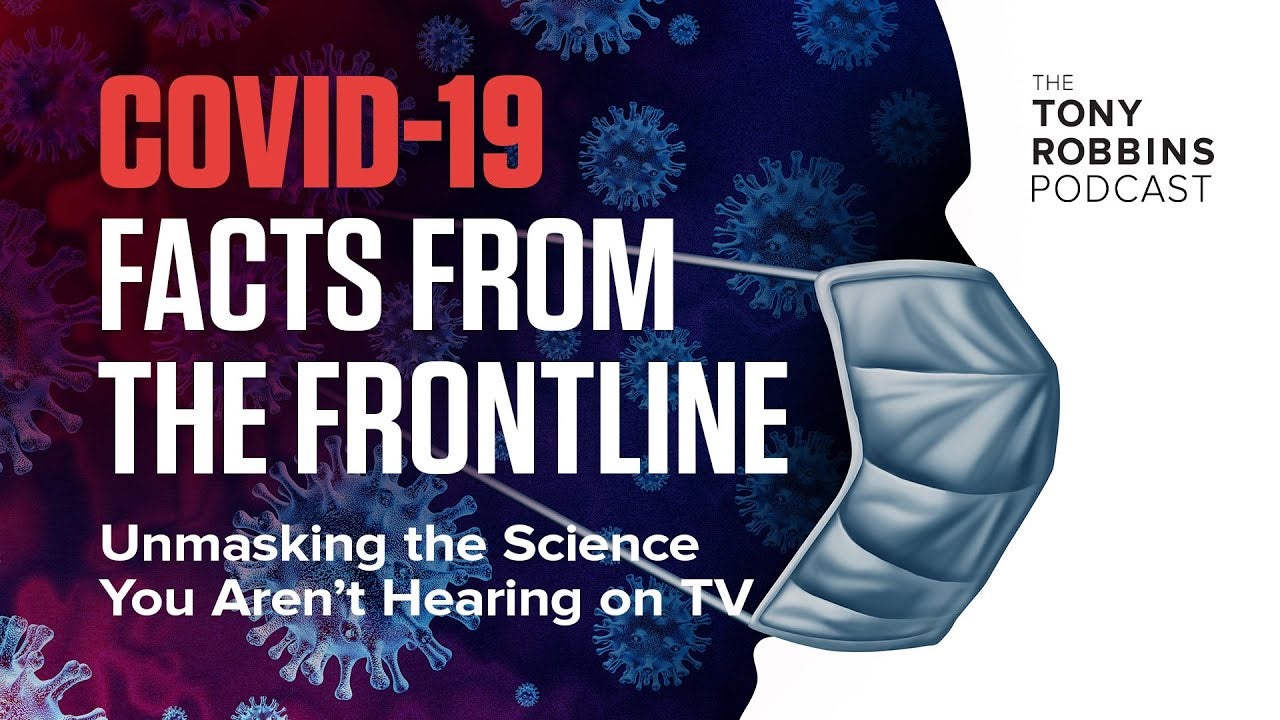
Introducing the “Facts From the Frontlines” episode of #TheTonyRobbinsPodcast – where Tony uncovers the truth about coronavirus with a 7-person panel of highly qualified researchers, an experienced epidemiologist, a Nobel Laureate, and M.D.s testing and treating patients on the frontlines. Together, they reveal the evidence-based research that has come to light in the last two months. Uploaded 23-05-20 This is one of the most important interviews Tony has ever conducted. It reminds us to stand guard at the door of our mind, practice discernment when determining trustworthy sources, and think critically in order to stay flexible and maintain the ability to pivot in light of new information – especially when lives depend on it. To hear the full interview, go here: https://www.tonyrobbins.com/podcasts/covid-19-facts-from-the-frontline/ *COVID-19 Playlist* https://www.youtube.com/watch?v=YgP_Au5RZVw&list=PLYTXvUDQT5pUaoPTzi71UIqilqgBOKkQe (https://www.youtube.com/watch?list=PLYTXvUDQT5pUao
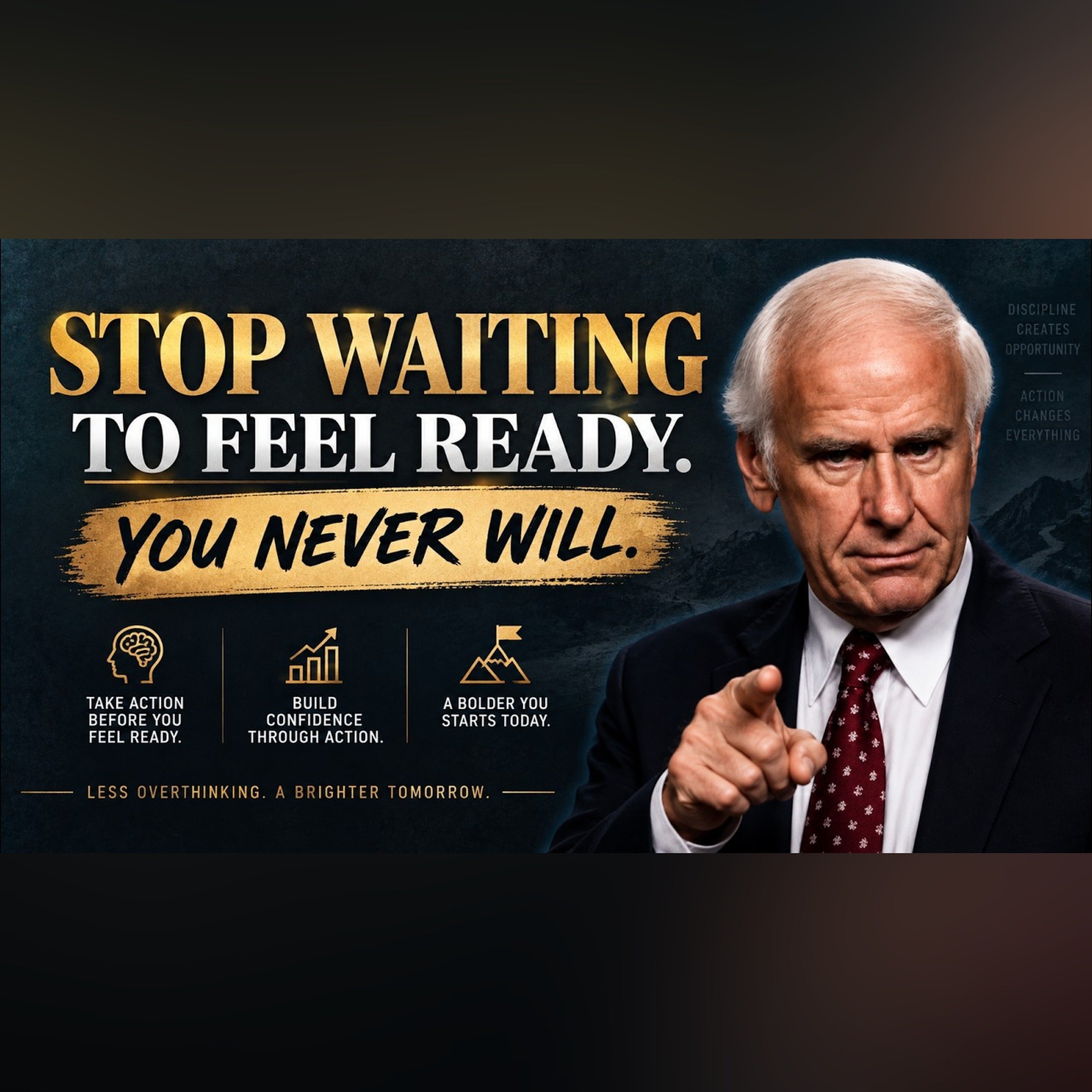
The gate doesn't have a lock. It doesn't have a key. There's nobody standing on the other side waiting to wave you through. Uploaded 09-09-26 The gate was open the whole time. You just couldn't see it, because you were staring at the ground, waiting for your feet to feel light. You've been standing there for years, warming up for a race you never run. Here is the truth: readiness is not a feeling you receive. It is a decision you make. The people who built the things you wish you'd built didn't feel more ready than you do — they just stopped waiting to feel it. This seminar unpacks the single mechanic behind why you never feel ready — and why willingness, not readiness, is what actually builds a life. CHAPTERS 0:00 Intro — The gate was open the whole time 2:04 The classroom lie: prepare, then perform 4:24 Fear wearing the mask of wisdom 6:36 Readiness is a quality you bring, not a state you arrive at 8:24 The glass never fills — skill comes from use 11:36 The cruel arithmetic of the wa
Get the 200+ Page Optimal Living Daily Workbook (PDF) - Free. Want to turn today's episode into an actionable plan? Episode 3779: Joshua Fields Millburn and Ryan Nicodemus of The Minimalists explain the first steps they took to regain control of their money after years of six-figure debt. It starts with a written monthly budget that sorts every expense into essentials, nonessentials and junk, plus a small safety net for emergencies, and then reframes investing as simply paying your future self, automated so you never miss the money. Read along with the original article(s) here: https://www.theminimalists.com/freedom/ Quotes to ponder: "Most of us have no idea where our money is going. We think we know, but we don't really know." "The stricter you are, the sooner you'll be free." "Right now is the best time to start planning for your future." Airwallex is a financial technology company, not a bank. Services in the US are provided by Airwallex US, LLC, a licensed money transmitter (NMLS
Todd Humphreys forecasts the near-future of geolocation when millimeter-accurate GPS "dots" will enable you to find pin-point locations, index-search your physical possessions ... or to track people without their knowledge. And the response to the sinister side of this technology may have unintended consequences of its own. (Filmed at TEDxAustin.) Uploaded 26-06-13 Talk by Todd Humphreys.
Provide your feedback here. In this episode, Mike discusses the BC Court of Appeal decision R. v. Juan, 2007 BCCA 351 (https://www.canlii.org/en/bc/bcca/doc/2007/2007bcca351/2007bcca351.pdf) where police arrested a man who was a passenger in a car that arrived at a mall parking lot for a pre-arranged drug transaction. Police searched the man and found cocaine in his pocket. A trial judge excluded the evidence and acquitted the man of PPT — possession for the purpose of trafficking — because there were insufficient objective grounds to support his arrest. The judge found the only basis for arresting the man was his presence in the car which was used by its driver to complete a drug transaction. Did the trial judge overlook the experience of the officers and their knowledge of the illicit drug trade? Or was it okay for the judge to ignore their testimony about drug transactions? Find out what the BC Court of Appeal said when it weighed in. Thanks for listening! Feedback welcome at legali
Provide your feedback here. In this episode, Mike discusses Bill C-16 (https://www.parl.ca/Content/Bills/451/Government/C-16/C-16_4/C-16_4.PDF)'s amendments to the Criminal Code provisions of s. 489.1 (report to a justice) and s. 490 (detention of things seized). Learn how these legislative changes affect the way police — especially those in BC — report (or not) the extraction of data from a seized electronic device and the time to request the extension of a detention order if proceedings are not commenced. Criminal Code s. 489.1(4) This section does not apply with respect to computer data, as defined in subsection 342.1(2), other than virtual currency or other digital assets. s. 490(2) Nothing shall be detained under the authority of paragraph (1)(b) for a period of more than 180 days after the day of the seizure, or any longer period that ends when an application made under paragraph (a) is decided, unless (a) a justice, on the making of a summary application to him after three clear
Courts should protect careful consideration even when this slows case processing.
Share your view, then see how readers voted. No sign-in required. This poll is shared across stories.
Do you agree or disagree?
Common Quandary
A Common Quandary to discuss
Another conversation to explore, separate from this news story.
The stadium can ban violent fans by scanning every face at the gate. Would you walk in?
A stadium can use facial recognition to identify people banned for violence and shorten security lines. Every visitor would be scanned, error rates are not zero, and the resulting biometric data could become useful to police or advertisers.
How much privacy may a crowd be asked to trade for collective safety?