Ep 78: Dr. Gains (Michael Kamalu): Why Generic Workouts Fail: The Science of Personalized Training
54 min
Listen through the publisher, then discuss the episode here or arrange an in-person Roundtable. Your city determines where to meet.
Roundtables are designed for groups of four, with a shared subject and room for everyone to speak. Come for discussion, with no dating expectation.
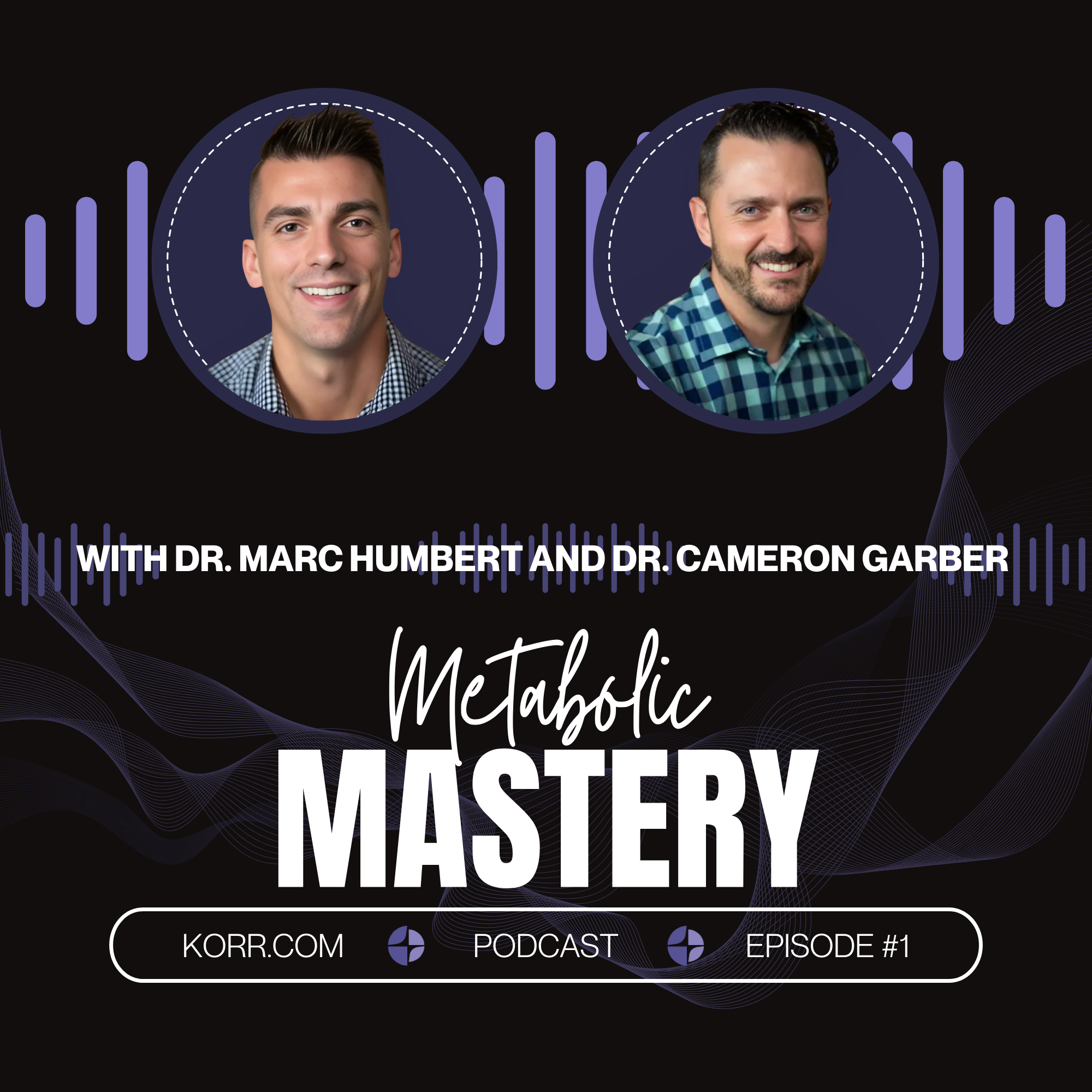
Most fitness advice was written for the “average body,” and nobody is average from head to toe. In this episode of Metabolic Mastery, hosts Dr. Marc Humbert and Dr. Cameron Garber sit down with Michael Kamalu, founder of Dr. Gains, to explain why generic workouts fail and what truly personalized training looks like. Michael shares his path from a skinny eighth-grade basketball player with a string of injuries to Mayo Clinic Medical School, and how that led him to build tools and a facility around one idea: your training should match your anatomy, your metabolism, your goals, and your constraints. They cover how body proportions and even the number of lumbar vertebrae change how you should lift, why the “best” recovery tool depends on your goal, and how diagnostics like metabolic testing can feed a plan built for you. They also get into blood flow restriction training, rotational loading, and why muscles grow unevenly. You Will Learn: Why generic fitness advice is written for the “average body,” and how anatomical variations (like having four, five, or six lumbar vertebrae) change how you should squat and lift How limb proportions affect the load your muscles actually feel, and why comparing lifts between two people can mislead you Why the same recovery tool can help one goal and hurt another, such as a cold plunge after training helping strength but potentially blunting muscle growth How metabolic testing, muscle function testing, and other diagnostics can combine into one personalized plan instead of ten disconnected opinions Why “perfect” training and recovery plans fail if they don’t fit your life, your timeline, and your constraints How blood flow restriction (BFR) training lets you build size, strength, and endurance with lighter weights, and why measuring arterial occlusion pressure matters Why rotational training is missing from most routines, and how it ties to rotator cuff health and injury prevention How regional muscle activation works, and why varying your exercises prevents weak points and injuries Why muscles adapt faster than tendons and joint capsules, and how to train for long-term resilience instead of short-term gains
Episode information is provided by the publisher. Listening takes place on the publisher’s service.
For written details on this paper, see the StayCurious Metabolism Newsletter: https://staycuriousmetabolism.substack.com/p/the-art-of-a-heartbeat-one-of-the?r=40ekz2 Snyder Interview 1: https://youtu.be/mCrc4gfbK2o Snyder Interview 2: https://youtu.be/kMpGkg4zMOU Snyder Interview 3: This one! Snyder Interview 4: Coming Soon… Leptin Resistance Letter: https://staycuriousmetabolism.substack.com/p/obesitys-secret-letters-the-hidden?r=40ekz2 Gift Guide: https://staycuriousmetabolism.substack.com/p/saint-dr-nicks-holiday-gift-guide?r=40ekz2 This conversation with Stanford’s Professor Michael Snyder breaks down one of the most important exercise studies ever published — a deep, molecular look at what really happens inside your body when you work out. We explore how thousands of molecules shift in real time, why inflammation during exercise is actually a good thing, how omega-3 signaling, mitochondrial remodeling, nitric oxide pathways, and metabolic flexibility all come together in a coordin
Is your body weight stable, but you're still not eating enough to properly fuel your training, recovery, and overall health? Introducing Why Stable Weight Doesn't Always Mean You're Eating Enough from Jeff Hoehn of the Mind Muscle Connection Podcast (https://www.buzzsprout.com/1508401). Just because your weight isn't changing doesn't necessarily mean you're adequately fueled. In this episode, Jeff breaks down why maintaining a stable body weight doesn't always mean you're meeting your body's energy needs, especially if you're training hard, staying lean, or spending long periods dieting. You'll learn: Why stable body weight doesn't automatically mean adequate energy availability Who is most at risk of underfueling, even when their weight isn't changing How high training output, staying too lean, and chronic dieting can contribute to low energy availability The potential signs of underfueling, including changes in performance, recovery, hormones, and menstrual health Why spending too lo
Today, I’m honored to connect with Dr. Troy Badger. He is a board-certified cardiologist and interventionalist and the founder of Cardiostrong, a concierge preventive cardiology clinic in Provo, Utah, focused on reducing cardiovascular risk, optimizing metabolic health, and improving strength and cardiorespiratory fitness for executives and athletes. In today’s conversation, we discuss Dr. Badger’s gender- and age-specific approach to heart health, including treatment differences for men and women, and diagnoses such as INOCA, SCAD, vasospastic disease, and Takotsubo. We examine emotions and their influence on heart health, coronary ischemia and cardiomyopathies, labs and diagnostics, how Dr. Badger assesses risk in his patients, and the differences between a CAC and a CCTA. Dr. Badger also shares the labs he finds essential for all patients and discusses the role of VO2 Max, cardiovascular training, and lifestyle—specifically nutrition, the use of GLP-1 drugs, and a multidisciplinary
If you're training hard but feeling wiped, eating a restricted diet for your gut, or just never hungry after a tough workout, you might not be getting the protein you need. This episode breaks down how much you really need and how to get it without upsetting your gut. YOU'LL TAKEAWAY: Macronutrients and calories 101, and how restrictive diets throw off your balance How your body digests protein, and why it matters before workouts The many roles of protein, from enzymes and iron storage to post-workout appetite How much protein you need, plus 3 easy low FODMAP ways to boost it — RESOURCES & LINKS MENTIONED: ⤵️ Want high touch coaching support for IBS & fuelling performance? Apply for coaching. (http://gutfitnutrition.com/apply) Free Training: How to Control IBS So You Can Fuel Your Training Without a Lifelong Low FODMAP Diet (https://gutfitnutrition.com/heal-ibs-training-live) Supporting your immune system when you're sick (Ep. 70) (https://open.spotify.com/episode/5bCto0jWLcbC5hQW4hrH6
The Game of Change is your key to unlocking potential and living the future now. In this motivational speech, discover how embracing change can propel you toward a life filled with purpose and fulfillment. We'll explore transformative strategies that empower you to take charge of your destiny and make impactful decisions today. Whether you're feeling stuck or looking for inspiration, this episode will guide you through practical steps to harness your inner strength and vision. Don't wait for the future—start living it now! Tune in and learn how to shift your mindset and create the life you truly desire. #motivation #personaldevelopment #changeyourlife #future #selfimprovement #inspiration #mindset #success #goalsetting #positivity the game of change, motivational speech, future now, personal growth, embrace change, unlock potential, self improvement, transform your life, motivational episodes, living in the now, success mindset, inspiration, positive thinking, life transformation, goal
Get the 200+ Page Optimal Living Daily Workbook (PDF) - Free. Want to turn today's episode into an actionable plan? Episode 4233: Kate Galliett explains three reasons we make health, fitness and life harder than they need to be: ignoring how the body works as a connected system, trusting only extreme intensity, and leaking the energy that fuels motivation and discipline. She makes the case that appropriate effort, not maximum effort, is the only sustainable path to lasting results. Read along with the original article(s) here: https://fitforreallife.substack.com/p/why-you-make-everything-harder-than Quotes to ponder: "The better way is to give appropriate effort and get appropriate results. This is the only sustainable way." "If you try and live at the extremes, you will constantly ping-pong back and forth from one extreme to the other." "Just imagine - you might not actually lack discipline after all, you just might be leaking energy that feeds your ability to be disciplined." We spen
Get A Demo: https://korr.com/contact/video-demo/ Is excess body fat a death sentence for your heart? Not exactly, and the full story is more nuanced than any 15-second social media clip. In this episode of Metabolic Mastery, hosts Dr. Marc Humbert and Dr. Cameron Garber unpack the real relationship between adiposity and cardiovascular disease. They explain why the type and location of fat matter, why cardiorespiratory fitness can offset a lot of risk, and why BMI and the scale are poor measures of fitness. They also break down where your daily calories actually go, why your body fights fat loss through metabolic adaptation, and how testing with KORR’s Cardio Coach helps you lose fat in a healthy, sustainable way. You Will Learn: Why a higher-fitness person with obesity can have lower mortality risk than a normal-weight person with poor cardiorespiratory fitness How the J-shaped BMI curve works, and why the lowest-risk range sits around a BMI of 21 to 27 The difference between subcutane
Get A Demo: https://korr.com/contact/video-demo/ “I have a bad knee.” “My back has never been the same since the accident.” In this episode of Metabolic Mastery, hosts Dr. Marc Humbert and Dr. Cameron Garber explain why your body doesn’t actually remember that old injury the way your brain does. They cover how tissues heal and adapt, how bracing and avoidance can reset your brain’s sense of “safe,” and why pain is an alarm system, not always a measure of tissue damage. They also explain the load vs. capacity framework and show how metabolic testing, strength testing, and smart zone 2 training help you rebuild what you can do, without blaming the activity. You Will Learn: Why most injured tissues heal within weeks, and why lingering pain often comes from disuse and avoidance rather than the original injury How your body communicates through electrical, chemical, and mechanical signals, and how those signals drive adaptation at any age Why bracing or slinging a joint can reset your brain
Disease statistics should include context about who is affected and how counts are collected.
Share your view, then see how readers voted. No sign-in required. This poll is shared across stories.
Do you agree or disagree?
Common Quandary
A Common Quandary to discuss
Another conversation to explore, separate from this news story.
A likable but unreliable former employee lists you as a reference. How honest are you?
A former employee who was unreliable but personally likable lists you as a reference without asking. Their prospective manager calls and asks only whether you would hire them again.
How much truth do you owe a stranger when it may cost someone a fresh start?