Listen through the publisher, then discuss the episode here or arrange an in-person Roundtable. Your city determines where to meet.
Roundtables are designed for groups of four, with a shared subject and room for everyone to speak. Come for discussion, with no dating expectation.
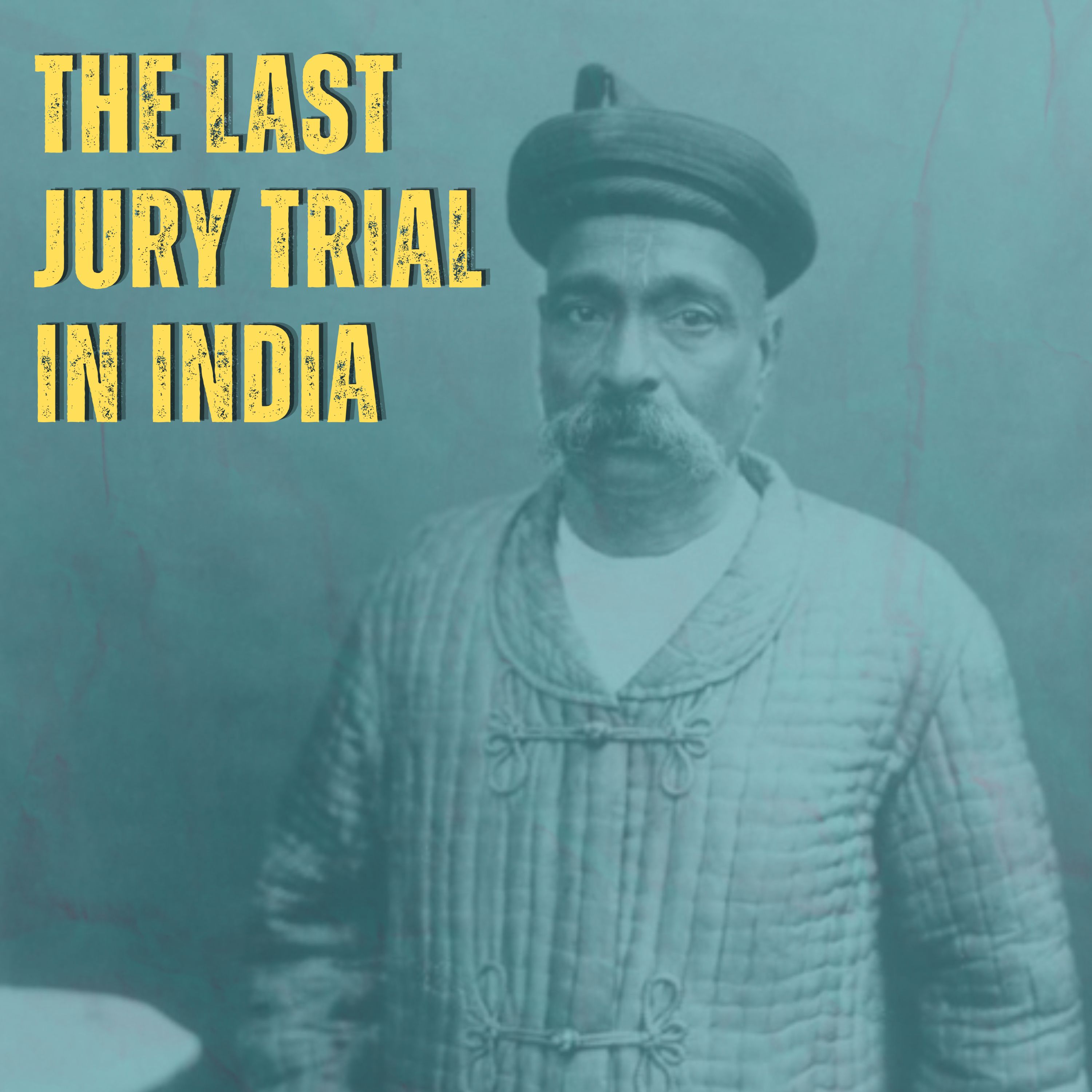
The lover ends up dead. The murder trial of Commander Kawas Nanavati captivated Bombay because it had everything—sex, betrayal, intrigue. When the jury verdict came out, many were outraged and they thought the jury system was to blame. The trial came to be known as “The Last Jury Trial in India” because it heralded the end of the jury in India and became a lightning rod for concerns about the jury being corrupted by prejudice and the media. The Last Jury Trial in India is a four-part series hosted by Sonali Chakravarti, professor of government at Wesleyan University. Hosted by Simplecast, an AdsWizz company.
Episode information is provided by the publisher. Listening takes place on the publisher’s service.
November 21, 2026; 10am: The president’s coziness with tech oligarchs is muddying the waters of protecting America’s best interests. Congressman-elect Dan Koh expresses his concerns about the series of recent tech outages and how the administration is prioritizing beneficial relationships and cash over the safety of Americans and their cybersecurity; Lisa Rubin breaks down the obstacles ex-Nvidia CEO Jensen Huang can expect as legal inquiries come his way; Project 2025 may seem like a distant memory, but its policies are more present in this administration than you might think. David Graham outlines the consequences of the Heritage Foundation’s influence; Victor Fontanez is known on the internet as VicBlends, a viral haircutting sensation. But to many in the California prison system, he’s a mentor and hero, helping incarcerated men prepare for a career. Fontanez reflects on his impact. Hosted by Simplecast, an AdsWizz company.
The Ninth Circuit hears the consolidated criminal appeals of Zachary Holt and a co-defendant. The case grew out of a series of robberies and shootings in Idaho and eastern Washington. During an attempted robbery on the Colville Reservation in twenty twenty-two, two people were killed. Holt later shot at pursuing police. A jury convicted him and his co-defendant of multiple crimes; both received life sentences. The main legal question you will hear concerns a voluntary-intoxication instruction: whether jurors should have been told how alcohol or drug use could bear on the intent required for particular charges. Intoxication is not a blanket excuse for crime. In a specific-intent prosecution, though, evidence of intoxication may bear on whether the government has proved the necessary state of mind. Listen for the difference between evidence that someone consumed drugs or alcohol and evidence relevant to their ability to form that intent. A separate dispute concerns a robbery committed in
Pulsatile tinnitus causes people to hear a rhythmic sound that matches their heartbeat. This report explores what causes it, why diagnosis can be challenging and the expanding treatment options available to some patients. Reporter: Sarah Diprose Guest/s Dr Robert Fahed, Interventional Neuroradiologist and Stroke Neurologist at The Ottawa Hospital, and Assistant Professor at the University of Ottawa. References The assessment of pulsatile tinnitus—a systematic review of underlying pathologies and modern diagnostic approaches (https://www.theajo.com/article/view/4101/html) Pulsatile Tinnitus: A Comprehensive Clinical Approach to Diagnosis and Management (https://www.mdpi.com/2077-0383/14/13/4428) The day the ‘whooshing’ stopped: World-first trial at The Ottawa Hospital brings relief from pulsatile tinnitus (https://ohri.ca/en/newsroom/day-whooshing-stopped-world-first-trial-ottawa-hospital-brings-relief-pulsatile-tinnitus)
November 21, 2026 On November 22, 1963, President John F. Kennedy and First Lady Jacqueline Kennedy were visiting Texas, They hoped to heal a rift in the Democratic Party, as the white supremacists who made up the base of the party’s southern wing loathed the Kennedy administration for its support for Black rights, That base was furious about the administration’s backing of James Meredith, the first Black American to enroll at the University of Mississippi, By going to Dallas, Kennedy hoped to mend some fences in the state Democratic Party, The President's motorcade began with high spirits, Lady Bird Johnson thought, when she heard three shots, that it “must be firecrackers or some sort of celebration,” The Secret Service, knowing what had happened, rushed the motorcade to a hospital, When Vice President Johnson and Lady Bird were told that the President was dead, officials rushed LBJ away, In the confusion - in addition to the murder, it wasn't clear how extensive the plot was against
Rebuilding the government after Trump and DOGE will take more than rehiring the people they fired last year. The Supreme Court enabled the administration’s assault on services and protections millions of Americans rely upon, and it could still block the rebuilding, too. On this week’s Amicus, Dahlia Lithwick talks with Cornell law professor and former Biden administration official K. Sabeel Rahman about his new book, Remaking the State: A New Blueprint for American Democracy (https://www.amazon.com/dp/1967190208?tag=slatmaga-20&th=1), about why restoring the old machinery of the administrative state won’t be enough. Rahman connects DOGE’s slash-and-burn campaign to a much longer legal project. He explains why doctrines that constrain regulation remain a threat to future policymaking, even as the high court supercharges Trump’s executive power grabs. But this is not just a damage assessment. From stronger consumer protections to easier access to public benefits and a meaningful democrat
The world appears to be falling apart, and the Trawl ladies are beginning to wonder whether anyone is actually in charge. From America's air traffic control system grinding to a halt, banking glitches and our ever-growing dependence on technology, Jemma and Marina are asking what happens when the infrastructure we rely on is run by systems, and people, we can't trust. Trump's America is proving quite the masterclass in chaos. There's Transportation Secretary Sean Duffy, whose career has taken him from reality TV to running America's transport network; questions over the new AI technology, the FAA's failures and the government's handling of the crisis; and another extraordinary display of Trump's blame-shifting when things go wrong. We also look at Markwayne Mullin's rather unfortunate timing when it comes to a trip to a college football game, the questions surrounding donations to Trump's enormous new ballroom and the companies subsequently winning government contracts. Are these isola
How is the judge-centered legal system working in India today? Tremendous backlogs and a feeling of distance between the people and the courts are the concerns I heard most about. The detention of Umar Khalid, an activist who protested the 2019 Citizenship Amendment Act has gone on for more than 5 years. What would happen if he had his case heard before a jury? This thought experiment of the jury trial in India is paired with a discussion of the legal system in Argentina where jury trials have recently been introduced in the most serious cases. Hosted by Simplecast, an AdsWizz company.
Even though jury trials were suspended for many nationalist leaders charged with political crimes, there were still moments when jurors exerted their power. One example is the trial of Communist organizer, Philip Spratt, a focus of the episode. The threat of a jury undermining the prosecution in the sprawling Meerut Conspiracy Trial also led the colonial government to take drastic action. Lastly, this episode also looks at the drafting of the 1950 Indian Constitution and asks, “Why did a country that committed to universal suffrage decide that the jury trial was not worth fighting for?” Hosted by Simplecast, an AdsWizz company.
If colonialism is a system of forced rule by an outside entity, why did the British introduce jury trials in India? Were they fair? This episode looks at two remarkable trials: the first is a murder trial of a British tea plantation owner by his workers, and the other is the 1908 trial of Bal Gangadhar Tilak. Tilak was the publisher of the most widely read newspaper in Western India and faced charges of sedition, that is, promoting “disaffection” for the king. Taken together, the trials show that the jury trial was meant to legitimize the British as an empire of law, but the way the trials were conducted revealed something more sinister. Hosted by Simplecast, an AdsWizz company.
Security measures should be proportionate to demonstrated risks.
Share your view, then see how readers voted. No sign-in required. This poll is shared across stories.
Do you agree or disagree?
Common Quandary
A Common Quandary to discuss
Another conversation to explore, separate from this news story.
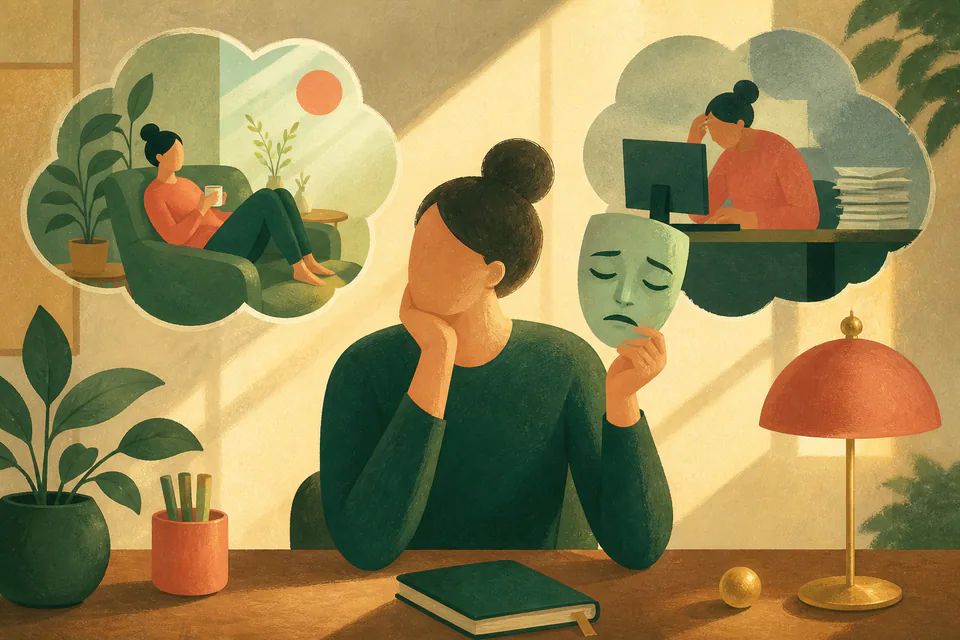
You are not sick—you just cannot face work today. Do you call in sick?
Your employer offers sick leave but no personal days. You are not physically ill, yet you feel exhausted and know a day away would help. Saying you are sick is the only way to take paid time off without explanation.
Do unjust workplace rules change the duty to be truthful?