Episode 140 - Platon
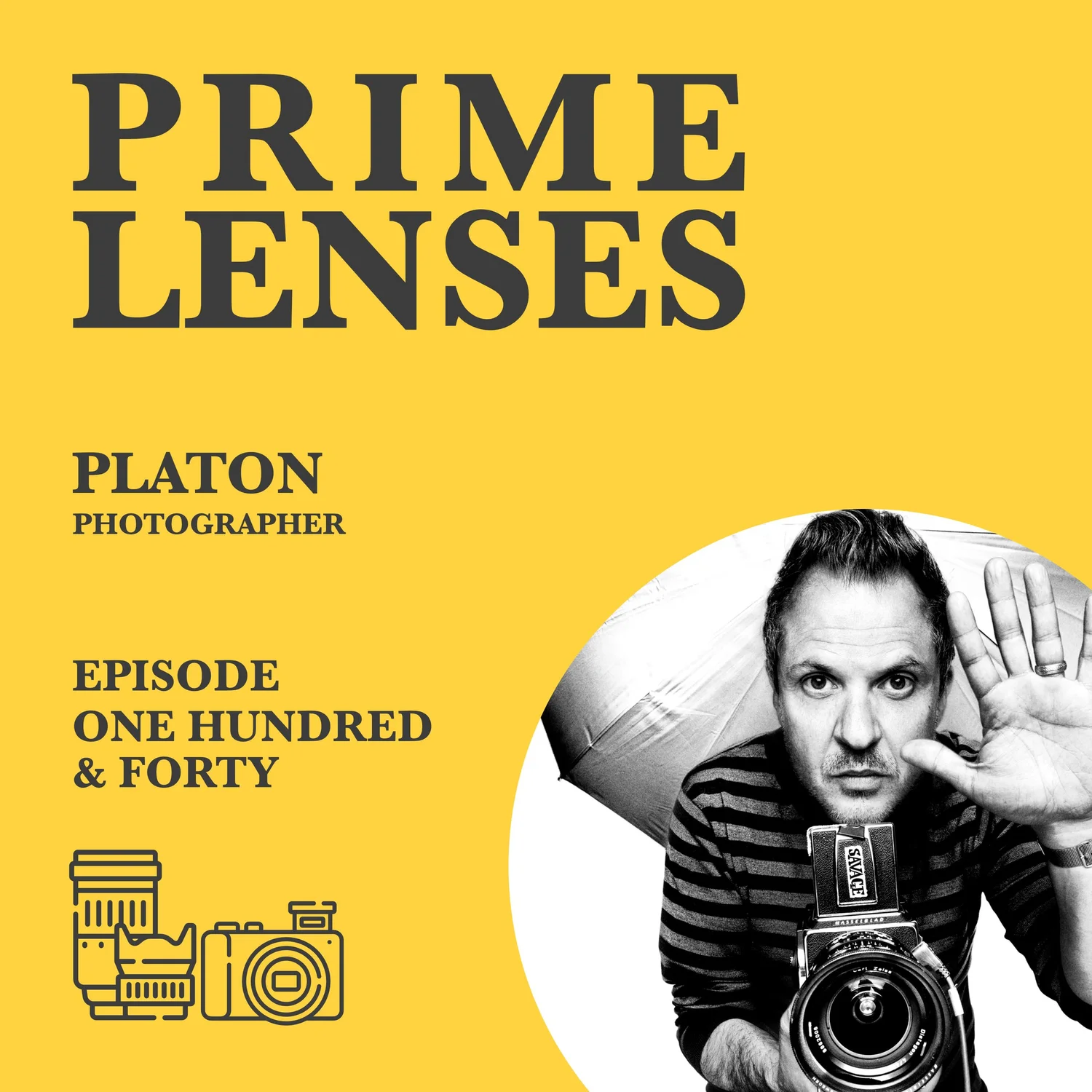
Listen through the publisher, then discuss the episode here or arrange an in-person Roundtable. Your city determines where to meet.
Roundtables are designed for groups of four, with a shared subject and room for everyone to speak. Come for discussion, with no dating expectation.
Platon has photographed more world leaders than almost anyone alive, but we start somewhere smaller: Paros, the island of his childhood, and the book he has been laying out on studio floors and hotel rooms for years. From there the conversation moves through why his white backgrounds began as the whitewashed walls of village houses, how a café called Parliament and a single post office phone line shaped a photographer who ended up working in parliaments, and why he thinks curiosity beats judgment every time. He tells the stories behind the portraits: Netanyahu twice, Obama before the smile, and Bill Clinton with seven and a half minutes of good behaviour and a wide-angle lens. We also get to the box, and what it means to the people who sit on it. A listener question about being constrained by a signature style gets a better answer than I expected. It ends with a message for anyone working alone. Highlights No timestamps were available, so positions are approximate (share of the conversation elapsed). • ~0% Forty years to deliver a promise to an old lady in the village who never got to see the book. She is in it. • ~8% Where the white background really came from: the white houses of a Greek village, not Penn, Avedon or Bailey. • ~22% The village as the original social media: one phone line in the post office, and a café called Parliament. • ~34% Replace judgment with curiosity, and what a picture of P. Diddy or Harvey Weinstein means now compared with when he took it. • ~43% The box. Pussy Riot and Putin sat on the same one, and so did a pregnant woman who told him nobody had ever asked how she felt. • ~53% Netanyahu twice, a year apart: "When he's vulnerable, he's volatile." • ~64% Obama's first Time cover, and why he refused to ask him to smile. • ~76% Clinton, the wide-angle lens, "show me the love", and a cover that went out to cable news outrage. • ~96% The Little Rock Nine portrait in the Smithsonian, and why the school canteen means more to him. Chapters Positions are approximate, from where each topic starts in the transcript. Please replace with real timestamps from the edit. • ~0% Cold open and the Paros book: layouts on the floor, the title, the old lady • ~5% Defenders, Republic and permission to make something personal • ~8% Learning to take pictures on the island, the white background, film and the Leica • ~15% From magazines to filmmaking, and the first recorded interview • ~22% Village life, the phone line, Café Parliament • ~28% Influences: architecture, album covers, Churchill, democracy as a Greek word • ~32% Trust, legacy media and "all you need is attention" • ~34% Curiosity over judgment; Diddy and Weinstein • ~41% A listener asks about being constrained by a style • ~43% Dyslexia, reduction, and the box • ~53% Netanyahu twice • ~59% The responsibility of other people's stories, and The People's Portfolio • ~64% Obama, the first Time cover • ~73% Seduction, Icarus, and being immune to power • ~76% Clinton and the Esquire cover • ~85% Truth, film, AI, and standing your ground • ~90% Neil Young, Van Gogh, and not chasing validation • ~96% The Little Rock Nine • ~99% "You are needed" Mentioned in this episode Books and reading • Paros by Platon — the book at the centre of the first third of the conversation. MW Editions, 370 pages, 225 black and white photographs. · https://mweditions.com/?p=1576 • The Defenders: Heroes of the Global Fight for Human Rights — Platon's human rights book, made with The People's Portfolio. · https://mweditions.com/books/the-defenders-heroes-of-the-global-fight-for-human-rights/ • Be Quiet, Be Heard: The Paradox of Persuasion by Susan and Peter Glaser — the book Platon saw on Obama's desk. The authors say it appeared in the New Yorker photo essay. · https://elgl.org/new-sensation-drs-susan-peter-glaser-glaser-associates/ People and institutions • Platon — official site. · https://platonphoto.com (https://platonphoto.com/) • Smithsonian Institution — acquired Platon's archive of African American civil rights and cultural leaders in 2020; the Little Rock Nine portrait is part of that story. · https://platonphoto.com/about-1 Quotes Replace judgment with curiosity, and it will serve you well. — Platon, ~34% I'm immune to power. I don't want it. If they offered me any kind of power, I wouldn't know what to do with it. — Platon, ~70% Look in the mirror, talk to yourself and say, you know what? I am needed. — Platon, ~99% Mentioned but not linked • Platon's Republic (book, Iain) — a search turned up only a Goodreads page mixed up with Plato's Republic, so I left it unlinked. • The People's Portfolio (Platon's foundation, founded 2013) — confirmed as a non-profit by the MW Editions page, but I could not verify a standalone URL. • Short film accompanying Paros (~15%) — Platon expects to release it early next year; no page found. • Cillian Murphy film (~28%) — Iain mentions rewatching it; I found a Port magazine cover but could not confirm which film, so no link. • Henry Kissinger recording (~15%) — Platon's first recorded interview, about Frank Sinatra; no public page found. • Reid Miles, Peter Blake, Alan Fletcher / Pentagram, George Lois, Le Corbusier, Frank Lloyd Wright (~28%) — Platon's influences; not searched. • Hasselblad, Leica (~8%) — the gear mentions are brief; add brand links if you want them. • Time, Esquire, Larry King, Bob Woodward, John Lithgow, Neil Young — named in the stories; not searched. Credits Hosted by Iain Farrell. Guest: Platon.
Episode information is provided by the publisher. Listening takes place on the publisher’s service.
Listen at the source ↗