Listen through the publisher, then discuss the episode here or arrange an in-person Roundtable. Your city determines where to meet.
Roundtables are designed for groups of four, with a shared subject and room for everyone to speak. Come for discussion, with no dating expectation.
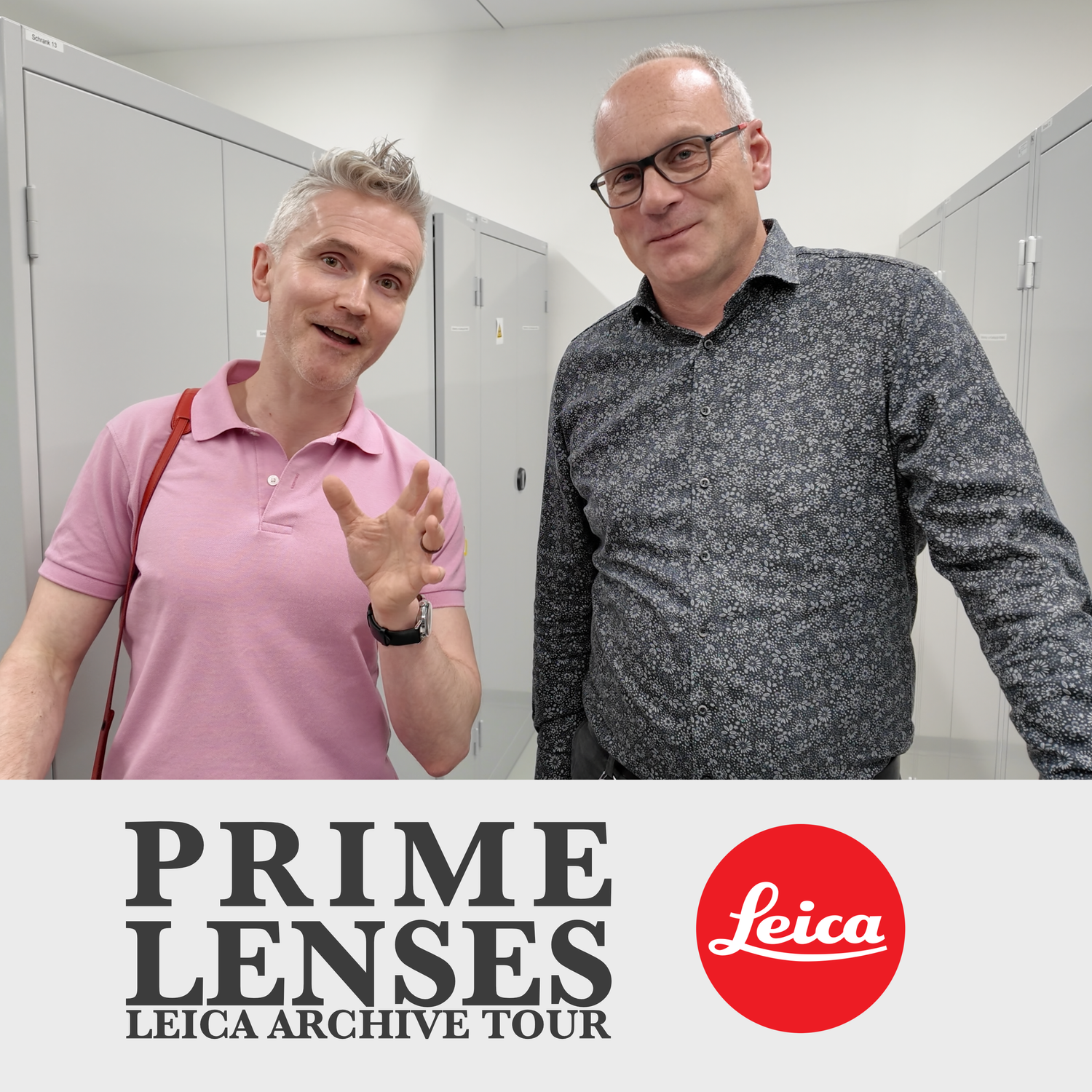
Midweek Special. Step Into Our Memory A tour of the Leica Archive, from Barnack’s signature to the one-off camera Jony Ive designed. Guest: Tim Pullmann — looks after the Leica Archive at Leitz Park in Wetzlar. In this episode On a recent trip to Wetzlar, Tim Pullmann took me through a side door at the Leica museum and into the archive, the place where the company keeps what it has made, drawn, printed and nearly thrown away. This one is a walk rather than an interview, and you hear the rooms as we go. The paper archive first: a 1923 technical drawing of the 0-Series signed off in pencil by Oskar Barnack, a hand-glazed ceramic Leica that exists exactly once, and a hundred-year-old bound magazine that may hold one of the first Leica adverts. Then the camera archive: original Barnack negatives that still print beautifully, a golden M4, a Paul Smith edition, and the prototype of the Leica M for (RED) that Jony Ive and Marc Newson designed. Tim also explains how a building’s keyholder became head of the archive, and why Leica came close to ending the M system in the 1970s.
Episode information is provided by the publisher. Listening takes place on the publisher’s service.
Now Mark wants to help you become financially free as well. Follow the podcast and turn on notifications! This Podcast is fan-made. No copyright infringement intended. ----- Keywords: financial independence, wealth building, wealth creation, financial scams, financial freedom, frugal living, credit cards, real estate
Dig into Moore’s Law and explore its 4 main limitations and how they could change how we are able to make progress in computing. -- Moore’s Law states that every 1 to 2 years the number of transistors that can fit on a given size computer chip will double. Thanks to this law, chips have gotten smaller, faster, more efficient, and cheaper. But today, there are four key problems that trip up this trend, potentially ending Moore’s Law and fundamentally changing how computing progresses. Sajan Saini and George Zaidan investigate. Lesson by Sajan Saini and George Zaidan, directed by Jeff Le Bars, JetPropulsion.space. A special thanks to Anuradha Murthy Agarwal who provided information and insights for the development of this video. Artists and artworks referenced in the animation: "The Persistence of Memory and The Disintegration of the Persistence of Memory" by Salvador Dalí "Composition VIII" by Wassily Kandinsky "Oh Jeff and Girl with Tear III" by Roy Lichtenstein "Black Square on a Whit
A.I. for Building Self-esteem: Seeing Yourself More Clearly and Kindly, a practical, beginner-friendly look at how artificial intelligence can help you see yourself a little more clearly and kindly. Building Self-esteem? Press play on Episode 427 of A.I. for Beginners and learn exactly how artificial intelligence, especially ChatGPT, alongside a journaling app, can help you see yourself a little more clearly and kindly. WHAT YOU WILL LEARN IN THIS EPISODE - Why building self-esteem is so hard to handle alone, and what is actually going on underneath it - A specific way to use a journaling app to work through it, step by step - An example prompt you can copy word for word: "Help me notice when I'm judging myself far harsher than I'd judge a friend" - A second practical technique, with another ready-to-use prompt: "Help me write down three qualities I actually like about myself, beyond achievements" WHO THIS EPISODE IS FOR - Anyone currently working on building self-esteem - Anyone curio
AI news from Anthropic's first day of trading, with Gemini Neon in Antigravity, Project Genie, Microsoft's MAI models, AI chips for China and Meta Muse. Anthropic priced its IPO at 83, opened near 111, and topped out above 114 before drifting back into the low 90s. Employees hold an estimated 232 billion dollars in stock, and Ashton Kutcher became a billionaire through his firm's early stake. Google stories included a hands-on account of Gemini Neon in Antigravity reviewing a whole project and then directing Claude Code as its product manager, a live Project Genie build of a South African safari, the Gemini Mac app's computer use, and Gemini for healthcare. Other topics were building an AI operations function from scratch at Verstela, gamified employee onboarding, Microsoft's Labs Canvas and MAI Code 2, House documents showing about 880,000 NVIDIA and AMD chips approved for export to China, and a Reuters report that Meta Muse surfaced private Signal messages through device permissions,
Merriam-Webster's Word of the Day for November 21, 2026 is: meet-cute • \MEET-kyoot\ • noun Meet-cute refers to a cute, charming, or amusing first encounter between romantic partners. A meet-cute can be such an encounter as shown in a movie or television show, or one that happens in real life. // Their meet-cute felt as if it came straight out of a romantic comedy. See the entry > (https://www.merriam-webster.com/dictionary/meet-cute) Examples: “Two women, Dylan and Melanie, cross paths on an artificial beach in a near-apocalyptic meet-cute: one has emerged from the underwater pod in which she was raised, the other works at a luxury resort as a bartender… and may also be a robot.” — Natalie Zutter, Literary Hub, 2 Jan. 2026 Did you know? Isn’t it cute how two words can be introduced to each other and become an inseparable pair soon after? Well, that’s exactly what happened when meet and cute got together in the early 1950s. The duo was spotted in The New York Times Book Review in 1952
What NVIDIA is trying to build next… You're probably hearing a lot about AI, DeepSeek, NVIDIA and more right now. If you want the big picture (and to start from the beginning), watch this Huge Conversation with NVIDIA CEO Jensen Huang. In the last few years, NVIDIA has skyrocketed to become one of the world's most valuable companies. That's because, beginning in the 90s, they led a fundamental shift in how computers work, now unleashing the current explosion of what’s possible with technology. A huge amount of the most futuristic tech you’re hearing about - in AI, robotics, gaming, self-driving cars, breakthrough medical research - relies on new chips and software designed by him and his company. During the dozens of background interviews I did to prepare for this, what struck me most was how much Jensen Huang has already influenced all our lives over the last 30 years, and how many are saying it’s just the beginning of something even bigger… We all need to know what he’s building and
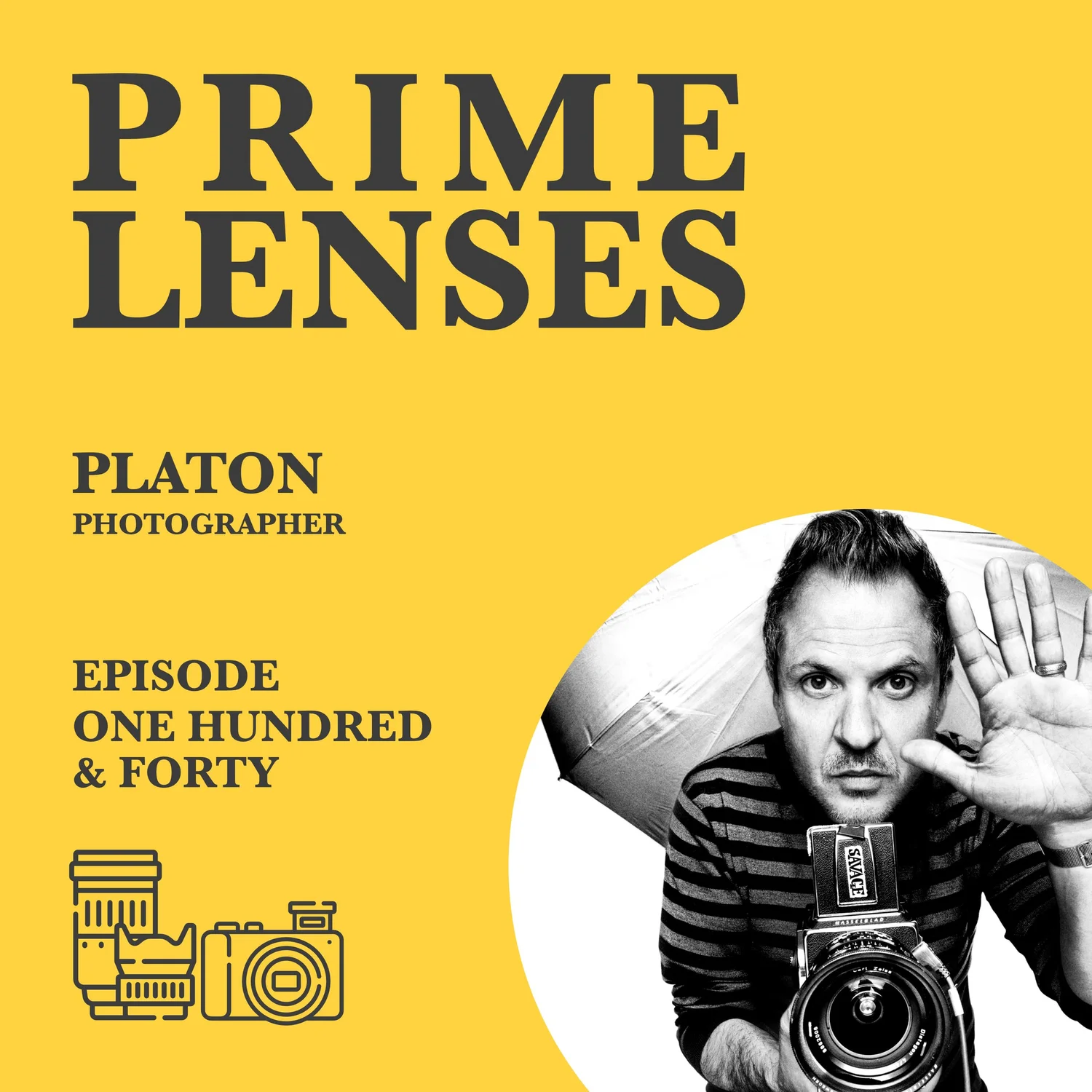
Platon has photographed more world leaders than almost anyone alive, but we start somewhere smaller: Paros, the island of his childhood, and the book he has been laying out on studio floors and hotel rooms for years. From there the conversation moves through why his white backgrounds began as the whitewashed walls of village houses, how a café called Parliament and a single post office phone line shaped a photographer who ended up working in parliaments, and why he thinks curiosity beats judgment every time. He tells the stories behind the portraits: Netanyahu twice, Obama before the smile, and Bill Clinton with seven and a half minutes of good behaviour and a wide-angle lens. We also get to the box, and what it means to the people who sit on it. A listener question about being constrained by a signature style gets a better answer than I expected. It ends with a message for anyone working alone. Highlights No timestamps were available, so positions are approximate (share of the convers
Today, my guest is Reiner Holzemer, the director of Leica A Century of Vision (https://leica-camera.com/en-int/photography/a-century-of-vision), a documentary made last year to celebrate the 100th anniversary of the production of the first serialised Leica 35 mm camera. The film is not, as you might expect, just a film about Leica the brand, but rather a celebration of photography and recognition of the momentous impact that the invention of 35 mm cameras, the industry that it spawned, and the capability that it gave photographers. Reiner is fortunate enough to speak with some great photographers in this documentary, previous guests of the show that you may recognise, like Joel Meyerwitz, like Sarah M. Lee, and like Misan Harriman, but also people like Sir Johnny Ive, who worked with Marc Newson to design a one of one M camera, as well as legends in the field like Evelyn Jane Atwood, Ralph Gibson, Steve McCurry, and of course the late great Sebastião Salgado. I was lucky enough to see
Students should help shape decisions about what and how they learn.
Share your view, then see how readers voted. No sign-in required. This poll is shared across stories.
Do you agree or disagree?
Common Quandary
A Common Quandary to discuss
Another conversation to explore, separate from this news story.
A parent clearly built the winning science project. Who should lose the prize?
An elementary student submits an elaborate science project far beyond their apparent ability. The parent proudly describes working together all weekend, and the child clearly learned something, but other students completed simpler projects themselves.
What is a fair response when help improves learning but distorts achievement?