Episode 192: Benjamin Franklin and the United States Postal Service (a special episode for Taylor)
20 min
Listen through the publisher, then discuss the episode here or arrange an in-person Roundtable. Your city determines where to meet.
Roundtables are designed for groups of four, with a shared subject and room for everyone to speak. Come for discussion, with no dating expectation.
Episode 192: Benjamin Franklin and the United States Postal Service (a special episode for Taylor) Did you know that Benjamin Franklin helped establish America's postal system before the United States even declared independence? In Episode 192 of Real Cool History for Kids, we're kicking off our special You've Got Mail! mini-series with an exciting story requested by Taylor! Travel back to colonial America, when letters traveled by horseback, mail delivery could take weeks, and the person receiving a letter often had to pay the postage! Discover how Benjamin Franklin used his curiosity and problem-solving skills to improve colonial mail routes, speed up deliveries, and eventually become the first Postmaster General appointed by the Continental Congress in 1775. Along the way, we'll explore colonial geography, learn about Franklin's clever use of an odometer, and discover why delivering letters and newspapers was so important during the American Revolution. • Take your exploration further with the printable activity packet available on our Patreon Platform (https://www.patreon.com/cw/RealCoolHistoryforKids)! • Would you like the chance to be part of the Real Cool History for Kids podcast? Send your audio-request for a special episode HERE! (https://angelaodell.com/episode-request-form/) • Tell us what you think of the Real Cool History for Kids podcast (or Angela's other work) by leaving an audio-review HERE! (https://angelaodell.com/audio-message-review/) Your review may be chosen to be included in an episode!
Episode information is provided by the publisher. Listening takes place on the publisher’s service.
Steve Taylor, PhD, is the author of Extraordinary Awakenings, The Leap: The Psychology of Spiritual Awakening, Spiritual Science, Back to Sanity, Out of the Darkness and many other books. He’s senior lecturer in psychology at Leeds Beckett University. Steve’s articles and essays have been published in over 100 academic journals, magazines, and newspapers and he blogs for Scientific American and Psychology Today. His website is https://www.stevenmtaylor.com/ In this video, rebooted from 2021, he defines spiritual awakening as an opening to a larger understanding of oneself. Ultimately, he maintains that our deepest self is at one with the entire universe. Many human problems result from a sense of separation, of being stuck at an ego level. He describes several types of awakenings. Often they result from a sense of acceptance, even in the aftershock of trauma. (Recorded on December 5, 2021) Check out New Thinking Allowed's AI chatbot. To order a copy of Charles T. To order Extraordinary
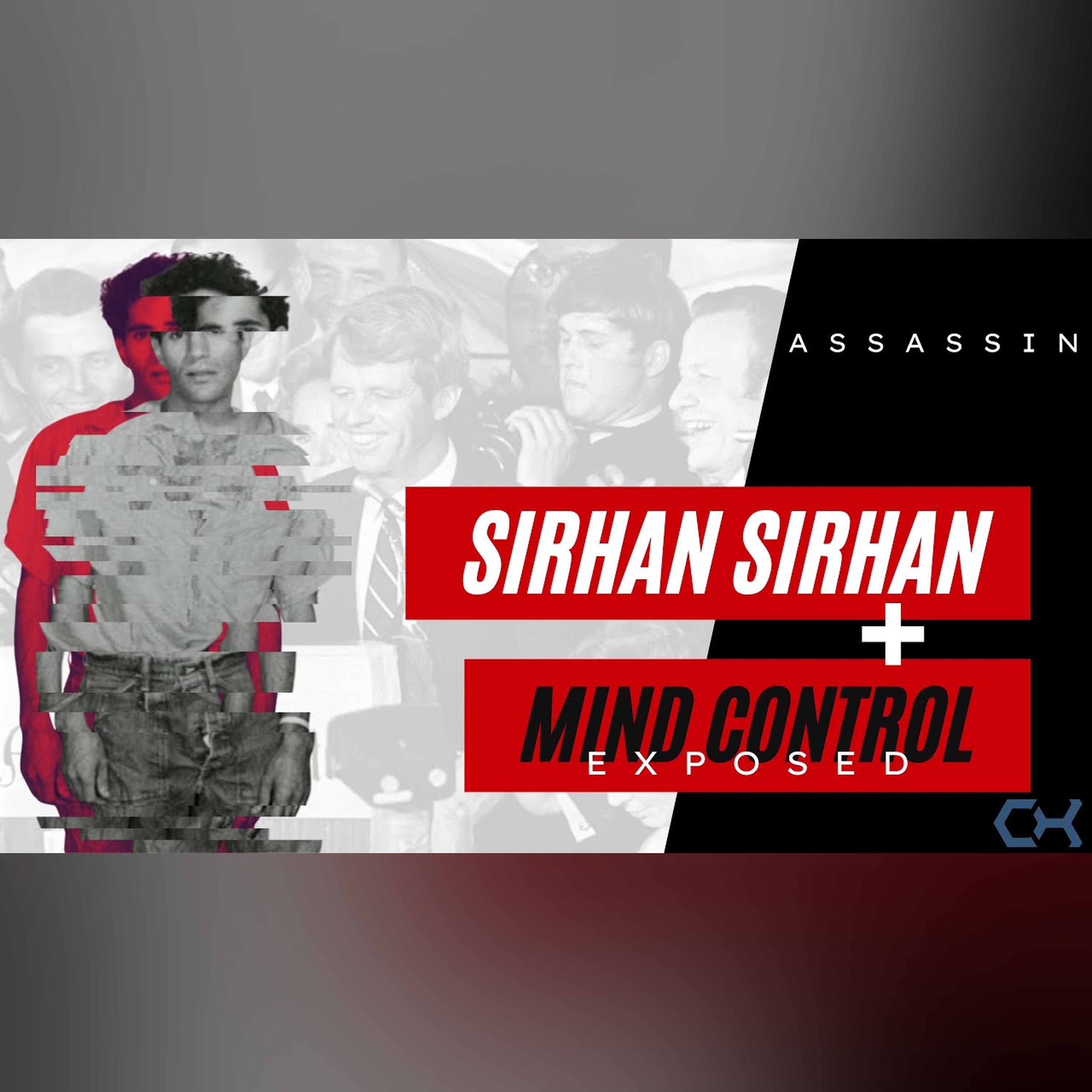
Join NCI University today to master human behavior and influence: Uploaded 05-11-21 This is a dive to discover the possibilities, not the case itself. Sirhan Sirhan, in full Sirhan Bishara Sirhan, (born March 19, 1944, Jerusalem), Palestinian-born Jordanian citizen who was convicted (1969) of fatally shooting U.S. Sen. Robert F. Kennedy on June 5, 1968. He received the death penalty, but the sentence was later commuted to life. Sirhan, a Christian Palestinian, was born in Jerusalem. In 1948 Jordan took control of East Jerusalem and what is now the West Bank, and the following year it granted citizenship to people living in those areas. It is believed that this is how Sirhan became a Jordanian citizen. In the 1950s, he and his family moved to the United States and eventually settled in Pasadena, California. There he attended Pasadena City College and later held odd jobs, notably working at a horse stable and later at a health food store. During this time, Sirhan became vocal in his oppo
This week on The Necessary Conversation, it's Chad, Haley, and Mary Lou. Bob is still recovering but sent in a video message about Trump calling Putin his friend that we watch together. 🇷🇺 Trump held the first-ever three-way talks with Putin and Xi, called it a "12 out of 10," and produced nothing. Then at a press conference he called Putin his friend — and when asked if Putin is a friend to America, the president of the United States said, "I can't speak to America." That same day, Trump's friend Putin launched massive strikes into Ukraine, hit Poland with two missiles — an act of war against a NATO ally — then struck near a Ukrainian restaurant and drone-bombed the first responders, killing a 7-year-old child and a 20-year-old paramedic. We watch Bob's video and ask Mary Lou: is Russia our friend? 🇨🇳 The House Foreign Affairs Committee revealed Trump's Commerce Department approved nearly 880,000 advanced AI chips for Chinese military-linked companies including Alibaba, Tencent, a
Viewers like you help make PBS (Thank you ) . Support your local PBS Member Station here: https://to.pbs.org/DonateSPACE Uploaded 03-10-18 On this Space Time Journal Club we look at how gravitational waves can be used to search for extra dimensions of space! To learn more about CuriosityStream you can go to: https://www.curiositystream.com/space... and use the code "spacetime" during the sign-up process. "Limits on the number of spacetime dimensions from GW170817" Pardo, Fishbach, Holz and Spergel 2018 You can further support us on Patreon at https://www.patreon.com/pbsspacetime Get your own Space Time t-shirt at http://bit.ly/1QlzoBi Tweet at us! @pbsspacetime Facebook: facebook.com/pbsspacetime Email us! pbsspacetime [at] gmail [dot] com Comment on Reddit: http://www.reddit.com/r/pbsspacetime Help translate our videos! Previous Episode: Quantum Gravity and the Hardest Problem in Physics Hosted by Matt O'Dowd Written by Matt O'Dowd Graphics by Luke Maroldi Assistant Editing and Sound
Merriam-Webster's Word of the Day for November 22, 2026 is: copacetic • \koh-puh-SET-ik\ • adjective Copacetic (less commonly spelled copasetic or copesetic) describes things that are very satisfactory. // Worry not: I assure you that everything’s copacetic. See the entry > (https://www.merriam-webster.com/dictionary/copacetic) Examples: “We will be blessed with a second lunar eclipse on this night, but it won’t quite be total: at maximum, a little more than 90 percent of the moon will fall into Earth’s shadow. The event will start at 10:35 P.M. EDT, and the maximum eclipse will occur just after midnight. It won’t be as cool as the March eclipse, but the timing will be a lot more copacetic.” — Phil Plait, Scientific American, 9 Jan. 2026 Did you know? Copacetic (with many variant spellings) is probably better known for competing theories of its origin than for any record of unconscious everyday use in American English. The first written occurrence of the word thus far detected (as copa
Explore what makes polio so dangerous, what is causing the 21st century resurgence of cases, and how we can eradicate the disease. -- In 1952, polio was everywhere: killing or paralyzing roughly half a million people annually. Yet just 10 years later, paralytic polio cases in the US dropped by 96% and we were on track to get rid of polio for good. But in recent years, the virus started striking back. So, what’s behind these recent spikes? Explore the dangers of poliovirus and the possibility of eradicating this deadly disease. Directed by Anton Bogaty. This video made possible in collaboration with Gates Ventures Learn more about how TED-Ed partnerships work: https://bit.ly/TEDEdPartner A special thanks to Ananda Bandyopadhyay, Amber Zeddies, and Kathleen O'Reilly who provided information and insights for the development of this video. Support Our Non-Profit Mission ---------------------------------------------- Support us on Patreon: http://bit.ly/TEDEdPatreon Check out our merch: htt
Episode 193: The Adventure of the Pony Express (a special episode for Eleanor) How did letters travel nearly 2,000 miles before there was a telegraph line connecting the country? In this episode of Real Cool History for Kids, we continue our You've Got Mail! series with the story of the Pony Express! Discover how a relay of horses and riders carried mail between Missouri and California, what kind of riders the company hired, and the promises they made before starting work. Learn how they faced harsh weather, rode through the night, and depended on station workers to keep the mail moving. The Pony Express operated for only about a year and a half, but its story offers lasting lessons about endurance, honesty, and being faithful with our responsibilities. Listen, learn, and explore American postal history together! • Take your exploration further with the printable activity packet available on our Patreon Platform (https://www.patreon.com/cw/RealCoolHistoryforKids)! • Would you like the
A rule should not be introduced unless it can be enforced fairly.
Share your view, then see how readers voted. No sign-in required. This poll is shared across stories.
Do you agree or disagree?
Common Quandary
A Common Quandary to discuss
Another conversation to explore, separate from this news story.
Scientists can edit mosquitoes until a deadly disease disappears. Who gets to say yes?
Scientists can potentially release modified mosquitoes whose genes would spread through wild populations and sharply reduce a deadly disease. The ecological effects could cross borders and may be impossible to reverse.
Who may authorize an irreversible change intended to save lives?