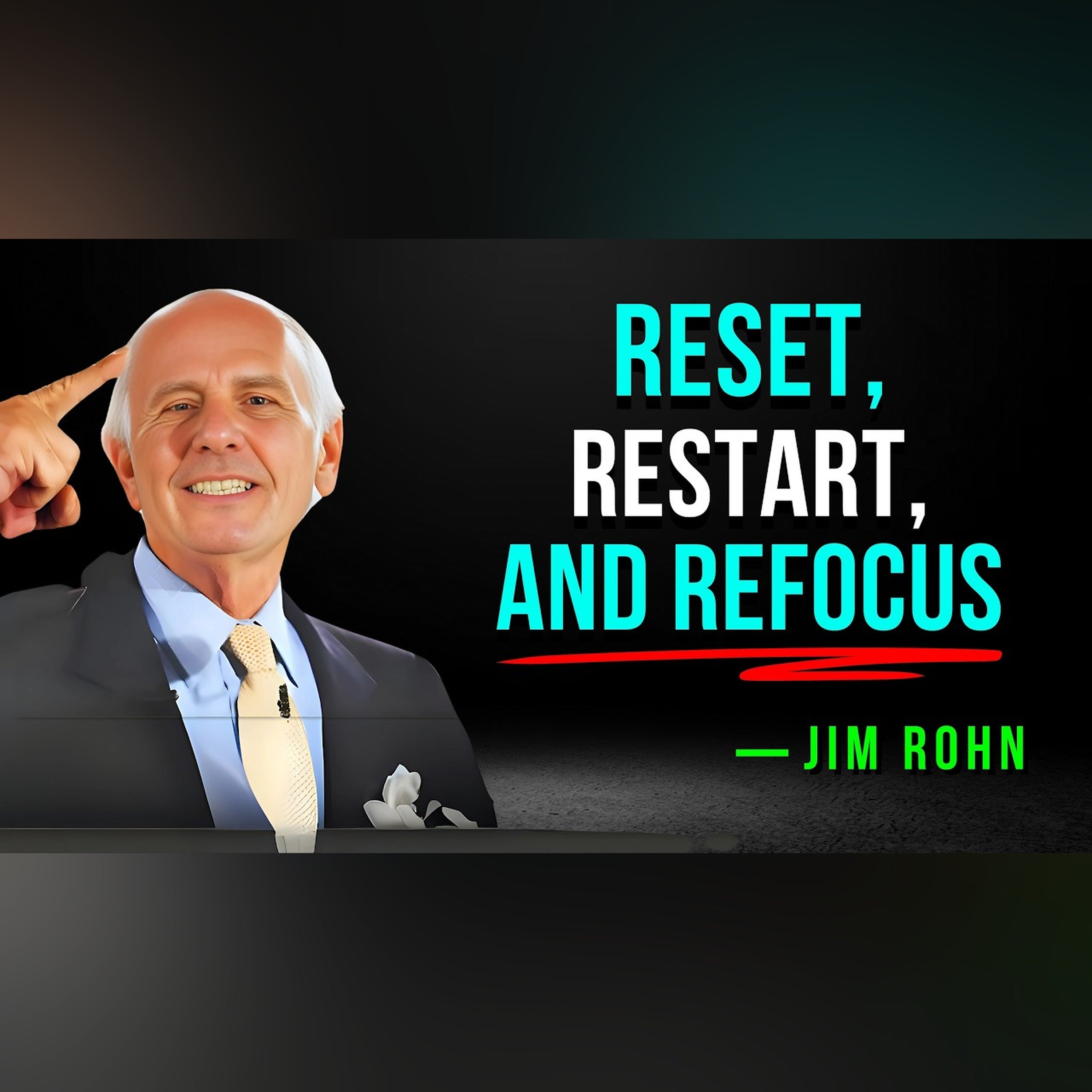
Reset, Restart, and Refocus — Make 2026 Your Comeback Year – Jim Rohn Motivation | Jim Rohn Fan Academy #jimrohn #motivation #success #selfdiscipline #comeback #mindset #selfgrowth ► Speaker: Jim Rohn (AI Voiceover by Jim Rohn Fan Academy) Disclaimer: This video is created for motivational and educational purposes only. The AI-generated voice is inspired by Jim Rohn’s timeless philosophy. The real Jim Rohn has no affiliation with this channel—this is a fan-led project dedicated to preserving and spreading his wisdom. Uploaded 07-01-26 No matter how your year has gone so far, you can draw a line in the sand today. You can reset your mindset, restart your habits, and refocus your life. Jim Rohn’s powerful message reminds us that a comeback year doesn’t happen by luck—it happens by rebuilding your discipline, renewing your vision, and taking full responsibility for your future. This is your invitation to rewrite your story, rebuild your confidence, and make 2026 the year everything change
Master the skills that change lives — enroll in your free human behavior course today: https://nci.university/learn Uploaded 15-01-26 EXECUTIVE SUMMARY: Video: What It Feels Like to See Into People Purpose: Reframe how human behavior is actually driven and perceived Outcome: Permanent shift in how you experience people and conversations CORE IDEA: Human behavior is not driven by beliefs, opinions, or logic. Those are after-action reports. Behavior is driven by the nervous system’s constant assessment of: • safety • approval • power • avoidance of shame Decisions are made before conscious thought. Beliefs are constructed afterward to justify what already happened. WHY THIS MATTERS: Most people spend their lives interacting with: • beliefs • arguments • explanations • surface narratives As a result, they miss the layer where real decisions are made. This video focuses on that lower layer — the one that actually governs: • conflict • influence • attraction • resistance • leadership • trus
The Ninth Circuit considers how JPMorgan uses money left in its employees' retirement plan. These are unvested employer contributions: money departing workers had not yet earned the right to keep. They are not the employees' own salary contributions. The forfeited money stays inside the plan. Wright says JPMorgan used it to offset future employer contributions rather than reduce administrative fees charged to participants. His claim is that the company repeatedly saved itself money while employees continued paying fees. The district court dismissed his lawsuit before trial. It read the plan as not allowing forfeitures to cover participants' share of expenses, and rejected his claims under ERISA, the federal retirement-plan law. The argument will separate two decisions: who pays the plan's expenses, and how money already in the plan is allocated. Wright will argue that the plan's provisions work together and that the choices were subject to duties owed to participants. JPMorgan and the
From July 7, 2025: Winnona Bernsen, nonresident fellow at the Atlantic Council’s Cyber Statecraft Initiative and founder of DistrictCon (https://www.districtcon.org/), joins Lawfare Contributing Editor Justin Sherman to discuss her recently released report "Crash (Exploit) and Burn: Securing the Offensive Cyber Supply Chain to Counter China in Cyberspace (https://www.atlanticcouncil.org/in-depth-research-reports/report/crash-exploit-and-burn/)." They discuss the offensive cyber industry, the private sector and individual players, and the government procurement pipelines in the United States and China. They also discuss the strengths and weaknesses of each country’s offensive cyber procurement ecosystem, what it takes to sell an exploit, Winnona’s findings on the markups that middlemen add to exploit sales, and what it all means for the future of competition and cybersecurity. Hosted on Acast.
Check Out Untold Earth on PBS Terra: https://www.youtube.com/watch?v=-BVHSUMAWR4&list=PLzkQfVIJun2J5q9CIXPAlL95FSb0tJul7&index=85 PBS Member Stations rely on viewers like you. To support your local station, go to:http://to.pbs.org/DonateSPACE Sign Up on Patreon to get access to the Space Time Discord! We humans have always been explorers. The great civilizations that have arisen across the world are owed to our restless ancestors. These days, there’s not much of Earth left to explore. But if we look up, there’s a whole universe out there waiting for us. Future generations may one day explore the cosmos and even settle entire other galaxies. But there is a hard limit to how much of the universe we can expand into. So, how big can humanity get? Episodes Referenced: How Much Of The Universe Can Humanity Ever See?: https://youtu.be/eVoh27gJgME Is Interstellar Travel Possible?: https://youtu.be/wdP_UDSsuro What If Humanity Is Among The First Spacefaring Civilizations?: https://youtu.be/uTrF
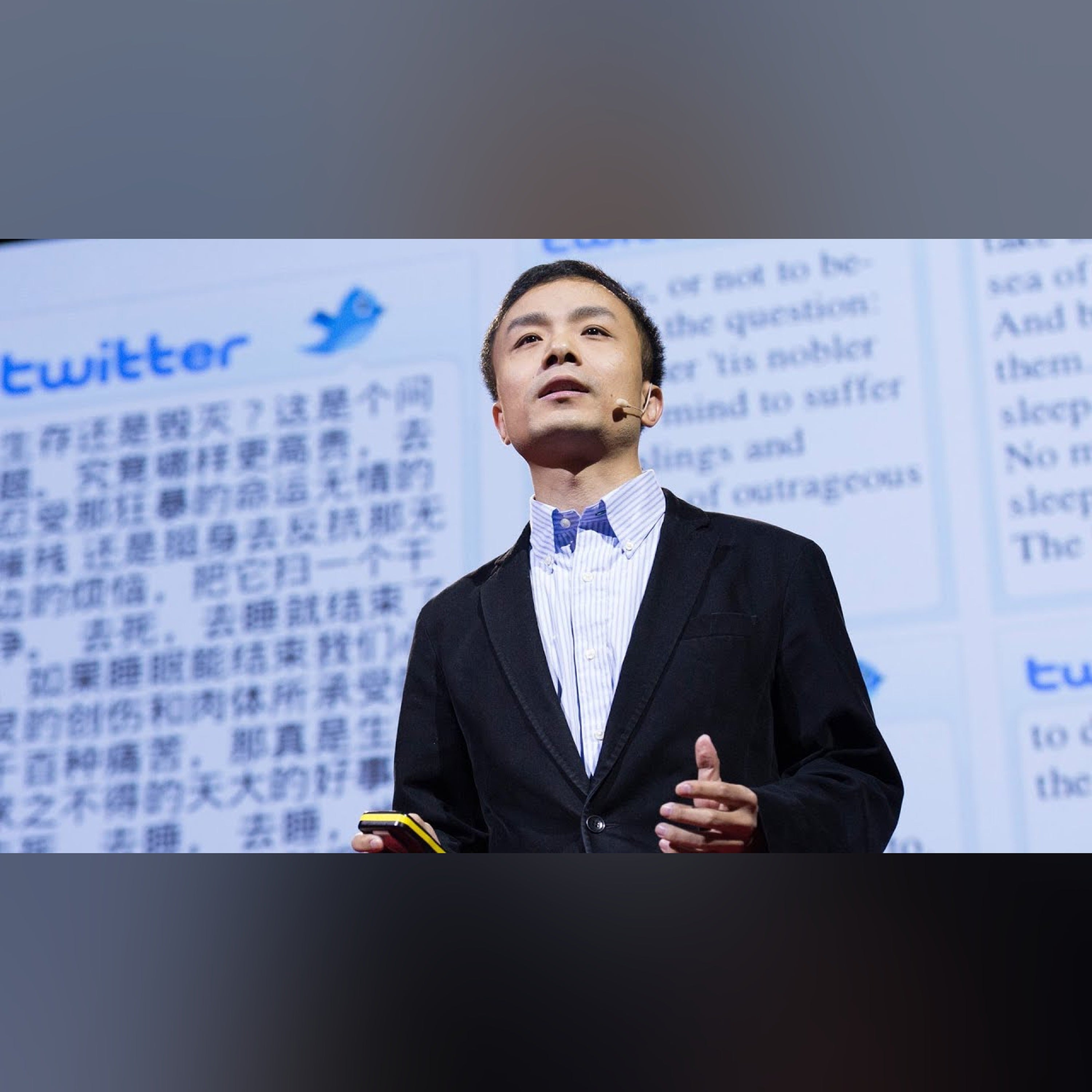
View full lesson: http://ed.ted.com/lessons/behind-the-great-firewall-of-china-michael-anti Uploaded 22-06-13 Michael Anti (aka Jing Zhao) has been blogging from China for 12 years. Despite the control the central government has over the Internet -- "All the servers are in Beijing" -- he says that hundreds of millions of microbloggers are in fact creating the first national public sphere in the country's history, and shifting the balance of power in unexpected ways. Talk by Michael Anti.
This week on the podcast we examine new Office for Students and Advance HE research on AI in higher education (https://wonkhe.com/blogs/podcast-ai-and-assessment-tef/) – which finds uneven institutional approaches and risks for valid assessment and AI literacy. The regulator sees “closed” assessment as the most effective way to validate learning – so can universities build students’ AI skills while protecting confidence in their degrees? Plus we discuss the latest details and data on the revised Teaching Excellence Framework, where Bronze across the board would restrict growth, and our guests pick their stories of the week. With Aaron Porter, Associate Director (Governance) at Advance HE, David Kernohan, Deputy Editor at Wonkhe, Mack Marshall, Editorial Coordinator at Wonkhe and presented by Debbie McVitty, Editor at Wonkhe. Office for Students: Universities should help students develop AI skills while protecting confidence in degrees (https://www.officeforstudents.org.uk/news-blog-and
People selling health products should provide evidence for their claimed benefits.
Share your view, then see how readers voted. No sign-in required. This poll is shared across stories.
Do you agree or disagree?
Common Quandary
A Common Quandary to discuss
Another conversation to explore, separate from this news story.
You find a rare library book your father kept for forty years. Do you return it anonymously?
While clearing your father's attic, you find a rare book stamped by the local library and due in 1986. The library would be thrilled to recover it, but returning it openly would expose a secret he apparently kept for decades—and might produce a spectacular overdue fine.
Does making an old wrong right require admitting who did it?