Getting Winter Ready: Is Your Farmyard Inspection Ready?
21 min
Listen through the publisher, then discuss the episode here or arrange an in-person Roundtable. Your city determines where to meet.
Roundtables are designed for groups of four, with a shared subject and room for everyone to speak. Come for discussion, with no dating expectation.
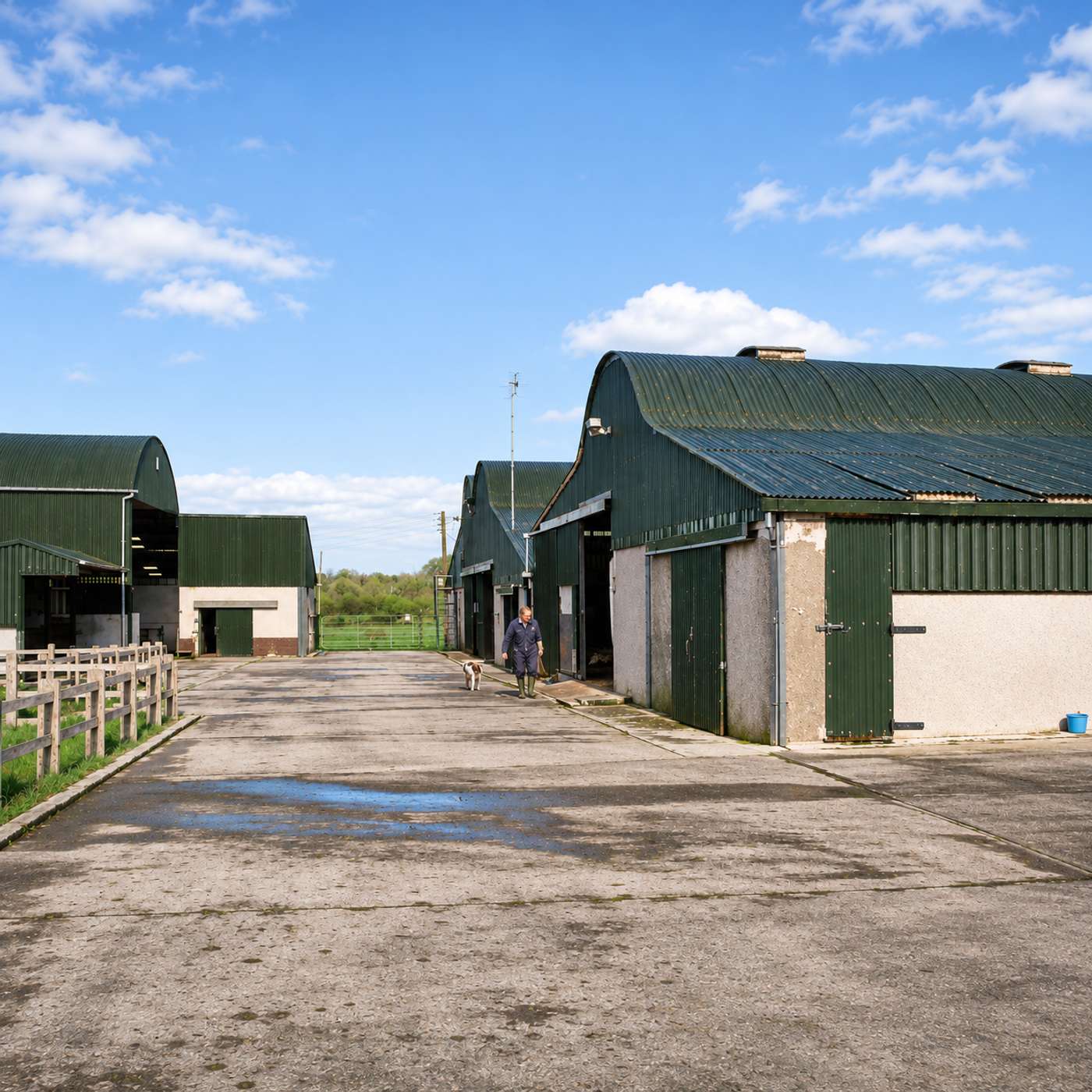
In the final episode of the Getting Winter Ready series on the Beef Edge, Catherine Egan is joined by Jimmy Lyons, Teagasc Agricultural Sustainability Support and Advisory Programme (ASSAP) Advisor based in Teagasc Listowel, to discuss water quality, farmyard management and preparing for Nitrates Action Programme (NAP) inspections. With environmental regulations and water quality inspections becoming increasingly important, Jimmy explores the most common issues identified during farm inspections and what beef farmers can do to ensure their farms are compliant. Jimmy discusses the main pollution risks around the farmyard, how contaminated water can reach local streams and rivers, and why even small amounts of agricultural pollution can have an impact on water quality. Jimmy focuses on the importance of managing dirty water correctly, highlighting practical ways to reduce the volume of dirty water collected around the yard. With cattle housed for the winter, slurry storage is another key consideration. Jimmy outlines how farmers can assess their storage capacity, reduce rainwater entering slurry tanks and understand the rules around slurry spreading dates and suitable ground conditions. Finally, Jimmy explains the support available to farmers through the Teagasc ASSAP programme and how they can access advice to identify risks and make improvements. Further details available at: ASSAP Fact sheet Find your local ASSAP advisor
Episode information is provided by the publisher. Listening takes place on the publisher’s service.
Training Wednesday is back, and Aaron, Trent, and Peaches spend the live answering Air Force Special Warfare candidate questions — but first, there is an update from the current SWAS class. According to the numbers discussed on the live, 78 candidates failed the initial IFT and 52 still failed the refire. The guys try to understand how that happens after months of development and preparation, discuss reports that some candidates struggled with the swim and high-volume masks, and once again return to the same message they keep giving candidates: you need to arrive ready. From there, the live turns into a full candidate-training clinic. The guys talk about periodizing strength and endurance work, building Zone 2 capacity, gradually increasing mileage, why running with a weighted vest is probably not solving the problem you think it is, preparing for A&S, training with the equipment you will actually use, and why the goal is not simply to pass a minimum standard. They also answer question
The Ninth Circuit considers Cottonwood versus the Big Sky Water and Sewer District, a Clean Water Act dispute over wastewater reaching a Montana river. Cottonwood alleged pollution from the district's storage ponds and irrigation at a nearby golf course. A key dispute was how much water leaked from the ponds, rather than being pumped out for irrigation elsewhere. After a jury ruled for the district, Cottonwood asked the judge to reopen the judgment. It alleged that important water-export data had been concealed in hidden Excel tabs. The judge rejected that claim, finding the data had been disclosed and was not falsified. The judge also imposed attorneys' fees and a restriction on further motions. Cottonwood's lawyer will argue that the way the spreadsheets were produced prevented a fair challenge to the data, and that the judge mishandled the later EPA investigation. The district's lawyer will defend the court's findings. There is also a separate golf-course claim involving Boyne. List
It's another week of men behaving appallingly, and frankly, we're running out of room beneath the floorboards. From the allegations surrounding David Walliams to Russell Brand's extraordinary message from prison, in this epsiode the Trawl ladies are looking at the power, entitlement and hypocrisy that seem to follow certain famous men around. Marina and Jemma discuss the women speaking out, the importance of changing the law around adults pursuing teenagers, and why the age of consent is not a licence for grown men to exploit the power imbalance. There's also a rather revealing look back at some of the jokes that passed for entertainment not so long ago, and Jonathan Ross might want to look away. Plus, Nigel Farage gets caught out over his association with Brand, the Telegraph's Tim Stanley confuses male libido with sexual assault, Lucy Beaumont and Mia Latter get the recognition they deserve, and Andrew Tate has a spider problem. Tiny violins at the ready. All that, some excellent und
Canadian trade negotiators privately warn that waiting out the American tariff war could devastate domestic industries, even as Washington escalates its rhetoric and Parliament passes Budget 2026. We also track new Saskatchewan warnings over Chinese steel, energy financing along the Alberta and North Dakota corridor and a generational divide in cross-border winter travel with Will McAleer of the Travel Health Insurance Association of Canada.
The pilot worked. Now what? In Part 2 of this panel discussion, four leaders explain how they're taking AI from pilot to scale, and what it takes to get data and governance right. This panel discussion took place at the Ireland eGovernment Awards and Leadership Summit 2026 on 24 September 2026 at UCD's O'Reilly Hall. We bring together Louise McKeever, Government CIO; Cleo O'Beirne, Principal Officer at Revenue; Philip McGrath, Senior Governance Specialist at the World Bank; and Malcolm Byrne TD, former Cathaoirleach of the Joint Committee on AI. The panel is chaired by Conall Ó Móráin. If you're taking AI beyond the pilot, here's what to do: Start small, prove it, then scale. Revenue tested agentic AI on a small application first, stage by stage. Redesign the whole process, not one stage. Individual productivity gains only go so far. Plan for lost knowledge, and recovered knowledge. As AI scales, people may know less, but AI can also capture knowledge that has already been lost. Reuse
Dr. Sarah Kapnick, Global Head of Climate Advisory at J.P. Morgan, joins Navin Girishankar on Betting on America to discuss how the next economic order will depend on the next energy order. She explains that resilient energy systems more than ever will be a source of national power as countries seek to keep energy flowing amid increasingly frequent disruptions such as climate shocks like El Niño, war in the Middle East and Ukraine, and surging power demand from AI. Dr. Kapnick explores the global landscape for resilient energy systems, the strategies countries are deploying, and the role of energy diplomacy as a source of geopolitical advantage.
Ahead of the Teagasc National Beef Conference on 30th November at the Hodson Bay Hotel, Athlone, Seamus Nolan, Teagasc Schemes Support Unit Specialist joins Catherine Egan to discuss the conference theme ‘Profitable Beef Farming, Balanced Lifestyle’, exploring the challenges faced by farmers balancing full-time off-farm employment with running a suckler or beef enterprise. Seamus highlights effective time management, the importance of well-designed farm facilities, and practical ways to make everyday tasks easier and safer, particularly for farmers working in the evenings and during busy periods such as calving season. Seamus also outlines the opportunities available through TAMS to help farmers upgrade their facilities, plan future investments and make their farms more efficient and family-friendly. Seamus previews the conference session ‘Farming & Family Life: Finding the Right Balance’, featuring farmers and industry specialists sharing practical experiences and advice on making bee
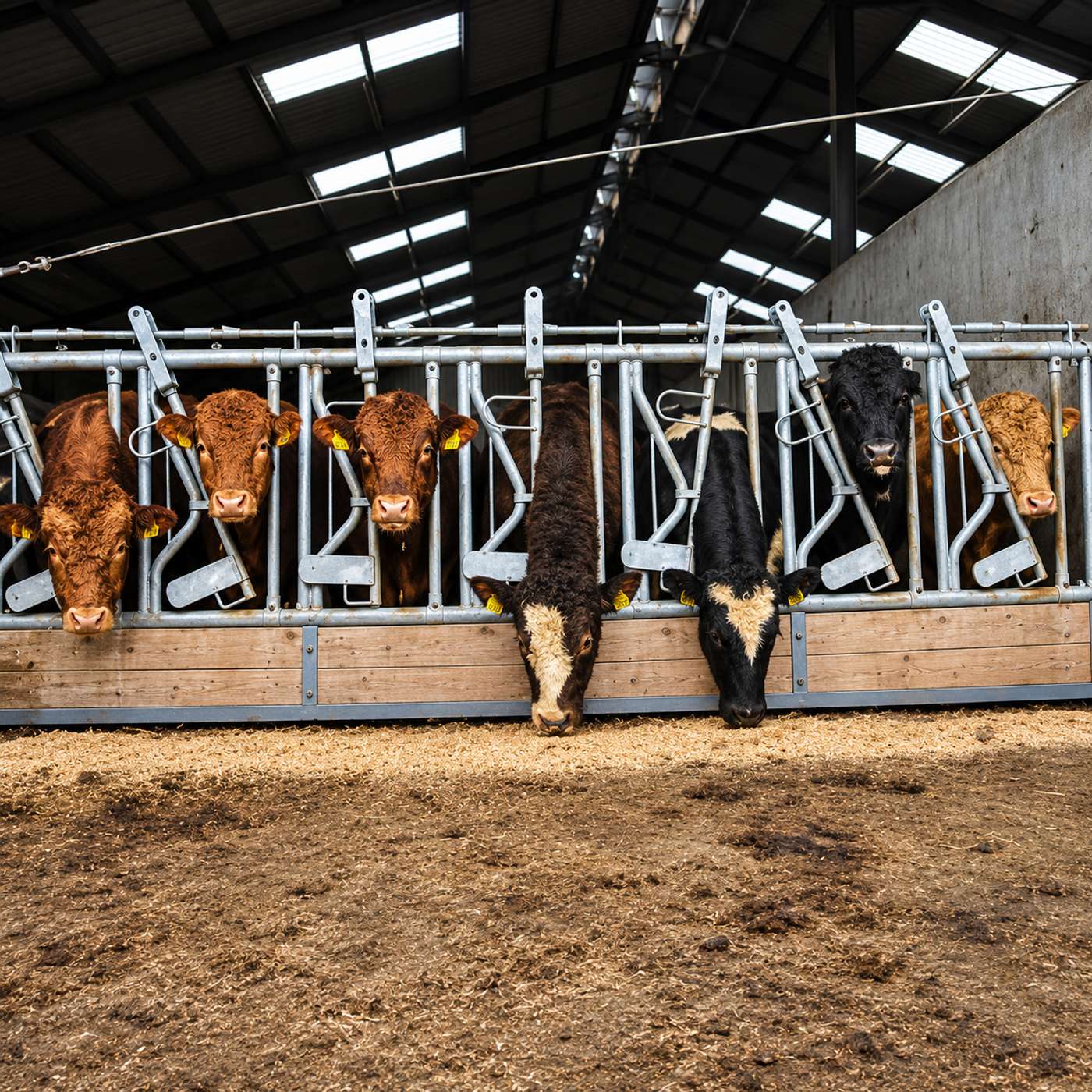
Teagasc Cattle Specialist, Niall Kerins, explores how housing conditions can influence cattle performance over the winter months, as part of the ‘Getting Winter Ready’ series on the Beef Edge. Even when nutrition and animal health are well managed, poor housing can limit liveweight gain, particularly in weanlings. Niall discusses the importance of appropriate stocking rates and space allowances for different types and weights of cattle, and why farmers should regularly reassess space requirements as animals grow throughout the winter. He also examines the importance of adequate feed-barrier space, highlighting how competition at feeding time can affect feed intake and performance, particularly among younger and more timid animals. Niall discusses how farmers can assess ventilation, carry out a simple smoke test and identify potential problems without creating harmful draughts, especially in areas housing young calves and freshly calved cows. The importance of clean, accessible water su
Officials should explain how public consultation changed their final decision.
Share your view, then see how readers voted. No sign-in required. This poll is shared across stories.
Do you agree or disagree?
Common Quandary
A Common Quandary to discuss
Another conversation to explore, separate from this news story.
Your dinner guest arrives with their dog. Do you let both of them in?
A friend appears at your carefully planned dinner with a large dog they never mentioned. They say the dog becomes anxious when left alone and will sit quietly. Another guest is uneasy around animals, and your lease forbids pets.
Whose needs should an unexpected accommodation displace?