Listen through the publisher, then discuss the episode here or arrange an in-person Roundtable. Your city determines where to meet.
Roundtables are designed for groups of four, with a shared subject and room for everyone to speak. Come for discussion, with no dating expectation.
View full lesson: http://ed.ted.com/lessons/what-s-the-value-of-vitamins-ginnie-trinh-nguyen Uploaded 06-10-14 Vitamins are the building blocks that keep our bodies running; they help build muscle and bone, capture energy, heal wounds and more. But if our body doesn’t create vitamins, how do they get into our system? Ginnie Trinh Nguyen describes what vitamins are, how they get into our bodies -- and why they are so crucial. Lesson by Ginnie Trinh Nguyen, animation by The Moving Company Animation Studio.
Episode information is provided by the publisher. Listening takes place on the publisher’s service.
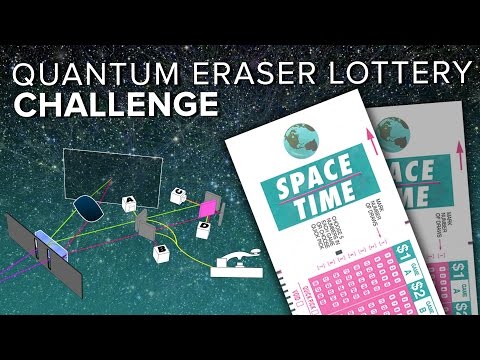
Matt challenges you to use quantum physics to win the lottery. Are you up to the task? Uploaded 17-08-16 Previous Episode on Quantum Eraser https://www.youtube.com/watch?v=8ORLN_KwAgs Get your own Space Time tshirt at http://bit.ly/1QlzoBi Tweet at us! @pbsspacetime Facebook: facebook.com/pbsspacetime Email us! pbsspacetime [at] gmail [dot] com Comment on Reddit: http://www.reddit.com/r/pbsspacetime Support us on Patreon! http://www.patreon.com/pbsspacetime Help translate our videos! http://www.youtube.com/timedtext_cs_panel?tab=2&c=UC7_gcs09iThXybpVgjHZ_7g (http://www.youtube.com/timedtext_cs_panel?c=UC7_gcs09iThXybpVgjHZ_7g&tab=2) The Quantum Eraser experiment seems to show that information can travel backwards in time. On today’s episode of Space Time, we are going to create a time-traveling communication device and use it to cheat on the lottery! Here's Your Challenge question: Why am I going to be sadly disappointed after turning on my invention? I do get a signal – nice work fut
Master the skills that change lives — enroll in your free human behavior course today: https://nci.university/learn Uploaded 14-03-26 During the first ninety seconds of any interaction, a window opens in the human brain that most people never notice. A specific sequence of neurological events unfolds — predictable, exploitable, and almost never taught outside of military and intelligence training. Very few people alive understand the full mechanics of what happens inside that window. Only operators, interrogators, and behavioral scientists with the right access have ever had this mapped out for them. Someone made sure it stayed that way. Every interaction you've ever had — every negotiation, every first impression, every moment you walked into a room — was governed by this sequence. You were either running it or it was being run on you. Most people spend their entire lives on the receiving end without ever knowing it. Language is the delivery system. But language isn't where it starts.
How’s your energy level today? Tony Robbins dives into the power of energy and how it fuels everything from relationships to business. If your energy is low, even your best intentions may fall flat. But with high energy, you can achieve incredible results. So, how can you boost your energy when you're feeling drained? Let's explore the secrets behind limitless energy! Uploaded 01-09-24 Watch more videos like this How To Raise Your Standards To Get ANYTHING YOU WANT: https://youtu.be/-FEFeG1nEmc 2 KEY SKILLS To Master If You Want An EXTRAORDINARY Life: https://youtu.be/CMF7H9OX5NQ NOW I AM THE VOICE! Change Your State and Raise Your Standards: https://youtu.be/ceYtAEpSoGk Tony Robbins Life Advice Playlist: https://www.youtube.com/playlist?list=PLYTXvUDQT5pXYvh-ry7E6_XV23-9mObG1 Follow Tony Robbins: Facebook: https://www.facebook.com/TonyRobbins Instagram: https://instagram.com/tonyrobbins/ TikTok: https://www.tiktok.com/@UC-12kRMQjK1LiQKRrT2zXcQ Twitter: https://twitter.com/tonyrobbins
Human DNA editing is finally here. Check out the new WHOOP here! https://join.whoop.com/cleo There is a microscopic technology that now gives us the power to edit our own genes while we’re alive. To cure certain diseases, possibly prevent others, or boost what our bodies can do… or maybe, one day give our kids abilities no one has ever had before… effectively putting evolution into our hands. This is not some sci-fi future! We’re already using this technology in real medical treatments in plants to grow new crops and in animals to create new species! Just yesterday, news broke that a baby’s life was saved using personalized gene editing that fixed one tiny error in its DNA. This is truly “huge if true.” Deciding how we use this new superpower may be the biggest challenge we have ever faced - and the biggest opportunity to reduce human suffering. This tool is called CRISPR. Dr. Jennifer Doudna won the Nobel Prize for discovering it. So, in this third episode of Huge Conversations, Dr. D
The Fair Work Tribunals edition of Wednesday 25 November 2026 (39 decisions, two with headnotes), with the Fair Work Tribunals edition of Tuesday 24 November 2026 (228 decisions, three with headnotes) alongside it. A Full Bench on why the Black Coal award's redundancy relief clause runs through the dispute procedure and not compulsory arbitration; another on appealing a refusal to reinstate and counting the anticipated period; and three rulings where generative AI did some of the drafting: costs and fictitious authorities, an AI-drafted agreement that made a worker an employee, and an AI-prepared witness statement. Fair Work Desk: relief from retrenchment pay goes through the dispute procedure (opening story). R2S Medical & Emergency Response Pty Ltd v Peter Quirk and Others [2026] FWCFB 291 (https://jade.io/article/1307378) - Gibian VP, Dobson and Slevin DP, 5 November 2026. Signal Doctrine and Practice & Procedure. Black Coal Mining Industry Award 2020 cll 32, 34.4, 34.6; Fair Work A
# Keep Your Promises To Yourself — This Will Change Your Life | Jim Rohn Motivation Every time you promise yourself something and fail to follow through, you make it harder to trust your own decisions. But when you start keeping your word to yourself, something important begins to change. Uploaded 13-10-26 In this powerful motivational video inspired by Jim Rohn, you’ll discover why keeping your personal promises is one of the most important habits for building self-discipline, confidence, and lasting success. You may promise yourself that you will wake up earlier, exercise regularly, save money, stop wasting time, or finally work toward your goals. But what happens when nobody is watching and nobody is reminding you? Your choices in those moments can shape how much you trust yourself. Jim Rohn teaches that personal growth begins with responsibility and consistent action. When you stop making promises you do not intend to keep, set realistic commitments, and follow through even when yo
Dig into the slippery slope fallacy, which assumes that one step will lead to a series of events that lead to an extreme— often bad— scenario. Uploaded 19-08-21 -- It’s 1954. Vietnamese nationalists are on the verge of securing an independent Vietnam under communist leader Ho Chi Minh. U.S. President Eisenhower claims that by virtue of the "falling domino principle," communist control of Vietnam would lead to the global spread of authoritarian communist regimes. Can you spot the problem with this argument? Elizabeth Cox explores the slippery slope fallacy. Lesson by Elizabeth Cox, directed by TOGETHER. Support Our Non-Profit Mission ---------------------------------------------- Support us on Patreon: http://bit.ly/TEDEdPatreon Check out our merch: http://bit.ly/TEDEDShop ---------------------------------------------- Connect With Us ---------------------------------------------- Sign up for our newsletter: http://bit.ly/TEDEdNewsletter Find us on Twitter: http://bit.ly/TEDEdTwitter Pe
View full lesson: http://ed.ted.com/lessons/how-do-we-measure-distances-in-space-yuan-sen-ting Uploaded 09-10-14 When we look at the sky, we have a flat, two-dimensional view. So how do astronomers figure the distances of stars and galaxies from Earth? Yuan-Sen Ting shows us how trigonometric parallaxes, standard candles and more help us determine the distance of objects several billion light years away from Earth. Lesson by Yuan-Sen Ting, animation by TED-Ed.
As machines take on more jobs, many find themselves out of work or with raises indefinitely postponed. Is this the end of growth? No, says Erik Brynjolfsson -- it's simply the growing pains of a radically reorganized economy. A riveting case for why big innovations are ahead of us ... if we think of computers as our teammates. Be sure to watch the opposing viewpoint from Robert Gordon. Uploaded 30-08-13 Talk by Erik Brynjolfsson.
Communities should invest in adapting to unavoidable hazards as well as preventing future damage.
Share your view, then see how readers voted. No sign-in required. This poll is shared across stories.
Do you agree or disagree?
Common Quandary
A Common Quandary to discuss
Another conversation to explore, separate from this news story.
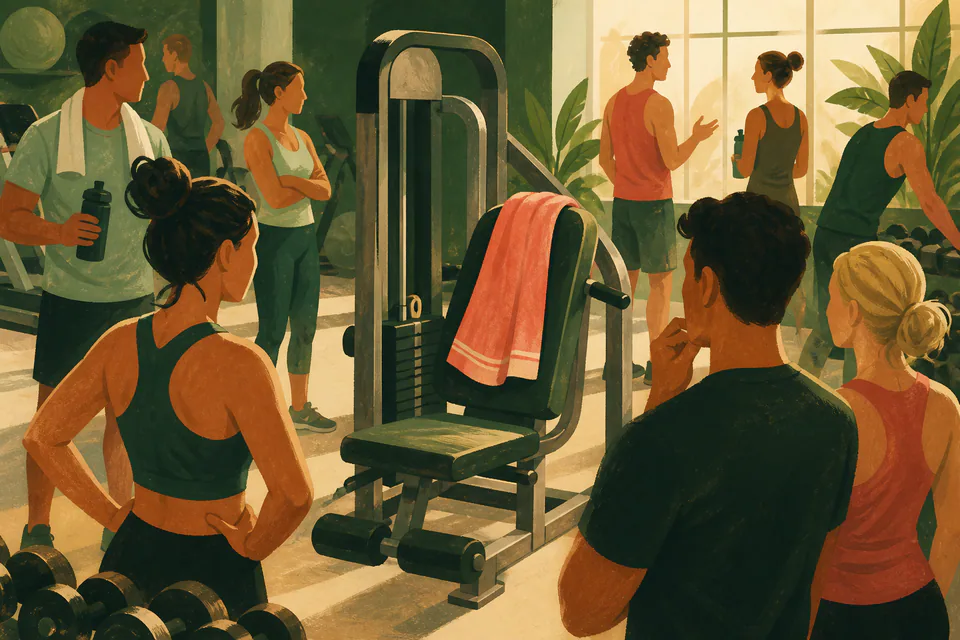
Someone reserves the best gym machine with a towel. When may you move it?
At a crowded gym, a towel has occupied the most popular machine for fifteen minutes while its owner chats across the room. Gym rules prohibit reserving equipment, but everyone occasionally steps away between sets.
How long may convenience masquerade as continued use?