English-language podcasts

TED-Ed

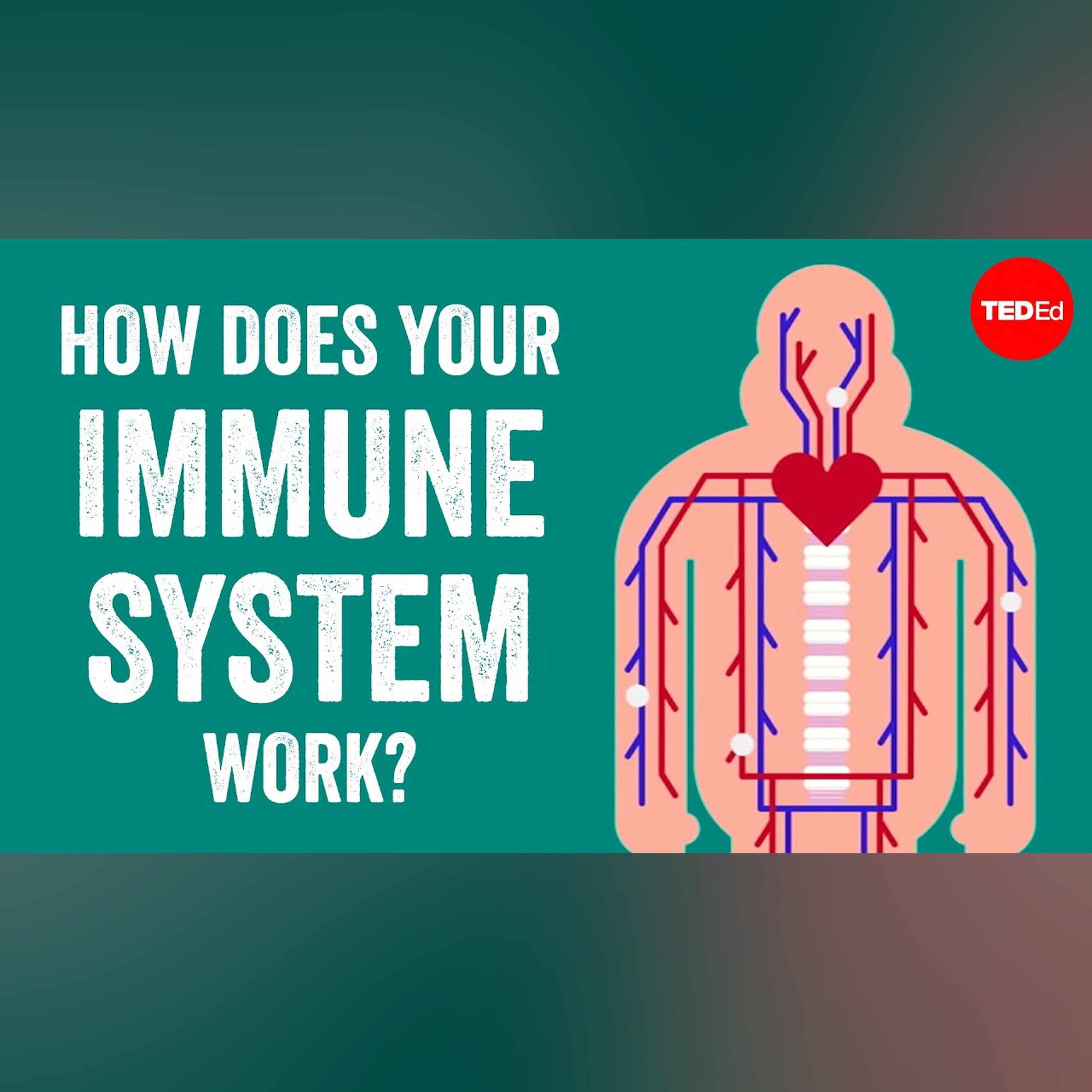
How does your immune system work? - Emma Bryce
8 min

Listen through the publisher, then discuss the episode here or arrange an in-person Roundtable. Your city determines where to meet.

Roundtables are designed for groups of four, with a shared subject and room for everyone to speak. Come for discussion, with no dating expectation.

Explore how your immune system’s vast network of cells, tissues, and organs coordinate your body’s defenses against bacteria, viruses and toxins. Uploaded 08-01-18 -- The immune system is a vast network of cells, tissues, and organs that coordinate your body’s defenses against any threats to your health. Without it, you’d be exposed to billions of bacteria, viruses, and toxins that could make something as minor as a paper cut or a seasonal cold fatal. So how does it work? Emma Bryce takes you inside the body to find out. Lesson by Emma Bryce, animation by Cabong Studios. Sign up for our newsletter: http://bit.ly/TEDEdNewsletter Support us on Patreon: http://bit.ly/TEDEdPatreon Find us on Twitter: http://bit.ly/TEDEdTwitter Peep us on Instagram: http://bit.ly/TEDEdInstagram View full lesson: https://ed.ted.com/lessons/how-does-the-immune-system-work-emma-bryce Thank you so much to our patrons for your support! Without you this video would not be possible! Antero Semi, Yanuar Ashari, Mrinalini, Anthony Kudolo, Scott Gass, Querida Owens, David Lucsanyi, Hazel Lam, Jhiya Brooks, Manav parmar, Dwight Tevuk, Stephen A. Wilson, Siamak H, Dominik Kugelmann, Michel Reyes, Katie Winchester, Mary Sawyer, Ryan Mehendale, David Rosario, Samuel Doerle, Be Owusu, Susan Herder, Savannah Scheelings, Prasanth Mathialagan, Yanira Santamaria, Chad Harper, Dawn Jordan, Chris Mathew, Constantin Salagor, Activated Classroom Teaching, Kevin Wong, Umar Farooq, Goh Xiang Ting Diana, Dmitry Neverov, Tushar Sharma, Cristóbal Medina Moenne.

Episode information is provided by the publisher. Listening takes place on the publisher’s service.

Listen at the source ↗

Featured places to meet in Palo Alto, CA

Explore these places and arrange a conversation through ThinkMatch.

City guide for Palo Alto, CA

More from TED-Ed

TED-Ed

We need a "moral operating system" - Damon Horowitz

22 min

Damon Horowitz reviews the enormous new powers that technology gives us: to know more -- and more about each other -- than ever before. Drawing the audience into a philosophical discussion, Horowitz invites us to pay new attention to the basic philosophy -- the ethical principles -- behind the burst of invention remaking our world. Where's the moral operating system that allows us to make sense of it? (Filmed at TEDxSiliconValley.) Uploaded 08-08-13 Talk by Damon Horowitz.

Discuss this episode

TED-Ed

How to conquer a dragon with math - Garth Sundem

6 min

View full lesson: http://ed.ted.com/lessons/how-to-defeat-a-dragon-with-math-garth-sundem Having trouble remembering the order of operations? Let's raise the stakes a little bit. What if the future of your (theoretical) kingdom depended on it? Garth Sundem creates a world in which PEMDAS is the hero but only heroic when in the proper order. Lesson by Garth Sundem, animation by Mark Phillips.

Discuss this episode

TED-Ed

The secret lives of baby fish - Amy McDermott

6 min

View full lesson: http://ed.ted.com/lessons/the-secret-lives-of-baby-fish-amy-mcdermott Uploaded 11-08-14 Coral reef fish, like the yellow tang surgeonfish, begin life in a fascinating and weird way – as tiny floating larvae! These babies are capable of drifting thousands of miles on ocean currents, far from the reefs where they were born. Amy McDermott describes how these tiny trekkers travel across vast oceans, searching for the far-flung reefs they will one day call home. Lesson by Amy McDermott, animation by Reflective Films.

Discuss this episode

Community Poll

People affected by infrastructure routes should have a meaningful role in choosing them.

Share your view, then see how readers voted. No sign-in required. This poll is shared across stories.

Do you agree or disagree?

Choose one answer

Common Quandary

A Common Quandary to discuss

Another conversation to explore, separate from this news story.

You are vegetarian, but the leftover steak is headed for the trash. Do you eat it?

A vegetarian avoids buying meat because of animal welfare concerns. At work events, untouched meat is routinely thrown away, and eating it would neither increase demand nor cause another animal to be harmed.

Should a moral practice be judged by its consequences or its consistency?

Explore this quandary