English-language podcasts

TED-Ed

How tall can a tree grow? - Valentin Hammoudi
7 min

Listen through the publisher, then discuss the episode here or arrange an in-person Roundtable. Your city determines where to meet.

Roundtables are designed for groups of four, with a shared subject and room for everyone to speak. Come for discussion, with no dating expectation.

What makes a tree grow tall? And do trees ever stop growing? Explore how photosynthesis and gravity can affect and limit the height of trees. Uploaded 14-03-19 -- Reaching heights of over 100 meters, Californian sequoias tower over Earth’s other 60,000 tree species. But even these behemoths seem to have their limits: no sequoia on record has been able to grow taller than 130 meters. So what exactly is stopping these trees from growing taller, forever? Valentin Hammoudi investigates why trees have limited heights. Lesson by Valentin Hammoudi, directed by Doug Alberts. Sign up for our newsletter: http://bit.ly/TEDEdNewsletter Support us on Patreon: http://bit.ly/TEDEdPatreon Find us on Twitter: http://bit.ly/TEDEdTwitter Peep us on Instagram: http://bit.ly/TEDEdInstagram View full lesson: https://ed.ted.com/lessons/how-tall-can-a-tree-grow-valentin-hammoudi Thank you so much to our patrons for your support! Without you this video would not be possible! Guy Hardy, Brandy Sarver, Jose Arcadio Valdes Franco, Akinola Emmanuel, igor romanenko, Dian Atamyanov, Abhishek Bansal, Austin Randall, Ryan B Harvey, Jennifer Kurkoski, phkphk123321, Arlene Weston, Mehmet Yusuf Ertekin, Ten Cha, Les Howard, Kevin O'Leary, Francisco Leos, Robert Patrick, Marcus Appelbaum, Alan Wilder, Mohamed Elsayed, Aleksandr Lyozin, Angel Pantoja, Eimann P. Evarola, Carlos H. Costa, Tariq Keblaoui, Bela Namyslik, Nick Johnson, Won Jang, Sandra Fuller Bocko, Johnnie Graham, Harshita Jagdish Sahijwani, Amber Alexander, Yelena Baykova, John C. Vesey, Karmi Nguyen, Chung Wah Gnapp, Jane White, BRENDAN NEALE, Lawrence Teh Swee Kiang, Alex Pierce, Nick Cozby, Jeffrey Segrest, Anthony Arcis, Ugur Doga Sezgin, Kathryn Vacha, Allyson Martin, Srinivasa C Pasumarthi, 张晓雨 and Nishant Suneja.

Episode information is provided by the publisher. Listening takes place on the publisher’s service.

Listen at the source ↗

Featured places to meet in Palo Alto, CA

Explore these places and arrange a conversation through ThinkMatch.

City guide for Palo Alto, CA

More from TED-Ed

TED-Ed

We need a "moral operating system" - Damon Horowitz

22 min

Damon Horowitz reviews the enormous new powers that technology gives us: to know more -- and more about each other -- than ever before. Drawing the audience into a philosophical discussion, Horowitz invites us to pay new attention to the basic philosophy -- the ethical principles -- behind the burst of invention remaking our world. Where's the moral operating system that allows us to make sense of it? (Filmed at TEDxSiliconValley.) Uploaded 08-08-13 Talk by Damon Horowitz.

Discuss this episode

TED-Ed

How to conquer a dragon with math - Garth Sundem

6 min

View full lesson: http://ed.ted.com/lessons/how-to-defeat-a-dragon-with-math-garth-sundem Having trouble remembering the order of operations? Let's raise the stakes a little bit. What if the future of your (theoretical) kingdom depended on it? Garth Sundem creates a world in which PEMDAS is the hero but only heroic when in the proper order. Lesson by Garth Sundem, animation by Mark Phillips.

Discuss this episode

TED-Ed

The secret lives of baby fish - Amy McDermott

6 min

View full lesson: http://ed.ted.com/lessons/the-secret-lives-of-baby-fish-amy-mcdermott Uploaded 11-08-14 Coral reef fish, like the yellow tang surgeonfish, begin life in a fascinating and weird way – as tiny floating larvae! These babies are capable of drifting thousands of miles on ocean currents, far from the reefs where they were born. Amy McDermott describes how these tiny trekkers travel across vast oceans, searching for the far-flung reefs they will one day call home. Lesson by Amy McDermott, animation by Reflective Films.

Discuss this episode

Community Poll

Schools should adapt standards to individual needs rather than apply identical expectations to everyone.

Share your view, then see how readers voted. No sign-in required. This poll is shared across stories.

Do you agree or disagree?

Choose one answer

Common Quandary

A Common Quandary to discuss

Another conversation to explore, separate from this news story.

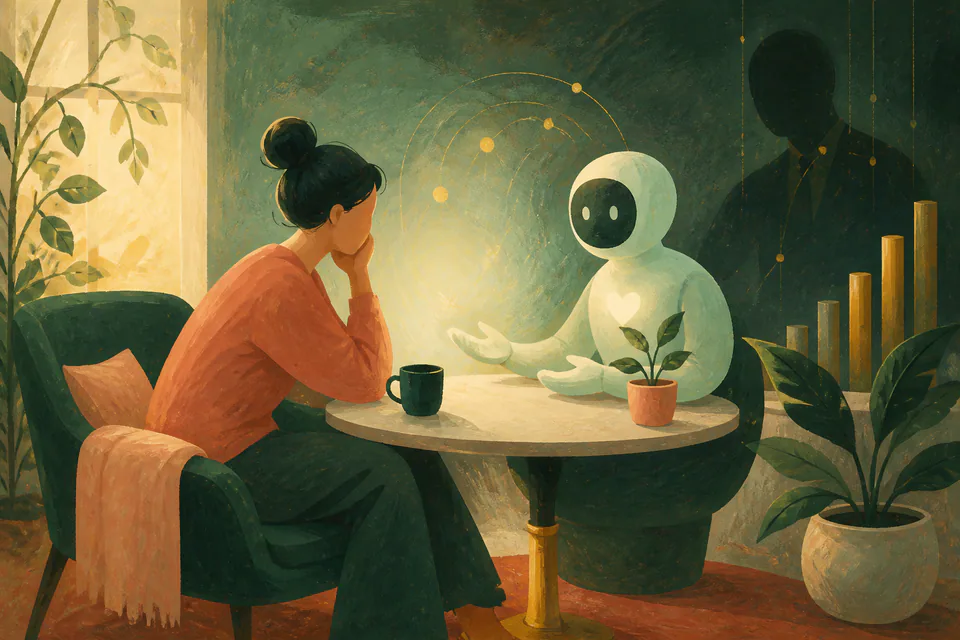
Your best friend is an AI that profits when you stay lonely. Is the friendship real?

A lonely adult considers an AI companion their closest confidant. The service is always patient and supportive, but the company profits when users spend more time engaged with it.

Does a comforting system have a duty to make itself less necessary?

Explore this quandary