Listen through the publisher, then discuss the episode here or arrange an in-person Roundtable. Your city determines where to meet.
Roundtables are designed for groups of four, with a shared subject and room for everyone to speak. Come for discussion, with no dating expectation.
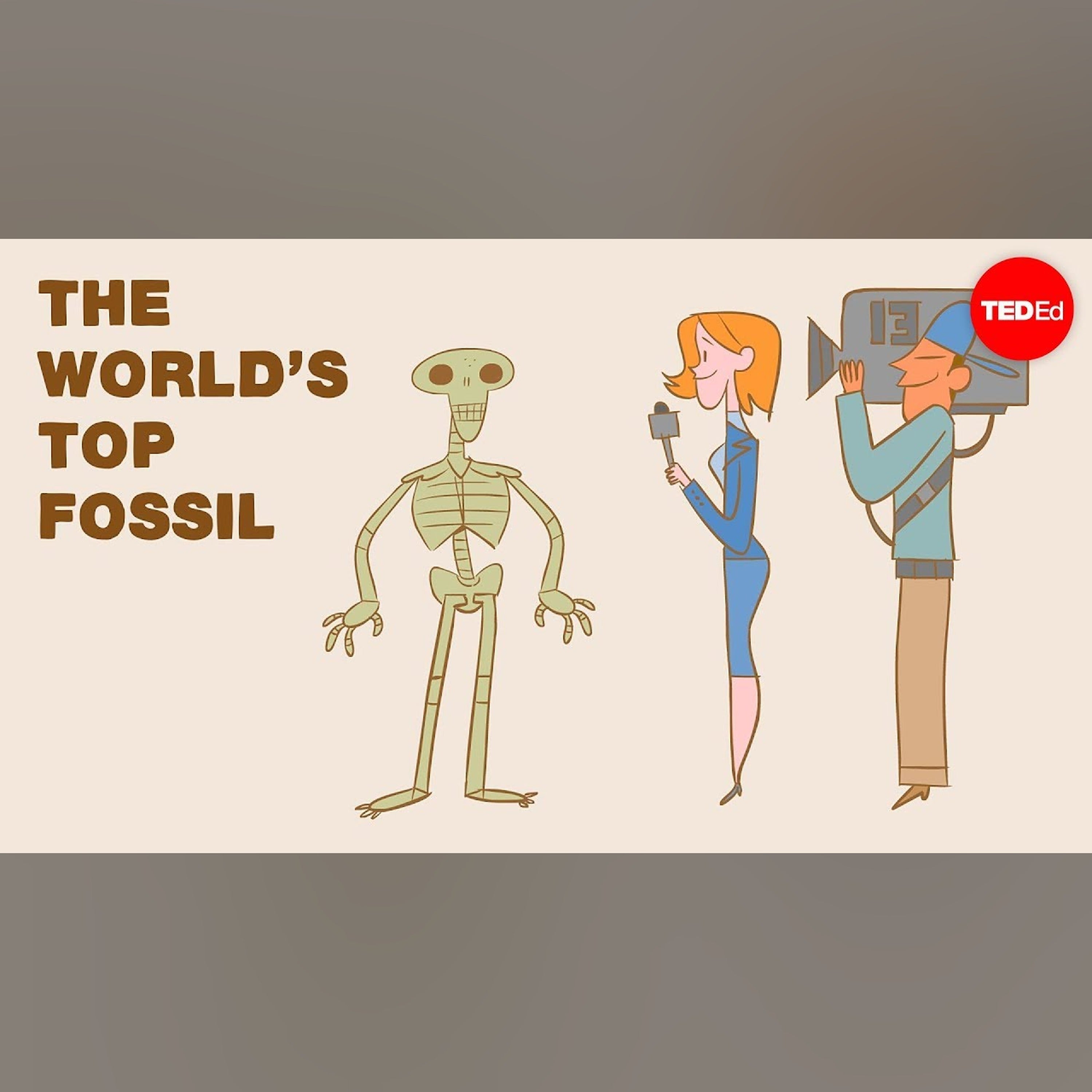
View full lesson: http://ed.ted.com/lessons/how-to-fossilize-yourself-phoebe-a-cohen Uploaded 06-01-14 You can aspire to great things in life, but how about in death? Could you be one of the world's greatest fossils many years from now? To ensure being found by a future paleontologist, you'll need to die in a highly specific way (think within tree sap or on the bottom of the ocean floor), and nature takes care of the rest. Phoebe A. Cohen details the steps your body must take to find future fame as a fossil. Lesson by Phoebe A. Cohen, animation by Anton Bogaty.
Episode information is provided by the publisher. Listening takes place on the publisher’s service.
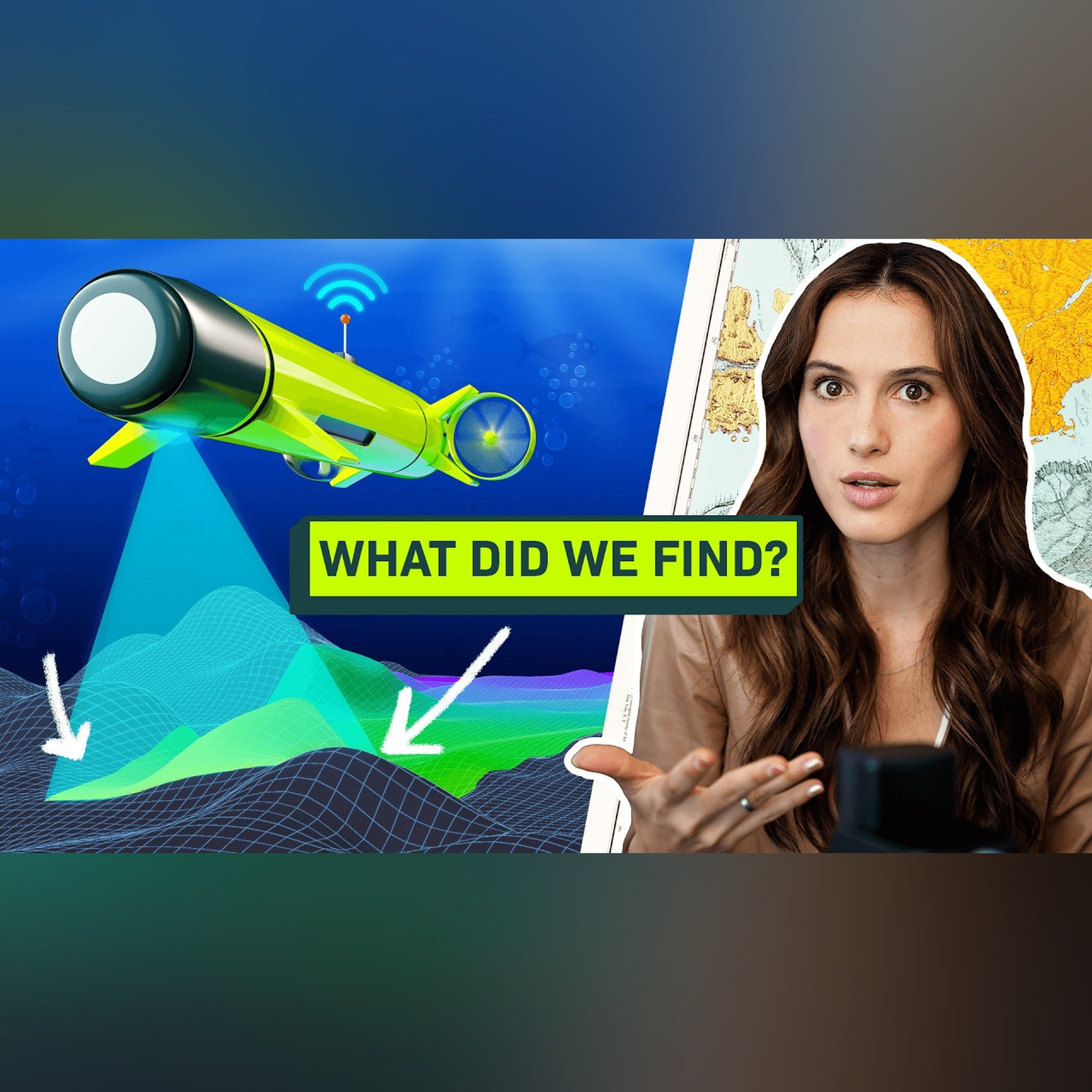
Why deep sea maps are SO BAD (and how to fix it)... Our maps of the ocean are surprisingly bad! On Google Maps it looks like we know so much… but we know less about the ocean floor than we do the surface of Mars. And that’s a big problem, because we are using the ocean all the time: We’re laying internet cables across it, we fight wars in it, we search it during a crisis - like the imploded OceanGate Titan submersible or the missing Malaysia Airlines Flight 370. 71% of the surface of the Earth is water! And yet we have a surprisingly limited view of what’s below it. But that’s also understandable. Because cartographically speaking, water sucks. For Mars or Earth’s surface, we can take pictures. But light doesn’t get to the ocean floor, so we need other ways to see it. The good news is, we’re developing that tech right now, and an international group called Seabed 2030 is working to piece together a better map. There is a terrifying, incredible, alien world on our own planet, and we’re
There are two types of people – those that see what they want, and those that see what stands in the way of what they want. Which type of person are you? Uploaded 24-10-19 This is just one of the questions that leadership expert Simon Sinek challenges you to get real about. Because when it comes to making real change in your life – you have to start with yourself. Why do you get up in the morning? How do you embody the vision you have for your life? And what value are you bringing to the table? In this episode of the Tony Robbins Podcast, Editorial Director Ana Yoerg sits down with Simon Sinek to breakdown his 10 rules for Success. Simon Sinek is the author of 4 best-selling books: Start with Why: How Great Leaders Inspire Everyone to Take Action; Leaders Eat Last: Why Some Teams Pull Together and Others Don’t; Together is Better: A Little Book of Inspiration; and Find Your Why: A Practical Guide to Discovering Purpose for You and Your Team. His Ted Talk on How Great Leaders Inspire Ac
Let them underestimate you. Let them doubt your potential. Let them believe you'll never achieve anything extraordinary. Their opinions do not determine your future. You don't need everyone's approval to chase your dreams. You don't need to explain your ambitions to people who refuse to see your vision. What you need is the discipline to keep working, the courage to believe in yourself, and the determination to succeed even when nobody supports you. This powerful motivational speech is a reminder to stop seeking validation, overcome rejection, develop mental toughness, and turn every setback into motivation to become stronger. People will doubt you. They will question your decisions, underestimate your abilities, and sometimes make you feel like your dreams are impossible. But their disbelief is not proof of your limitations. Instead of wasting your energy trying to prove yourself through words, focus on building a future that reflects your hard work and dedication. Work in silence. St
Viewers like you help make PBS (Thank you ) . Support your local PBS Member Station here: https://to.pbs.org/DonateSPACE Uploaded 25-10-17 For years, astronomers have been unable to find up to half of the baryonic matter in the universe. We may just have solved this problem. You can further support us on Patreon at https://www.patreon.com/pbsspacetime Get your own Space Time tshirt at http://bit.ly/1QlzoBi Tweet at us! @pbsspacetime Facebook: facebook.com/pbsspacetime Email us! pbsspacetime [at] gmail [dot] com Comment on Reddit: http://www.reddit.com/r/pbsspacetime Help translate our videos! https://www.youtube.com/timedtext_cs_panel?tab=2&c=UC7_gcs09iThXybpVgjHZ_7g (https://www.youtube.com/timedtext_cs_panel?c=UC7_gcs09iThXybpVgjHZ_7g&tab=2) Previous Episode: The Nature of Nothing | Space Time https://www.youtube.com/watch?v=X5rAGfjPSWE&t=55s (https://www.youtube.com/watch?t=55s&v=X5rAGfjPSWE) Dark Matter! Dark Energy Playlist We’ve known for some time that around 95% of the energy
A kiss can be wonderful. It can create an instant connection, spark romance, or make you feel closer to someone. But a kiss can also have the opposite effect — and sometimes ruin everything. So what makes kissing so powerful, and why can one kiss make such a difference? There's some fascinating science behind it. https://www.scientificamerican.com/article/why-we-kiss/ We spend an enormous amount of time worrying about what's going to change. What's next? What's coming? How do we prepare? But what if we're paying attention to the wrong things? Some of the most important forces shaping our lives never change, and understanding them may be far more valuable than trying to predict the future — something humans are notoriously bad at. Morgan Housel, partner at The Collaborative Fund and author of Same as Ever: A Guide to What Never Changes (https://amzn.to/3SwWn6u) (https://amzn.to/3SwWn6u)), joins me to explain why the things that stay the same may be the most important things to understan
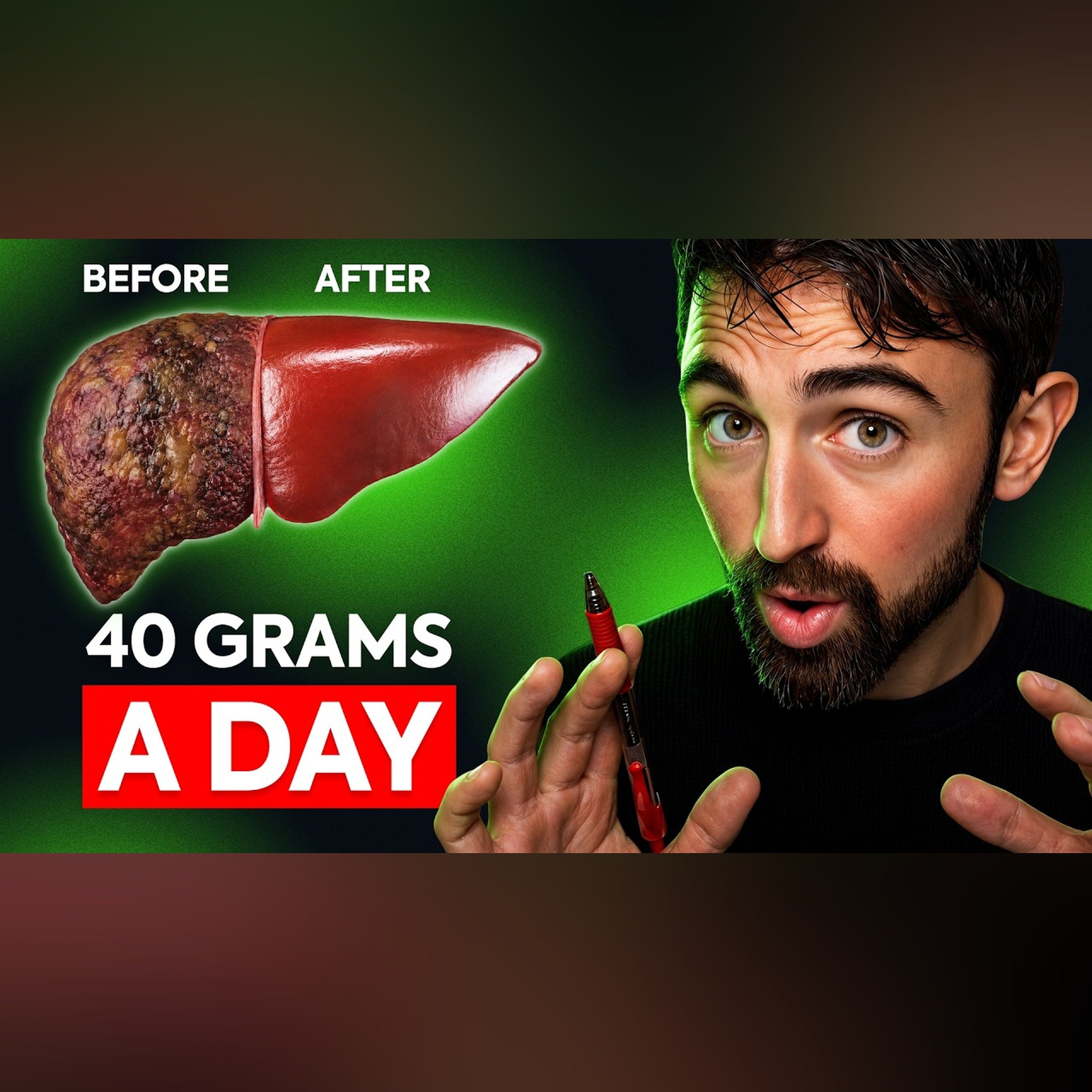
For all references, extra nuances, and early access to breakdowns like this, see the associated newsletter: https://staycuriousmetabolism.substack.com/p/shrink-visceral-fat-by-feeding-your?r=40ekz2 Winnow Microplastic Binding Probiotic: https://www.winnowlabs.com/STAYCURIOUS Microplastics and Heart Health, Letter https://staycuriousmetabolism.substack.com/p/microplastics-in-my-heart-its-worse?r=40ekz2 Microplastics and Brain Health, Letter: https://staycuriousmetabolism.substack.com/p/this-graph-changed-how-i-think-about?r=40ekz2 Description: In this video we examine the scientific evidence behind resistant starch, including randomized controlled trials showing reductions in body weight, total fat mass, and visceral fat measured by MRI—even when calorie intake remains controlled. We also explore the biological mechanism, including how changes in the gut microbiome may drive these effects. But there’s an important twist: not everyone responds the same way. We’ll look at new research exp
Damon Horowitz reviews the enormous new powers that technology gives us: to know more -- and more about each other -- than ever before. Drawing the audience into a philosophical discussion, Horowitz invites us to pay new attention to the basic philosophy -- the ethical principles -- behind the burst of invention remaking our world. Where's the moral operating system that allows us to make sense of it? (Filmed at TEDxSiliconValley.) Uploaded 08-08-13 Talk by Damon Horowitz.
View full lesson: http://ed.ted.com/lessons/how-to-defeat-a-dragon-with-math-garth-sundem Having trouble remembering the order of operations? Let's raise the stakes a little bit. What if the future of your (theoretical) kingdom depended on it? Garth Sundem creates a world in which PEMDAS is the hero but only heroic when in the proper order. Lesson by Garth Sundem, animation by Mark Phillips.
View full lesson: http://ed.ted.com/lessons/the-secret-lives-of-baby-fish-amy-mcdermott Uploaded 11-08-14 Coral reef fish, like the yellow tang surgeonfish, begin life in a fascinating and weird way – as tiny floating larvae! These babies are capable of drifting thousands of miles on ocean currents, far from the reefs where they were born. Amy McDermott describes how these tiny trekkers travel across vast oceans, searching for the far-flung reefs they will one day call home. Lesson by Amy McDermott, animation by Reflective Films.
A workable temporary compromise is often better than delaying all action.
Share your view, then see how readers voted. No sign-in required. This poll is shared across stories.
Do you agree or disagree?
Common Quandary
A Common Quandary to discuss
Another conversation to explore, separate from this news story.
The night before the wedding, your friend admits serious doubts. Do you tell their partner?
On the night before a wedding, your closest friend says they are unsure they should marry but insists it is ordinary panic. They make you promise secrecy and plan to proceed. Their partner asks you directly whether everything is okay.
When does loyalty require breaking a confidence before an irreversible choice?