How to LET GO and trust your path. What most people miss.
7 min
Listen through the publisher, then discuss the episode here or arrange an in-person Roundtable. Your city determines where to meet.
Roundtables are designed for groups of four, with a shared subject and room for everyone to speak. Come for discussion, with no dating expectation.
I would give credit to the process, not to the creator. In this Afternoon Vibe from The Positive Mindset Podcast, Henry Lawrence gets honest about something he used to do: give all the credit to the process and none to the Creator. The I am statements, changing your identity, the techniques all work, and that's exactly how the creation quietly becomes the idol. Henry talks about why no amount of logic can get you there, why there's a movement happening right now and a choice in front of you, and what real sacrifice is: not leaving behind the things you didn't want anyway, but letting go of the things you actually love. He closes on the calling, the warning of "depart from me," and the one place real understanding comes from: pursuing the Lord first. In this episode: • "When you turn the creation into the idol and you use the creation, guess what seat that puts you in? God." • "There is no amount of logic that would make this make sense." • "Leaving the stuff that you didn't want anyway is not a sacrifice." • "It's leaving the stuff that you actually love and want that is so hard." • "It only happens when you pursue the Lord first." Follow @realhenryg on Instagram and TikTok. Pulled from the full episode "How to Turn to God When It Hurts: Going From Reacting in Pain to Choosing God First" (Nov 19): https://podcasters.spotify.com/pod/show/positive-mindset-podcast/episodes/How-to-Turn-to-God-When-It-Hurts-Going-From-Reacting-in-Pain-to-Choosing-God-First-e3sljse
Episode information is provided by the publisher. Listening takes place on the publisher’s service.
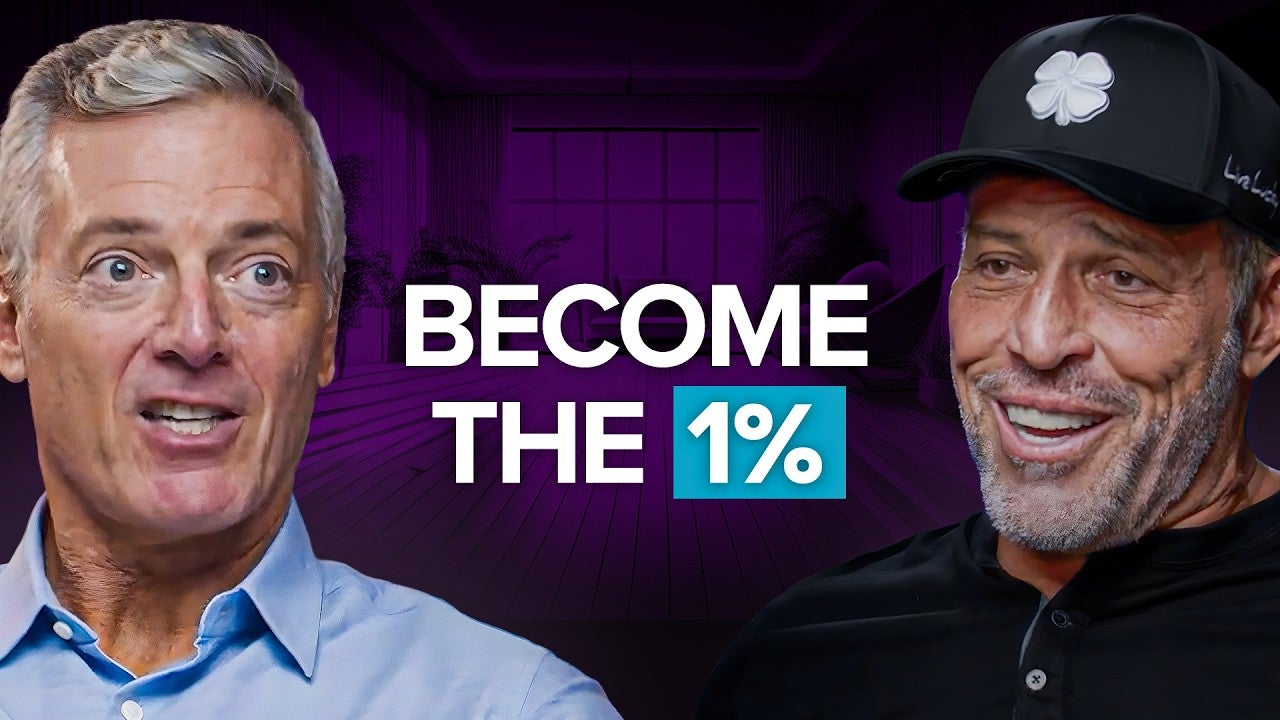
What if you could invest like the top 1%—without being in it? In this video, Tony Robbins breaks down key insights from the world’s best investors and showing you how smart diversification and private equity can change your financial future. This is how real wealth is built. Uploaded 08-06-25 Watch more videos like this Tony Robbins x Robert Smith: The Power of the Playbook - Making Great Companies Extraordinary: https://youtu.be/7KyXhghjtDQ How Tony Robbins $125M Loss Became His Greatest Lesson...: https://youtu.be/WwrR26BjrZg Expert financial advice from Peter Mallouk, coauthor of The Path: https://youtu.be/Fb4z-4j6elk Join "The Edge" - Tony Robbin's FREE weekly newsletter: https://tonyr.co/3YJ0m2L Try Tony AI for just $1: https://tonyr.co/4cr742A Follow Tony Robbins: Facebook: https://www.facebook.com/TonyRobbins Instagram: https://instagram.com/tonyrobbins/ TikTok: https://www.tiktok.com/@tonyrobbins Twitter: https://twitter.com/tonyrobbins LinkedIn: https://www.linkedin.com/in/off
Can you rewire your brain to turn down chronic pain? Your pain is real, but your brain decides how loud that pain feels and new science shows that self-hypnosis may offer a new route to pain relief. One that goes beyond relying on pills alone. In today’s episode, Stanford psychiatrist Dr. David Spiegel, who has spent decades researching pain, explains how the brain controls pain. You’ll learn why chronic pain can be worsened by fear, anxiety and poor sleep. David explains how pain signals travel from your body to your brain, and why the brain can turn them up or down. He also shares how tools like hypnosis can help with pain management. By the end of the episode, you’ll have a simple 7-step self-hypnosis exercise for drug-free pain relief you can try at home. Build healthy habits. Download the ZOE app today Join ZOE (https://zoe.com/buymembership) Follow ZOE onInstagram (https://www.instagram.com/zoe/). Timecodes 00:00 Intro 01:49 Is your pain really in your brain? 09:07 Can't sleep? H
You used to know what you wanted. Maybe not exactly, but you had a sense — a direction you were heading, a rough shape of where your life was going. And then at some point you lost it. Not dramatically. Quietly. The direction faded out, the shape went unclear, and you kept doing the work in front of you without being able to say what you were working toward anymore. Uploaded 19-06-26 The compass that used to point at something started spinning, and you did not know how to make it stop. Here is the truth: lost direction is one of the most common conditions among adults in their 30s, 40s, and beyond, and almost nobody talks about it — because you are supposed to have it figured out by now, and admitting you do not feels like admitting you failed at something basic. But the direction you lost is not gone. It is buried under thirty years of other people's voices, cultural shoulds, family expectations, professional pressures. Underneath all of it you still know what you actually want. You j
In this episode, you’ll learn the secret to a better, happier life: connecting with the people around you. When I met my husband Chris, I was at a bar ordering a bourbon on the rocks to go. In a plastic cup (very classy, I know). Then I heard a voice behind me say, “That sounds great. Make it two.” I turned around. And here we are, celebrating 30 years of marriage. That one moment led to three children and decades of memories. All because a stranger decided to say something. I’ve been thinking about this ever since I sat down with Dr. Nicholas Epley for today’s episode of The Mel Robbins Podcast. He’s a psychologist and behavioral scientist at the University of Chicago who has spent years studying how we connect with other people, why we so often get it wrong, and what we miss out on when we don't say something in these moments: friends, lovers, colleagues, and magic. His research has found that happiness isn't just about the occasional big moment in life. It's about all the little goo
Sharing a meal at the same table, a practice known as commensality, helps families and communities build trust and connect across generations. While many people believe the 1621 harvest feast shared by the Pilgrims and the Wampanoag people started an unbroken annual tradition, American Thanksgiving history actually followed a much more uneven path. Indigenous peoples held seasonal harvest and gratitude ceremonies for generations before 1621, and the Plymouth meal was largely forgotten for about 200 years. George Washington issued the first national Thanksgiving proclamation for Thursday, November 26, 1789, and magazine editor Sarah Josepha Hale later persuaded Abraham Lincoln to set a regular November date in 1863. The holiday did not become federal law until 1941, after public confusion over a date change. When gathering for a holiday dinner, Harvard research shows that asking open-ended follow-up questions makes conversations more engaging and boosts likability. Keeping a few neutral
Get the 200+ Page Optimal Living Daily Workbook (PDF) - Free. Want to turn today's episode into an actionable plan? Episode 4238: Karl Staib explains microgratitude, the practice of setting up a grateful mindset before an interaction and looking back on it with appreciation afterward. He shares five small ways to feel it each day, from appreciating something about a person before greeting them to smiling at everyday things, and how a gratitude journal helps the habit stick. Read along with the original article(s) here: Quotes to ponder: "The idea of microgratitude is to set yourself up for gratitude before you even enter a situation." "If you can plant little seeds of gratitude and positivity throughout your day, you'll have a better time and get so much more out of each experience." "It's all about looking at small things in life and seeing all the amazing opportunities they offer if you are willing to appreciate them." We spend so much of our lives caught up in our thoughts... that w
What if the way you've been practicing gratitude is starting in the wrong place? On Thanksgiving Day, in this unscripted episode of The Positive Mindset Podcast, Henry Lawrence talks to anyone walking into a table full of blessings, or an empty chair, and shows why the highest place to start giving thanks is with praise for God Himself. Henry explains why most of us were taught gratitude backwards: we start with our circumstances and ask them to give us something good, so our peace only ever matches what's going on outside us. He flips it. The true foundation is above us, a Father in heaven who loves you and gave you the chance to spend eternity with Him, and everything else in life is downstream from that. From there he talks about why starting with God isn't skipping your problems, how your perception becomes your reception, why you can sit in front of a full table and still be poor in spirit, and why praise isn't denial, it's order. He leads an opening breath, an invitation to welco
You have a choice to react to a situation or glorify God in it. In this mindset shift from The Positive Mindset Podcast, Henry Lawrence talks about the choice every one of us faces when something hurts: react to the situation, or glorify God in it. It's easy to say thank you God when the promotion comes or something works out. Henry shares why the moment the hurt and the abandonment show up is exactly when you go to Christ even more, and why we keep trying to get ourselves right first when God is supposed to come in and change us. He paints a picture of a little hole-in-the-wall restaurant in Italy that you could never fully describe to someone back home, and walks through what he's learning to do when frustration hits: pause, put on worship, find the verse, read the whole chapter, and let your perception change. Near the start Henry leads a centering deep breath, and it closes with a final deep breath, the rising tide and a prayer. In this episode: • "When you bring God into the situa
What do you do when you feel backed into a corner, the plan you were sure was meant for you falls through, and you honestly have no idea which way to turn next? In this raw, unscripted episode of The Positive Mindset Podcast, Henry Lawrence shares from right inside that moment—speaking to anyone sitting with the question, "What do I do?" Henry opens up about walking in faith after a door he felt certain had lined up closed unexpectedly. Instead of pretending he already has the neat answer, he walks through the shift in real time: checking the ego that resists asking for help, recognizing when we're asking God to help us control an outcome versus surrendering to His will, and discovering who we really are in our core when there is nothing external left to support it. He invites you to stop carrying the weight alone, hold your head high because of who your Father is, and bring the struggle to God first—not only in crisis, and not as a last resort. He leads an opening breath and prayer, a
Corrections should be given prominence comparable to the original reporting error.
Share your view, then see how readers voted. No sign-in required. This poll is shared across stories.
Do you agree or disagree?
Common Quandary
A Common Quandary to discuss
Another conversation to explore, separate from this news story.
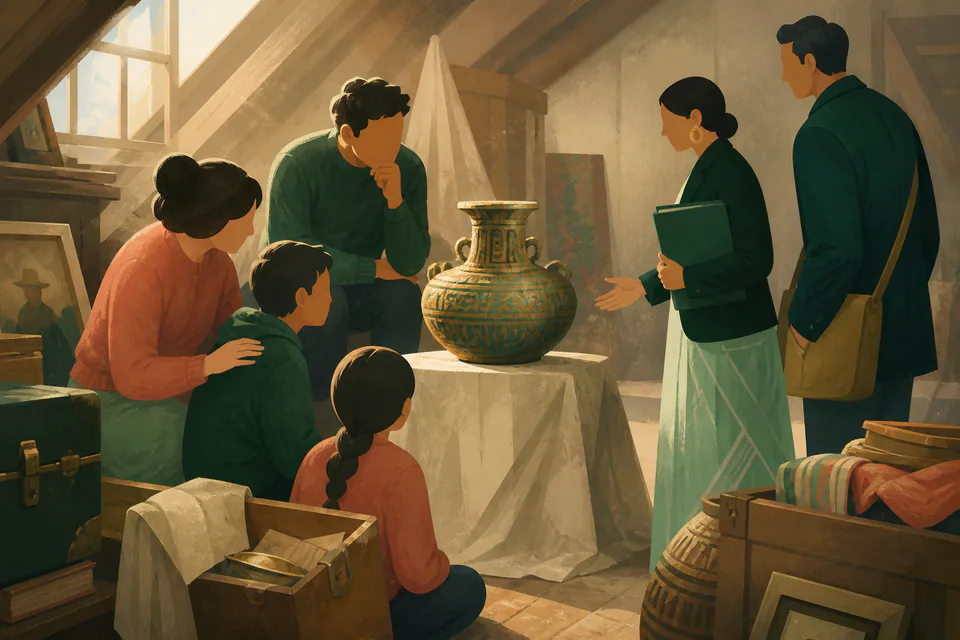
Your grandfather brought home an ancient artifact. A museum wants it back. Do you surrender it?
In your grandfather's attic you discover a beautiful ancient object he brought home while working overseas decades ago. Your family treasures it and his papers suggest the rules were murky. A museum from that country says it belongs to their collection and asks for its return.
Can a family inherit clear ownership of something acquired through unclear power?