Listen through the publisher, then discuss the episode here or arrange an in-person Roundtable. Your city determines where to meet.
Roundtables are designed for groups of four, with a shared subject and room for everyone to speak. Come for discussion, with no dating expectation.
Here's a Thought… #2797 with Brooks Jensen Artmaking Is Problem-Solving I have a daughter who loves puzzles. Watching her attack a puzzle reminds me of the process I engage when working on art. The end can often be visualized, but the means to get there cannot. That could almost be the definition of a puzzle. To reach the end requires innumerable steps almost all of which are essentially trial and error, or perhaps I should say "educated and deduced guess" followed by new understanding which leads to another educated guess. We sneak up on the answer rather than pouncing on it. Become a member of LensWork Online (https://www.lensworkonline.com/)and have access to all 2700+ Here's a Thought… commentaries.
Episode information is provided by the publisher. Listening takes place on the publisher’s service.
[coursehero.com] (https://www.coursehero.com/lit/Anne-of-Green-Gables/summaries/), [enotes.com] (https://www.enotes.com/topics/anne-green/chapter-summaries/chapter-16-summary) ANNE OF GREEN GABLES - Chapters 15 & 16 Chapter 15: "A Tempest in the School Teapot" Anne begins school in Avonlea and is delighted to share the experience with her beloved Diana. Things are going splendidly until she meets Gilbert Blythe. Trying to get Anne's attention, Gilbert pulls her braid and calls her"Carrots!" That is exactly the wrong thing to say to a girl so sensitive about her red hair. Anne responds by smashing her slate over Gilbert's head and vows never to forgive him, even when he tries to apologize. Further humiliation at the hands of the teacher only deepens Anne's determination that Gilbert Blythe has become her sworn enemy. [storgy.com] (https://storgy.com/works/anne-of-green-gables/chapters/15/), [gradesaver.com] (https://www.gradesaver.com/anne-of-green-gables/study-guide/summary-chapters-15
A 7% drop in Australian wine exports doesn’t sound huge until you put it next to the reality of a small local market and a massive national crush. We dig into what’s driving the latest numbers, including tariffs and cost pressures in the US, a lift in Canada as US wine disappears from government-controlled shelves, and why China’s “restocking” story is more complicated than the headlines. We also talk about the uncomfortable truth that a big slice of what we export is bulk wine, which can be cheaper and lower carbon, but can also mean less control over the final bottle and the way your wine shows up for consumers. Then we compare how the major wine states are responding to the squeeze and why their approaches barely resemble each other. South Australia throws serious money at oversupply and vineyard transition, while New South Wales focuses on tourism and consumer demand, Tasmania doubles down on premium, and Victoria prioritises efficiency, risk management, biosecurity and sustainabil
Reed Manly tells FBI Agent Ryan Powers exactly why he won’t hand over his company’s jump records. If Ryan reads them, he’ll have to arrest him. It’s the most honest thing anyone at Timelane has said all morning. Unfortunately for Ryan, he’s standing on the wrong side of Manly’s desk when he says it. Eighteen hours later, Ryan wakes strapped to a chair in a room barely big enough to hold it. His watch says he’s still in Pasadena. Manly’s voice comes through a speaker overhead, pleased with how well the first experiment went. For the next one, he intends to send Ryan two hundred years into the future. His colleagues have yet to work out how long they should leave him there. Ryan’s supervisor knows where he went. There’s a signed subpoena. Under ordinary circumstances, someone would already be looking for him. But Ryan makes his living investigating people with access to the past, and he understands exactly what that means for the last person who remembers seeing him alive. FEATURED STORY
What happens when European politics goes digital? Behind the scenes in European Union institutions, a quiet transformation is reshaping the way power works. Based on long-term ethnographic research, The Brussels Bubble: Inside the European Union in the Digital Age (https://bookshop.org/a/12343/9781009756808)(Cambridge University Press, 2026) by Dr. Rebecca Adler-Nissen & Dr. Kristin Anabel Eggeling follows diplomats, civil servants, spokespersons, and interpreters through the corridors, meeting rooms, cafés, and smartphone screens of Brussels' European Quarter. Against the backdrop of Brexit, the COVID-19 pandemic, and Russia's war on Ukraine, it reveals how digital technologies have become inseparable from the practice of international politics—reshaping trust, tact, and authority in unexpected ways. Far from a tale of technological revolution, The Brussels Bubble exposes digitalisation as a messy, human negotiation about what diplomacy and Europe itself mean today. Combining vivid na
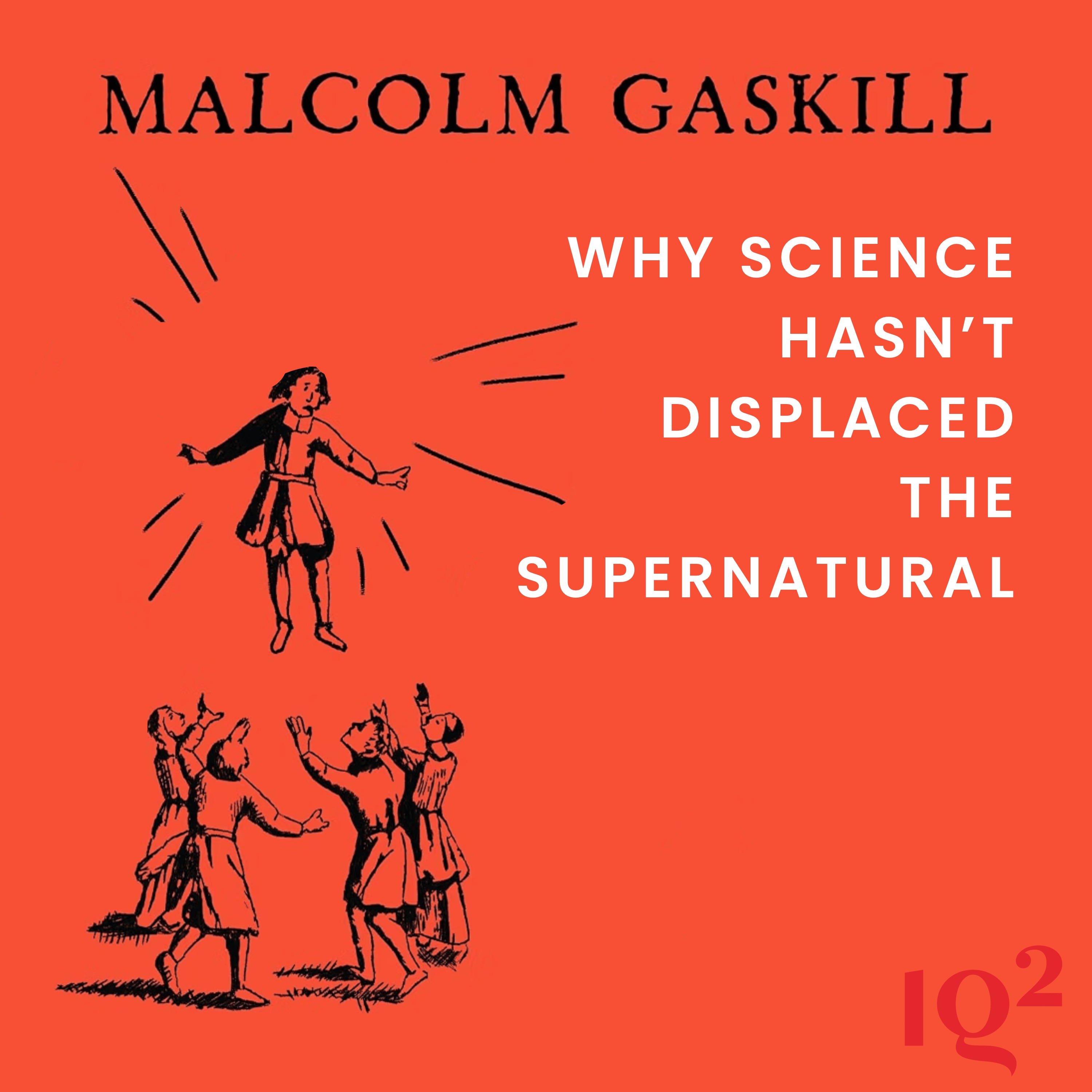
How do we make sense of the unseen? For centuries, the supernatural has offered ways to understand misfortune, find comfort and live with uncertainty. But its history is not simply a story of superstition giving way to reason. Why did people seek evidence in witchcraft trials? Can science and supernatural belief exist alongside one another? And what might today’s encounters with frontier technologies reveal to us about the persistence of the uncanny? In this episode, Margherita Volpato speaks with Malcolm Gaskill about his new book, Worlds of Fear and Wonder: Living with the Supernatural, Past and Present. Together, they explore the emotions behind supernatural beliefs that have shaped culture. They discuss Puritans searching for signs from God, the persistence of enchantment in the modern world and the uneasy relationship between technology and the uncanny. Malcolm Gaskill is Emeritus Professor of Early Modern History at the University of East Anglia and the author of seven books, inc
My mom was staying with me when I taped this episode last week, and when I came downstairs, she said: "that was a lot of laughing." It's true: when I get together with two of the smartest people writing about television today — people I've known since grad school, when we were just naïfs getting up in the replies of established critics — I'm going to laugh a lot. This episode entertains, but it also allows us to explore the craggy, often crappy depths of the current TV landscape with two critics who spend much more time watching what's available than I do. Have the streamers totally disinvested in writing? Why doesn't Apple TV advertise? Is Netflix just basic cable? Why is the pacing so bad in so many otherwise great shows? And what good stuff are we missing? You're gonna love this one. Thanks to the sponsors of today's episode: Starting November 19, visit AuraFrames.com (https://auraframes.com/) and get up to $50 off select frames, plus an additional $5 off your order with the promo c
Here's a Thought… #2811 with Brooks Jensen Disproportional Scaling Morphing an image through disproportional scaling has never occurred to me. Jeff Schewe opened my eyes about this a few years ago. When I resisted because this would make my images less real, Jeff reminded me that everything we do in photography is unreal. He was right.
Here's a Thought… #2810 with Brooks Jensen Where to Crop Sometimes we have irrational ideas that can barely be justified. Where to crop is an illustration of this for me. I always prefer cropping optically, with a zoom lens, in the field, with the subject before me. The alternative is cropping during processing, in the computer, where we throw away precious pixels. I almost never crop in processing. Am I being irrational about this?
Here's a Thought… #2809 with Brooks Jensen There Is No Try Yoda said it so succinctly: Do or do not; there is no try. I often feel like I want to say this to all those YouTube influencers. I want to see their finished work more than I want to see how they got there. Is there truth to that old canard "Those who can do; those who can't teach." I don't think so, but I do find myself more interested in their results than I see in their videos.
Preserving historic places can justify limiting redevelopment.
Share your view, then see how readers voted. No sign-in required. This poll is shared across stories.
Do you agree or disagree?
Common Quandary
A Common Quandary to discuss
Another conversation to explore, separate from this news story.
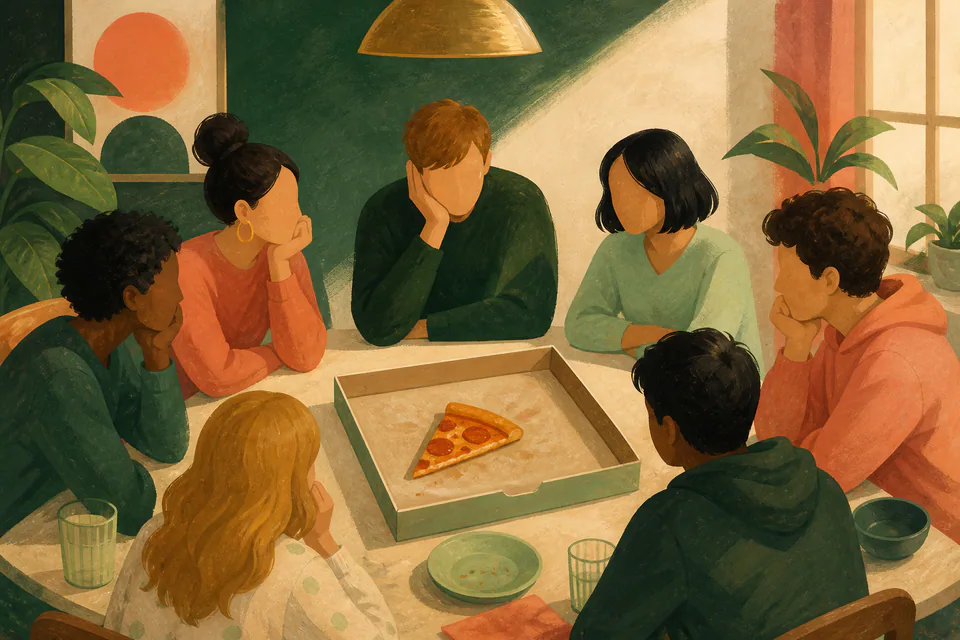
One slice of pizza remains and everyone is pretending not to want it. Can you take it?
Six friends have been circling the last slice of pizza for twenty minutes. Nobody claims it when you ask, yet two people keep glancing at the box. You are still hungry and paid the same share as everyone else.
Does politeness require leaving something that nobody will openly claim?