Listen through the publisher, then discuss the episode here or arrange an in-person Roundtable. Your city determines where to meet.
Roundtables are designed for groups of four, with a shared subject and room for everyone to speak. Come for discussion, with no dating expectation.
Here's a Thought… #2816 with Brooks Jensen A Notable Absence Last year, I spent several days at the Clark Museum Library in Williamstown, Massachusetts looking at photography books. Yesterday, I spent a day in the library at Crystal Springs Museum in Bentonville, Arkansas. Dozens of books, hundreds of photographs, and not a single "pretty picture" that I can recall. Did I not see any, or do I simply not remember them? Or, did I not pull out those books where I'd find such work? Or, is this a reflection of the librarians who make decisions about which books to add to their collections?
Episode information is provided by the publisher. Listening takes place on the publisher’s service.
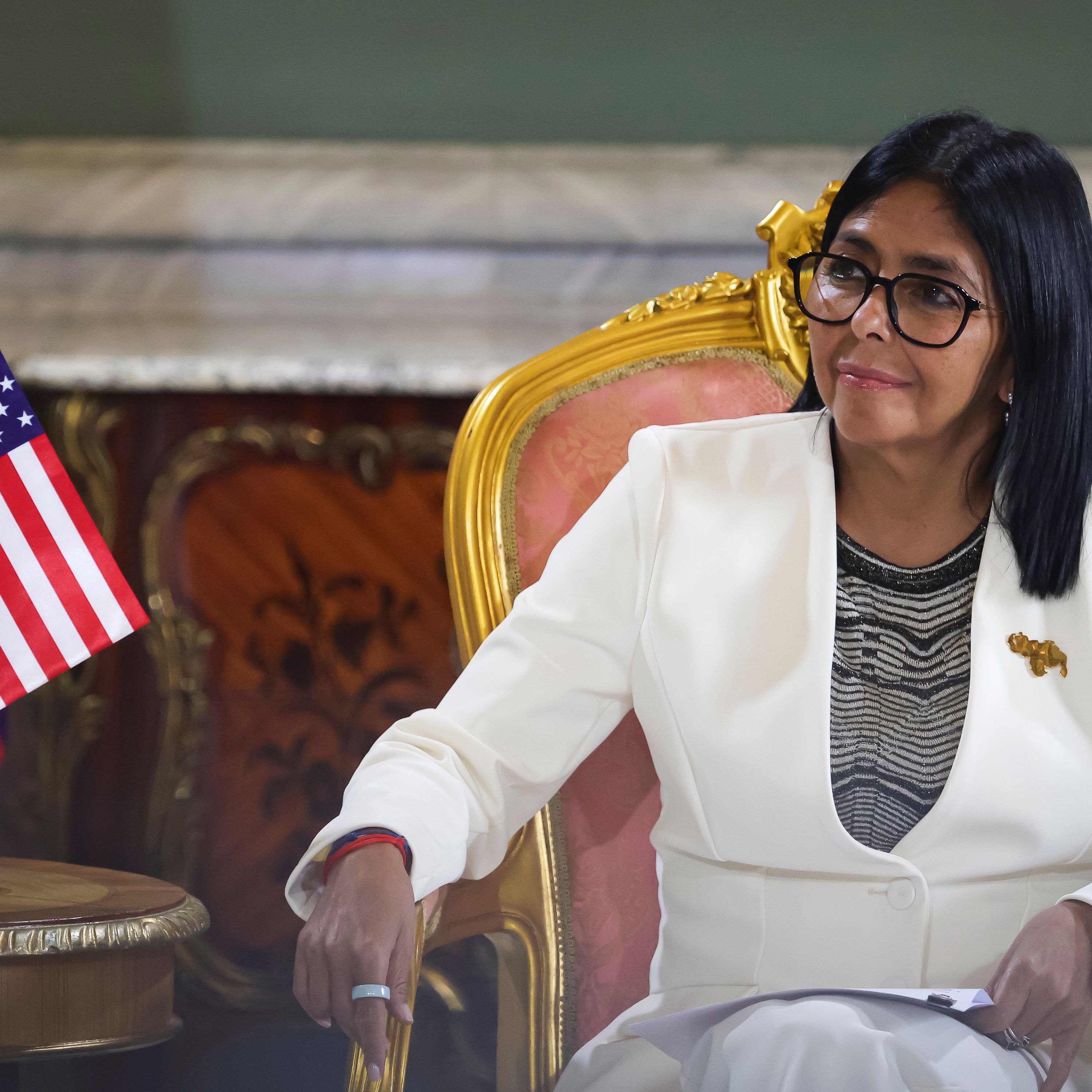
Since the United States seized and imprisoned President Nicolás Maduro, in January, and asserted control over Venezuela’s oil production, Marco Rubio has effectively called the shots. But, rather than inviting the Trump-friendly opposition leader María Corina Machado back from exile, the U.S. elevated a loyal Maduro deputy, Delcy Rodríguez, to run a puppet regime. Who is Rodríguez, and what motivated her to make her peace with an imperial takeover? The staff writer Jon Lee Anderson (https://www.newyorker.com/contributors/jon-lee-anderson) recently returned from a rare interview with Rodríguez and her brother and political consort, Jorge Rodríguez; he also spoke at length with two U.S. operatives who conceived the attack that culminated in Maduro’s abduction. He talks with David Remnick about the state of play in Venezuela, and what the Trump Administration’s designs on Cuba may be. Further reading: “Venezuela’s Collaborator-in-Chief (https://www.newyorker.com/magazine/2026/11/23/venezu
On this week’s episode of You Are What You Read, we are joined by bestselling author Julie Orringer with her new novel, Luna, Phoenix, Queen. You know Julie’s work: her novel The Invisible Bridge and the award-winning short story collection How to Breathe Underwater, which was a New York Times Notable Book. She is the winner of The Paris Review‘s Plimpton Prize for Fiction and the recipient of fellowships from the National Endowment for the Arts, Stanford University, and the Dorothy and Lewis B. Cullman Center for Scholars and Writers at the New York Public Library. Luna, Phoenix, Queen is a spellbinding novel of two college professors harboring potent secrets, the family and friends in their orbit, and an unforgettable, resilient dog named Luna.
This week on F-Stop Collaborate and Listen, host Matt Payne interviews Craig Blacklock (https://blacklockgallery.com/). Craig Blacklock learned photography from his father Les Blacklock, a pioneer in color nature photography, and has spent fifty years exploring Minnesota and Lake Superior's shorelines. In this conversation, Craig traces his path from analog view cameras and calendar work to digital workflows, self-publishing, and drone photography. He shares the story behind his breakout book, born from a 100-day solo kayak circumnavigation of Lake Superior, and how he sold tens of thousands of copies without a conventional publisher. The conversation goes deep on the creative value of committing to a single subject over decades, shifting from literal landscapes to human figures and abstract water reflections, and the technical challenges of view camera tilt-shift work and book sequencing. Craig also discusses environmental advocacy, meticulous drone previsualization using Google Earth
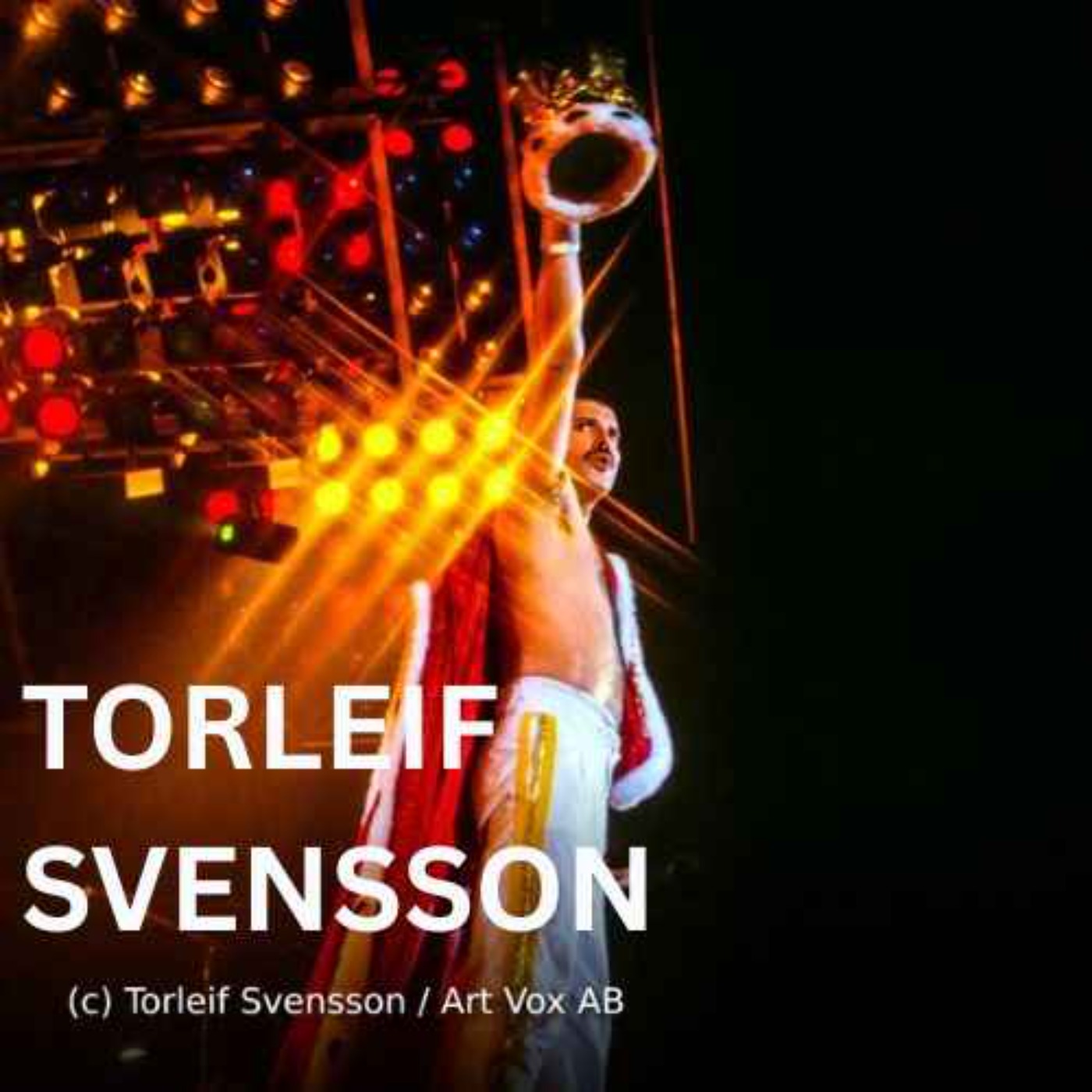
Swedish photographer Torleif Svensson captured Queen and Freddie Mercury during the historic 1986 Magic Tour—the band’s final tour with Freddie. But Torleif’s extraordinary journey began two years earlier when a thief broke into his car and stole his camera equipment and approximately 50 exposed rolls of film. Among the lost photographs were the pictures he had taken at his first Queen concert. Determined to photograph Freddie Mercury again, Torleif travelled to Montreux, met Brian May and was invited to join Queen on a boat trip across Lake Geneva. Later, after Queen manager Jim Beach saw Torleif’s experimental concert photography, he invited him onto the Magic Tour. Torleif was given exceptional access. While other photographers were restricted to the opening three songs, he could move around the venues and continue photographing until the end of the concerts. That freedom allowed him to capture Freddie wearing his crown and royal mantle during God Save the Queen—including images fro
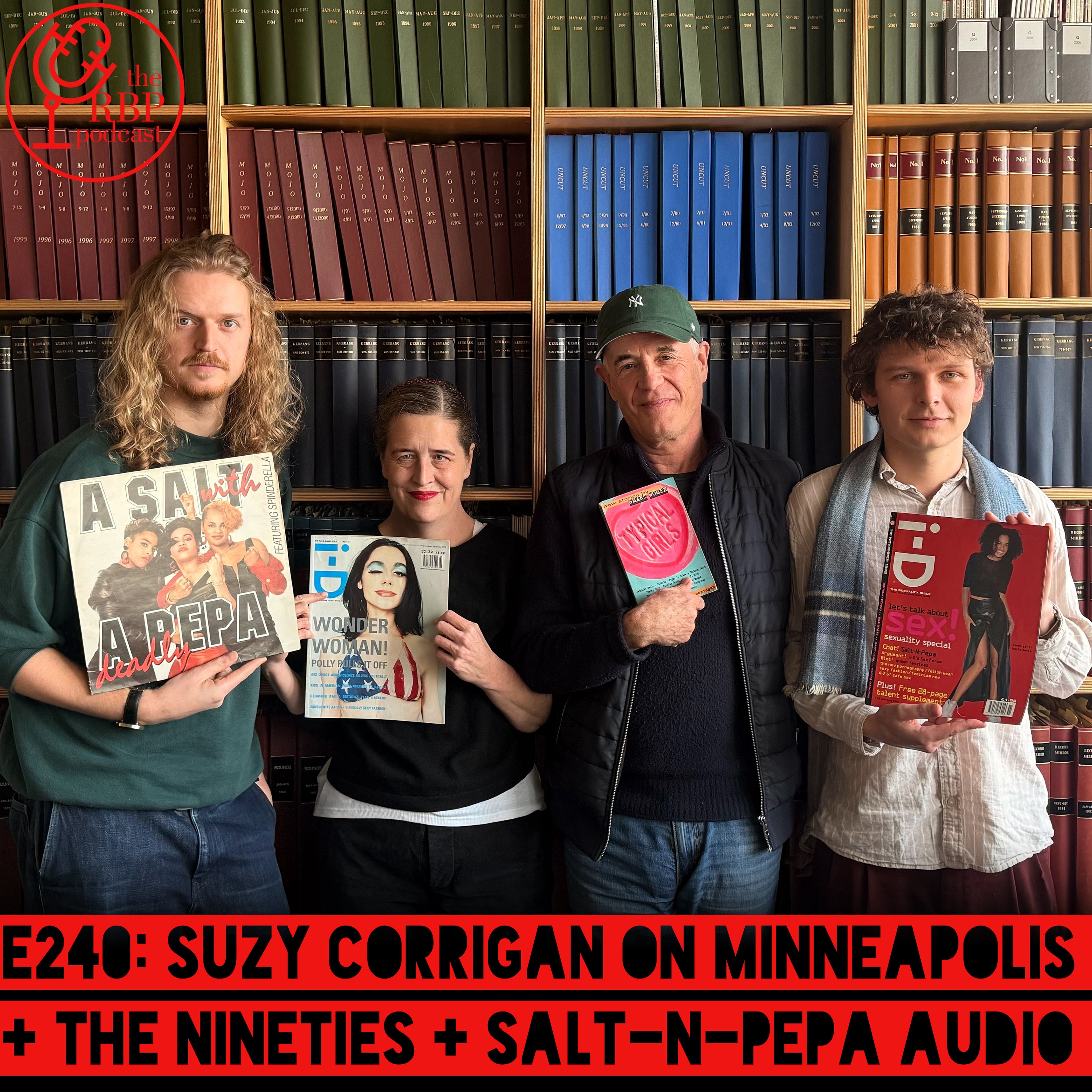
For this episode Suzy Corrigan joins us to look back on the 1990s and her days at i-D magazine. Starting with her memories of her Minneapolis childhood, our guest explains her nascent Anglophilia and the Manchester bands that drew her to "dear old Blighty" in the late '80s. Her early '90s experiences at the NME give us an opportunity to pay tribute to the paper's former editor Danny Kelly, who died earlier this month. She then recounts how she followed Helen Mead to i-D and recalls life at that bible of street fashion. Mention of Typical Girls, Suzy's 1997 anthology of stories by "smart women", prompts a general discussion of women's experiences in the decade of lads' mags — and of how we've reached a new moment of reckoning for male entertainers such as Russell Brand and David Walliams. The subject of female empowerment leads us to clips from a 1997 audio interview with Salt-N-Pepa, the trailblazing hip hop trio whose debut album turns 40 this December. After Barney briefly revisits T
Merriam-Webster's Word of the Day for November 23, 2026 is: optimization • \ahp-tuh-muh-ZAY-shun\ • noun Optimization refers to an act, process, or methodology of making something (such as a design, system, or decision) as good, functional, or effective as possible. // She traded in her old phone for a newer model that offered improved battery optimization and better camera performance. See the entry > (https://www.merriam-webster.com/dictionary/optimization) Examples: "For better or worse, my notes app is the piece of technology closest to looking like the inside of my brain: a bit chaotic, annoyingly detail-oriented, and perhaps perpetually nostalgic. While handwritten to-do lists hold my life together, my notes app contains the catch-all, the weird (one that simply says 'possum'), and the important (a list of people's birthdays) coexisting. Somehow, the mess of my notes resists all forms of optimization, or even coherence." — Rainesford Stauffer, Time, 24 July 2026 Did you know? Opt
Here's a Thought… #2815 with Brooks Jensen Memories versus Statements Most family snapshots are memories. They're important to us, as they should be. If all they do is present a fleeting appearance, they remain just visual memories. Curiously enough, those memories come alive when we convert them into statements. How? Add text of what someone said; add what happened just before or just after the shutter clicked; include a personality characteristic of the person just photographed; add what you felt at the moment he made the picture. Turn memories of appearance into statements about moments.
Episode #1532 from our long-running, weekly podcast On Photography and the Creative Process The Grand Idea of Your Art I believe that every important artist has some grand idea that is the foundation of their artistic expression. For example, Stieglitz believed that photography was as important an art medium as painting and tried to prove that with Gallery 291; Adams felt an overwhelming reverence for Nature and helped found the environmental movement; Lange knew a deep compassion for suffering; Weston the fragility and pathos of life, etc. What is the grand idea of your art? Instant access, terabytes of content, inspiration and ideas that expand daily with new content. Sign up for instant access! (https://checkout.subscriptiongenius.com/lenswork.com/1782/?redirect=1) You might also be interested in. . . Every Picture Is a Compromise, (https://www.brooksjensenarts.com/epic/epic.html)a series at www.brooksjensenarts.com. and... "How to" tutorials and camera reviews are everywhere on You
Here's a Thought… #2814 with Brooks Jensen What You Choose to Observe We learn so much about you by what you select — out of the entire world — to photograph. The most important thing in your photograph is not its style, not its size, not its medium, not its composition. To paraphrase that old saying about real estate, the three things that really count in a photograph are Subject, Subject, and Subject. What you see precedes how you see.
Reporting on court cases should protect personal privacy when details add little public value.
Share your view, then see how readers voted. No sign-in required. This poll is shared across stories.
Do you agree or disagree?
Common Quandary
A Common Quandary to discuss
Another conversation to explore, separate from this news story.
A reserved meeting room has been empty for twenty minutes. Can your group take it?
Every library study room is occupied except one marked reserved. Its booking began twenty minutes ago and nobody has appeared. Your group has an urgent presentation to prepare, while library rules say reservations remain valid for half an hour.