Introducing Going Wild: Soil Science with the (Jordon) King of the Everglades
28 min
Listen through the publisher, then discuss the episode here or arrange an in-person Roundtable. Your city determines where to meet.
Roundtables are designed for groups of four, with a shared subject and room for everyone to speak. Come for discussion, with no dating expectation.
This week we’re sharing a special episode from the brand-new fifth season of Going Wild with Dr. Rae Wynn-Grant, the multi-award-winning podcast from our our friends at PBS’ Nature (https://www.pbs.org/wnet/nature/). In this new season, host and acclaimed wildlife ecologist, Dr. Rae Wynn-Grant, heads out into the field to bring you closer to the people, the animals, the sounds and the stories that make these wild spaces so magical and so worth protecting. Like in today’s episode, featuring soil ecologist and social media sensation, Jordon King, who gives Dr. Rae Wynn-Grant a proper initiation into the Florida Everglades, where even the dirt has a story to tell. But with drought transforming the wetlands in one of the region's driest seasons, they're discovering that what's missing can be just as fascinating as what's beneath their feet. For more episodes like this, be sure to follow Going Wild with Dr. Rae Wynn-Grant (https://play.megaphone.fm/q6eirfjdsckwxrpmdryvwq) on Apple Podcasts, Spotify, or wherever you get your podcasts.
Episode information is provided by the publisher. Listening takes place on the publisher’s service.
In this calm and sleepy facts episode, we spend eight peaceful hours exploring some of the quietest wonders of the natural world. We begin beneath a gathering thunderstorm, following warm air as it rises into towering clouds and learning how a single flash of lightning can briefly heat the air to several times the temperature of the surface of the Sun. From there we settle into the hidden world of hibernation, where animals slow their breathing and their heartbeats to just a few beats a minute and wait out the long winter in stillness. Next, we wander among the trees, discovering how they lift water hundreds of feet into the air without a single moving part and quietly record each passing year in rings of wood. Finally, we cross the deserts, where the heat of the day gives way to cold, clear nights and some dunes hum softly as the sand slides down their slopes. Each story unfolds slowly and gently, with no sudden sounds, so the whole night can pass in calm and quiet wonder. Let these c
In Brought to You By: How Corporations Warped the Truth, Conned the Public, and Broke Democracy (https://bookshop.org/a/12343/9781639736331), Amy Westervelt exposes the plot hidden within the familiar story of science denial. Over the last century, Big Industry has built a vast apparatus of think tanks, lobbyists, sponsored university labs, and obliging news networks to con the public and fool decision-makers, poisoning the informational ecosystem and warping the nature of truth along the way. With her signature wit and incisiveness, Westervelt introduces the masterminds of corporate misinformation: Herb Schmertz, the public relations pioneer who made Mobil “the thinking man's oil company;” Richard Edelman, the PR guy who helped the dairy industry vilify oat milk; David Petraeus, the disgraced spy chief using counter-insurgency tactics to discredit climate science; and many more. She shows how these company men have worked to usher in an era of unprecedented corporate control. Only by
For some reason, it did not stop him.Now I just want to ask you something real quick to put you in the mind of a bear. If you found some of your favorite food just left out and you somehow, like me most of the time, just couldn’t resist the temptation. Bears live and eat by what is detected by their noses, so logically, after eating its fill, a proper expectation would be that the bear would go sleep off a large meal upwind of where its food was cached. The wind carries both scent and sound to the bear as it rests and acts as an alarm to it to defend its cache. The hide was still up in the birch, untouched. He dropped his packboard at the base of the tree and glanced up to see where he would need to climb. Movement in the brush, some three hundred feet away, caught his eye. Two bears, roughly thirty feet apart, moved through the brush. From their color and build, he identified them as grizzlies, also called coastal brown bears.Up to that day, every bear he had met in the wild had chose
One evening, a mother was putting her three-year-old son to bed, just as she'd done countless times before. She read him a story, rubbed his back, and waited for him to fall asleep. But for no apparent reason, she suddenly became overwhelmed by sadness. The feeling was so intense that she began to cry. Later that night, she woke to the unmistakable sounds of someone playing with her son's favorite building blocks. When she went to investigate, she found him sound asleep and his toys put away. But something in the room wasn't quite as she'd left it. Over the following nights, that same unexplained sadness returned. It wasn't until she thought about the time of year, and a heartbreaking loss she'd experienced a decade earlier, that she began to wonder whether these strange occurrences might be connected. Could someone she'd lost have found a way to visit? #RealGhostStoriesOnline #TrueGhostStories #SpiritVisitations #AfterDeathCommunication #SignsFromBeyond #ChildSpirit #ParanormalEncount
PBS Member Stations rely on viewers like you. To support your local station, go to: http://to.pbs.org/DonateSPACE ↓ More info below ↓ Uploaded 21-04-21 Sign Up on Patreon to get access to the Space Time Discord! That Einstein guy was a real bummer for our hopes of a star-hopping, science-fiction-y future. His whole “nothing travels faster than light” rule seems to ensure that exploration of even the local part of our galaxy will be an excruciating slow. But Einstein also gave us a glimmer of hope. He showed us that space and time can be warped - and so the warp drive was conceived. Just recently, a couple of papers contend that these are not pure science fiction. Check Out Our Previous Warp Drive Episode Warp Drive Papers Introducing Physical Warp Drive Breaking the Warp Barrier Check out the Space Time Merch Store Hosted by Matt O'Dowd Written by Matt Caplan and Matt O'Dowd Graphics by Leonardo Scholzer, Yago Ballarini, Pedro Osinski, Adriano Leal and Stephanie Faria GFX Visualization
A kiss can be wonderful. It can create an instant connection, spark romance, or make you feel closer to someone. But a kiss can also have the opposite effect — and sometimes ruin everything. So what makes kissing so powerful, and why can one kiss make such a difference? There's some fascinating science behind it. https://www.scientificamerican.com/article/why-we-kiss/ We spend an enormous amount of time worrying about what's going to change. What's next? What's coming? How do we prepare? But what if we're paying attention to the wrong things? Some of the most important forces shaping our lives never change, and understanding them may be far more valuable than trying to predict the future — something humans are notoriously bad at. Morgan Housel, partner at The Collaborative Fund and author of Same as Ever: A Guide to What Never Changes (https://amzn.to/3SwWn6u) (https://amzn.to/3SwWn6u)), joins me to explain why the things that stay the same may be the most important things to understan
In this episode of Tiny Show and Tell Us, a listener asks if the film company Kodak really knew about the Trinity atomic bomb test before the public, leading us down a fascinating story about radioactive fallout, x-ray film, and secret agreements. Then we tackle a mind-boggling question: if there are birds that look blue, then why don't any bird feathers contain blue pigment? Related episodes you may enjoy: When movies caught fire: The history and science of nitrocellulose film (https://www.acs.org/pressroom/tiny-matters/nitrocellulose-film.html) [BONUS] Decoding dinosaur colors and the failure of postpartum care (https://www.acs.org/pressroom/tiny-matters/dinosaur-colors-and-postpartum-care.html)
In the late 1950s, a tuberculosis drug was repurposed as the world’s first antidepressant. Then the selective serotonin reuptake inhibitor (SSRI) Prozac ushered in a new era of antidepressants. Today SSRIs are some of the most widely prescribed drugs in the country, but gaps still exist in our biological understanding of mental health, the overall efficacy of antidepressants, and predicting serious side effects. In response, some scientists and physicians are turning to different classes of drugs altogether to treat depression. Listen to Chain Reaction by ACS wherever you get podcasts and at acs.org/chainreaction. (http://acs.org/chainreaction)
In nature, cannibalism is surprisingly common. Fish eat their offspring, insects consume their siblings, and some tadpoles transform into specialized cannibals with stronger jaws and a tooth. In this episode, we explore how cannibalism can shape entire ecosystems, influencing everything from fish populations to nutrient cycles, and why so many species are cannibalistic despite its costs. We discuss selfishness in nature, filial and sexual cannibalism, and the role of developmental plasticity in evolution.
Public cultural institutions should present contested works with context instead of simply removing them.
Share your view, then see how readers voted. No sign-in required. This poll is shared across stories.
Do you agree or disagree?
Common Quandary
A Common Quandary to discuss
Another conversation to explore, separate from this news story.
Your coworker bends a dumb rule to help people. Do you report it?
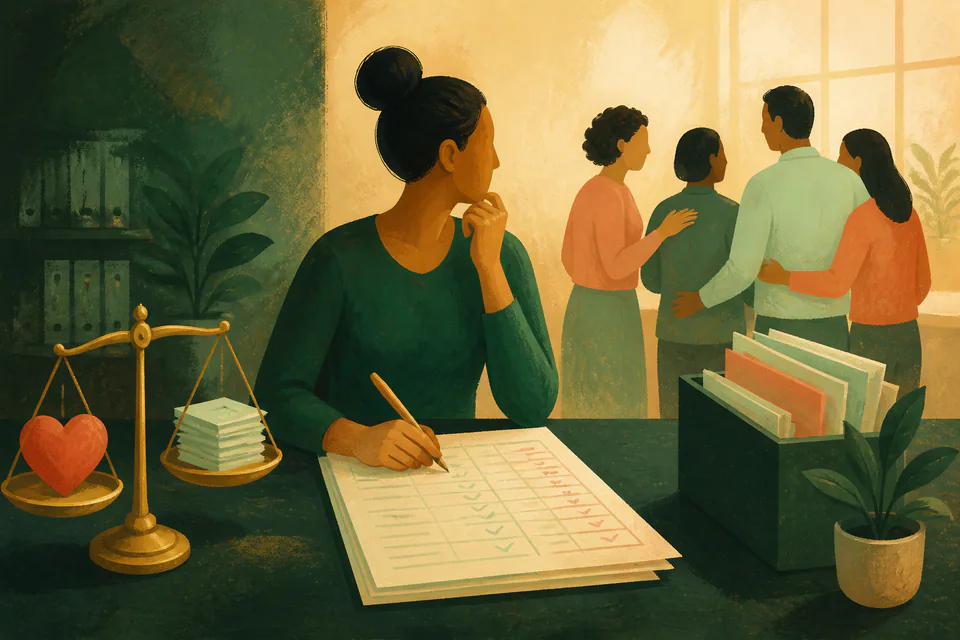
An underpaid coworker quietly bends a company rule to help colleagues receive benefits they were technically denied. No customer is harmed, but the records are inaccurate and you are asked to certify them.
Where should loyalty end when a rule seems unjust?