[BONUS] Why blue birds aren’t blue and did Kodak detect the Trinity test first?: Tiny Show and Tell Us #60
20 min
Listen through the publisher, then discuss the episode here or arrange an in-person Roundtable. Your city determines where to meet.
Roundtables are designed for groups of four, with a shared subject and room for everyone to speak. Come for discussion, with no dating expectation.
In this episode of Tiny Show and Tell Us, a listener asks if the film company Kodak really knew about the Trinity atomic bomb test before the public, leading us down a fascinating story about radioactive fallout, x-ray film, and secret agreements. Then we tackle a mind-boggling question: if there are birds that look blue, then why don't any bird feathers contain blue pigment? Related episodes you may enjoy: When movies caught fire: The history and science of nitrocellulose film (https://www.acs.org/pressroom/tiny-matters/nitrocellulose-film.html) [BONUS] Decoding dinosaur colors and the failure of postpartum care (https://www.acs.org/pressroom/tiny-matters/dinosaur-colors-and-postpartum-care.html)
Episode information is provided by the publisher. Listening takes place on the publisher’s service.
I tested 5 wild experiments in a zero gravity plane... Listen with me on Audible at https://www.audible.com/cleo I'm scanning my brain inside a plane that’s about to DIVE toward the ground… to test how weightlessness helps or hurts your brain. And it’s just one of the 5 crazy science experiments I got to test inside a Zero G plane. I recently went on this Zero G plane to explain a big debate about gravity, and while I was there, I also got exclusive access to experiments that can ONLY happen in zero gravity. I just knew you’d love to see it. So, in this extended cut, I’m going to give you a rare glimpse inside this falling laboratory and show you how the experiments they’re doing could be huge if true… Chapters: 0:00 What happens to your brain in space? 0:32 Why scientists want to fall from the sky 1:10 How do zero gravity planes work? 1:56 Experiment 1 3:58 Experiment 2 5:28 Experiment 3 7:23 Experiment 4 8:50 Experiment 5 10:27 Why these experiments are huge if true You can find me o
What actually works when it comes to detecting lies, and why are so many popular ideas about reading people and nonverbal behavior at odds with the scientific research? I talk with Aldert Vrij, one of the world's leading deception-detection researchers, who has spent almost four decades studying these topics. We discuss why what people say is far more revealing than their body language; why the perceived “sexiness” of reading nonverbal behavior has contributed to widespread myths and misconceptions; whether vocal behaviors like pitch, volume, and hesitation contain meaningful clues; and whether there's value in analyzing minor word choices and turns of phrase, as is done in so-called “statement analysis.” We discuss Paul Ekman's legacy as a source of faulty ideas about deception, micro-expression-based deception detection training, and the strategies that popular “body language experts” use to appear scientifically credible while simultaneously promoting ideas that conflict with the sc
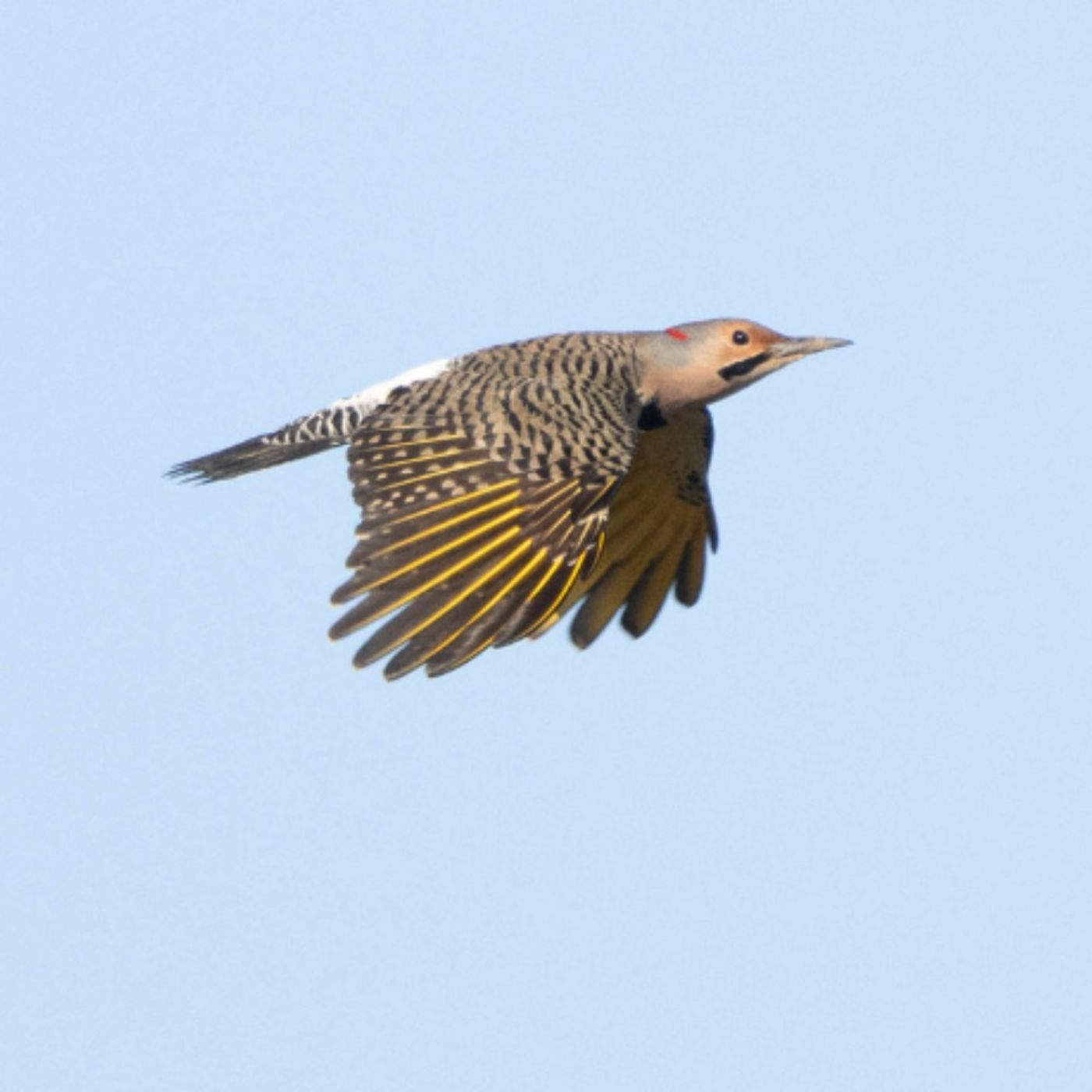
Sometimes all you need to identify a bird is a single feather. Because collecting bird feathers is prohibited in the U.S. to protect birds from poachers, start by taking a photo with a common object for scale. Then you can use online resources like the iNaturalist app or Featherbase website to help you solve the mystery. Keep your prime suspect in mind when you’re back where you found the feather and you might get to see the bird itself — feathers and all. More info and transcript at BirdNote.org (https://www.birdnote.org/podcasts/birdnote-daily/what-if-you-only-have-feather). Want more BirdNote? BirdNote is a nonprofit. Hosted by Simplecast, an AdsWizz company.
Viewers like you help make PBS (Thank you ) . Support your local PBS Member Station here: https://to.pbs.org/DonateSPACE Uploaded 03-10-18 On this Space Time Journal Club we look at how gravitational waves can be used to search for extra dimensions of space! To learn more about CuriosityStream you can go to: https://www.curiositystream.com/space... and use the code "spacetime" during the sign-up process. "Limits on the number of spacetime dimensions from GW170817" Pardo, Fishbach, Holz and Spergel 2018 You can further support us on Patreon at https://www.patreon.com/pbsspacetime Get your own Space Time t-shirt at http://bit.ly/1QlzoBi Tweet at us! @pbsspacetime Facebook: facebook.com/pbsspacetime Email us! pbsspacetime [at] gmail [dot] com Comment on Reddit: http://www.reddit.com/r/pbsspacetime Help translate our videos! Previous Episode: Quantum Gravity and the Hardest Problem in Physics Hosted by Matt O'Dowd Written by Matt O'Dowd Graphics by Luke Maroldi Assistant Editing and Sound
One evening, a mother was putting her three-year-old son to bed, just as she'd done countless times before. She read him a story, rubbed his back, and waited for him to fall asleep. But for no apparent reason, she suddenly became overwhelmed by sadness. The feeling was so intense that she began to cry. Later that night, she woke to the unmistakable sounds of someone playing with her son's favorite building blocks. When she went to investigate, she found him sound asleep and his toys put away. But something in the room wasn't quite as she'd left it. Over the following nights, that same unexplained sadness returned. It wasn't until she thought about the time of year, and a heartbreaking loss she'd experienced a decade earlier, that she began to wonder whether these strange occurrences might be connected. Could someone she'd lost have found a way to visit? #RealGhostStoriesOnline #TrueGhostStories #SpiritVisitations #AfterDeathCommunication #SignsFromBeyond #ChildSpirit #ParanormalEncount
For extra nuances and all the references, please see the newsletter: https://staycuriousmetabolism.substack.com/p/how-i-hacked-my-girlfriends-brainwith?r=40ekz2&utm_campaign=post&utm_medium=web&triedRedirect=true (https://staycuriousmetabolism.substack.com/p/how-i-hacked-my-girlfriends-brainwith?r=40ekz2&triedRedirect=true) Can light influence attraction, hormones, and even reproductive biology? In this video, we explore surprising research on light exposure, testosterone, estrogen, fertility signals, and behavioral changes observed in both animal models and human studies. From hormone cascades triggered through the skin to seasonal changes in reproductive biology, this is a fascinating look at how deeply light may shape human physiology. Along the way, I also test whether increasing my own sunlight exposure changes my testosterone levels and reveal how my girlfriend hacked my brain! For more nuance, mechanisms, protocols, and limitations behind these findings, check out the full deep
In the late 1950s, a tuberculosis drug was repurposed as the world’s first antidepressant. Then the selective serotonin reuptake inhibitor (SSRI) Prozac ushered in a new era of antidepressants. Today SSRIs are some of the most widely prescribed drugs in the country, but gaps still exist in our biological understanding of mental health, the overall efficacy of antidepressants, and predicting serious side effects. In response, some scientists and physicians are turning to different classes of drugs altogether to treat depression. Listen to Chain Reaction by ACS wherever you get podcasts and at acs.org/chainreaction. (http://acs.org/chainreaction)
This week we’re sharing a special episode from the brand-new fifth season of Going Wild with Dr. Rae Wynn-Grant, the multi-award-winning podcast from our our friends at PBS’ Nature (https://www.pbs.org/wnet/nature/). In this new season, host and acclaimed wildlife ecologist, Dr. Rae Wynn-Grant, heads out into the field to bring you closer to the people, the animals, the sounds and the stories that make these wild spaces so magical and so worth protecting. Like in today’s episode, featuring soil ecologist and social media sensation, Jordon King, who gives Dr. Rae Wynn-Grant a proper initiation into the Florida Everglades, where even the dirt has a story to tell. But with drought transforming the wetlands in one of the region's driest seasons, they're discovering that what's missing can be just as fascinating as what's beneath their feet. For more episodes like this, be sure to follow Going Wild with Dr. Rae Wynn-Grant (https://play.megaphone.fm/q6eirfjdsckwxrpmdryvwq) on Apple Podcasts,
In nature, cannibalism is surprisingly common. Fish eat their offspring, insects consume their siblings, and some tadpoles transform into specialized cannibals with stronger jaws and a tooth. In this episode, we explore how cannibalism can shape entire ecosystems, influencing everything from fish populations to nutrient cycles, and why so many species are cannibalistic despite its costs. We discuss selfishness in nature, filial and sexual cannibalism, and the role of developmental plasticity in evolution.
Supporters should be consulted before major changes in their club's ownership or location.
Share your view, then see how readers voted. No sign-in required. This poll is shared across stories.
Do you agree or disagree?
Common Quandary
A Common Quandary to discuss
Another conversation to explore, separate from this news story.
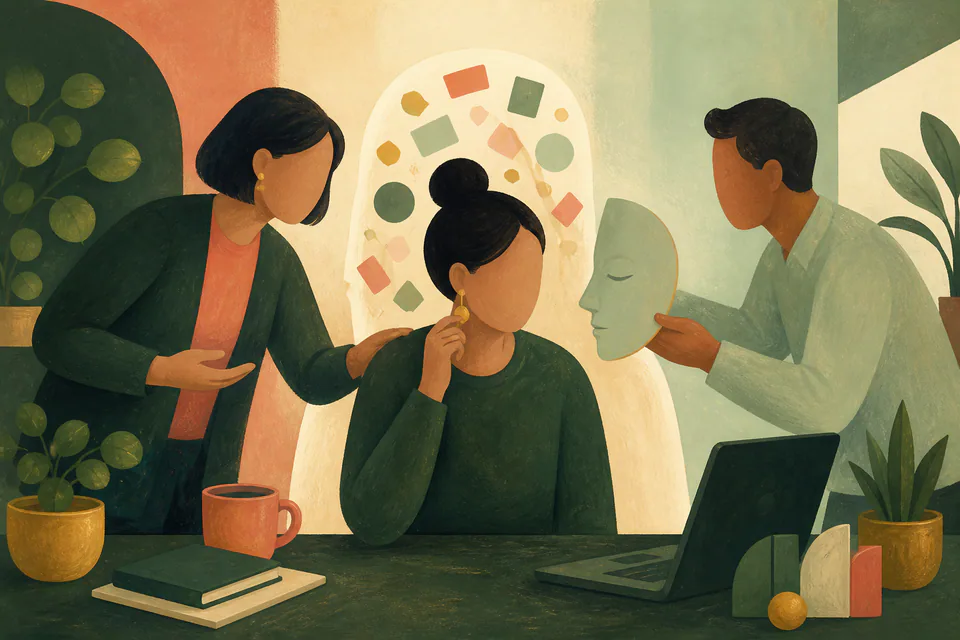
Your boss offers lessons to make you sound “more professional.” Do you take them?
Clients sometimes ask an employee to repeat themselves during calls. Their manager offers company-paid speech coaching framed as clearer communication, but the employee experiences the request as pressure to hide part of their identity.
When does improving communication become demanding conformity?