It's Not Humility if You Think You're in Charge | Jonathan Roumie
6 min
Listen through the publisher, then discuss the episode here or arrange an in-person Roundtable. Your city determines where to meet.
Roundtables are designed for groups of four, with a shared subject and room for everyone to speak. Come for discussion, with no dating expectation.
A broke actor who thought he was running his own life had to find humility before he could play Jesus. Check out the full episode: https://greatness.lnk.to/2008DM Jonathan Roumie, the actor who plays Jesus in The Chosen, told Lewis he would never have landed that role without a spiritual shift inside him before the call came. “Not even close,” he says. Jonathan knows what broke feels like. You can be broke and an egomaniac, he says, swearing you'll show the world a comeback. “It's not humble if you still think you're in charge.” Now strangers walk up to him and call him Jesus, some of them overcome with emotion. He gently says his own name out loud, “Hey, Jonathan. Nice to meet you,” and reminds them he is extremely flawed. Before every season of playing Christ, he prayed for the same thing: “Lord, let them not see my face. Let them see your face.” Sign up for the Greatness newsletter:http://www.greatness.com/newsletter Hosted by Simplecast, an AdsWizz company.
Episode information is provided by the publisher. Listening takes place on the publisher’s service.
Uploaded 15-11-18 View full lesson: https://ed.ted.com/lessons/the-standard-model-of-particle-physics-jonathan-butterworth If you were to take a coffee cup, and break it in half, then in half again, and keep carrying on, where would you end up? Could you keep on going forever? Or would you eventually find a set of indivisible building blocks out of which everything is made? Jonathan Butterworth explains the Standard Model theory and how it helps us understand the world we live in. Lesson by Jon Butterworth, directed by Nick Hilditch. Thank you so much to our patrons for your support! Without you this video would not be possible! Jennifer Kurkoski, phkphk12321, Arlene Weston, Mehmet Yusuf Ertekin, Ten Cha, Les Howard, Kevin O'Leary, Francisco Leos, Robert Patrick, Jorge, Marcus Appelbaum, Alan Wilder, Amin Talaei, Mohamed Elsayed, Angel Pantoja, Eimann P. Evarola, Claire Ousey, Carlos H. Costa, Tariq Keblaoui, Bela Namyslik, Nick Johnson, Won Jang, Johnnie Graham, Junjie Huang, Harshita
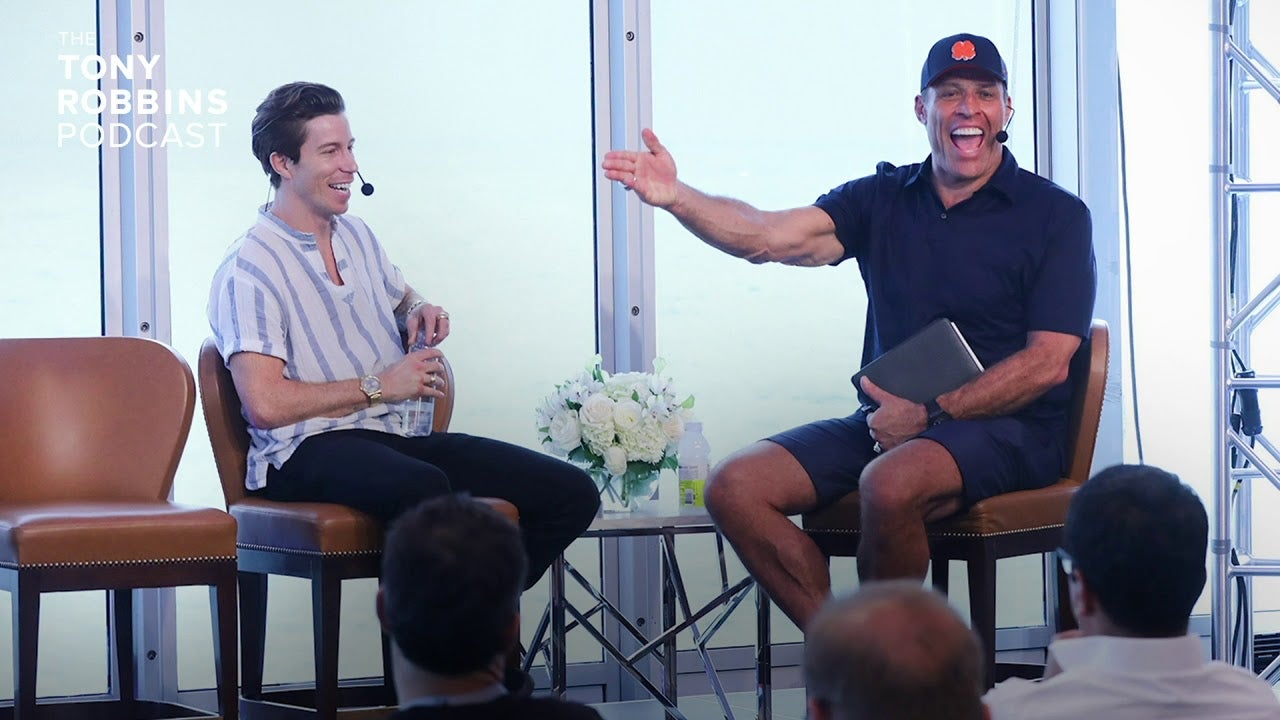
Tony Robbins uncovers the art – and science – of the comeback in this interview with snowboard legend Shaun White. As a three-time Olympic gold medalist and world record holder, Shaun knows a thing or two about success. He turned snowboard pro at 13 and skateboard pro at 16. He has the most wins of anybody in the history of the extreme sports event the X Games. Uploaded 29-06-20 His phenomenal wins didn’t come without a fight. How can you take those hits and come back? The answer lies in a deep sense of self-belief. Shaun started life with asthma and a heart defect that required surgery, but his parents never put boundaries on what he could accomplish. He says, “From the get go I believed I could do it. I saw the pros and I knew I could get to that point.” You too can create this deep belief in yourself using the tips at https://www.tonyrobbins.com/building-confidence/how-to-believe-in-yourself. Shaun also used his failures as fuel. Instead of being defeated, losing drove his desire to
Thank you to Wren for supporting PBS. To learn more, go to https://wren.co/start/spacetime Uploaded 16-02-22 Take the Space Time Fan Survey Here: https://forms.gle/wS4bj9o3rvyhfKzUA PBS Member Stations rely on viewers like you. To support your local station, go to:http://to.pbs.org/DonateSPACE Sign Up on Patreon to get access to the Space Time Discord! Objective Collapse Theories offer a explanation of quantum mechanics that is at once brand new and based in classical mechanics. In the world of quantum mechanics, it’s no big deal for particles to be in multiple different states at the same time, or to teleport between locations, or to influence each other faster than light. But somehow, none of this strangeness makes its way to the familiar scale of human beings - even though our world is made entirely of quantum-weird building blocks. The explanations of this transition range from the mystical influence of the conscious mind to the grandiose proposition of multiple realities. But Obje
discover how to turn lost time into unstoppable momentum. Whether you’ve drifted, delayed, or feel behind in life, this message offers a powerful mindset shift: you may be starting late, but you can still finish strong. Key Topics: The hidden cost of waiting and procrastination Why starting late requires sharper focus and urgency How to build discipline that replaces regret Turning pressure into purpose, not panic Redeeming lost time through intentional action This motivational speech delivers a wake-up call to anyone feeling behind. You’ll learn that the cost of delay isn’t just time—it’s position, confidence, momentum. But the good news? You can catch up—if you stop negotiating with comfort and start moving with purpose. This isn’t about rushing blindly; it’s about focused urgency, discipline, and smart execution. No matter where you’re starting, the path forward is always one step at a time. This Jim Rohn Motivational speech Is Perfect For: People who feel like they’ve wasted time a
What if the reason you feel lonely isn’t that you don’t have enough people in your life, but that you haven’t been intentional about building deeper connections? In this episode, I’ll show you how to build meaningful adult friendships, find your people, create rituals that strengthen relationships, and become the one who initiates instead of waiting for connection to happen. Because success means nothing if you don’t have people to share it with, and I want to help you build relationships that make your life richer, deeper, and more fulfilling. think about money and build a plan to earn more in 2027. Save your free spot: https://2026workshop.com direction, and focus in life. Rich Roll, and Dr. Steven Gundry. Hosted by Simplecast, an AdsWizz company. See https://pcm.adswizz.com advertising.
⭕️ NCI GRAD SCHOOL: https://nci.university/home-v2 Uploaded 21-05-26 There are 17 sentence structures that make another person's brain do the persuading for you. You don't argue. You don't push. You deliver the architecture and their own neurology finishes the job. These aren't scripts or phrases. They're machines. Each one was discovered independently — by Socrates, by trial lawyers, by hostage negotiators, by cult leaders — across 2,400 years, by people who never met and never read each other's work. They all found the same invisible thing. In this lecture I break all 17 into the four families nobody has ever mapped before: — Sentences that make the listener argue your position for you — Sentences that collapse resistance without pushing through it — Sentences that install an identity the person's own brain will defend long after you leave — Sentences that make a decision feel like it already happened Not one of them tells anyone what to think. Not one argues a position. Not one pers
Healthy eating gets harder when the mac and cheese your kid loves was made without the dyes for kids overseas. Check out the full episode: https://lewishowes.com/podcast/how-the-food-industry-is-feeding-you-lies-with-vani-hari/ Vani Hari, a food activist who has pushed Kraft and Subway to change their ingredients, told Lewis what she found when she compared food in Europe with food at home. To avoid a UK warning label about children's attention, Kraft swapped yellow 5 and yellow 6 for paprika and beta carotene overseas. American kids kept the dyes. Vani had quit her corporate job with no plan to support herself, and she started a petition anyway. It passed 200,000 signatures in a week, and parents began sending her letters about their kids. She printed those letters, carried the stack onto Dr. Oz and waved them on camera at Kraft. Sign up for the Greatness newsletter! (https://info.lewishowes.com/newsletter?source=podcast-post-roll) Hosted by Simplecast, an AdsWizz company.
Building habits starts when you stop breaking the promises you make to yourself. Check out the full episode: https://greatness.lnk.to/1508DM Michael Todd, a pastor, told Lewis he was an emotional eater who hit 270 pounds, eating after wins, losses, funerals and births, often at 2 in the morning. At 35, he could not do five push-ups. Michael stopped buying cars and turned his garage into a gym, with a trainer showing up six days a week. He finished 75 Hard before he was in shape for it. His formula is a decision that becomes a discipline, and a discipline that one day becomes desire. He lost 50 pounds, and he learned to trust his own word again. “I have literally turned into a different person with the same values, but a different vehicle.” Sign up for the Greatness newsletter! (https://info.lewishowes.com/newsletter?source=podcast-post-roll) Hosted by Simplecast, an AdsWizz company.
Trying to avoid stress might be the very thing pulling you toward depression. Check out the full episode: https://greatness.lnk.to/2007DM Alia Crum, a Stanford psychologist, told Lewis that stress only shows up around the things you care about. If Johnny is failing school and he isn't your son, you don't lose a minute of sleep. Alia admits she already worries about her daughter, who is eight, flunking a math exam she isn't even taking yet. The worry comes from loving her, and shutting it off would mean pulling away from what matters. She sees depression as a loss of care and purpose, often because you've cut yourself off from what you love so you won't feel the strain. Her answer for anyone who wants a life with zero stress: “Stop caring.” Sign up for the Greatness newsletter:http://www.greatness.com/newsletter Hosted by Simplecast, an AdsWizz company.
Synthetic images and videos should carry clear labels when presented as real events.
Share your view, then see how readers voted. No sign-in required. This poll is shared across stories.
Do you agree or disagree?
Common Quandary
A Common Quandary to discuss
Another conversation to explore, separate from this news story.
One coffee, four hours, last table. Can the café ask you to leave?
A neighborhood café has become a popular remote workplace. Some guests buy one drink and occupy tables for hours, while families and friends regularly leave because they cannot sit together.