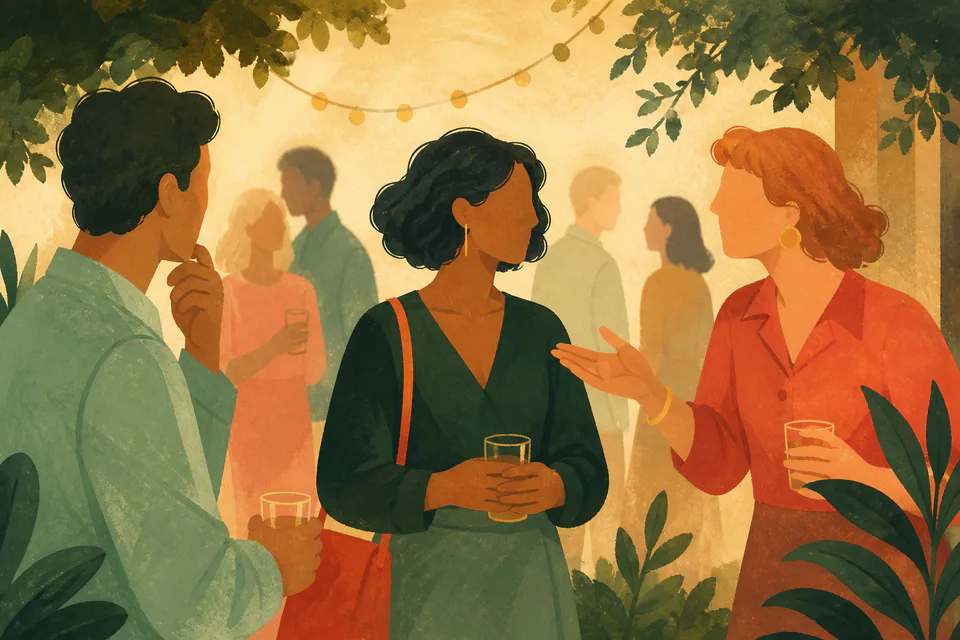
Listen through the publisher, then discuss the episode here or arrange an in-person Roundtable. Your city determines where to meet.
Roundtables are designed for groups of four, with a shared subject and room for everyone to speak. Come for discussion, with no dating expectation.
Sections of rock are completely missing from our geological record across continents. The great unconformity spans just over a billion years of history, leaving out critical periods in the evolution of life. Jonathan Webb speaks with Associate Professor Nicolas Flament about this geological puzzle and what could have caused it. Get in touch with us: [email protected] Featuring: Associate Professor Nicolas Flament, University of Wollongong Further information: The deep Earth origin of the Great Unconformity (https://www.nature.com/articles/s41586-026-11156-5)
Episode information is provided by the publisher. Listening takes place on the publisher’s service.
Viewers like you help make PBS (Thank you ) . Support your local PBS Member Station here: https://to.pbs.org/DonateSPACE Uploaded 25-10-17 For years, astronomers have been unable to find up to half of the baryonic matter in the universe. We may just have solved this problem. You can further support us on Patreon at https://www.patreon.com/pbsspacetime Get your own Space Time tshirt at http://bit.ly/1QlzoBi Tweet at us! @pbsspacetime Facebook: facebook.com/pbsspacetime Email us! pbsspacetime [at] gmail [dot] com Comment on Reddit: http://www.reddit.com/r/pbsspacetime Help translate our videos! https://www.youtube.com/timedtext_cs_panel?tab=2&c=UC7_gcs09iThXybpVgjHZ_7g (https://www.youtube.com/timedtext_cs_panel?c=UC7_gcs09iThXybpVgjHZ_7g&tab=2) Previous Episode: The Nature of Nothing | Space Time https://www.youtube.com/watch?v=X5rAGfjPSWE&t=55s (https://www.youtube.com/watch?t=55s&v=X5rAGfjPSWE) Dark Matter! Dark Energy Playlist We’ve known for some time that around 95% of the energy
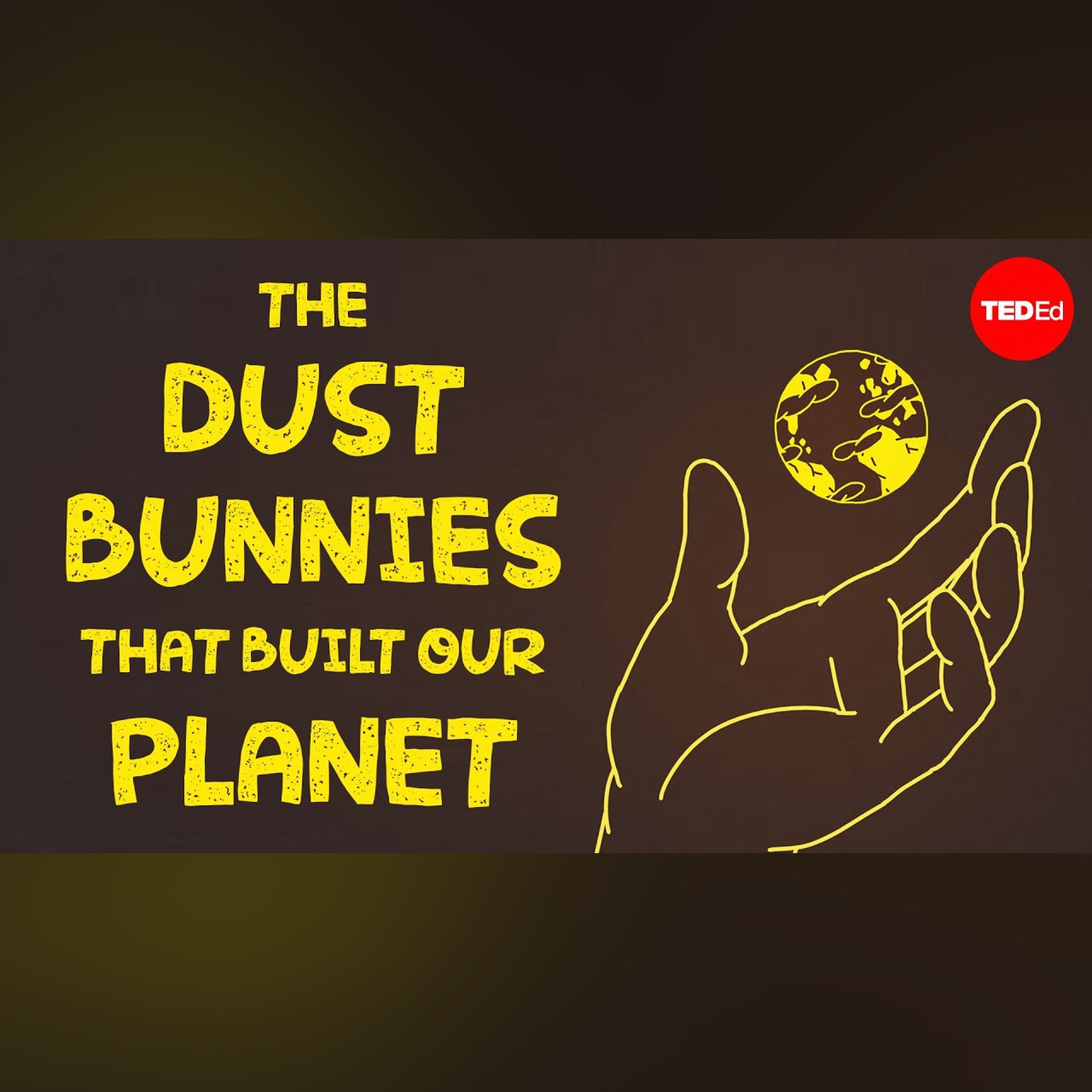
Investigate the theories surrounding cosmic dust bunnies and discover how the tiny particles could hold the key to the formation of life on Earth. Uploaded 05-09-19 -- Consider the spot where you’re sitting. Travel backwards in time and it might’ve been submerged at the bottom of a shallow sea, buried under miles of rock or floating through a molten landscape. But go back about 4.6 billion years, and you’d be in the middle of an enormous cloud of dust and gas orbiting a newborn star. What exactly is this cosmic dust? Lorin Matthews investigates. Lesson by Lorin Swint Matthews, directed by Frederic Siegel (Team Tumult). Sign up for our newsletter: http://bit.ly/TEDEdNewsletter Support us on Patreon: http://bit.ly/TEDEdPatreon Find us on Twitter: http://bit.ly/TEDEdTwitter Peep us on Instagram: http://bit.ly/TEDEdInstagram View full lesson: https://ed.ted.com/lessons/the-dust-bunnies-that-built-our-planet-lorin-swint-matthews Thank you so much to our patrons for your support! Without you
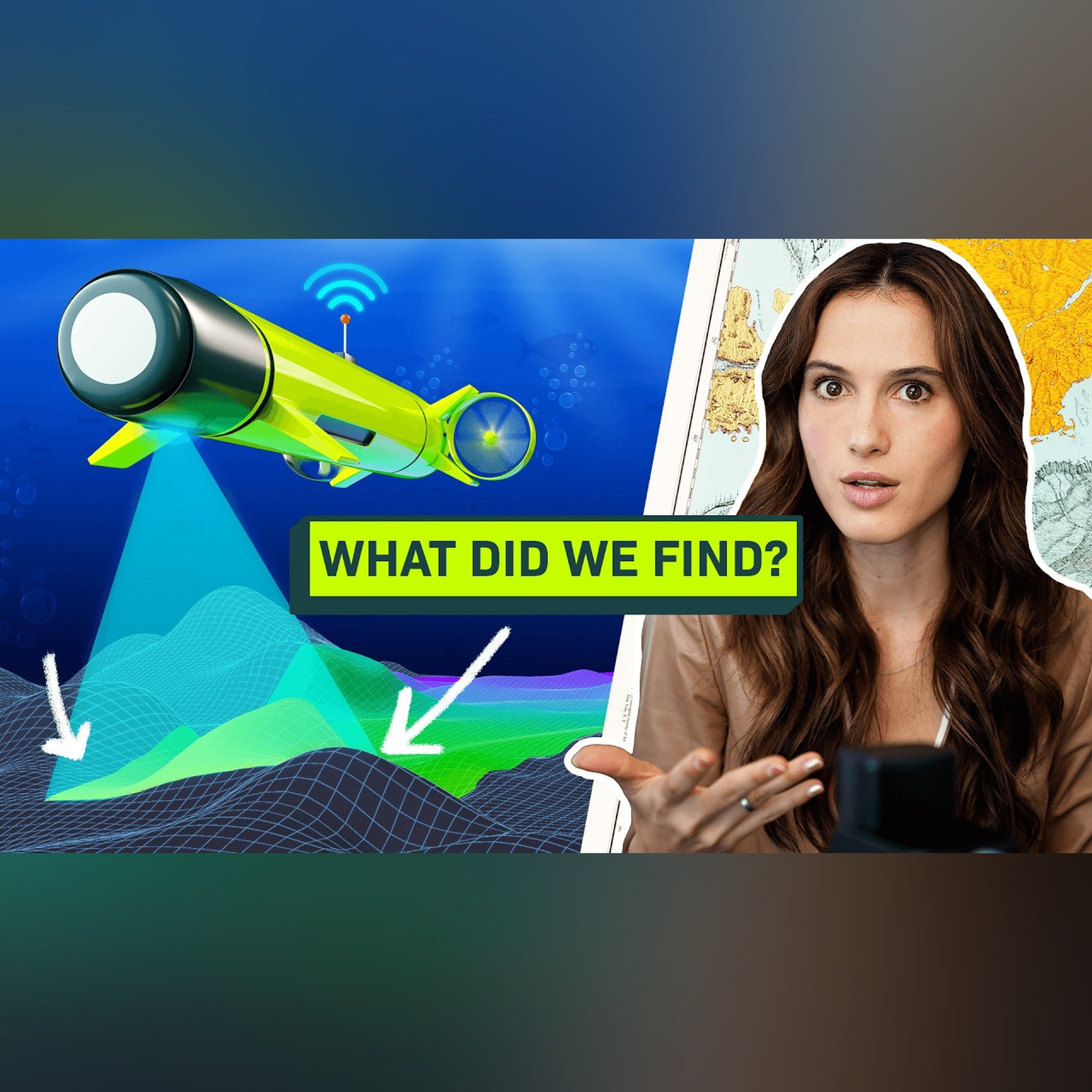
Why deep sea maps are SO BAD (and how to fix it)... Our maps of the ocean are surprisingly bad! On Google Maps it looks like we know so much… but we know less about the ocean floor than we do the surface of Mars. And that’s a big problem, because we are using the ocean all the time: We’re laying internet cables across it, we fight wars in it, we search it during a crisis - like the imploded OceanGate Titan submersible or the missing Malaysia Airlines Flight 370. 71% of the surface of the Earth is water! And yet we have a surprisingly limited view of what’s below it. But that’s also understandable. Because cartographically speaking, water sucks. For Mars or Earth’s surface, we can take pictures. But light doesn’t get to the ocean floor, so we need other ways to see it. The good news is, we’re developing that tech right now, and an international group called Seabed 2030 is working to piece together a better map. There is a terrifying, incredible, alien world on our own planet, and we’re
In this calm and sleepy facts episode, we journey far beyond our own solar system to explore the thousands of worlds orbiting distant stars, places we have only recently learned to find and are only just beginning to understand. We start with the basics of what an exoplanet is and how astronomers detect them, from the gentle dimming of a star as a planet passes in front of it to the tiny gravitational wobble a hidden world imprints on its sun. We visit the extraordinary harvest of the Kepler space telescope, which revealed that planets are not rare exceptions but the rule, scattered across nearly every star in the Milky Way. Along the way we encounter strange and extreme worlds, gas giants so close to their stars that they complete an orbit in mere days, tidally locked planets with one face locked in permanent daylight and the other in endless night, and rogue planets drifting alone through interstellar space with no star to call home. We explore the habitable zone, the narrow region a
After her father died suddenly, she inherited more than the family farm. She inherited the responsibility of keeping it running without the man who had spent nearly his entire life there. Then the longtime farmhands began quietly sharing strange experiences. One heard her father whistling outside the machine shed. Another heard his familiar footsteps in an empty barn. Someone else saw a man wearing his old brown work jacket standing beside a gate—only to look again and find no one there. She told them grief and memory could make familiar sounds feel more meaningful than they were. Then one evening, while working alone after everyone else had gone home, she heard three notes outside the barn. It was a whistle she had known since childhood. And nobody else on the farm would have understood what it meant. #GhostStories #FamilyGhost #SpiritVisit #HauntedFarm #Afterlife #SignsFromBeyond #Paranormal #FatherAndDaughter #Unexplained #Signs Love real ghost stories? Want even more? Want even mor
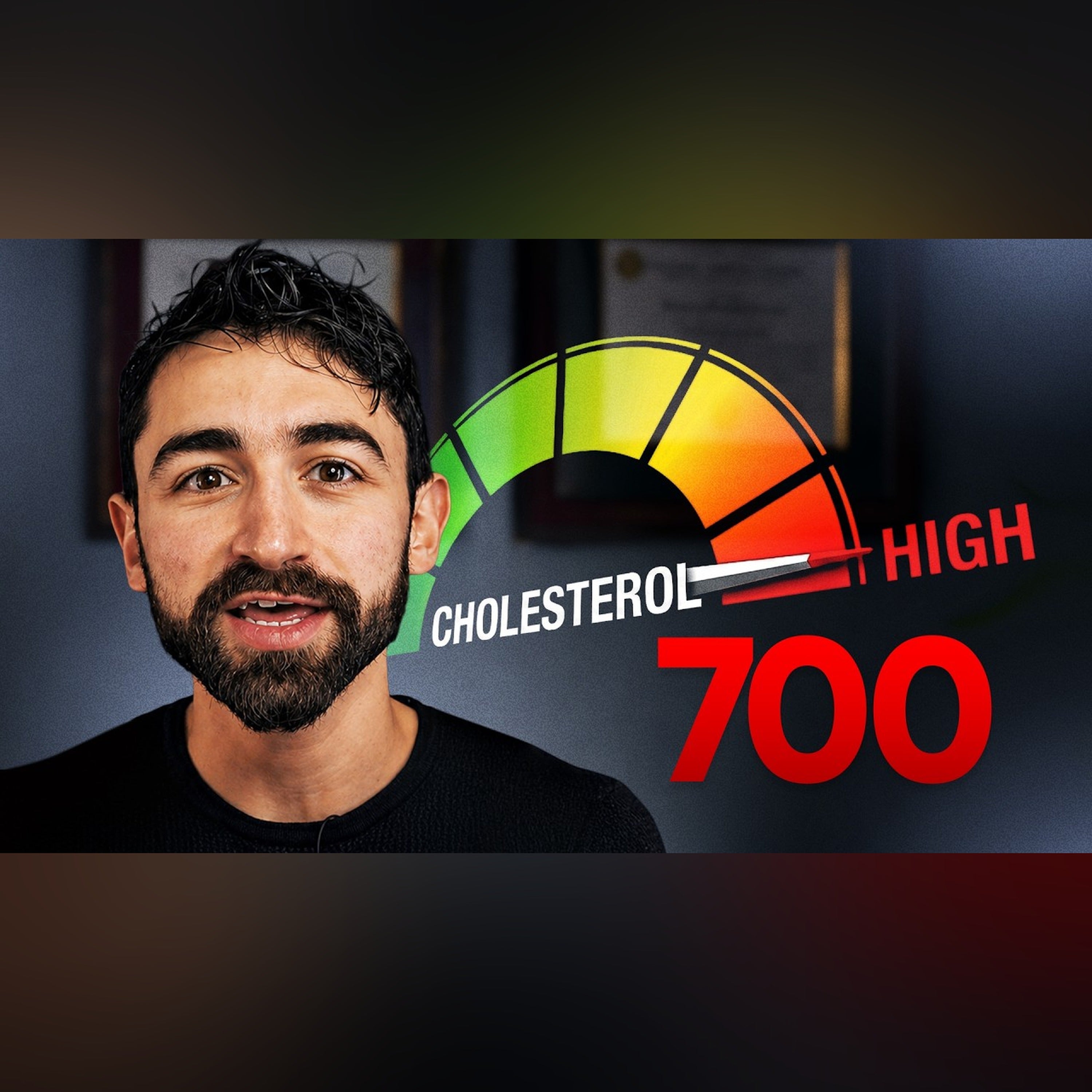
For a written breakdown, more nuances and early access to content, see the associated newsletter: https://open.substack.com/pub/staycuriousmetabolism/p/im-finally-lowering-my-cholesterol?r=40ekz2&utm_campaign=post&utm_medium=web&showWelcomeOnShare=true (https://open.substack.com/pub/staycuriousmetabolism/p/im-finally-lowering-my-cholesterol?r=40ekz2&showWelcomeOnShare=true) Statin RCT Video: https://youtu.be/d9LeDSoYOVc Ezetimibe Video: https://youtu.be/5idzP5ghT7A Bempedoic Acid Letter: https://staycuriousmetabolism.substack.com/p/beyond-cholesterol-the-unfolding?r=40ekz2 Description For the last seven years, despite extremely high cholesterol, I refused cholesterol-lowering medications. But I’ve just changed my mind…sort of. In this video, I walk through the full decision-making process: the risks, the uncertainty, the medical context, and the nuances that made this case unusually complicated. There are three plot twists. This is not medical advice. It’s a detailed look at an unusual
66 years ago, three researchers published a paper in the Journal Science titled Doomsday: Friday, 13 November, A.D. 2026. In it, they predicted the end of the world, but a few assumptions they made make the event unlikely. Jonathan Webb unravels this prediction with our myth-busting science reporter, Ellen Phiddian, explaining why we shouldn't worry… hopefully. Get in touch with us: [email protected] Featuring: Ellen Phiddian, science reporter Further information:
We don't know a lot about deep-sea eels, so when 2.8 million of them are found in the same place every year, scientists (and science reporters) get excited. Why are they there? Where are they coming from, and why should we care about these creatures from the depths? Jonathan Webb dives into this world of eels off the coast of Tasmania with environment reporter Peter de Kruijff. Get in touch with us: [email protected] Featuring: Peter de Kruijff, environment reporter Further information: Australia's giant spawning eel ball estimated to contain 2.8 million eels (https://www.abc.net.au/news/science/2026-10-28/australia-biggest-eel-ball-2-8-million-off-tasmania/107309716)
A rule should not be introduced unless it can be enforced fairly.
Share your view, then see how readers voted. No sign-in required. This poll is shared across stories.
Do you agree or disagree?
Common Quandary
A Common Quandary to discuss
Another conversation to explore, separate from this news story.
An old friend refuses to use someone's new name. Do you correct them at the reunion?
At a reunion, an old friend repeatedly uses the name a former classmate had years ago. They say shared history gives the old name affectionate meaning; the classmate has clearly introduced themselves with a different name.
When does preserving your shared past deny who someone is now?