Metabolizing Alzheimer’s: A New Key to Stopping Brain Damage
10 min
Listen through the publisher, then discuss the episode here or arrange an in-person Roundtable. Your city determines where to meet.
Roundtables are designed for groups of four, with a shared subject and room for everyone to speak. Come for discussion, with no dating expectation.
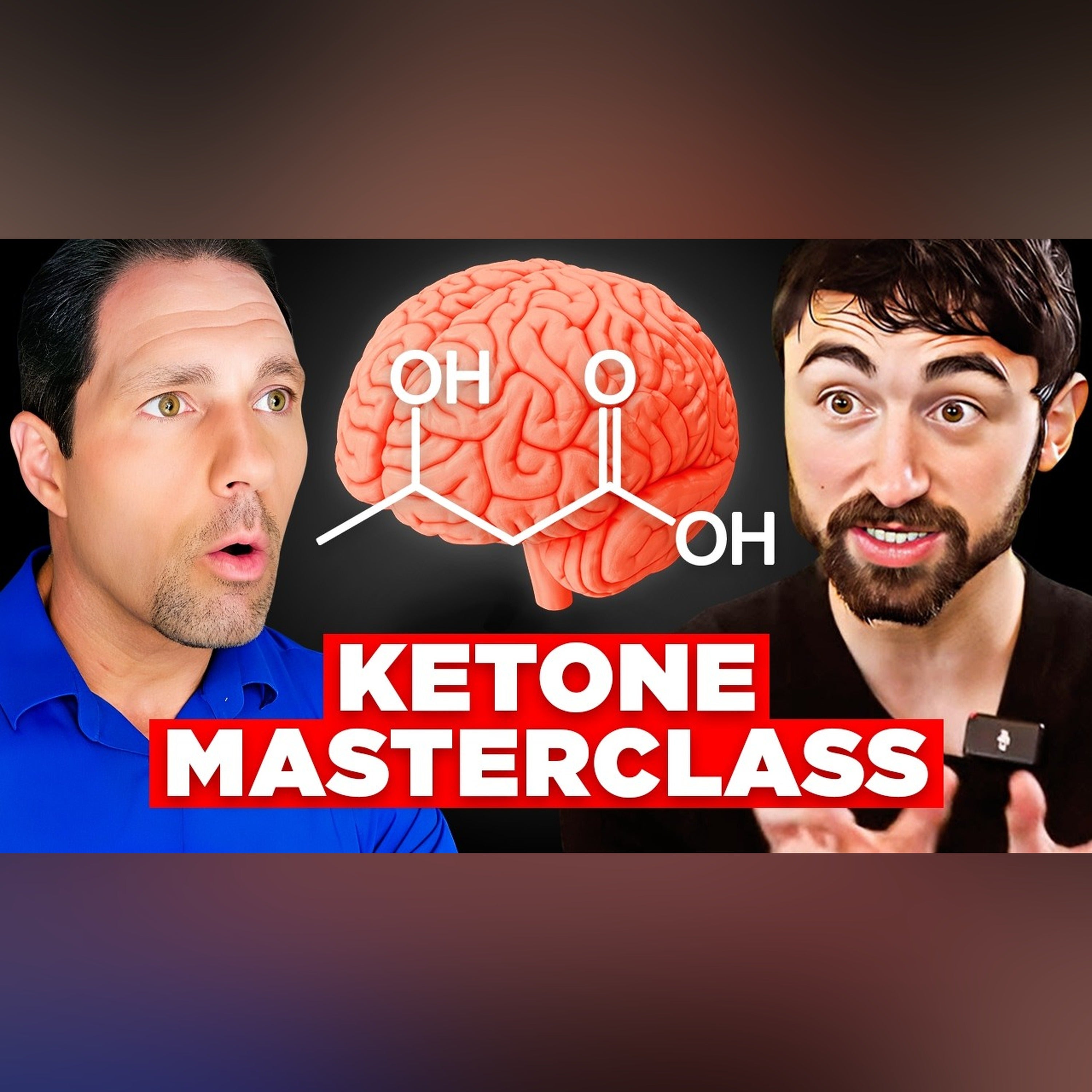
Alzheimer's disease is a metabolic disease where brain cells, including neurons and their support cells called astrocytes, struggle to produce and process energy. This energetic failure contributes to dementia. New research published in Science has identified a key protein in brain metabolism, IDO1, that contributes to energy crisis in Alzheimer’s disease. In this video, I’ll break down the latest findings and explain how this pathway can be targeted to slow or prevent Alzheimer's progression. Stay until the end for my high-level recommendations to protect yourself from dementia today. #alzheimersdisease #brainhealth #metabolichealth Chapters 0:00 – New paper: Alzheimer’s is a metabolic disease 0:52 – Brain metabolism background: Astrocytes and Lactate 1:32 – IDO1 enzyme is a Key Player in Alzheimer’s disease 3:09 – How to Rescue Brain Metabolism with Cancer Drug 4:33 – 4 Practices to Protect Against Dementia Paper: https://www.science.org/doi/abs/10.1126/science.abm6131 Prior Video on Fish and Brain Health: https://youtu.be/Tr7WB_u8gcY APOE-Genotype and Dietary Macronutrients on Cognitive Performance: https://pubmed.ncbi.nlm.nih.gov/37778510/ Precision Nutrition in ApoE4: https://pubmed.ncbi.nlm.nih.gov/33921683/
Episode information is provided by the publisher. Listening takes place on the publisher’s service.
Keto Consult #12, This week Jennifer and I talk about my experience at the Metabolic Health Center 2019. I was able to hear some really interesting lectures about Keto for Cancer and Keto for Mental Health. The talk about Keto for Cancer and Keto for Mental Health has come such a long way in the past 2 years and continues to evolve. We also discuss the Effects of Marijuana on the Brain and Hyperbaric Oxygen Chambers and the benefits of Hyperbaric Oxygen Therapy. Finally we get an update from Jennifer and discuss her personal Keto Journey. Thanks for tuning into my channel. To learn more about Keto and Cancer, read my blog here: https://bozmd.com/m-d-anderson-on-the-keto-diet-and-cancer/ BOOK-LINK - ANYWAY YOU CAN. AUDIBLE: https://adbl.co/2SLLfS1 PAPERBACK= (Affilate link) https://amzn.to/2Cq1IVC The two most common questions I get ... 1) "Doc, what BLOOD METER do you recommend?" ANSWER: FORACARE: http://bit.ly/2QKGmKG For years my diabetics told me this system was great. I tried sever
Explore how pulling an all-nighter can impact your cognitive function, and find out what happens to your brain when you don't sleep. -- You’re just one history final away from a relaxing spring break. But you still have so much to study! You decide to follow in the footsteps of many students before you, and pull an all-nighter. So, what happens to your brain when you stay up all night? And does cramming like this actually help you prepare for a test? Anna Rothschild explores how a sleepless night impacts your cognitive function. Lesson by Anna Rothschild, directed by Biljana Labović. Animation by Noam Sussman & Ali Kellner, Homework Studio. This video made possible in collaboration with the Bezos Family Foundation Learn more about how TED-Ed partnerships work: https://bit.ly/TEDEdPartner A special thanks to Dr. Mathias Basner, Andrew Fuligni, Adriana Galván, and UCLA Center for the Developing Adolescent who provided information and insights for the development of this video. Support Ou
Text me what you thought of the show (https://www.buzzsprout.com/1959372/fan_mail/new) Can working night shifts affect your fertility, ovulation or IVF success? After speaking with numerous women trying to fall pregnant while working shifts, including those undergoing expensive IVF treatment, I wanted to explore what the research actually tells us. In this episode of A Healthy Shift, we discuss how night shifts, disrupted sleep and circadian misalignment may affect reproductive health. We cover: Why the fertile window is so short. Shift work, reproductive hormones and menstrual irregularities. What research says about night shifts, fertility and IVF outcomes. The roles of sleep, stress, nutrition, weight and exercise. Practical steps for women trying to conceive while working shifts. Research links shift work with menstrual irregularities, but evidence that night shifts directly cause infertility or reduce IVF success remains uncertain. If you're trying to get pregnant while working ni
Brain chips don't read your mind. They do something weirder... This is Neuralink’s Next Gen R1 surgical robot. It’s one of several new ways scientists are now trying to combine the human brain with a computer, which sounds like science fiction because… it is! But not anymore. And you need to know about this right now, because human clinical trials are happening and this tech is moving fast. Some people want to use it to make you superhuman. But I think most people aren’t seeing what’s really huge if true here. This story isn’t about how to make us more like machines Instead, this might be one of the most cutting edge ways to keep us human. Visit http://mercury.com (http://mercury.com/) to join over 300 thousand entrepreneurs who love Mercury. Mercury is a financial technology company, not an FDIC-insured bank. Banking services provided through Choice Financial Group and Column N.A., Members FDIC. Chapters: 00:00 What if you put a chip in your brain? 01:02 What does a human brain feel l
Viewers like you help make PBS (Thank you ) . Support your local PBS Member Station here: https://to.pbs.org/DonateSPACE Uploaded 20-12-17 Find out about the last time and the next time the Earth will be hit by a Gamma-ray Burst. You can learn more about your personal DNA story by going to https://23andme.com/spacetime You can further support us on Patreon at https://www.patreon.com/pbsspacetime Get your own Space Time tshirt at http://bit.ly/1QlzoBi Tweet at us! @pbsspacetime Facebook: facebook.com/pbsspacetime Email us! pbsspacetime [at] gmail [dot] com Comment on Reddit: http://www.reddit.com/r/pbsspacetime Help translate our videos! https://www.youtube.com/timedtext_cs_panel?tab=2&c=UC7_gcs09iThXybpVgjHZ_7g (https://www.youtube.com/timedtext_cs_panel?c=UC7_gcs09iThXybpVgjHZ_7g&tab=2) Previous Episode: The Origin of Our First Interstellar Visitor Gamma-ray bursts are much less common than regular supernovae, and in fact regular supernovae can do just as much damage as a GRB. Howeve
Microplastics in my Heart Letter: https://staycuriousmetabolism.substack.com/p/microplastics-in-my-heart-its-worse?r=40ekz2 Stanford Fiber RCT, Letter https://staycuriousmetabolism.substack.com/p/fiber-is-good-for-you-is-lazy-science?r=40ekz2 Microbiome Reset, Letter https://staycuriousmetabolism.substack.com/p/how-im-rebuilding-my-microbiomeafter?r=40ekz2 Description: Microplastics are everywhere—in our food, water, and inside our bodies—and avoiding them completely is nearly impossible. In this conversation, I sit down with Dr. Matthew Dunn PhD, a molecular biologist working at the intersection of biotechnology and human health, to unpack what the science actually says about microplastics and how they may be linked to cardiovascular disease, reproductive health issues, and gut inflammation We break down the landmark human data, the animal and cellular studies that help explain possible mechanisms, and dissect the state of the data. We also explore a potential inside-out solution: usi
In this conversation, I sit down with Professor Dom D’Agostino, one of the world’s leading experts on metabolic therapies, ketosis, and exogenous ketones. We dive deep into the science of ketone esters, MCT oils, and 1,3-butanediol, breaking down how these compounds affect the brain, liver, and mitochondria. If you’ve ever wondered what ketone supplements actually do, this interview cuts through hype with hard data, clinical context, and self-experimentation. Mitochondrial Migration (Adapt) Video: https://youtu.be/R9x5Y57HuoA 0:00 – Ketones Can Rescue the Brain from Hypoglycemia 2:00 – The Self-Experiment That Changed Dom’s Career 5:00 – Ketones as a Lifeline in Severe Hypoglycemia 8:15 – Ketone Esters Explained: Forms, Effects, and Risks 16:10 – What Are MCTs and How They Boost Ketones 18:00 – The Story of MCT Oil and Alzheimer’s Disease 27:40 – Polyunsaturated Fats (PUFAs) and Ketone Production 33:00 – Ketone Salts: Benefits, Risks, and Misconceptions 36:00 – The Hidden Dangers of 1,
For extra nuances and all the references, please see the newsletter: https://staycuriousmetabolism.substack.com/p/how-i-hacked-my-girlfriends-brainwith?r=40ekz2&utm_campaign=post&utm_medium=web&triedRedirect=true (https://staycuriousmetabolism.substack.com/p/how-i-hacked-my-girlfriends-brainwith?r=40ekz2&triedRedirect=true) Can light influence attraction, hormones, and even reproductive biology? In this video, we explore surprising research on light exposure, testosterone, estrogen, fertility signals, and behavioral changes observed in both animal models and human studies. From hormone cascades triggered through the skin to seasonal changes in reproductive biology, this is a fascinating look at how deeply light may shape human physiology. Along the way, I also test whether increasing my own sunlight exposure changes my testosterone levels and reveal how my girlfriend hacked my brain! For more nuance, mechanisms, protocols, and limitations behind these findings, check out the full deep
Established legal precedents should change when strong reasons outweigh the value of consistency.
Share your view, then see how readers voted. No sign-in required. This poll is shared across stories.
Do you agree or disagree?
Common Quandary
A Common Quandary to discuss
Another conversation to explore, separate from this news story.
If a good deed is filmed for likes, is it still a good deed?
A local creator films themselves buying groceries for strangers. The videos generate substantial income, but they also inspire donations and allow the creator to help more people.
Do mixed motives diminish a genuinely helpful act?