Listen through the publisher, then discuss the episode here or arrange an in-person Roundtable. Your city determines where to meet.
Roundtables are designed for groups of four, with a shared subject and room for everyone to speak. Come for discussion, with no dating expectation.
View full lesson: http://ed.ted.com/lessons/mosquitos-malaria-and-education-bill-gates Bill Gates hopes to solve some of the world's biggest problems using a new kind of philanthropy. In a passionate and, yes, funny 18 minutes, he asks us to consider two big questions and how we might answer them. Talk by Bill Gates.
Episode information is provided by the publisher. Listening takes place on the publisher’s service.
Private equity is moving from the private-wealth world toward ordinary retirement accounts. Don and Tom unpack the hidden valuations, limited liquidity, higher costs, and conflicts that can follow when opaque assets are slipped into target-date funds. Then Kerry asks how to create a steadier retirement reserve outside a balanced fund, including whether a five-year CD ladder could help avoid selling stocks in a downturn. The conversation continues with the very different risks behind Treasury bonds and debt issued to finance the AI boom. Finally, they consider whether Roth conversions still make sense when the tax bill must come from the IRA itself—and why the answer may be less dramatic than the headlines suggest. 00:43 Private equity comes for target-date funds 12:50 Building retirement reserves beyond a balanced fund 18:45 AI corporate bonds versus Treasuries 23:25 Paying taxes for Roth conversions Questions? Comments? Click! (https://www.buzzsprout.com/2607021/fan_mail/new)
Online voting is not like online banking… Get your Henson razor (with 100 extra blades): http://hensonshaving.com/cleo This year, more people will likely vote than ever before in history. It’s being called the “The Ultimate Election Year”, when countries with half the world’s population can vote for their leaders. This big test of democracy requires millions of polling stations and billions of ballots. But voting’s not always easy! People might deal with long lines or need to travel far distances. In the US, we vote on a Tuesday, so people often need to take time off work… I’m really excited to vote! And I’ve also been wondering… wouldn’t it be easier if I could just… hit a button on my phone? Why can’t I vote online? And what would happen if I could? Over the past two months, I called up a bunch of voting and security experts to try to answer that question. And the answer I found is more controversial, complicated, and high stakes than I could have ever imagined… Chapters: 0:00 Why ca
Global AI news you might have missed, plus using AI for automatically finding consensus Episode release date: 22 Jun 2023 Core Ideas: Metamodernism: Narratives and emergence view of reality - Reduce suffering - Increase prosperity - Increase understanding mantra: Seek knowledge. DISCLAIMER: This is a community-driven show. ------- Keywords: chatbots, ai education, ai consciousness, ai agents, machine autonomy
Monday AI news covers NVIDIA's board reversing course on Jensen Huang, a slide in AI stocks, Google's changing homepage, and a security study on leaked AI credentials. Minutes before air, NVIDIA's board voted unanimously to reinstate Jensen Huang as CEO. A week earlier it had said it would not consider doing so, and its investigating committee continues its work. The conversation moves through Friday's drop in AI stocks, Google AI Mode shopping with Target, and Google's new task features alongside assistants like Duet and Dot. Other topics include data privacy concerns with AI texting startups, an OpenAI paper on perplexity as a measure of model confidence, a new Google homepage built around AI conversations, which appeared and disappeared between refreshes in what looks like an A/B test, and Dragos research using canary tokens that found exposed AWS credentials were the ones most often used. The show closes on Australia elevating AI to a national security challenge, Thinking Machines
A cheap HDMI capture card and Claude let a blind user get into a PC's BIOS without a monitor or sighted help. Steven Scott and Shaun Preece explain how it works, announce the new Good Vibes podcast, and work through a full inbox on iOS 27, Mastodon, Envision and Gemini. Steven plugged his Dell XPS into an HDMI capture card. Claude took screenshots and told him which keys to press, tab by tab, until he was inside the BIOS. Shaun used Whisper and Claude to trim a video in about two minutes. The hosts also talk about Media Access, a new audio editor from Brian Hartgen, and about using AI to make video shorts with captions. Good Vibes is a new podcast where blind people vibe code. It has interviews and demos, and the idea behind it is simple: if they won't build it for us, we'll build it ourselves. It debuts on Double Tap Live on 27 November and arrives in podcast apps on 30 November. In the inbox, Mike in Upstate New York finally updates to iOS 27, and the hosts compare VoiceOver bugs. Go
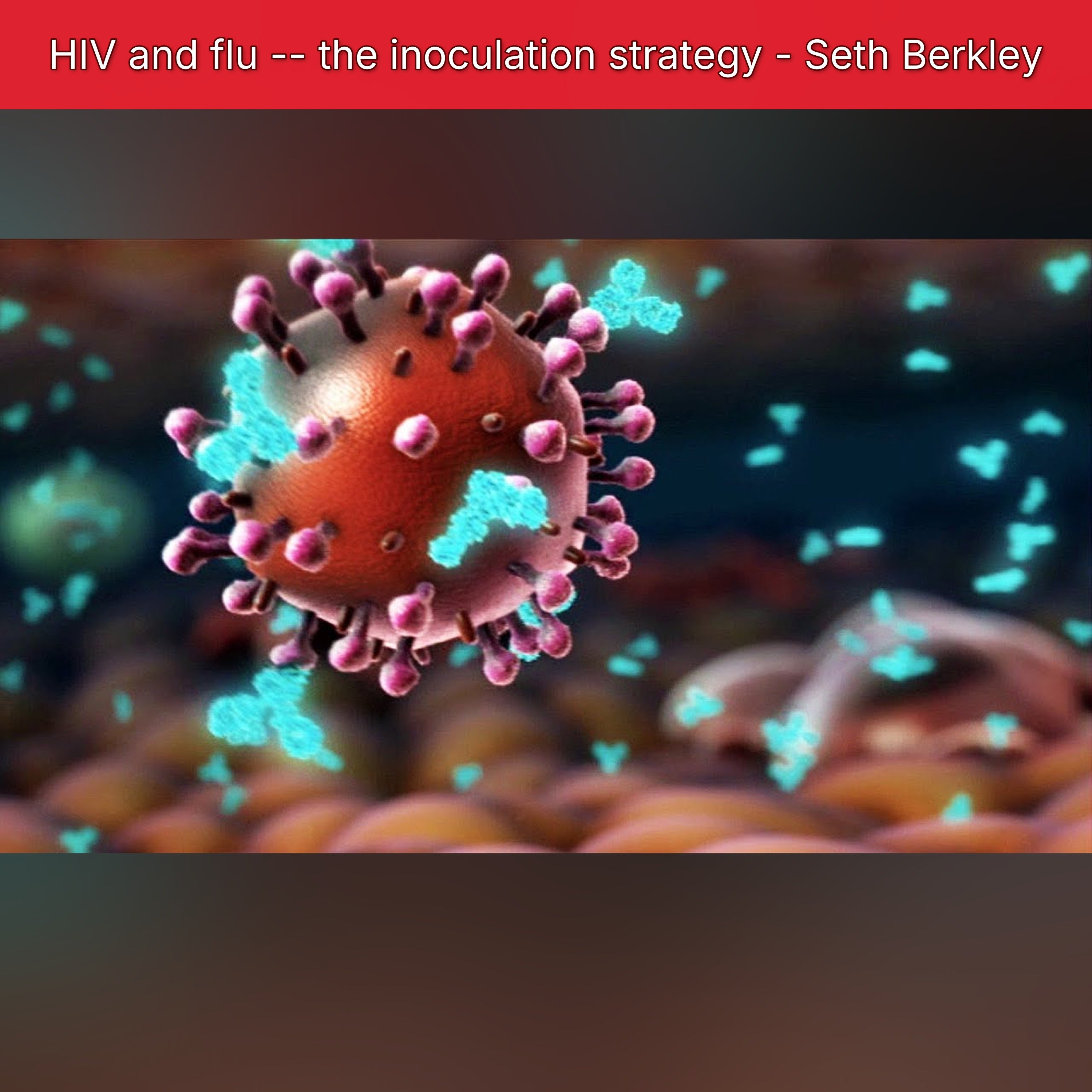
View full lesson: http://ed.ted.com/lessons/hiv-and-flu-the-vaccine-strategy-seth-berkley Seth Berkley explains how smart advances in vaccine design, production and distribution are bringing us closer than ever to eliminating a host of global threats -- from AIDS to malaria to flu pandemics. Talk by Seth Berkley.
The world needs clean water, and more and more, we're pulling it from the oceans, desalinating it, and drinking it. But what to do with the salty brine left behind? In this intriguing short talk, TED Fellow Damian Palin proposes an idea: Mine it for other minerals we need, with the help of some collaborative metal-munching bacteria. Uploaded 05-07-13 Talk by Damian Palin.
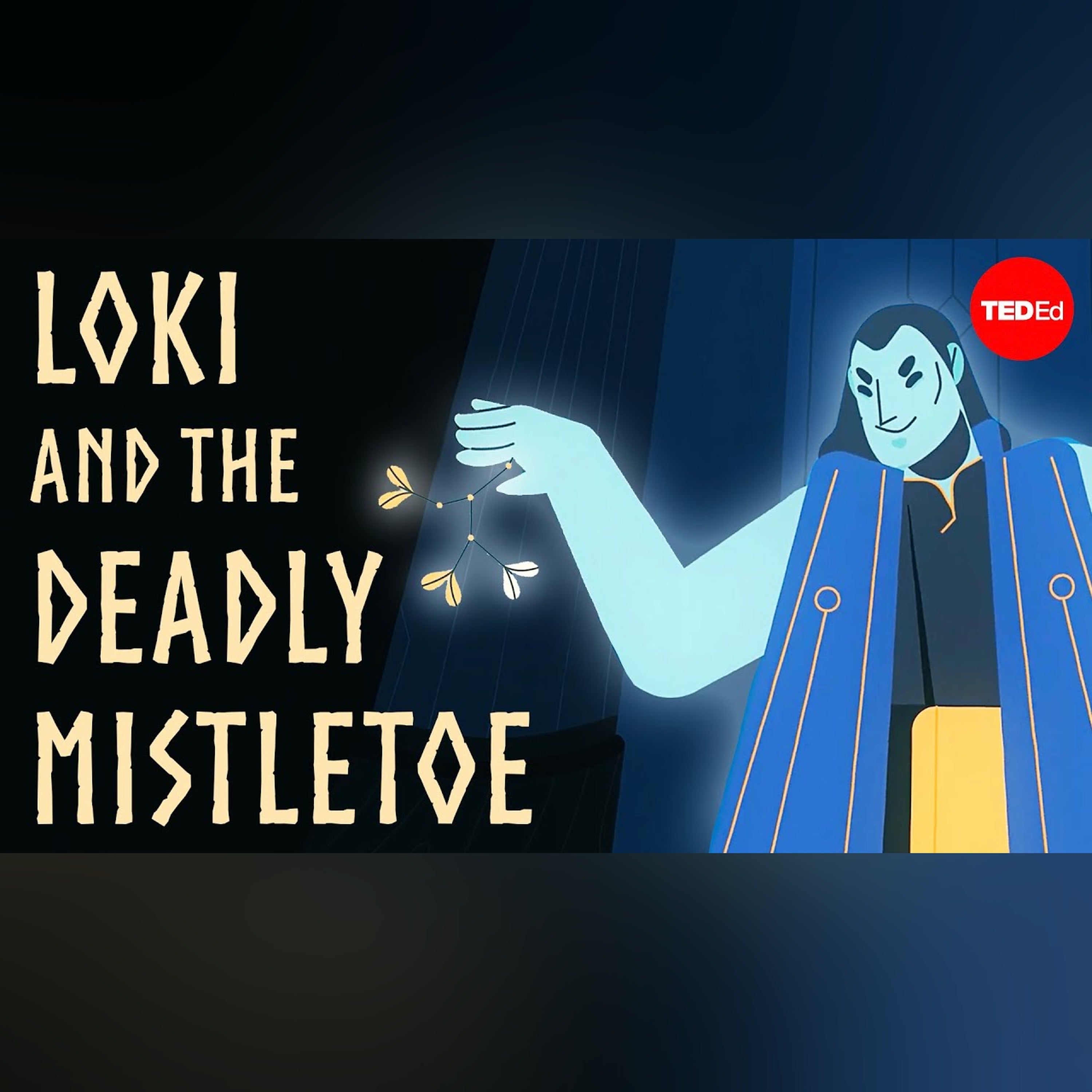
Discover the Norse myth of Baldur, the most beloved being in Asgard, and how the trickster god Loki plotted his death. Uploaded 01-12-20 -- Baldur was the gentlest and most beloved being in all of Asgard. But lately, he had been plagued by gruesome visions foretelling his own imminent death. Determined to protect her son from these grim prophecies, Queen Frigg travelled across the nine realms, begging all living things not to harm Baldur— all living things except one. Iseult Gillespie shares the myth of the death of Baldur. Lesson by Iseult Gillespie, directed by WOW-HOW Studio. Support Our Non-Profit Mission ---------------------------------------------- Support us on Patreon: http://bit.ly/TEDEdPatreon Check out our merch: http://bit.ly/TEDEDShop ---------------------------------------------- Connect With Us ---------------------------------------------- Sign up for our newsletter: http://bit.ly/TEDEdNewsletter Find us on Twitter: http://bit.ly/TEDEdTwitter Peep us on Instagram: http
Public information should be withheld only when there is a clear reason for confidentiality.
Share your view, then see how readers voted. No sign-in required. This poll is shared across stories.
Do you agree or disagree?
Common Quandary
A Common Quandary to discuss
Another conversation to explore, separate from this news story.
The stadium can ban violent fans by scanning every face at the gate. Would you walk in?
A stadium can use facial recognition to identify people banned for violence and shorten security lines. Every visitor would be scanned, error rates are not zero, and the resulting biometric data could become useful to police or advertisers.
How much privacy may a crowd be asked to trade for collective safety?