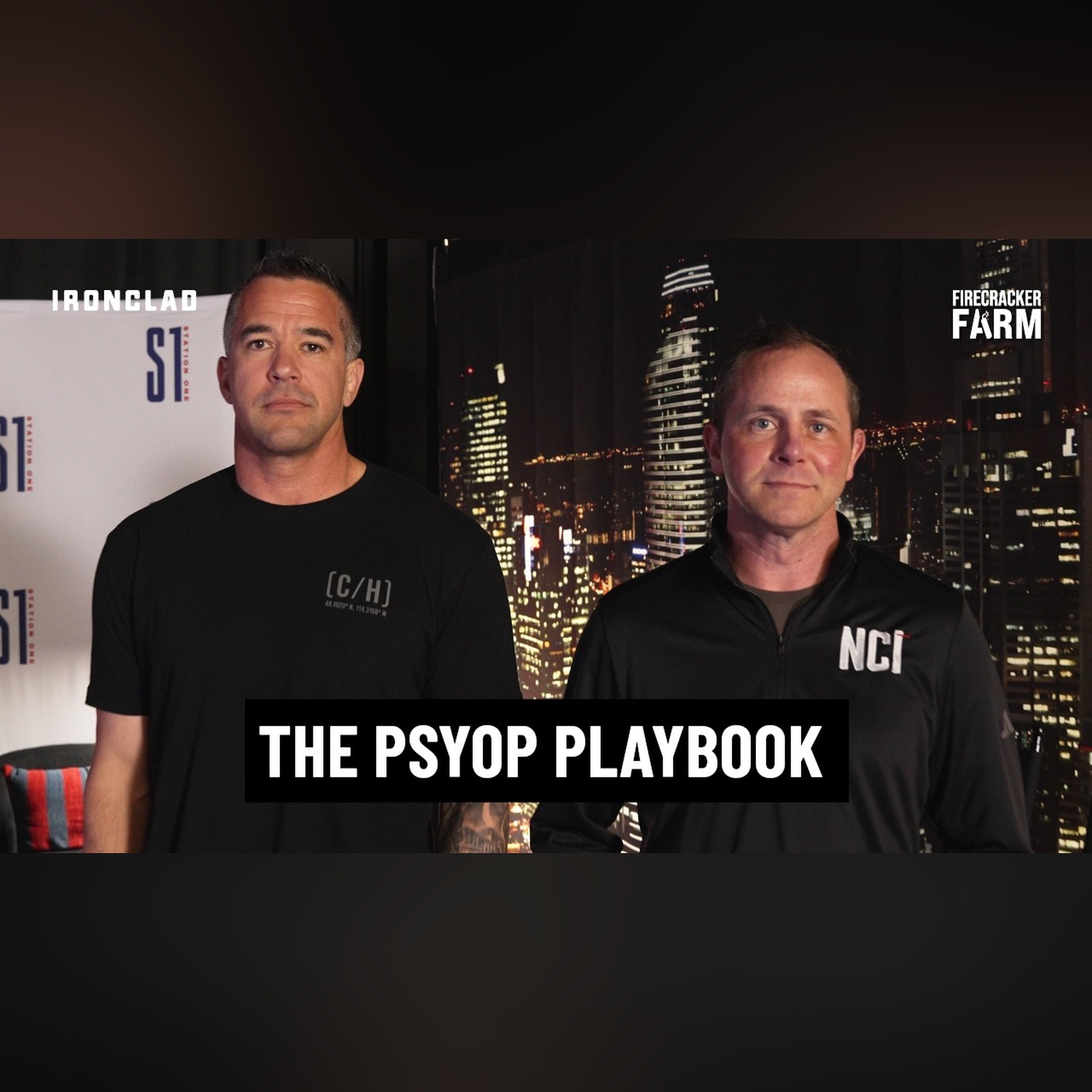
This is a PREVIEW of the upcoming episode of Change Agents. The full episode drops tomorrow at 5pm EST Uploaded 18-06-26 On this week's episode of Change Agents, Andy travels to Chase Hughes' new studio to break down how human behavior is manipulated at scale, from bot farms manufacturing fake consensus to the psychological framework Chase calls WOUND that explains why outrage, fear, and loneliness keep us glued to our phones. They dig into why Chase believes the algorithm is less a sinister mastermind and more an engine optimized purely for ad revenue, how think tanks may shape policy more than most people realize, and why Walter Cronkite and Julia Child both have far stranger backstories than anyone learned in school. Andy also gets a tour of Chase's new independent news studio, Station One, built to show audiences the psyops behind the headlines rather than just the headlines themselves. Change Agents is an IRONCLAD Original Firecracker Farm Norwood Sawmills: Learn more about Norwoo
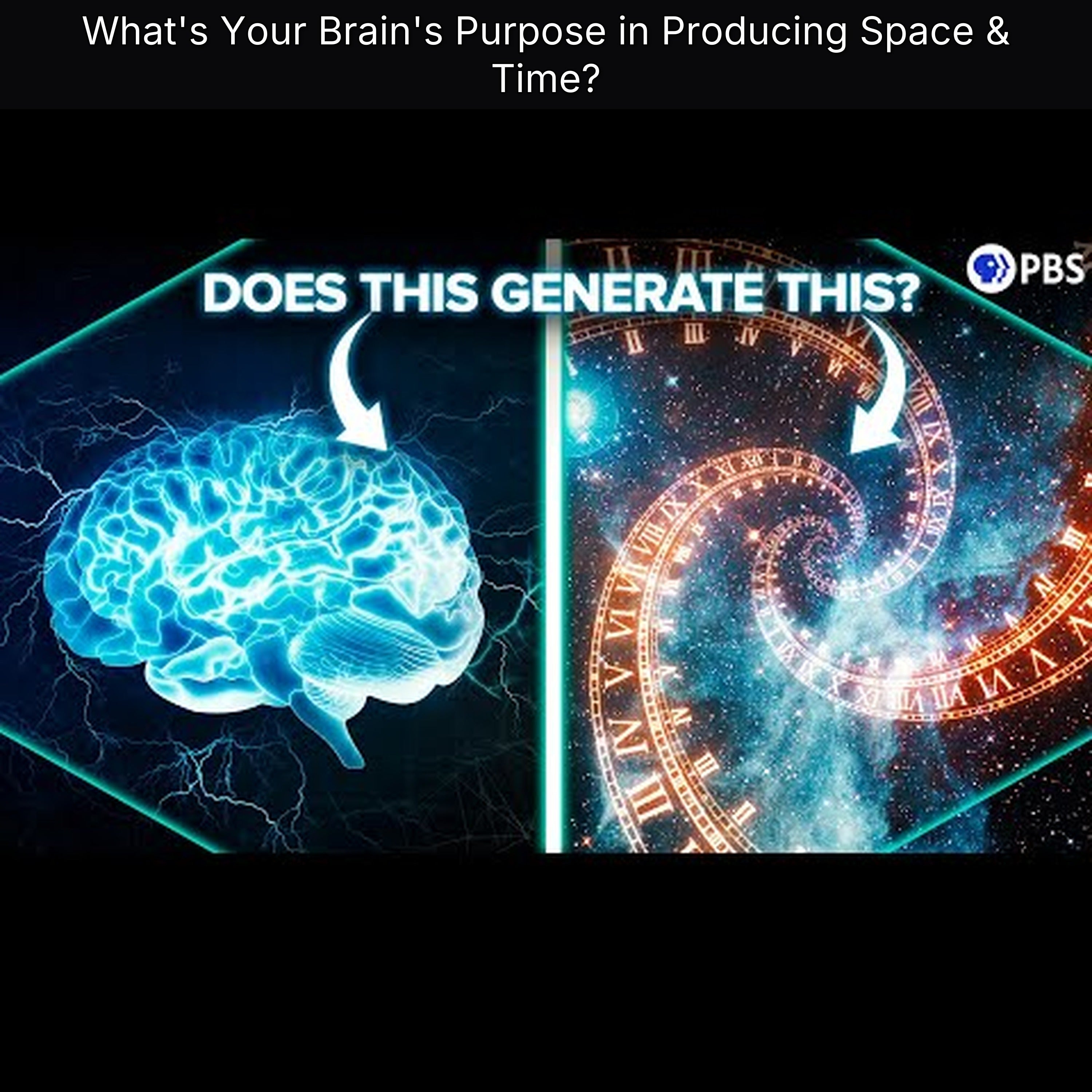
PBS Member Stations rely on viewers like you. To support your local station, go to:http://to.pbs.org/DonateSPACE Sign Up on Patreon to get access to the Space Time Discord! Physics is the business of figuring out the structure of the world. So are our brains. But sometimes physics comes to conclusions that are in direct conflict with concepts fundamental to our minds, such as the realness of space and time. How do we tell who’s correct? Are time and space objective realities or human-invented concepts? Episode Companion Playlist Check out the Space Time Merch Store Search the Entire Space Time Library Here: https://search.pbsspacetime.com/ Hosted by Matt O'Dowd Written by Bahar Gholipour & Matt O'Dowd Post Production by Leonardo Scholzer, Yago Ballarini, Pedro Osinski, Caique Oliveira, Adriano Leal & Stephanie Faria Directed by Andrew Kornhaber Associate Producer: Bahar Gholipour Executive Producers: Eric Brown & Andrew Kornhaber Executive in Charge for PBS: Maribel Lopez Director of P
Most people are looking at wealth wrong. They think it comes from doing something big — picking the right stock, starting the right business, inheriting the right money, catching the right break. Uploaded 15-06-26 They're watching for the big move. The dramatic decision. The lucky moment that's going to change their financial life. They're watching in the wrong direction. Wealth doesn't come from a big move. Wealth comes from a thousand small ones, done quietly, every single day, for decades. The people who actually have money — not the people who look like they have money, but the people who actually have it — share a set of habits that are almost embarrassingly quiet. None of these habits would make a good news story. None of them would sell a book. None of them feel like the answer when you first hear them. They are too small, too slow, too unimpressive. But the quiet habits are doing the work. While other people are looking for the big move, the quietly wealthy are running these ha
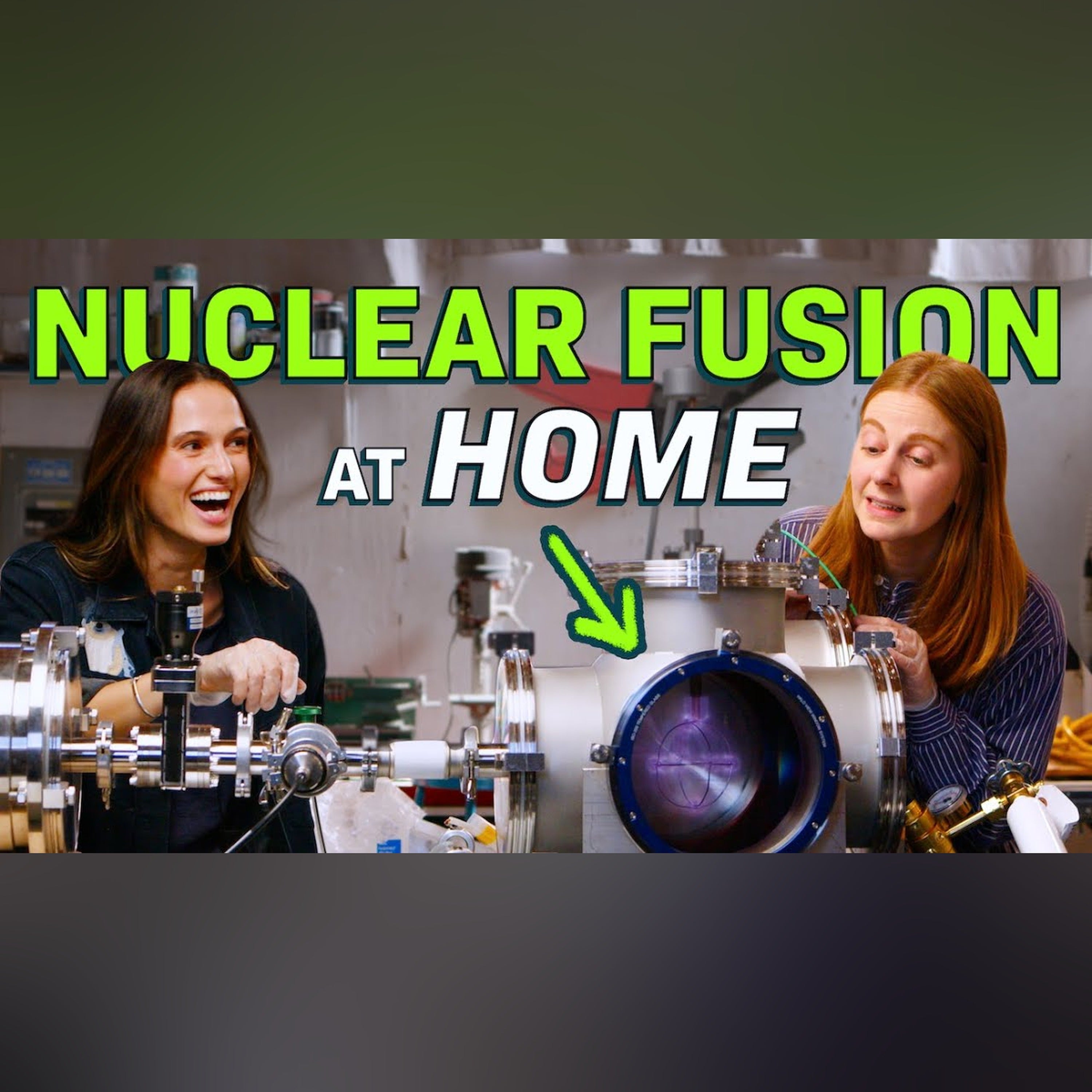
We attempted nuclear fusion. In Simone’s workshop. Disclaimer: This build was supervised by experts at Helion. Do not try this at home. I still can’t believe this video really happened. Back in May, I interviewed Helion CEO David Kirtley. I was trying to understand nuclear fusion: Is nuclear fusion possible now? How does fusion actually work? And most importantly, is nuclear fusion the future? Then, at the end of the interview, I asked David about headlines I’d seen about people building nuclear fusion devices in their backyards - what were they doing? “Oh,” David replied, “you can build one.” What followed is the biggest adventure yet on Huge If True. Together with the team at Helion and my friend fellow YouTuber Simone Giertz, we BUILT A NUCLEAR FUSION DEVICE to show how nuclear fusion works, what the big remaining challenges are, and how it might help us all in the future. Then, the last step was to try to turn it on… WATCH "FUSION, EXPLAINED: PART 1" HERE: https://youtu.be/piPbnKdv
Making others happy might just be the key to finding true joy within yourself. In this message, Tony Robbins and Sage Robbins shares how focusing on connection, contribution, and meaningful relationships can lead to a deeper sense of fulfillment and purpose. Uploaded 20-07-25 Watch more videos like this Rebuild Trust and Connection in Any Relationship | Tony Robbins Intervention: https://youtu.be/oq-13UXCsOk These 6 Psychological Needs Control EVERYTHING You Do: https://youtu.be/HVwUfSiZUZM How To Influence ANYONE In Your Life (No Matter How Difficult...): https://youtu.be/nyRnnn82ATg How Your Language Shapes EVERYTHING Around You: https://youtu.be/4uqkkFiT5hk Join "The Edge" - Tony Robbin's FREE weekly newsletter: https://tonyr.co/3YJ0m2L Try Tony AI for just $1: https://tonyr.co/4cr742A Follow Tony Robbins: Facebook: https://www.facebook.com/TonyRobbins Instagram: https://instagram.com/tonyrobbins/ TikTok: https://www.tiktok.com/@tonyrobbins Twitter: https://twitter.com/tonyrobbins L
A.I. for Starting to Exercise: Building a Routine That Actually Sticks, a practical, beginner-friendly look at how artificial intelligence can help you build a routine that actually sticks this time. Starting to Exercise? Press play on Episode 429 of A.I. for Beginners and learn exactly how artificial intelligence, especially ChatGPT, alongside Nike Training Club, can help you build a routine that actually sticks this time. WHAT YOU WILL LEARN IN THIS EPISODE - Why starting to exercise is so hard to handle alone, and what is actually going on underneath it - A specific way to use Nike Training Club to work through it, step by step - An example prompt you can copy word for word: "Here is my current fitness level and schedule, help me build a realistic beginner routine" - A second practical technique, with another ready-to-use prompt: "Give me a simple way to track my progress that doesn't rely on willpower alone" WHO THIS EPISODE IS FOR - Anyone currently working on starting to exercise
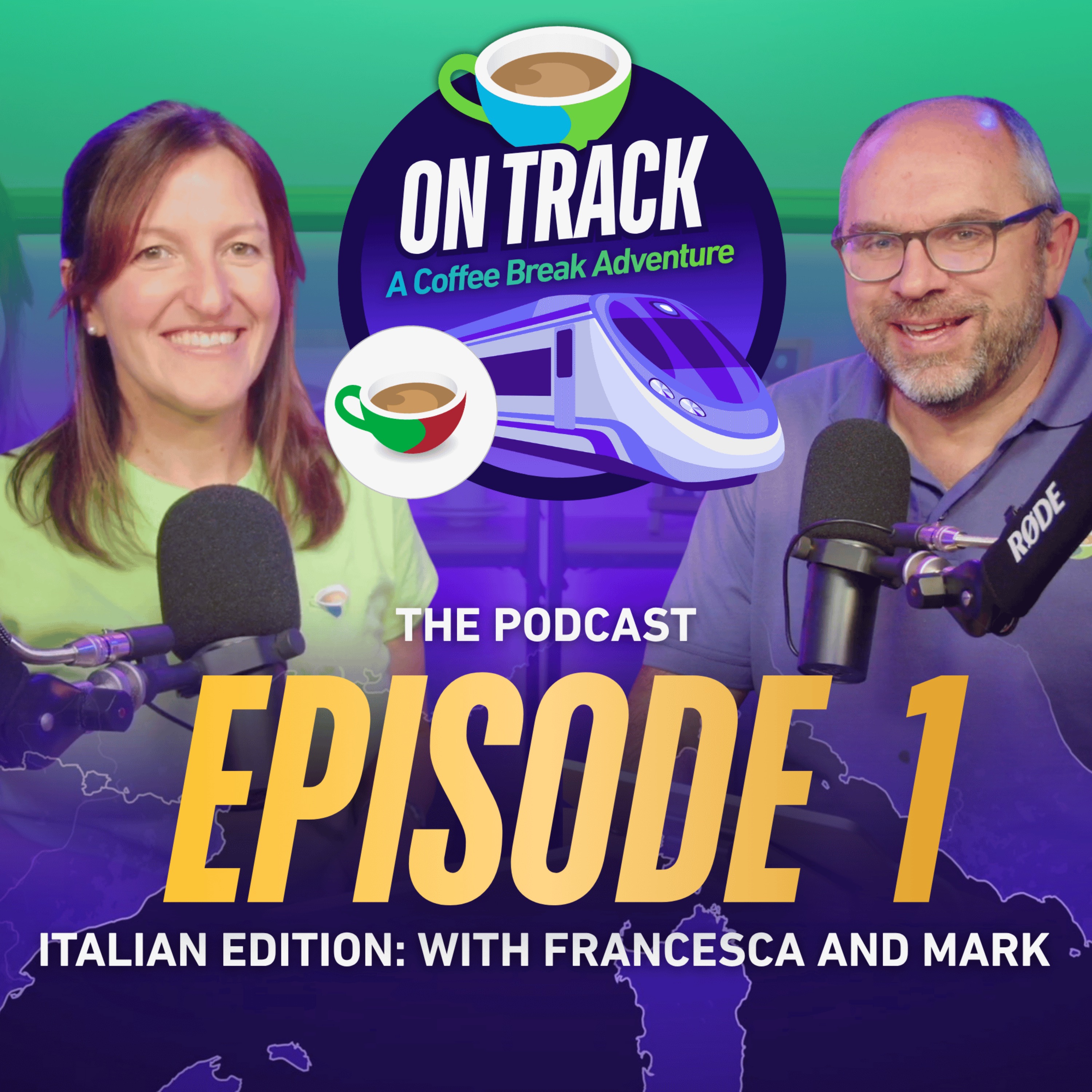
This is the companion podcast to On Track Episode 3: the third day of the race, starting in Zurich. Watch On Track Episode 3 (https://www.youtube.com/watch?index=6&list=PLVAysq-bowvw&v=K6U9Y7E_s_o) Francesca tells the story of day three from Team Green's side, in a short Italian text written for learners. This time the challenges are in German, and in Zurich they're full of numbers: telling the time and reading dates out loud. Francesca says "mastichiamo un pochino il tedesco": literally "we chew a little German", which means they have a smattering of it. And she opens with "visto che", "given that" or "since", a very natural way to give a reason in everyday Italian. Can't wait a week? Pick your language here and the code is applied for you (https://coffeebreaklanguages.com/ontrack). Everything about On Track, including the Companion Courses, can be found here (https://coffeebreaklanguages.com/ontrack). On Track is brought to you in collaboration with Teachable. The On Track companion
This is the companion podcast to On Track Episode 2: the second day of the race, starting in Milan. Watch On Track Episode 2. (https://www.youtube.com/watch?list=PLVAysq-bowvw&v=uSbK1bfKeh8) Get the free episode 2 handout for your own copy of the text, plus the word list. (https://coffeebreaklanguages.com/2026/11/on-track-companion-podcast-episode-2-italiano-milano/) Francesca tells the story of day two from Team Green's side, in a short Italian text written for learners. In Milan there's a race through the Galleria Vittorio Emanuele II, and an opera performed right outside La Scala. Francesca says "penso che per Pablo sia stato interessante": after "penso che", "I think that", Italian uses the subjunctive, so it's "sia stato", not "è stato". For a simple opinion she also uses "secondo me", "in my opinion", which takes the ordinary verb. Can't wait a week? Pick your language here and the code is applied for you. (https://coffeebreaklanguages.com/ontrack) Everything about On Track, incl
Wider communities should help fund hazard protection even when only some properties directly benefit.
Share your view, then see how readers voted. No sign-in required. This poll is shared across stories.
Do you agree or disagree?
Common Quandary
A Common Quandary to discuss
Another conversation to explore, separate from this news story.
Software says a student cheated with AI. Is that enough to fail the paper?
A teacher suspects several essays were written with AI. Detection software marks one student's work as highly likely to be generated, but the software is known to make mistakes and the student denies using it.
How should responsibility be assigned when evidence is powerful but unreliable?