Listen through the publisher, then discuss the episode here or arrange an in-person Roundtable. Your city determines where to meet.
Roundtables are designed for groups of four, with a shared subject and room for everyone to speak. Come for discussion, with no dating expectation.
To learn to think like a scientist check out http://Brilliant.org/SpaceTime (http://brilliant.org/SpaceTime) Uploaded 21-11-18 PBS Member Stations rely on viewers like you. To support your local station, go to: http://to.pbs.org/DonateSPACE To repeat the space time maxim: it’s never aliens … until it is. So let’s talk about ‘oumuamua. You can further support us on Patreon at https://www.patreon.com/pbsspacetime Get your own Space Time t-shirt at http://bit.ly/1QlzoBi Tweet at us! @pbsspacetime Facebook: facebook.com/pbsspacetime Email us! pbsspacetime [at] gmail [dot] com Comment on Reddit: http://www.reddit.com/r/pbsspacetime Help translate our videos! Previous Episode: Are Virtual Particles A New Layer of Reality? Hosted by Matt O'Dowd Written by Matt O'Dowd Graphics by Luke Maroldi Assistant Editing and Sound Design by Mike Petrow and Meah Denee Barrington Made by Kornhaber Brown (www.kornhaberbrown.com) Bialy and Loeb (2018) Micheli et al. (2018) Last year a visitor came to our inner solar system. To us it looked like a faint spot of light, moving quickly relative to the fixed stars. We’d seen similar things countless times before – lonely rocks, remnants from the formation of our solar system, drifting on their endless orbits around the sun and faintly glimmering with its reflected light. Nothing unusual about such asteroids and comets, but what made this object special was its trajectory. It was not in orbit around the Sun at all. Rather, it appeared to have fallen in from interstellar space, and was on its way back out again. The object is 1I/2017 U1, better known as ‘Oumuamua. It’s the first chunk of interstellar space debris we’ve ever spotted passing through our solar system. It caused a justifiable stir at the time. Hell, WE even did an episode on it. Special thanks to our Patreon Big Bang, Quasar and Hypernova Supporters: Big Bang David Nicklas CoolAsCats Anton Lifshits Fabrice Eap Justin Lloyd Juan Benet Quasar Tambe Barsbay Mark Rosenthal Dean Fuqua James Flowers Vinnie Falco Hypernova Chuck Zegar Jordan Young Joseph Salomone John Hofmann Martha Hunt Matthew O’Connor Ratfeast Brent Mullins Donal Botkin Edmund Fokschaner Max Levine Thanks to our Patreon Gamma Ray Burst Supporters: Alexander Rodriguez Alexey Eromenko Brandon Cook Brandon Labonte Daniel Lyons David Crane Fabian Olesen Fauzan Ardhana Greg Allen Greg Weiss Jack Frosch James Hughes JJ Bagnell Jon Folks Joseph Emison Josh Thomas Kevin Warne Malte Ubl Mark Vasile Nathan Leniz Nicholas Rose Nick Virtue Scott Gossett Shannan Catalano Shawn Azman Tommy Mogensen سلطان الخليفي
Episode information is provided by the publisher. Listening takes place on the publisher’s service.
Today, Mel is doing something she's never done before on The Mel Robbins Podcast. She's bringing members of her team into the studio for live coaching with world-renowned communications expert Vinh Giang. Vinh is known for teaching millions of people online how to stop sounding insecure, speak more clearly, and get people to listen when you talk. And when you hear him coaching today, it will be like he’s coaching you. One person freezes when they're put on the spot. Another can't stop interrupting people. Someone else has great ideas but stays quiet because they're afraid of being judged. Does any of that sound familiar? And Vinh isn't just giving advice. He's coaching real people through practical exercises, right there in the studio, so you can hear the difference and start making those same changes in your own life. As Mel says, put yourself in their shoes. As Vinh works with each person, you'll recognize things you struggle with, too. You'll learn: -What to do when your mind goes b
When a family moved into an apartment in New York, they had no idea just how much history the building held. Over the years, it had reportedly served several purposes, including a city hall and a jail. But they wouldn't learn those details until after some frightening experiences had already begun. On their very first night, the mother came running into her son's room, terrified by a man who had appeared in her bedroom. He hadn't simply frightened her. According to her account, he'd made it very clear that the family wasn't welcome. And things only became stranger from there. As the family settled in, they experienced unexplained sounds, unsettling physical encounters, and incidents that made them question what was actually moving around their home. Had something remained behind from the building's long history? And was it determined to make the new occupants leave? #RealGhostStoriesOnline #TrueGhostStories #HauntedApartments #HauntedJail #HistoricHauntings #NewYorkGhostStories #Parano
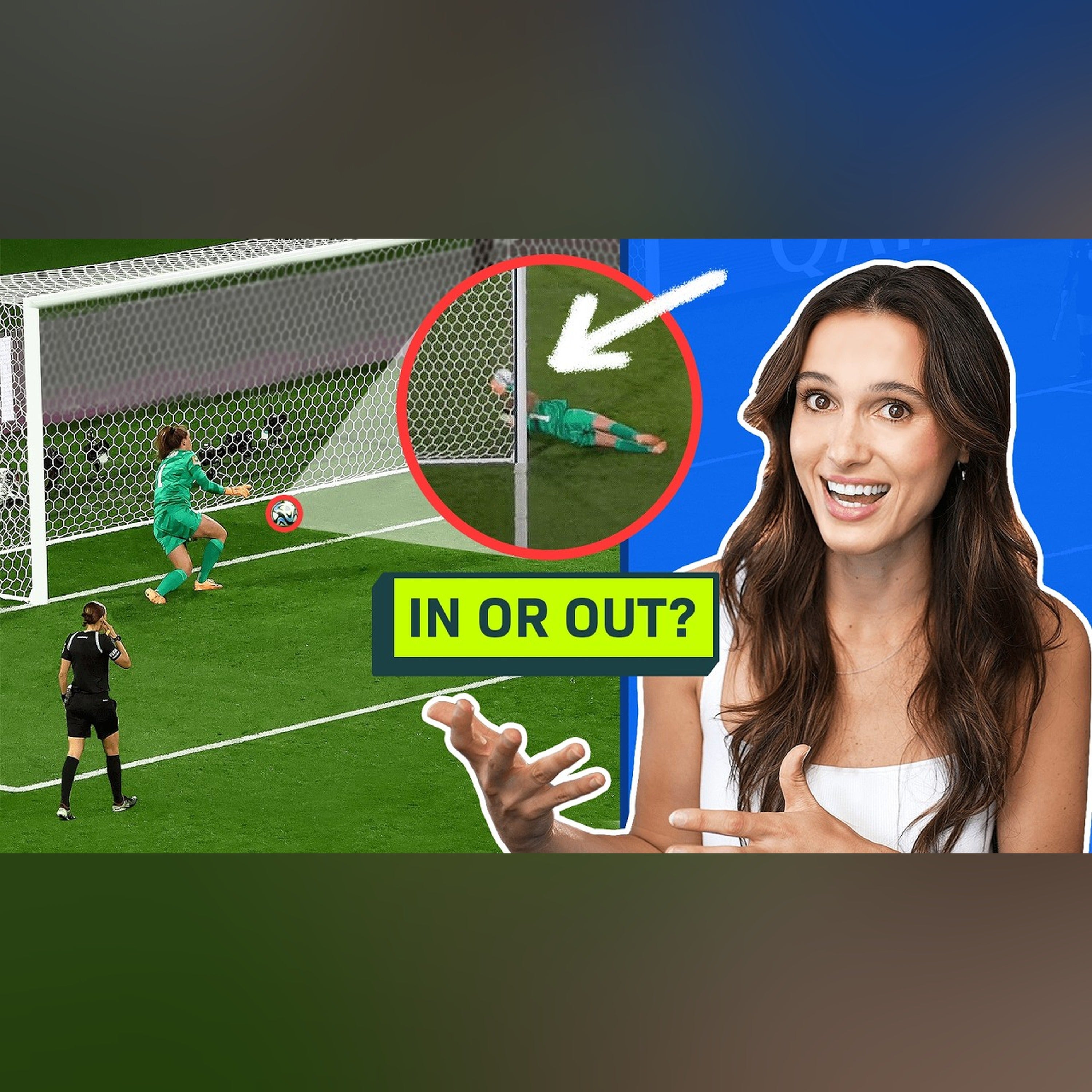
Are AI referees ruining sports? Or making them better? If you’re watching the 2023 US Open, you’re seeing automated referee calls. After years of controversy about human accuracy, tennis has used a system called Hawkeye to not only check human calls… but now to replace human referees. And this robot ref revolution isn’t just happening in tennis. It’s taking over the sports world. Soccer, basketball, baseball, they are all using machines to improve the calls being made on the field. The World Cup in particular has invested in these tools, from VAR (video assistant referee) to semi-automated offside and goal-line technology. The stakes are high. The difference between a right or wrong call can be a championship, or millions of dollars in prizes, endorsements, ticket sales. For the most part, fans like tech that makes calls more objective. HOWEVER… there is a big chunk of sports fans who would strongly disagree, who think that robot refs are ruining the game. Thing is, this tech isn’t goi
Some people walk through life believing that if they could just change one or two people around them, their whole life would finally work. Uploaded 27-05-26 Their spouse would stop doing that thing. Their parents would finally understand. Their kid would just listen for once. So they spend year after year trying to change the people in their life. And year after year, nothing changes. The people in their life are exactly who they were 10 years ago. Meanwhile, the person doing all the fixing has gotten older, more tired, more bitter, and not noticeably closer to the life they actually wanted. The whole project was never going to work — and there's a specific mechanism underneath it that does damage the longer you stay in it. This seminar lays out why fixing other people is the most sophisticated form of procrastination there is, what it's quietly costing every relationship in your life, and the only move that actually changes anything. CHAPTERS: 0:00 The Years You've Spent Trying to Fix
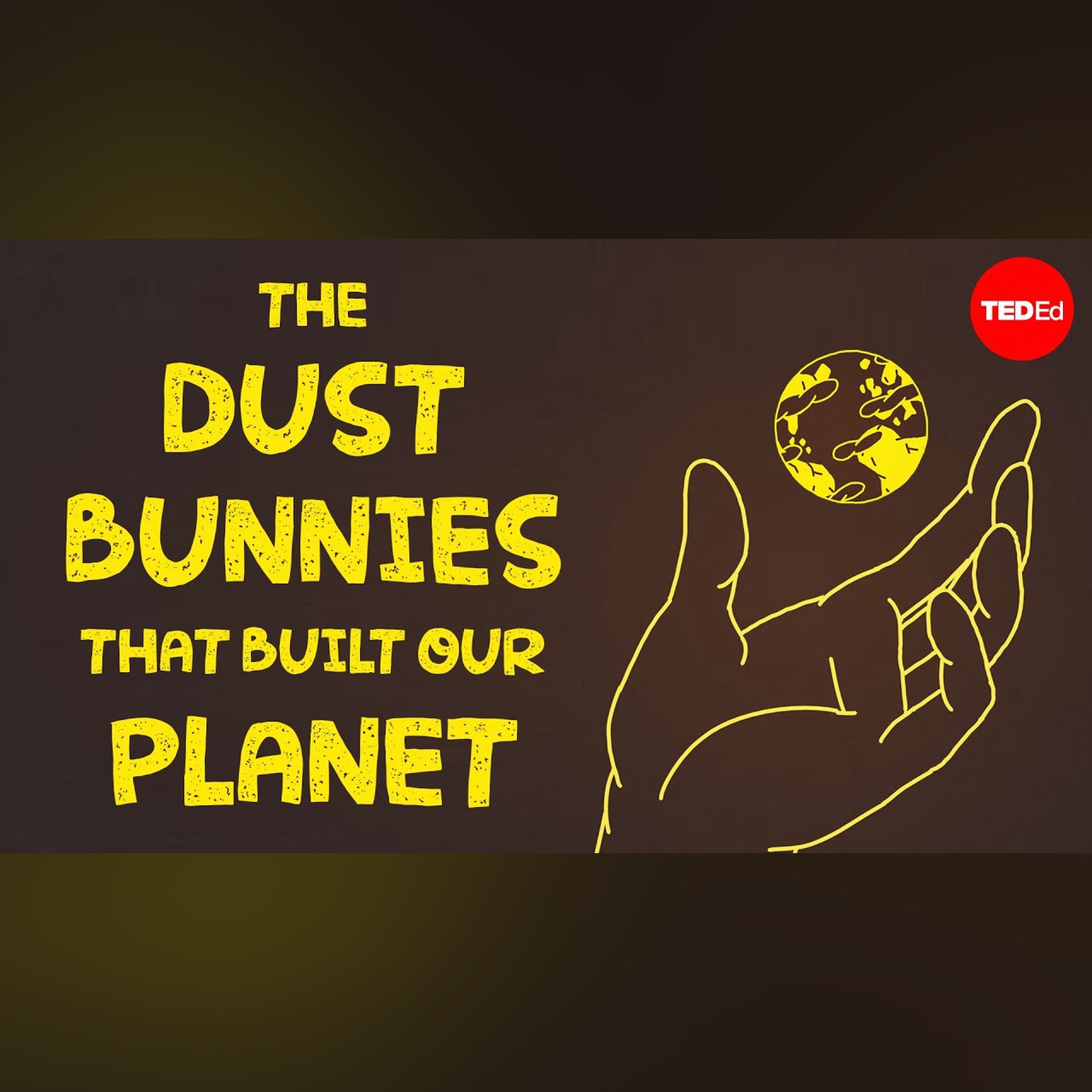
Investigate the theories surrounding cosmic dust bunnies and discover how the tiny particles could hold the key to the formation of life on Earth. Uploaded 05-09-19 -- Consider the spot where you’re sitting. Travel backwards in time and it might’ve been submerged at the bottom of a shallow sea, buried under miles of rock or floating through a molten landscape. But go back about 4.6 billion years, and you’d be in the middle of an enormous cloud of dust and gas orbiting a newborn star. What exactly is this cosmic dust? Lorin Matthews investigates. Lesson by Lorin Swint Matthews, directed by Frederic Siegel (Team Tumult). Sign up for our newsletter: http://bit.ly/TEDEdNewsletter Support us on Patreon: http://bit.ly/TEDEdPatreon Find us on Twitter: http://bit.ly/TEDEdTwitter Peep us on Instagram: http://bit.ly/TEDEdInstagram View full lesson: https://ed.ted.com/lessons/the-dust-bunnies-that-built-our-planet-lorin-swint-matthews Thank you so much to our patrons for your support! Without you
Your car is a computer on wheels, and someone across the country could hack its brakes. Check out the full episode: https://lewishowes.com/legacy/marc-goodman/ Marc Goodman, author of Future Crimes and a teacher at Singularity University, told Lewis that cybersecurity is now everyone's problem, because there has never been a computer system that couldn't be hacked. A Samsung TV can listen to everything you say in your bedroom. Tens of thousands of conference room video systems have been hacked, so a spy no longer needs to hide a bug under the table. Then Marc told the story of Cassidy Wolf, Miss Teen America, who opened an email that said “I've seen you naked.” A classmate had bought spyware online and was secretly running her webcam. She went to the FBI, and he went to prison for years. A Post-it Note over your webcam does the job. Marc: “just 'cause you don't see the light doesn't mean the camera's not on. Hosted by Simplecast, an AdsWizz company.
Viewers like you help make PBS (Thank you ) . Support your local PBS Member Station here: https://to.pbs.org/DonateSPACE Uploaded 26-07-17 Unlock the secrets of Feynman Diagrams. Part 5 in our Quantum Field Theory series. And if you're submitting an answer to our challenge question email your answer by August 2nd to pbsspacetime [AT] gmail.com with the subject line "Feynman Diagram Challenge." You can further support us on Patreon at https://www.patreon.com/pbsspacetime Get your own Space Time tshirt at http://bit.ly/1QlzoBi Tweet at us! @pbsspacetime Facebook: facebook.com/pbsspacetime Email us! pbsspacetime [at] gmail [dot] com Comment on Reddit: http://www.reddit.com/r/pbsspacetime Help translate our videos! https://www.youtube.com/timedtext_cs_... Previous Episode: The Real Star Wars Feynman’s path integral shows us that, to properly calculate the probability of a particle traveling from point A to point B, we need to add up the contributions from all conceivable paths between tho
Sign Up on Patreon to get access to the Space Time Discord! Uploaded 18-08-21 The universe is going to end. But of all the possible ends of the universe vacuum decay would have to be the most thorough - because it could totally rewrite the laws of physics. Today I hope to help you understand exactly how terrified you should be. Check out the Space Time Merch Store Sign up for the mailing list to get episode notifications and hear special announcements! Hosted by Matt O'Dowd Written by Matt O'Dowd Graphics by Leonardo Scholzer, Yago Ballarini, Pedro Osinski, Adriano Leal and Stephanie Faria GFX Visualizations: Ajay Manuel Directed by Andrew Kornhaber Assistant Producer: Setare Gholipour Executive Producers: Eric Brown and Andrew Kornhaber End Credits Music by J.R.S. Schattenberg: https://www.youtube.com/user/MultiDroideka Special thanks to Our Patreon Sponsors Big Bang Supporters Ari Paul Kyle Bulloch Charlie Mrs. Tiffany Poindexter Leo Koguan Sandy Wu Matthew Miller Scott Gray Ahmad Jo
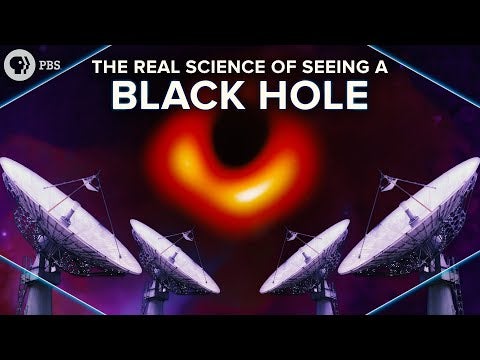
You can learn more about CuriosityStream at https://curiositystream.com/spacetime Uploaded 01-05-19 PBS Member Stations rely on viewers like you. To support your local station, go to: http://to.pbs.org/DonateSPACE How do you take a picture of a black hole and what can we learn from it? Our first ever actual bona fide photo of a black hole, made by the Event Horizon Telescope and revealed to the world in a press conference on April 10th. Since then it’s got plenty of coverage, because … I mean look at it. It’s a freaking black hole. It’s black, it’s holey, it’s everything we hoped it would be. Now that the giddiness has subsided and I personally have stopped spending hours on end staring at a black spot, we can take a breath and actually look at the real science here and discuss exactly how a picture like this could be taken and what we can learn from it. Check out the new Space Time Merch Store! Support Space Time on Patreon Need a Black Hole Refresher #Blackhole #astrophysics #spaceti
Conservation policies should include practical support for affected local livelihoods.
Share your view, then see how readers voted. No sign-in required. This poll is shared across stories.
Do you agree or disagree?
Common Quandary
A Common Quandary to discuss
Another conversation to explore, separate from this news story.
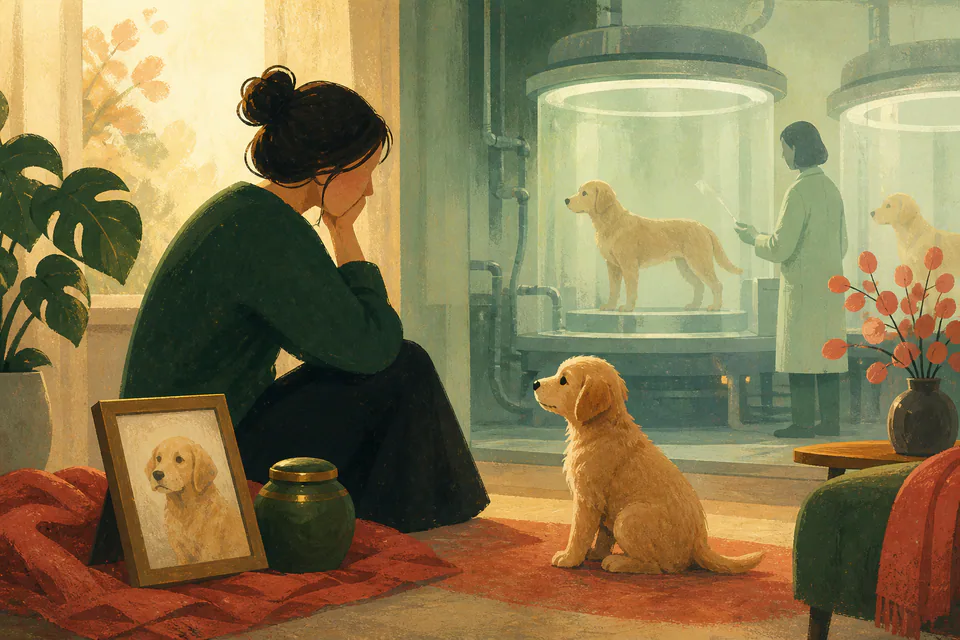
You can clone the best dog you ever had. Would you?
After a beloved dog dies, its owner can afford to have it cloned. The procedure is legal and improving, but it uses animals as surrogates and will not recreate the original dog's memories or personality.
What do our obligations to animals permit us to create for our own comfort?