Brian from Santiment joined me to analyze the latest on-chain metrics and investor sentiment for Bitcoin (BTC), XRP, Ethereum (ETH), and the broader crypto market. We also examined market sentiment across stocks and gold, the correlations between these asset classes, and what the data could signal about the next move for the crypto market. ️ Learn Crypto with Expert Commentary - http://MyCryptoCourse.com iTrustCapital Representative: [email protected] ⭐️ Trade crypto perps with a free $25 bonus on Kalshi. ♂️Merlin - http://tinyurl.com/MerlinTCYouTube Follow on social media: ️ X(Twitter) - https://x.com/thinkingcrypto ️ Facebook - https://www.facebook.com/thinkingcrypto/ ️ LinkedIn - http://linkedin.com/company/thinking-crypto ️ Instagram - https://www.instagram.com/thinkingcrypto/ ️ TikTok - https://www.tiktok.com/@thinkingcrypto5 ️ Threads - https://www.threads.net/@thinkingcrypto ️ Website - https://www.ThinkingCrypto.com/ Business Inquiries [email protected] ⏰ T
"Curing cancer," explained. We’re not looking for a “cure for cancer” anymore. Cancer is hundreds of diseases, so we’re really in a multi front fight against all of them. Cancer is a problem for us today in a way it wasn’t for previous generations. But, luckily, we also have more and more ways to fight back. I started this episode with endless questions: What is cancer? What causes it? How do we treat cancer? What are the symptoms? Why are some cancers easier to treat than others? Why is cancer so hard to cure? Why do so many people die of cancer? What I found is an incredible, complex, inspiring effort to treat and stop an insidious killer. In this video, we dive deep into how we treat cancer today. But I also found that we may not be helping the greatest number of people we can. In this episode of Huge If True, I want to make the case that while we have made enormous strides in the fight against cancer we have also largely ignored one of the single best ways to save the most lives. I
Explore how the Right to Repair movement is pushing back against companies which don’t want consumers fixing their products. -- Today, some companies are working hard to prevent consumers from repairing products on their own. In many cases, repair can only be done by the original manufacturer, if at all. With limited repair options available, we end up buying new and throwing more items out. So, how exactly do companies prevent repair? And what can consumers do about it? Aaron Perzanowski investigates. Lesson by Aaron Perzanowski, directed by Nick Hilditch. Support Our Non-Profit Mission ---------------------------------------------- Support us on Patreon: http://bit.ly/TEDEdPatreon Check out our merch: http://bit.ly/TEDEDShop ---------------------------------------------- Connect With Us ---------------------------------------------- Sign up for our newsletter: http://bit.ly/TEDEdNewsletter Find us on Twitter: http://bit.ly/TEDEdTwitter Peep us on Instagram: http://bit.ly/TEDEdInstagr
Horizon3.ai co-founder and CTO Anthony Pillitiere discusses how AI-enabled agentic threat actors are industrializing cyberattacks using existing vulnerabilities rather than novel exploits. Drawing on 21 years in the Air Force and his role as deputy CTO for JSOC, he explains why organizations must shift to autonomous offensive security and how the collapse between emerging threats and exploitation is forcing leaders to address long-standing cyber debt. Brought to you by: Mongo DB - Anyone can prototype an agent. Lovable - Turn ideas into software people love with Lovable. Start today at https://lovable.dev/ Factory - A 24/7 system turning signals into production software. Visithttps://factory.com/ Neon (by Databricks) - Scale your startup on Neon. The Postgres backend for apps and agents. Built by Databricks.https://neon.com/mtshttps://neon.com/mts (https://neon.com/mts%E2%81%A0) Head over to http://getvcx.com (http://getvcx.com/) to learn more Kong - The AI connectivity platform. Larri
Quinn Thompson says a dramatic Fed pivot is coming, and when the Fed is forced to expand its balance sheet again, Bitcoin is the asset that does really well. The Lekker Capital founder joins Andy to explain why he would fade the latest hot CPI print and why even one more hike would be a mistake. He walks through why commodities are already rolling over, why the first half of next year calls for patience, and why late-stage apathy in Bitcoin is exactly where opportunity shows up. He also covers why the SpaceX IPO marked the top for semis, what the Anthropic IPO and NVIDIA earnings mean for risk, and why a return to liquidity sets up the next big move. Quinn Thompson is the Founder and CIO of Lekker Capital. Live from the financial capital of the world. Timestamps: 00:00 Intro 02:16 A Big Fade On 50 Basis Points 06:27 A Dramatic Fed Pivot Mid Next Year 08:34 Fade The Hawkish Yield Spike 12:10 73K Is Bitcoin's Second Chance 14:34 Late-Stage Apathy Creates The Opportunity 16:51 SpaceX IPO
Kraken (https://kraken.pxf.io/c/6563010/687155/10583) Ledger (https://shop.ledger.com/?r=59fe6e05c254) NordVPN (https://go.nordvpn.net/aff_c?aff_id=143753&offer_id=612&url_id=14830) Spotify (https://open.spotify.com/show/4gu4MrqbGVZeNNNbAuvSmR) Follow Crypto News Today on X: @CryptoNewsHQ (https://x.com/CryptoNewsHQ) Published companion Deep Dive: AI's $81 Billion Explosion — Is Wall Street Abandoning Bitcoin? (https://cryptonewstoday.io/podcast/episodes/cefa139e-23c4-4424-b40a-238636763f2e) November 21, 2026: Bitcoin rebounds from roughly $55,130, briefly reclaims $60,000, then slips below it again. Who will keep buying when forced trades end? Today's Daily Crypto Roundup examines the recovery test, Chainflip's vault drain and service halt, and ZebPay's warning about customer information exposed through MoEngage. Listening guide: Why Bitcoin ETF flows and Bitcoin's price can move differently (https://cryptonewstoday.io/podcast/guides/bitcoin-etf-inflows-and-price). Also covered: Bitde
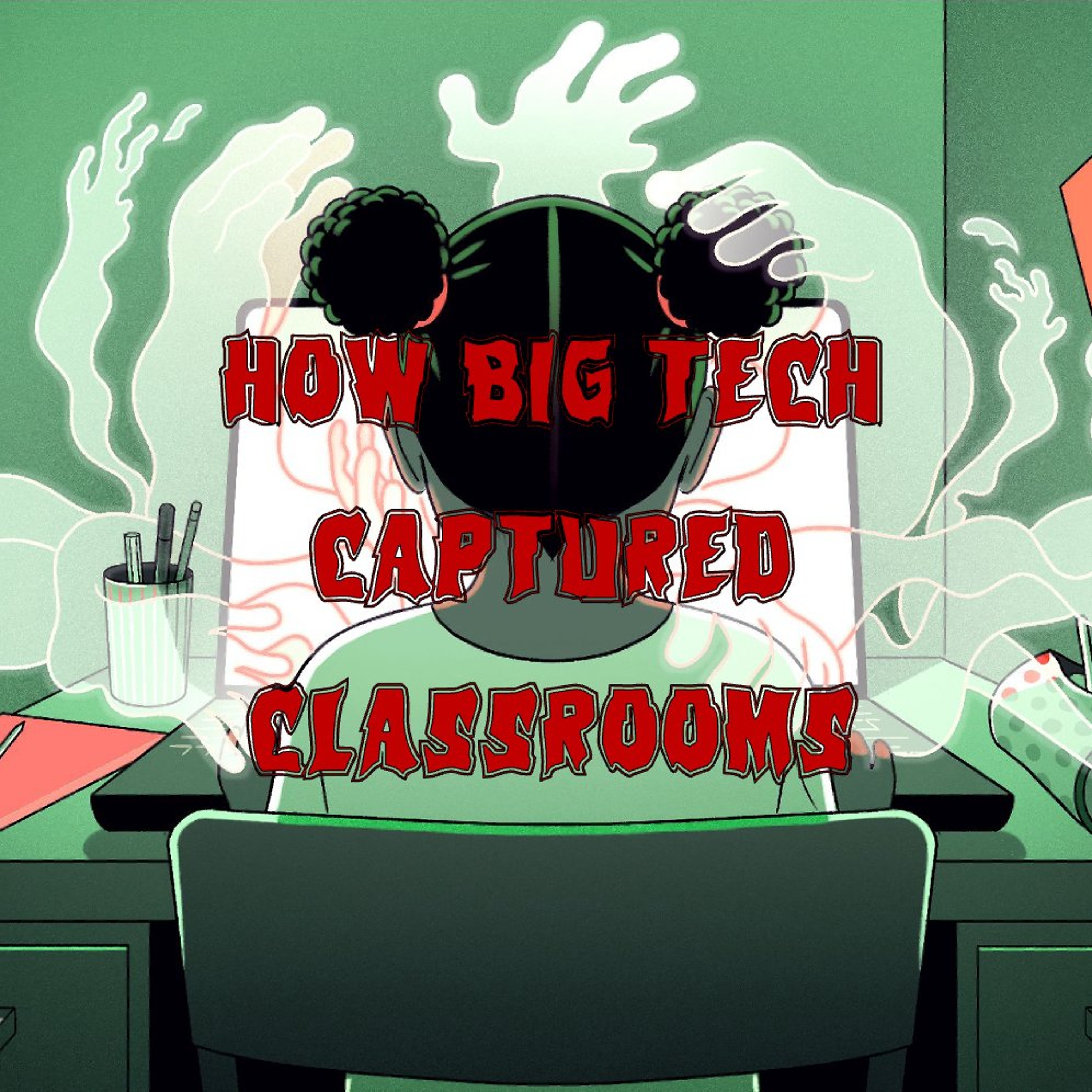
We are joined by Jessica Winter – writer at The New Yorker covering edtech and education policy — for a wide-ranging conversation about how school systems have become totally integrated with big tech companies like Google. Not only have schools become dependent on these corporate platforms, with the rise of AI they also have been captured by pedagogical ideas of vibes-based learning. We chat about the edtech experiments in schools, the discredited learning frameworks, the conflicts of interest and corporate capture, the lack of progressive policy visions, and much more. ••• What Will It Take to Get A.I. Out of Schools? https://www.newyorker.com/culture/progress-report/what-will-it-take-to-get-ai-out-of-schools ••• What We Lost When Big Tech Took Over the Classroom https://www.newyorker.com/culture/progress-report/what-we-lost-when-big-tech-took-over-the-classroom ••• Does the D.S.A. Have a Vision for Public Schools in New York? https://www.newyorker.com/culture/progress-report/does-the
Institutions should demonstrate equal treatment through people's actual experiences, not just written policies.
Share your view, then see how readers voted. No sign-in required. This poll is shared across stories.
Do you agree or disagree?
Common Quandary
A Common Quandary to discuss
Another conversation to explore, separate from this news story.
The restaurant forgot your expensive entrée. Do you point it out?
After a crowded dinner, you notice the restaurant omitted your most expensive entrée from the bill. Service was slow, the server seemed overwhelmed, and correcting it may create trouble for the person who made the mistake.
Does protecting someone from consequences ever justify benefiting from their error?