Listen through the publisher, then discuss the episode here or arrange an in-person Roundtable. Your city determines where to meet.
Roundtables are designed for groups of four, with a shared subject and room for everyone to speak. Come for discussion, with no dating expectation.
Patrick O’Connell opened The Inn at Little Washington in an abandoned garage in a town of 150 people in 1978, with no formal training, no staff who had ever been to a restaurant, and no idea it would become one of the most celebrated dining destinations in the world. This week, he talks with Kate and Mark about his memoir, Main, Middle, and Gay – growing up gay in the rural South, discovering Julia Child, befriending Craig Claiborne, cooking for Queen Elizabeth, and what it means to build something extraordinary in a place where everything told you not to. Read an excerpt from Main, Middle & Gay on The Bittman Project: https://bittmanproject.com/main-middle-and-gay-the-doorway-to-the-kitchen/ Want more food content? Hosted on Acast.
Episode information is provided by the publisher. Listening takes place on the publisher’s service.
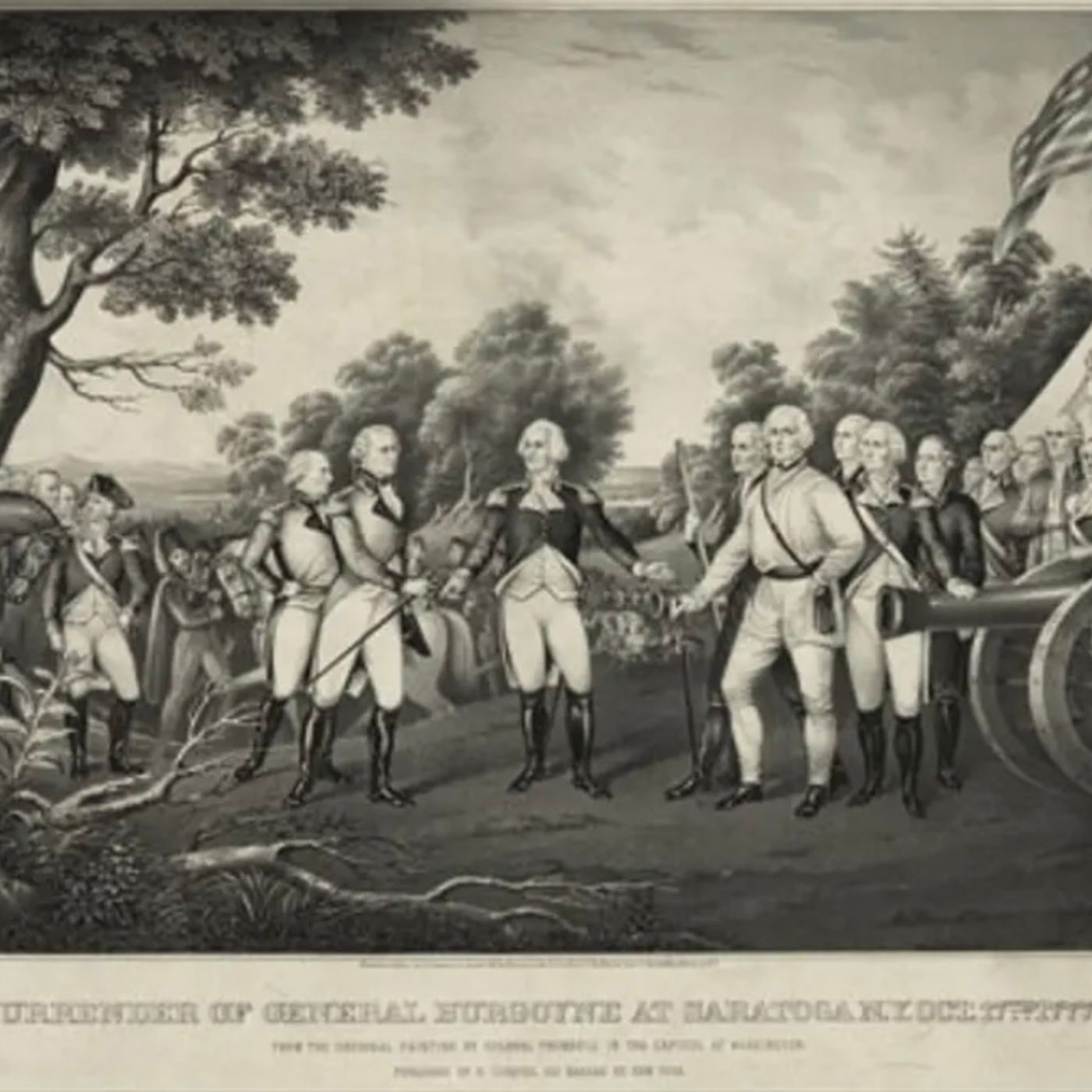
GATES AND BURGOYNE Burgoyne Surrender Tactical Negotiations Turning Point — Part Four Patrick K. O’Donnell, author of Revolutionary Snipers: Washington’s Frontier Commandos Whose Marksmanship Forged a New Way of War and Helped Win the Revolution, explains how, surrounded and cut off from water by relentless American snipers, Burgoyne’s starving army opened surrender negotiations with Gates and James Wilkinson. The capitulation of an entire British field army secured vital French intervention, marking the decisive turning point of the Revolutionary War. (12)
A kiss can be wonderful. It can create an instant connection, spark romance, or make you feel closer to someone. But a kiss can also have the opposite effect — and sometimes ruin everything. So what makes kissing so powerful, and why can one kiss make such a difference? There's some fascinating science behind it. https://www.scientificamerican.com/article/why-we-kiss/ We spend an enormous amount of time worrying about what's going to change. What's next? What's coming? How do we prepare? But what if we're paying attention to the wrong things? Some of the most important forces shaping our lives never change, and understanding them may be far more valuable than trying to predict the future — something humans are notoriously bad at. Morgan Housel, partner at The Collaborative Fund and author of Same as Ever: A Guide to What Never Changes (https://amzn.to/3SwWn6u) (https://amzn.to/3SwWn6u)), joins me to explain why the things that stay the same may be the most important things to understan
Get the 200+ Page Optimal Living Daily Workbook (PDF) - Free. Want to turn today's episode into an actionable plan? Episode 4232: Chris Guillebeau shares a candid, funny account of his lack of qualifications, from a short-lived dishwashing job to failing his way through statistics and shrink-wrapping pallets. He argues that formal credentials matter far less than people think, and that anyone who builds a good life without them should treat that work with gratitude and diligence. It is an encouraging take on personal development for anyone who has ever felt like an imposter. Read along with the original article(s) here: https://chrisguillebeau.com/qualifications/ Quotes to ponder: "First, forget about what you're actually qualified to do. It's irrelevant and no one cares." "Fourth, when you do find something that works for you, you should be very grateful, every day." "Regardless of your actual qualifications, there's one thing that no one can give you and no one can take away: the wil
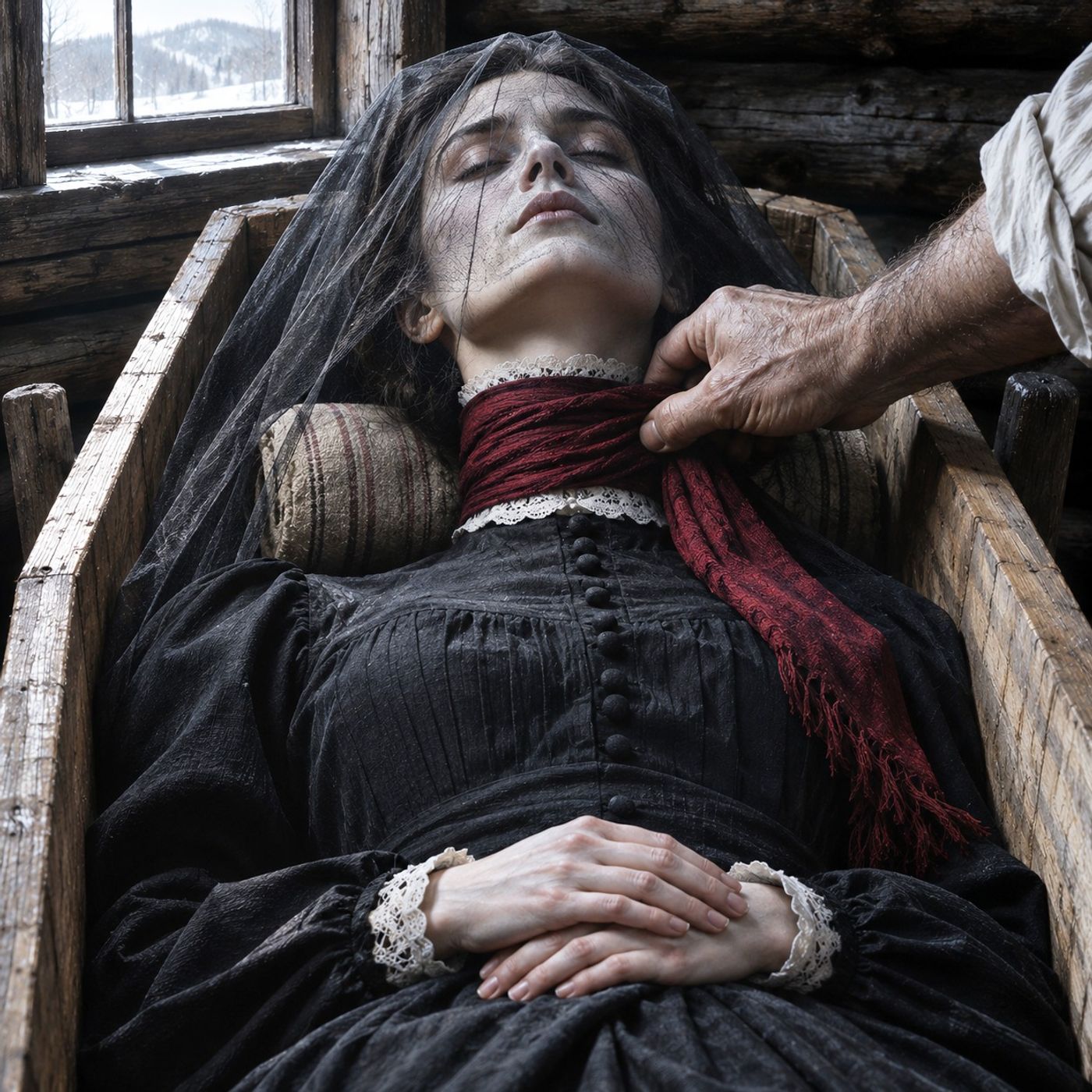
In January 1897, blacksmith Edward Shue washed and dressed his bride of three months for burial before the coroner ever reached their log house in Greenbrier County, West Virginia, and at her funeral he kept fussing with her head and neck, propping it on a pillow and wrapping a scarf around her high collar. Her mother, Mary Jane Heaster, had never liked him, and for weeks afterward she prayed every evening for her daughter to come back and tell her what had really happened. FEATURED STORIES IN THIS EPISODE: This Weird Darkness episode runs from the Greenbrier Ghost, the 1897 West Virginia murder victim whose mother said she came back to name her killer, to a bottomless pit in Washington, a wave of Mothman sightings over Chicago, and a London tomb rumored to be a time machine. Elva Heaster was dead – but that didn’t stop her ghost from solving the murder. *** In Stephen King’s “Pet Semetery”, beloved family pets could come back from the dead. *** In Washington there is a hole that some
This is a Grave Talks CLASSIC EPISODE! PART TWO On the eastern shores of Lake Winnebago sits the quiet town of Jericho, Wisconsin—a place that appears peaceful at first glance. But rising above it is the abandoned Holy Trinity Catholic Church, a towering reminder of a past that refuses to stay silent. Closed decades ago, the church, its neighboring convent, and former school have become collectively known as Jericho Haunted Trinity—one of Wisconsin’s most talked-about paranormal locations. Investigators report heavy footsteps echoing through the sanctuary, disembodied voices in empty hallways, and unexplained lights flickering through darkened windows long after the property was vacated. What happened within these walls? Why do so many who enter describe an overwhelming presence that feels anything but holy? Today on The Grave Talks, Cayla and Steve Gregory take us inside Jericho Haunted Trinity, sharing the history, the experiences, and the chilling phenomena that continue to draw inv
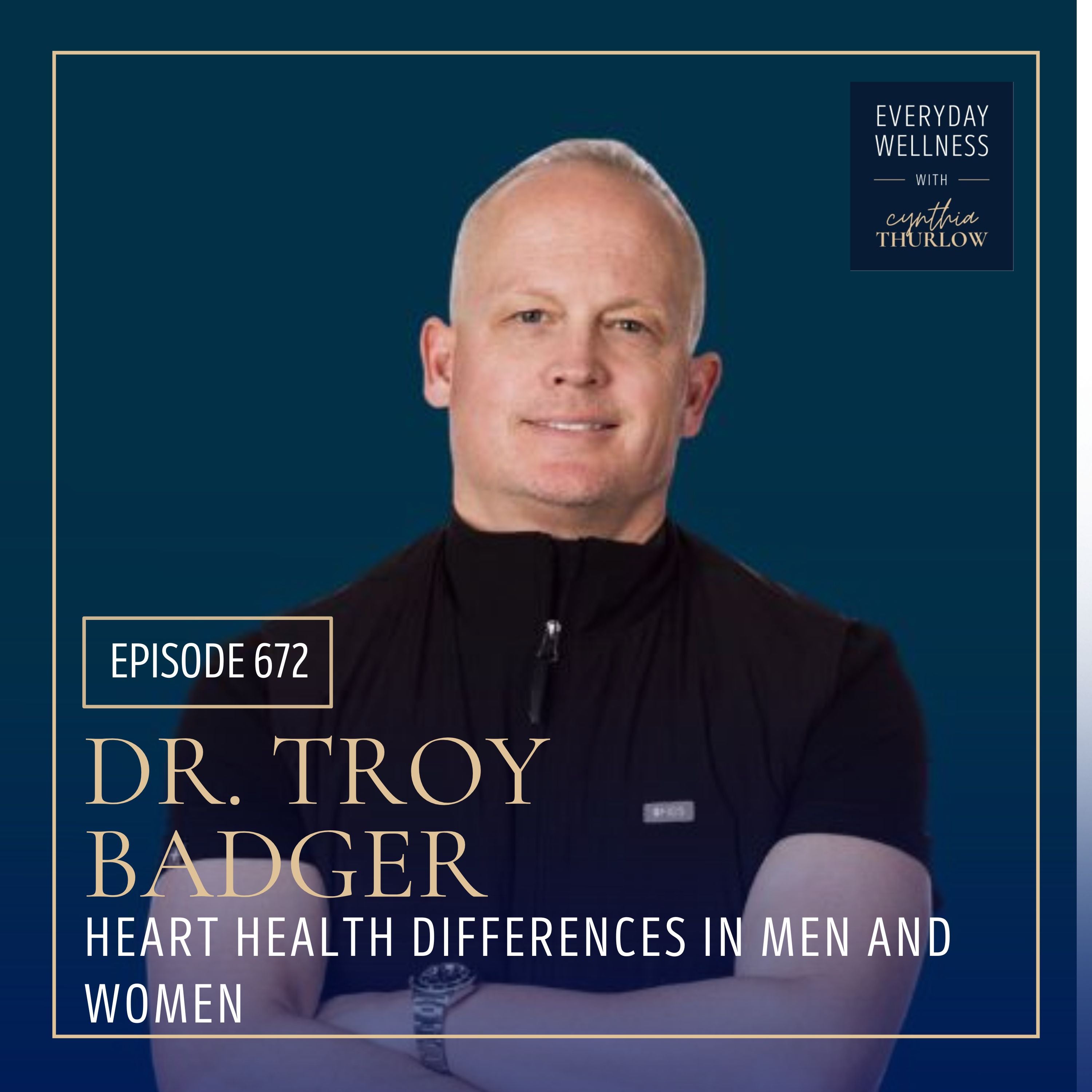
Today, I’m honored to connect with Dr. Troy Badger. He is a board-certified cardiologist and interventionalist and the founder of Cardiostrong, a concierge preventive cardiology clinic in Provo, Utah, focused on reducing cardiovascular risk, optimizing metabolic health, and improving strength and cardiorespiratory fitness for executives and athletes. In today’s conversation, we discuss Dr. Badger’s gender- and age-specific approach to heart health, including treatment differences for men and women, and diagnoses such as INOCA, SCAD, vasospastic disease, and Takotsubo. We examine emotions and their influence on heart health, coronary ischemia and cardiomyopathies, labs and diagnostics, how Dr. Badger assesses risk in his patients, and the differences between a CAC and a CCTA. Dr. Badger also shares the labs he finds essential for all patients and discusses the role of VO2 Max, cardiovascular training, and lifestyle—specifically nutrition, the use of GLP-1 drugs, and a multidisciplinary
Roz Chast is arguably the most recognizable cartoonist in America. Her work has appeared in 'The New Yorker' for nearly fifty years, and her particular brand of anxious, self-deprecating humor has become part of the cultural vocabulary. Her newest book, 'The Two Saddest Kitchens,' written and illustrated with fellow New Yorker cartoonist Jason Adam Katzenstein, is about exactly what it sounds like: two people who have no business being in a kitchen, documenting the chaos with great affection and very little shame. Mark and Kate sit down with Roz and Jason to talk about the book, the collaborative process of making the book on iPads across state lines, the surprisingly specific vocabulary people use when they don’t feel like cooking, and why the kitchen (with all its broken drawers, failed ice cream experiments, and lurking mystery cans) turns out to be a surprisingly intimate place. Mentioned on this week's episode: Beast blender: https://get.aspr.app/SH1oVp Kate's piece on food hiding
Andre Fowles grew up in a tenement yard in Kingston, Jamaica, learning to cook from his grandmother Mama Cherry. Her spirit of warmth is at the center of everything Andre does, from his years cooking at Miss Lily’s in New York, to winning 'Chopped,' to becoming a private chef for Bruce Springsteen and his wife Patti, to writing his debut cookbook 'My Jamaican Table.' In our conversation, Andre talks about what Mama Cherry taught him that culinary school couldn’t, why Jamaican food deserves a seat at the same table as French and Japanese cuisine, and what it means to go back to Kingston and open a space right across the street from his uncle’s decades-old porridge stand. Get recipes from 'My Jamaican Table' at the Bittman Project-- Guinness-Braised Short Ribs: https://bittmanproject.com/recipe/guinness-braised-short-ribs/ Coconut-Banana Pancakes: https://bittmanproject.com/recipe/coconut-banana-pancakes/ Crispy Coconut Shrimp with Chile-Lime Mayo: https://bittmanproject.com/recipe/crisp
People should receive a clear explanation before consenting to personal-data use.
Share your view, then see how readers voted. No sign-in required. This poll is shared across stories.
Do you agree or disagree?
Common Quandary
A Common Quandary to discuss
Another conversation to explore, separate from this news story.
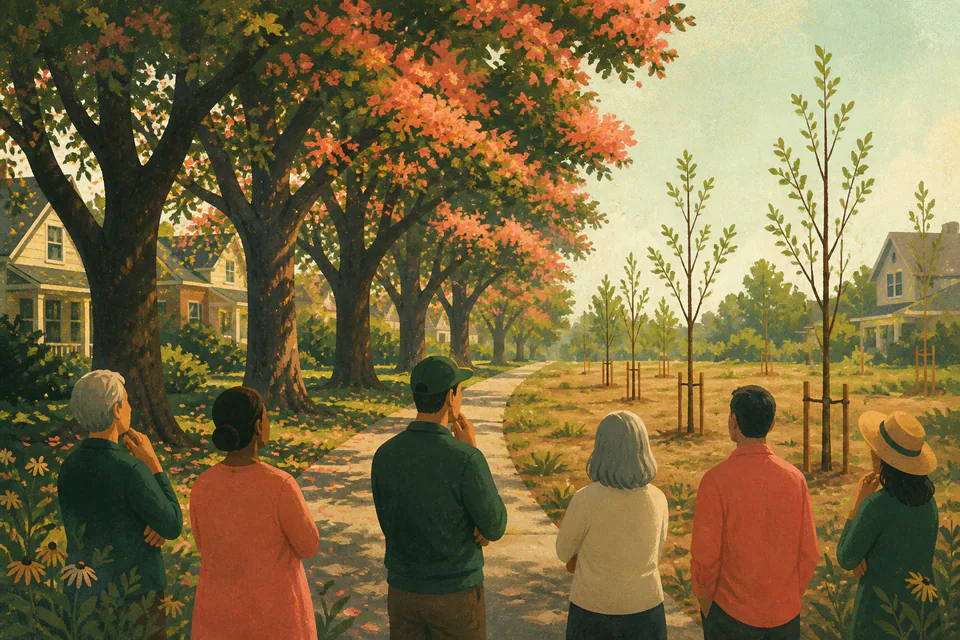
The prettiest trees on your street are ecological troublemakers. Do they come down?
A row of mature flowering trees defines a neighborhood and provides valuable shade. Ecologists identify them as invasive and recommend replacing them with native saplings that will take decades to grow.
How should visible community value be weighed against gradual ecological harm?