Pika Enact: Can You Direct AI Video While It Plays?
46 min
Listen through the publisher, then discuss the episode here or arrange an in-person Roundtable. Your city determines where to meet.
Roundtables are designed for groups of four, with a shared subject and room for everyone to speak. Come for discussion, with no dating expectation.
What if making an AI video felt less like writing a prompt and more like directing a film set? Pika is experimenting with a new approach called Enact: interactive AI-generated scenes where a creator can drag an actor into position, speak to the performers, or rethink a camera move while the scene is taking shape. Instead of asking for another finished clip, the director participates in the process. Pika CEO and co-founder Demi Guo joins creative leaders Matan Cohen-Grumi and Lindsay Brillson to explain the idea behind Enact, why these tools feel different from conventional AI video generators, and what their team had to invent to make responsive generation work. We also get into the limitations: video quality versus speed, what an AI actor needs to remember from a director, camera control, access to Pika's H3 Flex model, and who owns creative work made with AI. The bigger question is whether tools like this can help filmmakers feel more connected to the work rather than less. Pika: https://pika.art/Pika H3 Flex and product information: https://pika.art/blog/pika-h3-flex Pika launch video: https://pika.art/blog/pika-enact For more conversations about practical AI and where the technology is going, subscribe to The Neuron AI Explained and The Neuron daily newsletter at https://theneuron.ai/. Thanks to Alumni Ventures for sponsoring this episode and helping accredited individual investors access professionally managed venture capital portfolios. Explore their investment opportunities and learn more at https://www.av.vc/.
Episode information is provided by the publisher. Listening takes place on the publisher’s service.
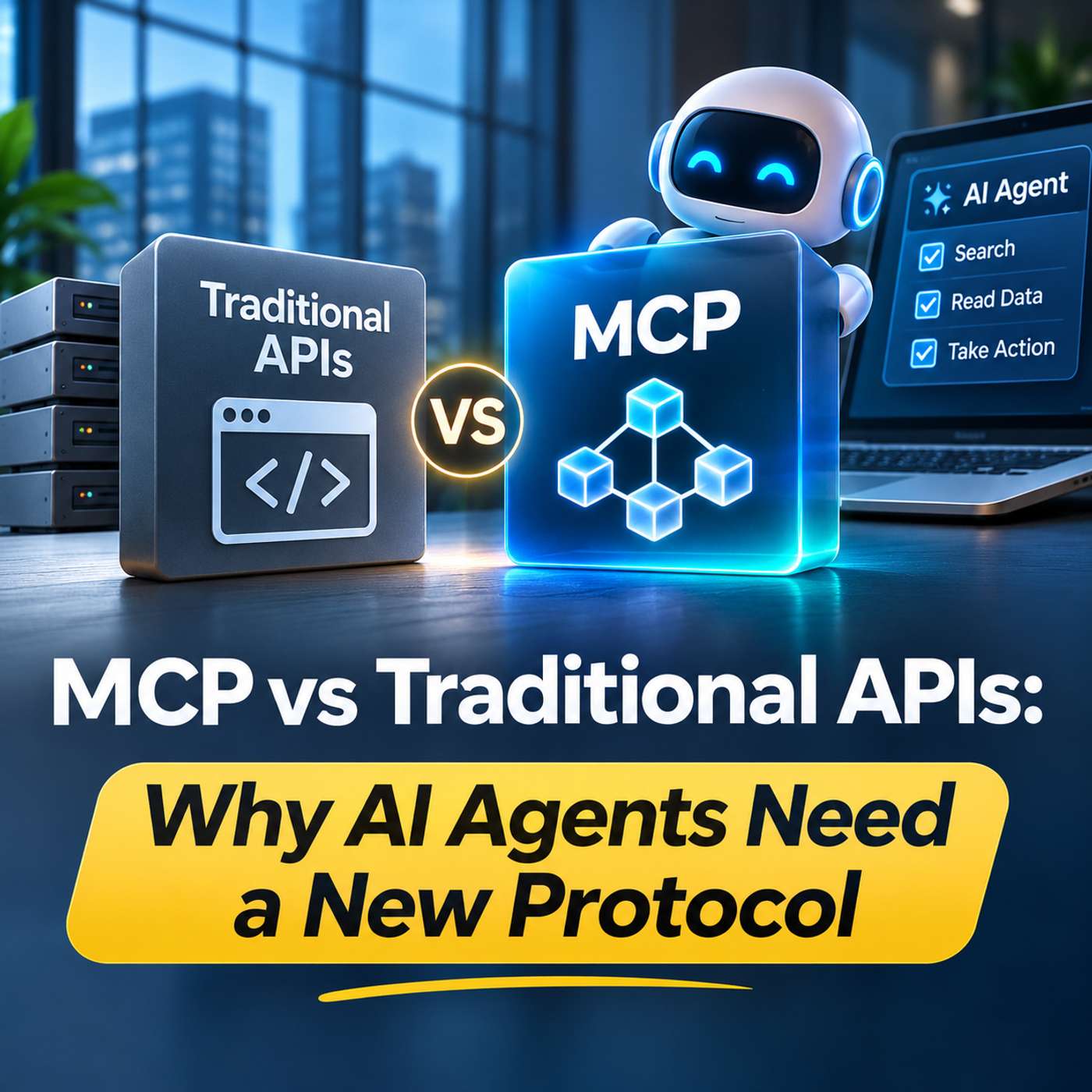
What if your AI application could connect to databases, process refunds, manage Kubernetes clusters, and communicate with enterprise tools without requiring weeks of custom integration code? In this episode of TechDaily.ai, host David and AI expert Sophia explore Model Context Protocol (MCP), a new approach to connecting AI models with external tools, APIs, and enterprise systems. Discover why traditional API integrations create major challenges for AI developers and how MCP is changing the way intelligent applications access data, discover tools, and execute complex workflows. Imagine building an AI-powered customer support assistant that needs to retrieve orders from PostgreSQL, search thousands of products through Elasticsearch, process Stripe refunds, and send Slack notifications. Traditionally, each integration requires custom authentication, error handling, and API-specific code. Switching between AI models like Claude, GPT-4, and Gemini only adds to the complexity. MCP offers a
I'm launching something new... Over the past two years on Huge If True, we’ve explored all kinds of new ideas and technologies that could change the world we live in. Like quantum computers, particle colliders, humanoid robots, new supersonic planes, and much more. We make this show because we believe that by envisioning better futures, we make them more likely to come true. Along the way, I’ve gotten to talk to some of the most important people building these new tools - the people whose visions of the future you and I might really end up living in! And every time I have one of these conversations, I always have the same feeling: “Man, I wish I could have shared that whole conversation with… you!” So, that’s what we’re going to do! Longer form, more in-depth, optimistic conversations with the people whose ideas are shaping the future. (In addition to the more crafted explainers we make already!) Introducing… Huge Conversations. If you want to know what the people building the future a
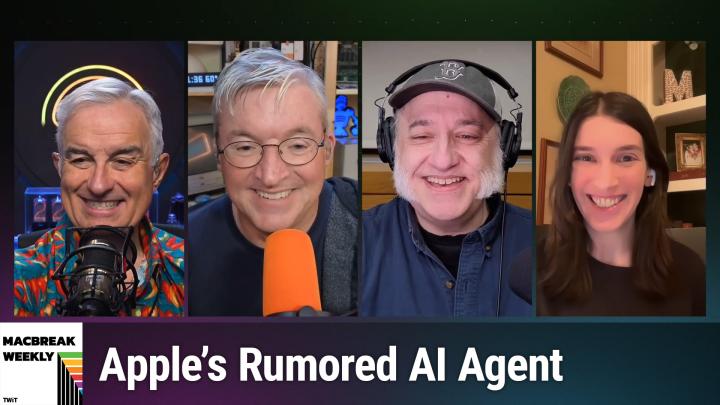
Apple is reportedly working on its own AI agent: is it in a position to compete with other models? Christina and Jason share their hands-on impressions of the iPhone Duo after a few weeks of use. And did you know Apple Music Radio reportedly has more than 50 million monthly listeners? Apple working on own AI Agent to rival OpenAI and Anthropic. Jimmy Chin's jaw-dropping photo shot on iPhone makes TIME's top 100 photos of 2026. Apple prepares to launch Product(Red) HomePod Mini and AirPods Max. Apple may be stuck with Samsung for iPhone Duo screens. Apple drops short-term DRAM deals for 5-Year Samsung contract. Apple Inc. has recovered $2.2 billion in tariff refunds. UK loses secrecy fight over Apple 'Backdoor' order. Apple hands Epic less than 1% of required documents in its App Store fee fight. EU in talks with Apple over barriers to rival iPhone browsers. FastFrames: Video generation at interactive latency. Apple's global-hit juggernaut "Ted Lasso" lands season five renewal. Zane Low
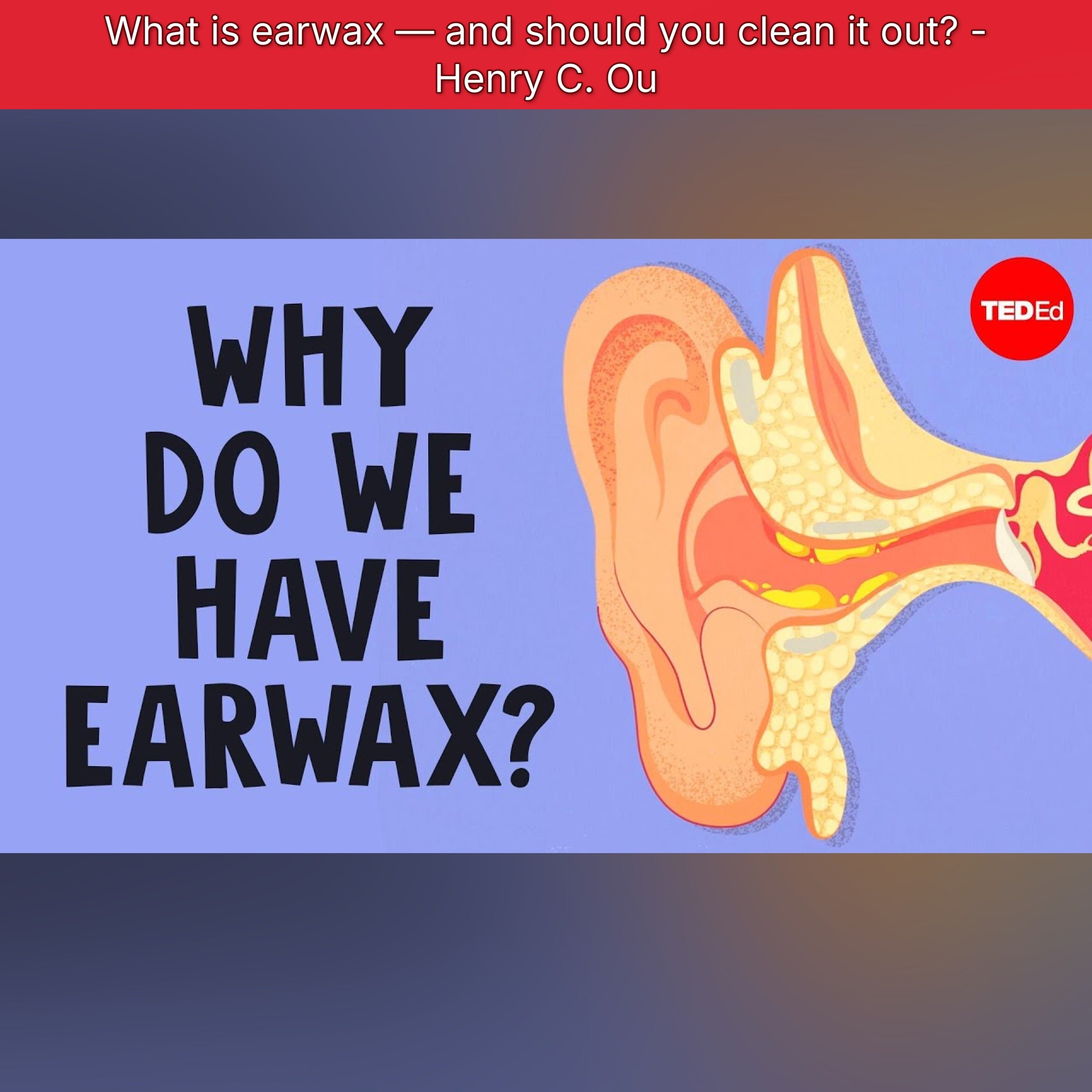
Explore why earwax forms, its purpose in our health, and whether or not we should be trying to get rid of it. -- Grooming paraphernalia has been found in numerous archeological sites, many of which have included earwax removal tools. And earwax evacuation remains a popular hygienic habit today. But what is earwax? And are the efforts to eliminate it actually good for us? Henry C. Ou explores the important role earwax plays in our health. Lesson by Henry C. Ou, directed by Yuriy Polyashko, Max Zaglotskyi, Darvideo Animation Studio. Support Our Non-Profit Mission ---------------------------------------------- Support us on Patreon: http://bit.ly/TEDEdPatreon Check out our merch: http://bit.ly/TEDEDShop ---------------------------------------------- Connect With Us ---------------------------------------------- Sign up for our newsletter: http://bit.ly/TEDEdNewsletter Find us on Twitter: http://bit.ly/TEDEdTwitter Peep us on Instagram: http://bit.ly/TEDEdInstagram ------------------------
A cheap HDMI capture card and Claude let a blind user get into a PC's BIOS without a monitor or sighted help. Steven Scott and Shaun Preece explain how it works, announce the new Good Vibes podcast, and work through a full inbox on iOS 27, Mastodon, Envision and Gemini. Steven plugged his Dell XPS into an HDMI capture card. Claude took screenshots and told him which keys to press, tab by tab, until he was inside the BIOS. Shaun used Whisper and Claude to trim a video in about two minutes. The hosts also talk about Media Access, a new audio editor from Brian Hartgen, and about using AI to make video shorts with captions. Good Vibes is a new podcast where blind people vibe code. It has interviews and demos, and the idea behind it is simple: if they won't build it for us, we'll build it ourselves. It debuts on Double Tap Live on 27 November and arrives in podcast apps on 30 November. In the inbox, Mike in Upstate New York finally updates to iOS 27, and the hosts compare VoiceOver bugs. Go
In today's episode of Milk Road Crypto, we sit down with Pranav Kanade, Portfolio Manager of VanEck's Alpha Fund, to discuss how professional investors navigate market volatility, manage portfolio risk, and identify investment opportunities when uncertainty is at its highest. Pranav explains why he believes the current AI sell-off is a market regime change rather than another dot-com crash, why the biggest winners of the past two years may not be the winners of the next two, and how rising financing costs and compute scarcity are reshaping the AI investment landscape. ~~~ Offer ends Tuesday! (https://milkroad.com/portfolioos/) ~~~~~ ~~~~~ Tools & Channels ~~~~~ Follow Milk Road on Social Media: Milk Road Twitter:https://link.milkroad.com/X Apple Podcasts:https://link.milkroad.com/apple-podcast ~~~~~ GUEST INFO Van Eck: https://x.com/vaneck_us It should not be considered as financial, legal.
AI is finding software vulnerabilities faster than organizations can patch them. OpenAI reported 948 Linux vulnerabilities with working privilege-escalation exploits. Should we be worried Join The Neuron's Corey Noles LIVE with Mark Stockley, Cybersecurity Evangelist at ThreatDown and host of The AI Fix podcast, to explore what AI-powered vulnerability discovery means for businesses, developers, and everyday users. Thanks to Alumni Ventures for sponsoring this episode and helping accredited individual investors access professionally managed venture capital portfolios. Explore their investment opportunities and learn more at https://www.av.vc/. From OpenAI's Linux research to PHP2Shell and Anthropic's Project Glasswing, we'll separate the real risks from the hype.What We'll Cover: - OpenAI's 948 findings: What was actually demonstrated? - PHP2Shell: Why PHP flaws can threaten web servers. - The Patch Tsunami: Can defenders keep up with AI discovery? - Claude Mythos: Why access to some A
Corey and Grant walk backward through roughly four years of modern generative AI, starting with late-2026 frontier models and agents and tracing the path back to ChatGPT’s November 2022 launch and the 2017 Transformer paper. The episode focuses on what changed at each stage: reasoning, tools, multimodality, long context, agents, open-source competition, and the shift from chatbots toward long-running computer work. They also revisit their own first encounters with ChatGPT, debate open access versus AI safety, and close with long-term predictions about robotics, machine labor, scientific progress, and who should have access to increasingly capable systems. Learn more: https://www.zoominfo.com/theneuron
Corey talks with Napster CEO John Acunto about the company’s pivot from music into AI agents and what Napster calls “streaming intelligence.” Acunto lays out a four-part customer-data framework, capture, learn, act, own, and argues that companies should use conversational agents to learn directly from customers while keeping control of the resulting data and models. The conversation covers photorealistic video agents, edge compute, Microsoft Azure / Foundry, robotics, data portability, customer conversion, and Napster’s broader bet that the next interface for AI will feel more like talking to a person than typing into a box. Learn more: https://napster.com “Scaling Out Superintelligence” Vijoy Pandey, January 2026. The technical whitepaper detailing the Internet of Cognition architecture, three-layer stack, and cognition state protocols. https://outshift.cisco.com/internet-of-cognition/whitepaper?utm_campaign=fy27q1_outshift_ww_paid_ioc-neuron-wp_podcast&utm_channel=podcast&utm_source=
Essential public services should be protected even when they operate at a financial loss.
Share your view, then see how readers voted. No sign-in required. This poll is shared across stories.
Do you agree or disagree?
Common Quandary
A Common Quandary to discuss
Another conversation to explore, separate from this news story.
Your friend spent five years writing a terrible novel. What do you say?
A close friend asks for your candid opinion of a novel they have spent five years writing. You find it confusing and unlikely to be published, but writing it has given them purpose during a difficult period.
Is kindness sometimes a reason to withhold an honest judgment?