English-language podcasts

PBS Space Time

RECENT EVIDENCE: Earth Had Rings (and Might Reclaim Them)

24 min

Listen through the publisher, then discuss the episode here or arrange an in-person Roundtable. Your city determines where to meet.

Roundtables are designed for groups of four, with a shared subject and room for everyone to speak. Come for discussion, with no dating expectation.

Check Out All PBS Earth Episodes: https://www.youtube.com/playlist?list=PLnNZYWyBGJ1F8ofFm4H9UTrHxqU8zngK4 Planet Earth is the jewel of the solar system—the shimmery blue oceans, the verdant green forests, the wispy whimsical cloud formations. Saturn is the only competitor for most gorgeous planet with that giant ring system. Hmm… what if we could put the jewel of the Earth in its own ring? Then no contest. Well, there’s an extremely good chance that Earth once DID have a ring system. At least, that’s the proposal by a recent study that has evidence that a mysterious burst in meteor activity nearly half a billion years ago was actually caused by that ancient ring system collapsing onto the Earth. And, you know, if we had a ring once maybe we can have one again. Check Out Joe Scott’s: What Would Happen If The Earth Had Rings? Sign Up on Patreon to get access to this Month’s Livestream Interview with Dr. Matt Caplan! Check out the Space Time Merch Store Search the Entire Space Time Library Here: https://search.pbsspacetime.com/ Hosted by Matt O'Dowd Written by Richard Dyer & Matt O'Dowd Post Production by Leonardo Scholzer, Yago Ballarini & Stephanie Faria Directed by Andrew Kornhaber Associate Producer: Bahar Gholipour Executive Producer: Andrew Kornhaber Executive in Charge for PBS: Maribel Lopez Director of Programming for PBS: Gabrielle Ewing Assistant Director of Programming for PBS: John Campbell Spacetime is a production of Kornhaber Brown for PBS Digital Studios. This program is produced by Kornhaber Brown, which is solely responsible for its content. © 2024 PBS. All rights reserved. End Credits Music by J.R.S. Schattenberg: https://www.youtube.com/user/MultiDroideka Space Time Was Made Possible In Part By: Big Bang Tj Steyn Bryce Fort Peter Barrett Alexander Tamas Morgan Hough Juan Benet Vinnie Falco Mark Rosenthal Supernova Grace Biaelcki Glenn Sugden Ethan Cohen Stephen Wilcox Robert Ilardi The Tyacke boys Mark Heising Hypernova Ulrich and Alexandre Francois Spencer Jones Dean Galvin Michael Tidwell Stephen Spidle Massimiliano Pala Justin Lloyd David Giltinan Kenneth See Gregory Forfa Alex Kern D. Rollere Scott Gorlick Paul Stehr-Green Ben Delo Scott Gray Антон Кочков John R. Slavik Donal Botkin chuck zegar Daniel Muzquiz Gamma Ray Burst Rick Magnun Bryan White Eric Raschke Aaron Pinto Kacper Cieśla Satwik Pani Param Saxena John De Witt Nathaniel Bennett Sandhya Devi Michael Oulvey Arko Provo Mukherjee Mike Purvis Christopher Wade Anthony Crossland Stephen Saslow Robert DeChellis Tomaz Lovsin Anthony Leon Nick Hoffenstoffer III Lori Ferris Koen Wilde Nicolas Katsantonis Richard Steenbergen Joe Pavlovic Chuck Lukaszewski Cole B Combs Jerry Thomas Nikhil Sharma John Anderson Bradley Ulis Craig Falls Kane Holbrook Ross Story Harsh Khandhadia Matt Quinn Michael Lev Rad Antonov Terje Vold James Trimmier Jeremy Soller Paul Wood Kent Durham Jim Bartosh John H. Austin, Jr. Diana S Poljar Faraz Khan Almog Cohen Daniel Jennings David Johnston Michael Barton Isaac Suttell Bleys Goodson Mark Delagasse Mark Daniel Cohen Shane Calimlim Tybie Fitzhugh Eric Kiebler Craig Stonaha Frederic Simon Alex Gan Matthew Johnson Michael Purcell John Funai Adrien Molyneux Bradley Jenkins Vlad Shipulin Justin Waters Thomas Dougherty Zac Sweers Dan Warren Joseph Salomone 00:00 Introduction 00:38 Channel Announcements 01:21 New Community Format + Patreon 02:35 Main Hypothesis 04:20 Lunar Debris Theory 07:15 Asteroid Impact Theory 10:35 Ring Lifespan & Dissappearance 14:46 Final Thoughts and Future Questions

Episode information is provided by the publisher. Listening takes place on the publisher’s service.

Listen at the source ↗

Featured places to meet in Palo Alto, CA

Explore these places and arrange a conversation through ThinkMatch.

City guide for Palo Alto, CA

More from PBS Space Time

PBS Space Time

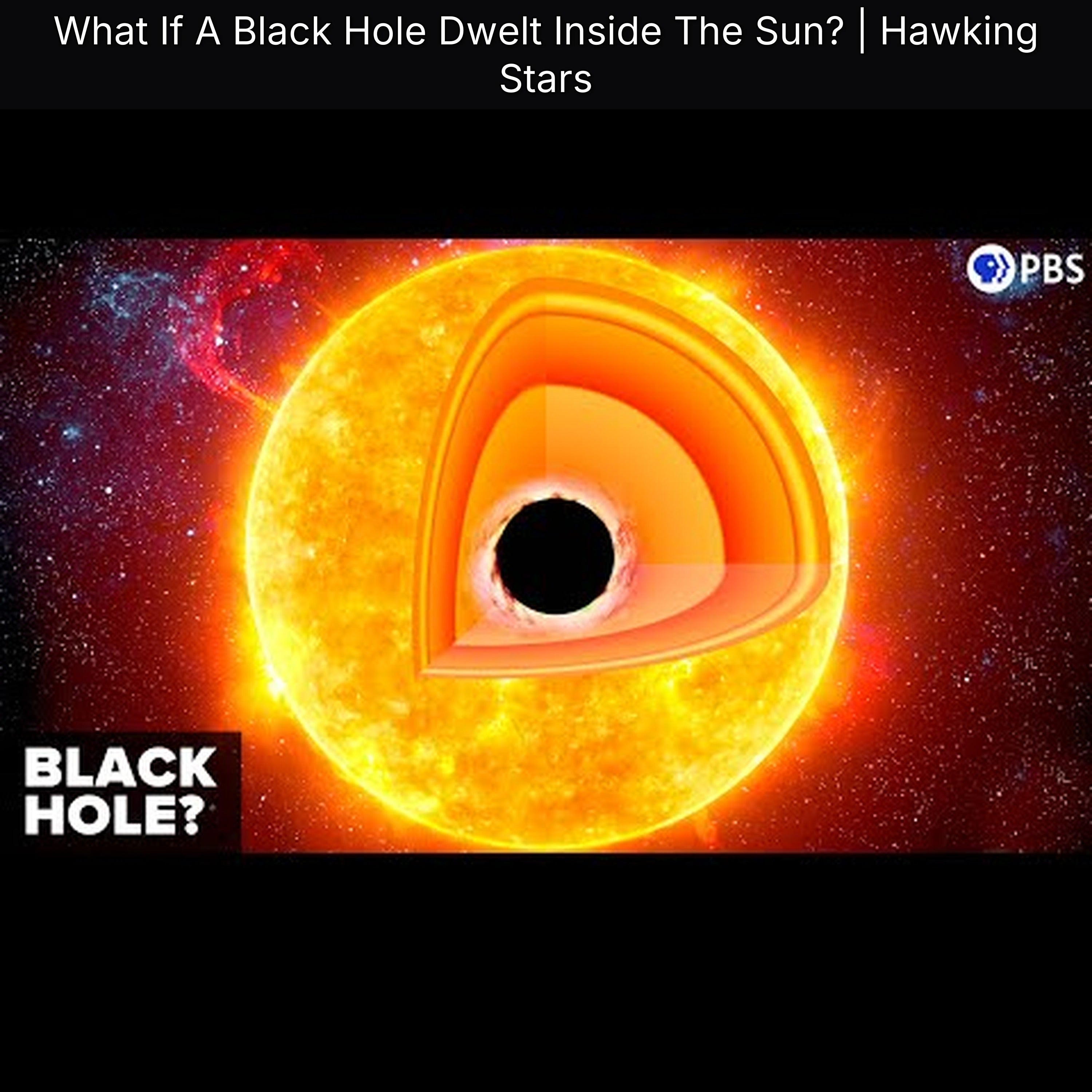
What If A Black Hole Dwelt Inside The Sun? | Hawking Stars

24 min

PBS Member Stations rely on viewers like you. To support your local station, go to:http://to.pbs.org/DonateSPACE Sign Up on Patreon to get access to the Space Time Discord! A fun nightmare sci-fi scenario is the sun being consumed by a black hole. Fortunately the chance of a black hole randomly wandering into our solar system is pretty tiny. That’s good news. But what if it’s already here, hiding in the core of the Sun and slowly eating it from the inside out? Hawking Stars Journal Papers: Search the Entire Space Time Library Here: https://search.pbsspacetime.com/ Hosted by Matt O'Dowd Written by Matt Caplan & Matt O'Dowd Post Production by Leonardo Scholzer, Yago Ballarini & Stephanie Faria Directed by Andrew Kornhaber Associate Producer: Bahar Gholipour Executive Producers: Eric Brown & Andrew Kornhaber Executive in Charge for PBS: Maribel Lopez Director of Programming for PBS: Gabrielle Ewing Assistant Director of Programming for PBS: John Campbell Spacetime is produced by Kornhaber

Discuss this episode

PBS Space Time

The Most Significant Satellite You've (Probably) Never Heard Of

20 min

Remove your personal information from the web at https://joindeleteme.com/SPACETIME One of the most important reasons we go to space is to know our own planet better. Today I'm going to tell you about an orbiting facility that literally watches Earth's biosphere breath and grow and die with incredible resolution. I'll talk about its profound existential and economic importance, and about why it's in danger of being lost. PBS Member Stations rely on viewers like you. To support your local station, go to:http://to.pbs.org/DonateSPACE Sign Up on Patreon to get access to the Space Time Discord! Check out the Space Time Merch Store Pale Blue Dot By Carl Sagan Search the Entire Space Time Library Here: https://search.pbsspacetime.com/ Hosted by Matt O'Dowd Written by Fernando Franco Félix & Matt O'Dowd Post Production by Leonardo Scholzer, Yago Ballarini & Stephanie Faria Directed by Andrew Kornhaber Associate Producer: Bahar Gholipour Executive Producer: Andrew Kornhaber Executive in Charge

Discuss this episode

PBS Space Time

How Does Gravity Affect Light?

18 min

PBS Member Stations rely on viewers like you. To support your local station, go to: http://to.pbs.org/DonateSPACE ↓ More info below ↓ Uploaded 09-03-21 We know that gravity exerts its pull on light, and we have an explanation for why. Actually, we have multiple explanations that all predict the same thing. And at first glance, these explanations seem to describe completely different causes. So what is the true connection between light and gravity, or is truth, in fact, entirely relative? Sabine Hossenfelder's episode "Do we travel through time at the speed of light?" Check out the Space Time Merch Store Hosted by Matt O'Dowd Written by Matt O'Dowd Graphics by Leonardo Scholzer, Yago Ballarini, Pedro Osinski, Adriano Leal and Stephanie Faria GFX Visualizations: Katherine Kornei Directed by Andrew Kornhaber Assistant Producer: Setare Gholipour Executive Producers: Eric Brown and Andrew Kornhaber "FREE GMC Motorhome reimagined low poly" (https://skfb.ly/6XxAN) by Karol Miklas is licensed

Discuss this episode

Community Poll

Independent replication should normally precede major decisions based on a single study.

Share your view, then see how readers voted. No sign-in required. This poll is shared across stories.

Do you agree or disagree?

Choose one answer

Common Quandary

A Common Quandary to discuss

Another conversation to explore, separate from this news story.

The stadium can ban violent fans by scanning every face at the gate. Would you walk in?

A stadium can use facial recognition to identify people banned for violence and shorten security lines. Every visitor would be scanned, error rates are not zero, and the resulting biometric data could become useful to police or advertisers.

How much privacy may a crowd be asked to trade for collective safety?

Explore this quandary