Scientists Just Announced There Could Be Life on Venus
29 min
Listen through the publisher, then discuss the episode here or arrange an in-person Roundtable. Your city determines where to meet.
Roundtables are designed for groups of four, with a shared subject and room for everyone to speak. Come for discussion, with no dating expectation.
In 2026, scientists announced there may actually be life on Venus. Weirder still, it might have travelled there from Earth. In this video, we’re digging into the latest discoveries from our neighbour planet, including strange atmospheric waves, mystery absorption patterns, and new volcanic discoveries on its surface, to find out what’s really hiding right next door.▀▀▀▀▀▀ Free shipping to most countries. Also on Amazon https://noviumdesign.shop/RNIUW6 ▀▀▀▀▀▀
Episode information is provided by the publisher. Listening takes place on the publisher’s service.
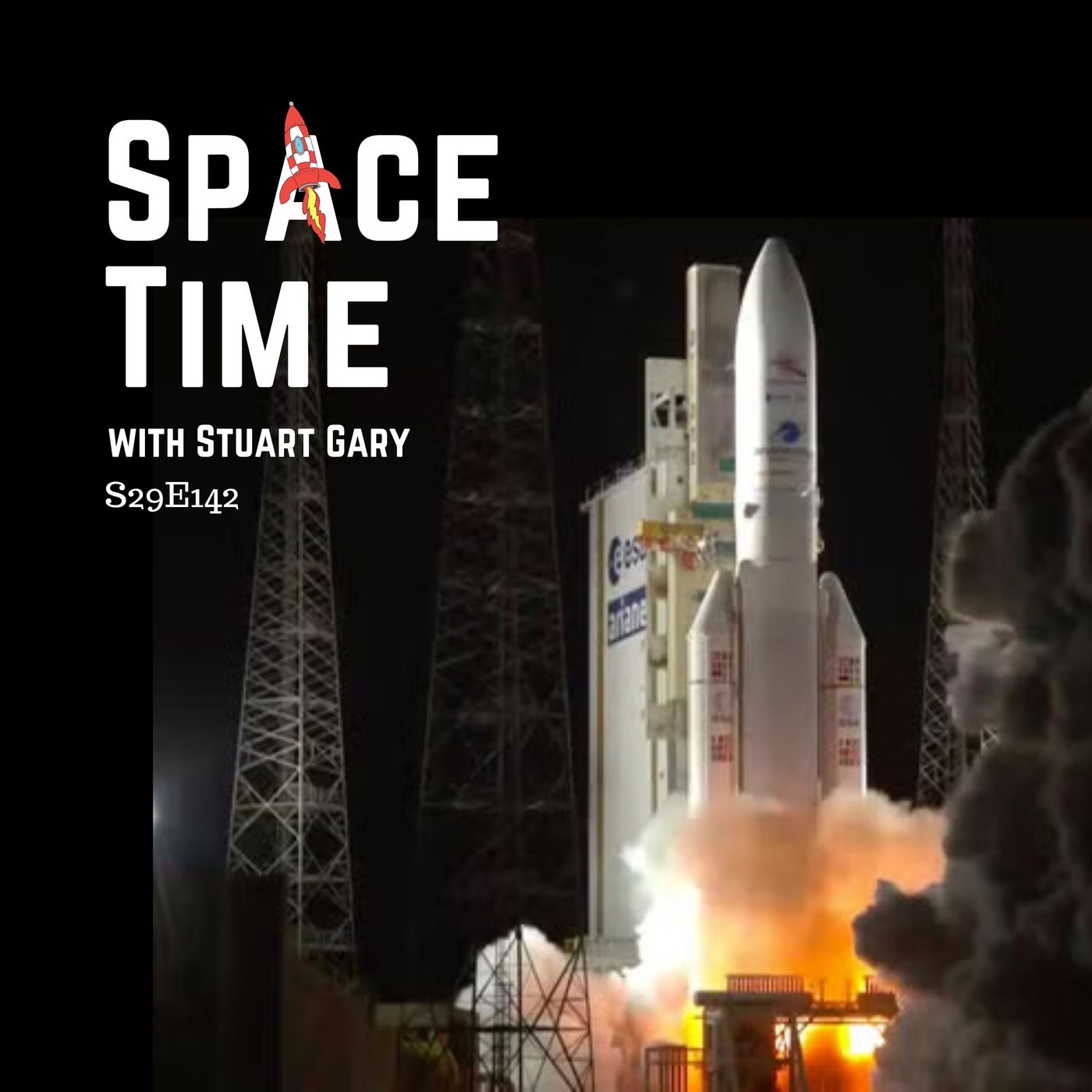
Friday SpaceTime 20261127 Series 29 Episode 142 BepiColombo arrives at Mercury After eight years of travelling through the inner Solar System, a gravity assist flyby around the Earth, two around Venus, and six around Mercury, the BepiColombo mission is finally is arriving in orbit at Mercury. The link between volcanoes on the sea floor and a pair of hot zones near Earth's core A new study has linked two enormous hot zone structures at the very bottom of the mantle, near the boundary with Earth's core to giant volcanic seamounts on the ocean floor some two thousand nine hundred kilometres above. America’s latest nuclear missile test The U.S. Air Force Global Strike Command has carried out a test launch of a Minuteman III intercontinental ballistic missile. The Science Report Smoking is becoming more socially acceptable despite its cancer causing poisons. The United States has just lost its measles elimination status. Scientists have developed the first detailed X-ray ageing guide for sh
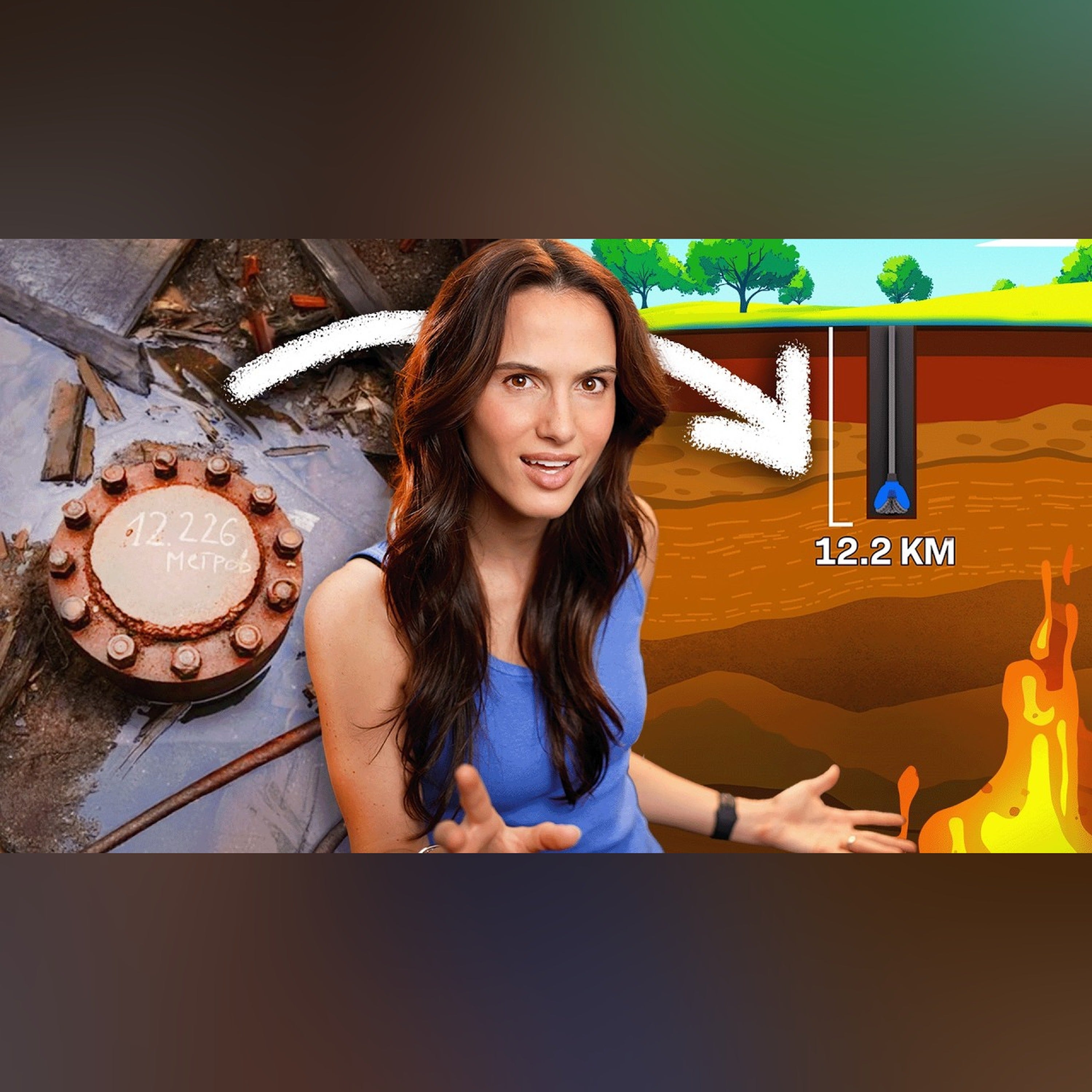
What's really down in the deep Earth? Have you ever thought, “what if I just dug a really really deep hole?” Well, the USSR actually did. The hole they dug is deeper than the deepest part of the ocean. It’s deeper than Mt. Everest is tall! They began digging it in the 1970s as part of a space race, but down. The United States only got to 600 ft before pulling funding. But the USSR kept going for 20 years. They made it about a third of the way through the Earth’s crust and then STOPPED. But what if… you just… kept... digging? If you dug a hole to the center of the Earth, what would you find? What would happen to you? And what does our newest tech tell us is REALLY down below your feet? In this video, we’re going on a journey to the center of the Earth… Chapters: 0:00 What if you dug a hole to Earth’s core? 1:05 What happens when I start digging? 1:36 What are the deepest made-made things? 2:25 What is the deepest hole humans ever dug? 3:03 What happens in the mantle? 3:45 Why is the Ear
Thank you to Draper and its Hack the Moon initiative for supporting PBS Digital Studios | Learn more at https://wehackthemoon.com. (https://wehackthemoon.com./) Uploaded 25-07-19 PBS Member Stations rely on viewers like you. To support your local station, go to: http://to.pbs.org/DonateSPACE One of the fundamental questions humanity has always asked is how big is our Universe? For much of human history, people believed that Planet Earth was the very center of the entire universe. And Earth is pretty big. But compared the rest of the universe, we are infinitesimally small. The animation in this video the Digital Universe data collection curated by the American Museum of Natural History. The software is used to visualize these datasets is OpenSpace, which is developed through a collaboration between AMNH, Linköping University in Sweden, New York University, and the University of Utah. The software and datasets are open source and are free to download and explore. https://www.openspacepro
New podcast episode between Ege Erdil and Daniel Kokotajlo. I thought this was going to be a debate, but they ended up agreeing on a lot more than I expected. Their main point of disagreement is how likely it is that we get some intelligence explosion that gives us AIs more competent than any human expert before 2029. Ege puts this possibility at around 20%, whereas Daniel thinks it’s higher than 50%. They agree that there is not a huge difference in probability, and that, in either case, the situation is crazy enough that our civilization really needs to grapple with how the world might be transformed, and we need a plan that actually makes sense. In particular, we should stop antagonizing China if we think some kind of global treaty will be needed to make superintelligence go well. There was another important crux about how well we should expect future AIs (that swamp humans in population size and cognitive power) to treat us, and how relevant it is that current AIs, by and large, se
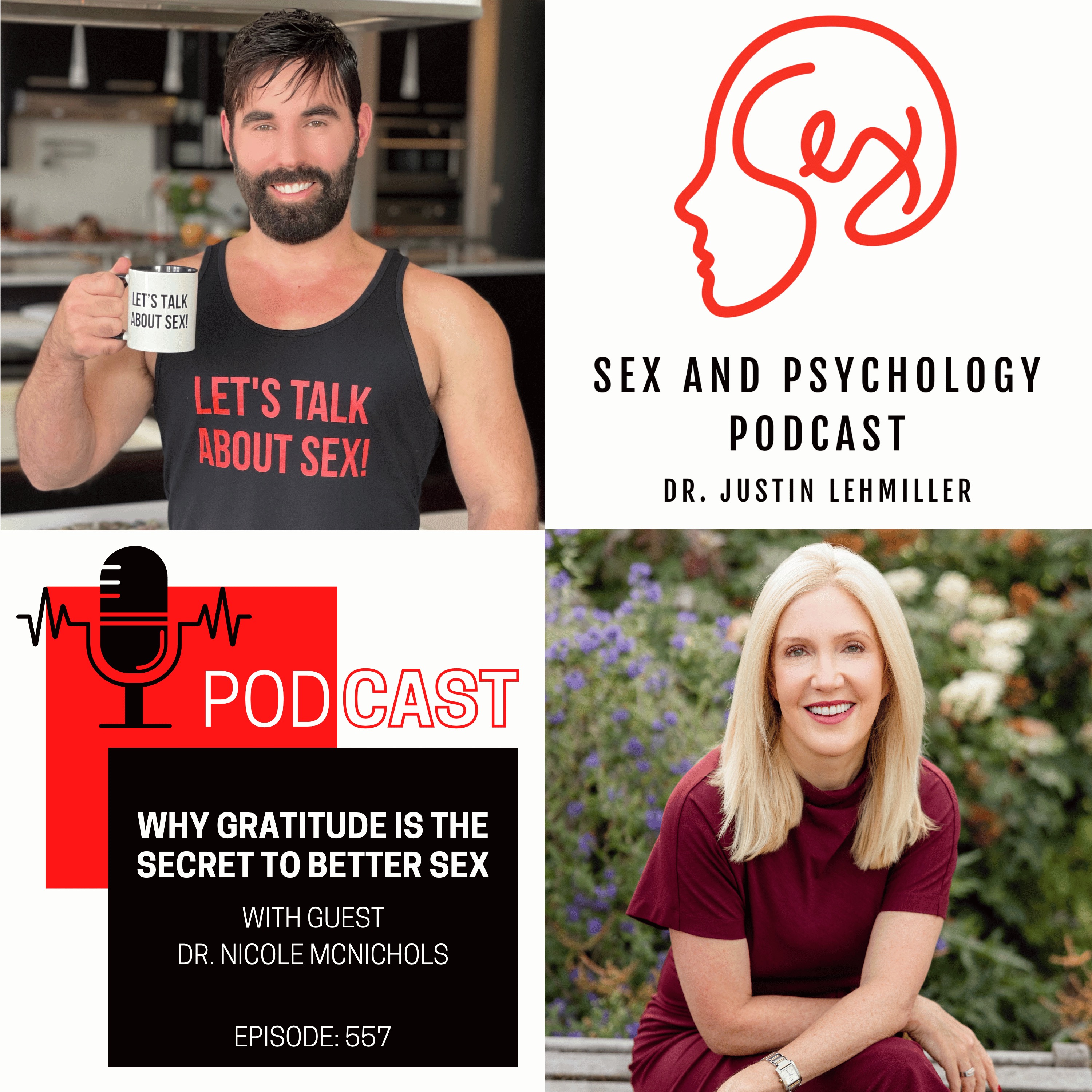
Thanksgiving is a time to reflect on the things we're grateful for, but when was the last time you stopped to appreciate your sex life? In this episode, we're exploring the surprising connection between gratitude and sexual desire. We'll discuss how feeling appreciated can strengthen intimacy, why gratitude can motivate us to be more attentive to our partners' needs, and simple ways to bring more appreciation into our sex lives without turning it into another obligation. I am joined once again by Dr. Nicole McNichols (https://nicolethesexprofessor.com/about-nicole/), an Associate Teaching Professor in the Department of Psychology at the University of Washington. Nicole's course, "The Diversity of Human Sexuality," is the largest and most popular course in the university's history with four thousand enrolled students each year. Nicole is author of the book You Could Be Having Better Sex. (https://link.amazon/B0iYWx0Q4) Some of the specific topics we cover include: What does it mean to p
This week’s Unexpected Elements is inspired by the meeting of Donald Trump, Vladimir Putin and Xi Jinping at a global economic summit in Shenzhen, China. It was described as a historic trilateral meeting, with the leaders issuing a joint declaration on a range of global issues. It got the Unexpected Elements team thinking about the fascinating science of triples, triplets, trios and thirds. First, we explore how a TV game show helped to inspire a complicated probabilities problem, and how finding the right answer to it could help you win a car. What does a reptile’s third eye have to do with your sleep? New research into tuataras looks at the extra eye they have at the top of their skulls. Some scientists believe the origins of this light-sensitive ‘third eye’ might actually lie in ancient sensory systems, and we also explore what this might mean for how humans evolved. Plus, we find out what makes the number three so appealing to humans, and why it’s so useful in jokes, with neuroscie
Every night, the largest animal migration on Earth takes place beneath the surface of our oceans. But this extraordinary event is just one of the secrets of the deep sea.In this video, we’re descending into the midnight zone, where bizarre creatures thrive in permanent darkness. How does this seemingly alien world help regulate the climate of our entire planet?▀▀▀▀▀▀ Come with us on a journey deep into the ocean's midnight zone... Inspire the future scientists and engineers that you love by visiting https://www.kiwico.com/astrumearth today.
In this Astrum compilation, we’re exploring the icy moons of our solar system. From Tethys and Dione, to Europa, we’ll dig into the spectacular discoveries on their icy surfaces, and probe their subsurface oceans to find out what might be lurking deep below. Plus, find out where ESA’s probe “Juice” (Jupiter Icy Moons Explorer) is heading next. ▀▀▀▀▀▀ The Astrum book is still available in the US!
Voyager 1 has just reached a major milestone: one light-day from Earth. It’s the furthest a man-made object has ever travelled, crossing the boundary at the edge of our Solar System and venturing out into interstellar space. In this video, we explore what Voyager 1 has found so far, the discoveries it’s still making, and the hazards it faces out there in deep space. Where is it heading next?▀▀▀▀▀▀ Take your fascination for space to a new level with Black Friday offers coming to DWARFLAB. Scan the QR code or follow the link https://bit.ly/astrum_dwarflab to check the offer available in your market.▀▀▀▀▀▀ The Astrum book is still available in the US!
Adults should generally be free to accept personal risks that do not substantially harm others.
Share your view, then see how readers voted. No sign-in required. This poll is shared across stories.
Do you agree or disagree?
Common Quandary
A Common Quandary to discuss
Another conversation to explore, separate from this news story.
Everyone loves the group photo except you. Can you forbid them from posting it?
At a reunion, someone takes a joyful group photo that captures the night perfectly. Everyone looks wonderful except you, caught at an awful angle. The group wants to post it publicly and promises nobody else will care.
How much control should one person have over a memory shared by many?