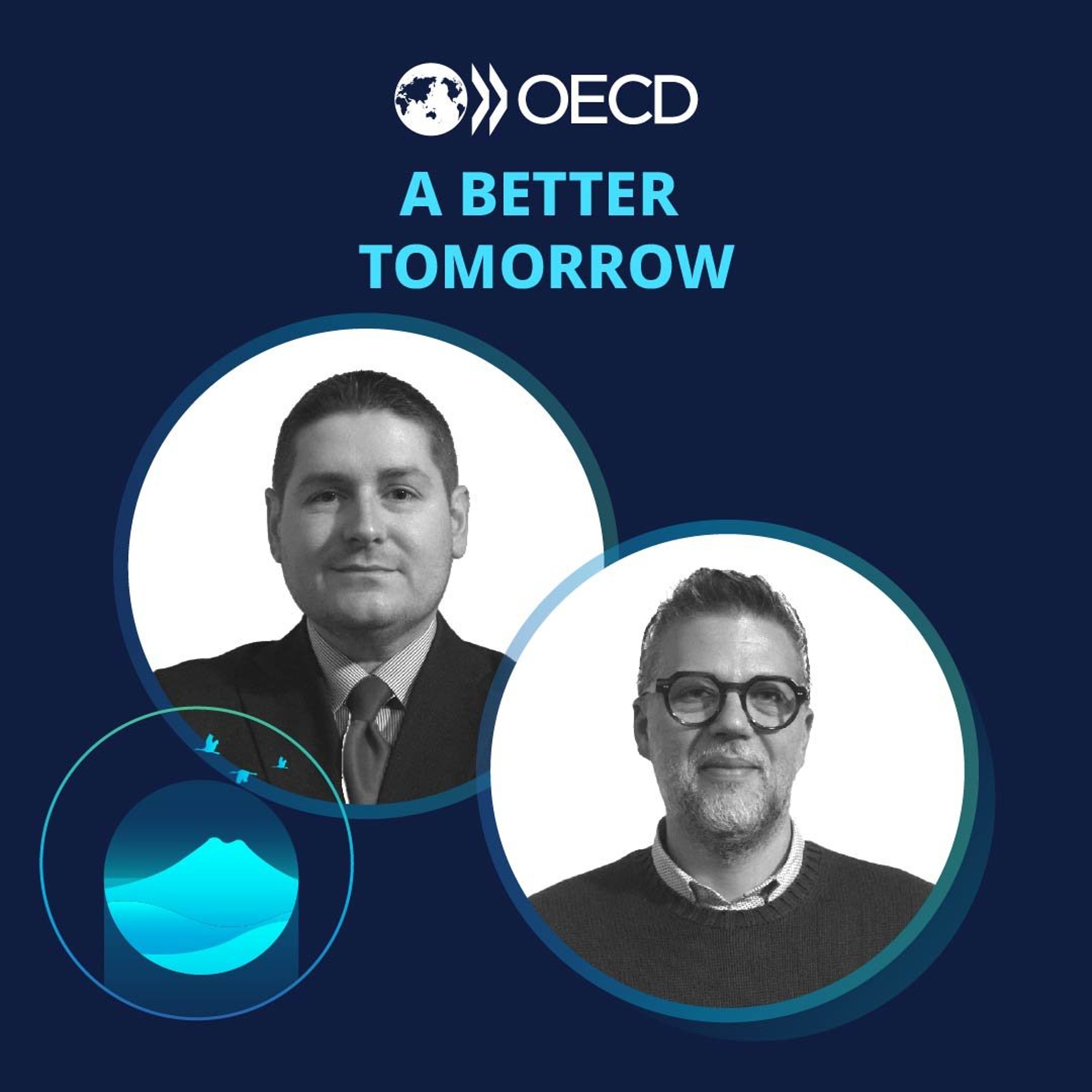
Scoring more than goals: Football, men’s health and social impact
19 min
Listen through the publisher, then discuss the episode here or arrange an in-person Roundtable. Your city determines where to meet.
Roundtables are designed for groups of four, with a shared subject and room for everyone to speak. Come for discussion, with no dating expectation.
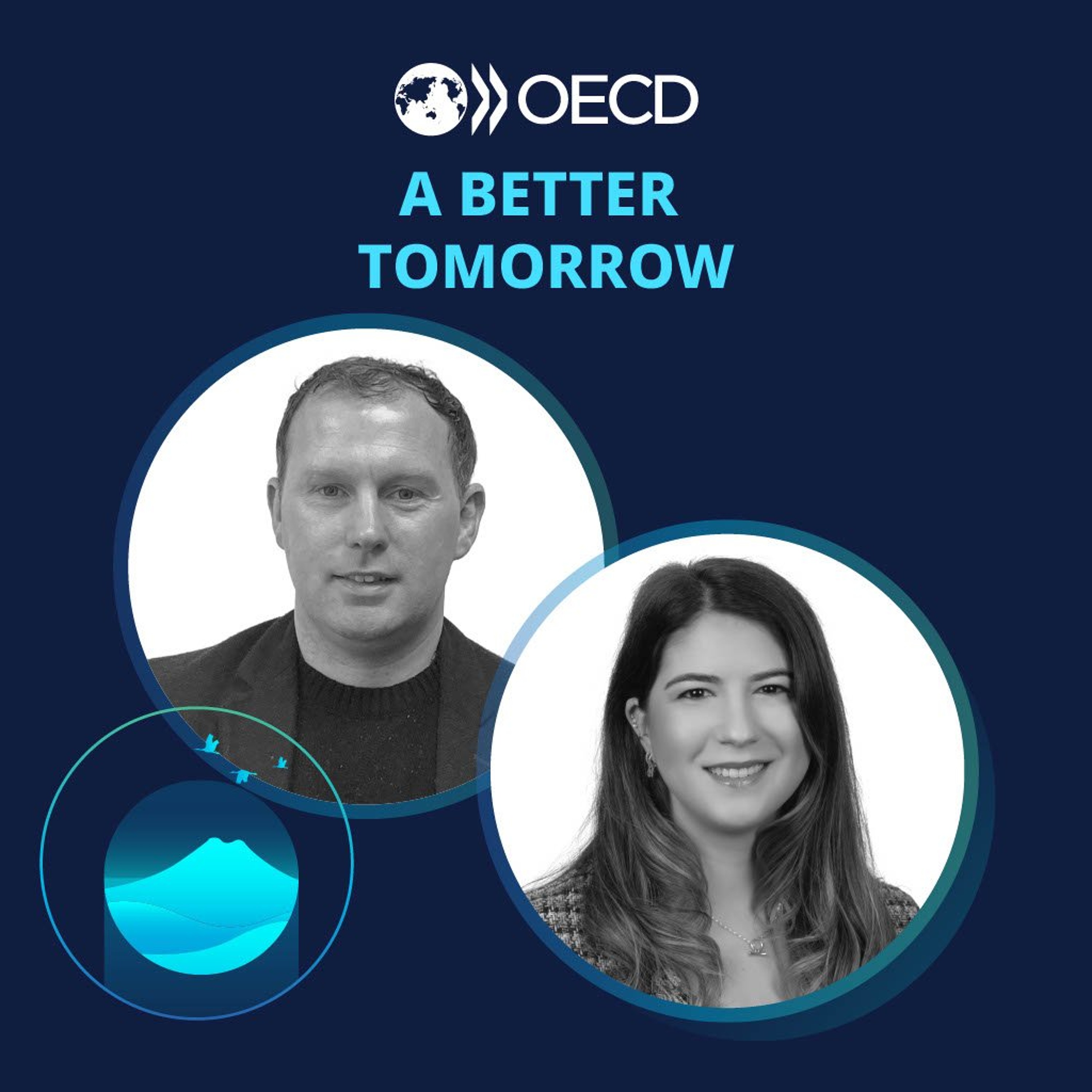
For every €1 invested in Ireland’s Football Cooperative, research estimates €17.60 in social value. But how do you put a value on friendship, better mental health and a sense of belonging? To mark Movember, this episode explores how a simple weekly kickabout can help men get active, build connections and feel part of their community. OECD Policy Analyst Melis Aslan and Football Cooperative founder Steven O’Connell discuss how inclusive, community-led football can improve men’s physical and mental well-being, the role of social enterprises in bringing people together, and how these wider benefits can be measured and replicated in other communities. Speakers: Melis Aslan Melis Aslan is a Policy Analyst and Economist at the OECD team working on social economy and innovation. She specialises in data on social economy, social impact measurement, internationalisation of social economy entities and social enterprise policy. Prior to joining the OECD, she worked at UNDP on impact investing and private sector contribution to international development. Melis holds an MSc in Economics from Tilburg University with a focus on sustainability and growth. Steven O’Connell Steven O’Connell is the founder of Football Cooperative, a volunteer-led social enterprise from Ireland that places recreational football as a hook to bring men together to get active to promote positive health and health literacy. Through a network of recreational football sites, weekly recreational football games are organised year round that engage participants of all fitness and football abilities. Steven has led Football Cooperative to form an academic partnership that measured the impact of participation following the principles of social return on investment. The outcome of which calculated that for every €1 invested in Football Cooperative returned a social value of €17.60. As a result of this evidence, plans alongside key national stakeholders are at an advanced stage to scale up the initiative’s impact to more communities. Learn more about the OECD: Keep up with the latest from the OECD: Get the latest OECD content delivered directly to your inbox!
Episode information is provided by the publisher. Listening takes place on the publisher’s service.
Europe's Little Anarchy: The Rise and Fall of Neutral Moresnet (https://bookshop.org/a/12343/9781501788147)(Cornell UP, 2026) uncovers the history of Neutral Moresnet: a once-forgotten space without borders, nationalism, or a recognized government. Between 1815 and 1919, this square mile of land wedged between Belgium, the Netherlands, and Germany was home to thousands of people living off the grid, free of taxation and oversight. But they also had no political status, police, legal currency, proper law courts, or government presence in sectors like public health, infrastructure maintenance, or education. Meanwhile, practical control over Neutral Moresnet lay in the hands of the local industry: a for-profit, multinational mining company that, because it owned rights to the land, also held a near monopoly on the supply of high-quality zinc to the rest of the world. Dr. Steven Press explores how the residents of Neutral Moresnet sought to improve their quality of life, appealing to Germa
Artificial intelligence is already finding its way into ambulances, patient care reports and EMS operations — but do agency leaders actually know what technology their people are using? This week on EMS One-Stop, host Rob Lawrence welcomes back EMS attorneys Doug Wolfberg and Ryan Stark of Page, Wolfberg & Wirth (PWW) to explore the rapidly emerging challenge of shadow AI and shadow IT. From smart glasses and personal recording devices, to ambient listening applications and generative AI platforms, the discussion examines how well-intentioned clinicians may be putting protected health information at risk without realizing it. Wolfberg and Stark explain why HIPAA hasn't fundamentally changed in the AI era, why business associate agreements and organizational oversight matter, and why simply banning technology is unlikely to be an effective long-term solution. Instead, EMS leaders must understand the tools being used, update their policies, educate their workforces and establish safeguar
The Tenth Circuit considers whether a health plan’s staffing requirement creates an unlawful barrier to mental health coverage. A young beneficiary received residential mental health treatment at two centers, one in New Hampshire and one in Utah. Blue Cross Blue Shield of Illinois, the plan’s claims administrator, denied payment because the centers did not provide around-the-clock onsite nursing. The family challenged those denials internally, then sued to recover benefits and to challenge unequal treatment under the Mental Health Parity Act. The district court ruled for Blue Cross and the employer’s benefit plan. The appeal asks whether the nursing requirement is comparable to the conditions imposed on analogous medical and surgical care, including skilled nursing and inpatient rehabilitation. The family’s lawyer will argue that licensing rules and accepted mental health standards allow other professional staffing arrangements, so this added nursing requirement unfairly restricts cove
Training Wednesday is back, and Aaron, Trent, and Peaches spend the live answering Air Force Special Warfare candidate questions — but first, there is an update from the current SWAS class. According to the numbers discussed on the live, 78 candidates failed the initial IFT and 52 still failed the refire. The guys try to understand how that happens after months of development and preparation, discuss reports that some candidates struggled with the swim and high-volume masks, and once again return to the same message they keep giving candidates: you need to arrive ready. From there, the live turns into a full candidate-training clinic. The guys talk about periodizing strength and endurance work, building Zone 2 capacity, gradually increasing mileage, why running with a weighted vest is probably not solving the problem you think it is, preparing for A&S, training with the equipment you will actually use, and why the goal is not simply to pass a minimum standard. They also answer question
In this video, Disability Attorney Walter Hnot goes over call in questions, and answers for those questions. Like the content? Review us here: https://g.page/r/CcwyektC7nCPEAg/review . If the link does not work, Google: Disability Resolution, P.A. WANT A CLASS ACTION COLA FRAUD LAWSUIT? Sign the petition here: https://chng.it/bvLmbpWrrY Welcome to the largest Social Security Disability Tutorial Video Library On Earth. PRIVATE ONE HOUR PHONE CALL THIS IS HOW YOU CAN GIVE BACK TO HELP GROW THE CAUSE: Option 1: Leave 5 |==================5 STAR REVIEWS==================| Google (Search Disability Resolution Orlando, FL)- https://www.google.com/search?authuse... (https://www.google.com/search?authuse...=) AVVO (Search Walter Hnot) - https://www.avvo.com/attorneys/32817-... BBB (Search Disability Resolution Orlando, FL)- https://www.bbb.org/us/fl/orlando/pro... MARTINDALE (Search Walter Hnot Orlando, FL) - https://www.martindale.com/attorney/w... Option 2: Donate Student Loans : https://www
How does a status-sensitive China approach international order—the hierarchical institutional and/or normative orders that can either elevate or demote its positions? Conventional wisdom often accredits rising powers’ strategies to their treatment by established powers, whose (mis)recognition can swing these status-seekers between cooperation or revisionism. However, this simple dynamic between destabilizing rising powers and their superior status-quo-defenders risks truncating a status hierarchy—the vertical ordering of super- and subordination. This project thus theorizes the dynamic of multiple-audience status-seeking to comprehensively capture the diverse sources and consequences of China’s status (dis)satisfaction. Navigating recognitiongranting great powers and deference-paying smaller powers, China chooses its international order strategy according to four status scenarios with distinct socio-psychological and social forces: (1) cooperation vis-à-vis status satisfaction (high re
Why are some places thriving while others risk being left behind? Where people live shapes their access to jobs, housing and opportunities. In this episode, adapted from the launch webinar of *OECD Regions and Cities at a Glance 2026*, experts explore how productivity, technological transformation and demographic change are reshaping regions and cities. They discuss what these trends mean for people and places, from growing housing pressures to ageing populations and climate risks. The episode also marks the launch of new indicators on the OECD Local Data Portal, helping us look beyond national averages to better understand how places are changing. Speakers: Nadim Ahmad is Deputy Director at the OECD Centre for Entrepreneurship, SMEs, Regions and Cities (CFE), helping to drive momentum in the development of integrated policies that look holistically at people, places and firms, and, in doing so, better policies for better lives, and resilient and sustainable economic growth. Prior to j
Welche Rolle spielt Übersetzung dabei, die Erkenntnisse der OECD über Länder- und Kulturgrenzen hinweg zugänglich zu machen? Wie verändert künstliche Intelligenz die Arbeit von Sprachexpert*innen? In dieser Folge von Why Languages Matter at the OECD spricht Daniela Herzog-Hébert, Leiterin des Deutschen Übersetzungsdiensts der OECD, mit Silvia Rathnau-Prenzel, Leiterin der OECD Translation Division, darüber, warum mehrsprachige Kommunikation entscheidend dazu beiträgt, Wissen in die Praxis umzusetzen. Gemeinsam beleuchten sie, wie Übersetzungen politischen Entscheidungsträger*innen, Forschenden und der breiten Öffentlichkeit helfen, komplexe Themen in ihrer eigenen Sprache besser zu verstehen. Am Beispiel der OECD-Arbeit zu BEPS, den internationalen Maßnahmen gegen Gewinnverkürzung und Gewinnverlagerung multinationaler Unternehmen, zeigt Silvia, welchen Unterschied es gemacht hat, dass wichtige Fachdokumente auch auf Deutsch verfügbar waren. Außerdem geht es um die wachsende Bedeutung k
Perché le lingue contano all'OCSE Perché il multilinguismo è fondamentale per avvicinare le Organizzazioni Internazionali ai cittadini? E quale ruolo svolge la lingua italiana nel favorire il dialogo e la cooperazione internazionale? In questo episodio di Perché le lingue contano all'OCSE, Giancarlo Ruggiero, responsabile della Sezione linguistica italiana dell'OCSE, incontra Antonio Petrarulo, Consigliere presso la Rappresentanza Permanente d'Italia presso le Organizzazioni Internazionali a Parigi, per parlare del valore del multilinguismo nella diplomazia e nella diffusione della conoscenza. Insieme esplorano come la comunicazione multilingue possa rendere le analisi e le raccomandazioni dell'OCSE più accessibili, aiutando i cittadini a comprendere le questioni politiche e a partecipare al dibattito pubblico. Antonio sottolinea l'importanza di potersi esprimere nella propria lingua nei forum internazionali e il ruolo della Sezione linguistica italiana dell'OCSE, istituita nel 1961, n
News reports should clearly separate verified facts from the writer's interpretation.
Share your view, then see how readers voted. No sign-in required. This poll is shared across stories.
Do you agree or disagree?
Common Quandary
A Common Quandary to discuss
Another conversation to explore, separate from this news story.
A DNA test reveals a family time bomb. Do you tell relatives who would rather not know?
A genetic test reveals that you carry a serious inherited condition. Your siblings and adult cousins may carry it too, but one has previously said they would rather live without predictions about illnesses that cannot yet be prevented.
Can someone's wish not to know outweigh your responsibility to warn them?