Listen through the publisher, then discuss the episode here or arrange an in-person Roundtable. Your city determines where to meet.
Roundtables are designed for groups of four, with a shared subject and room for everyone to speak. Come for discussion, with no dating expectation.
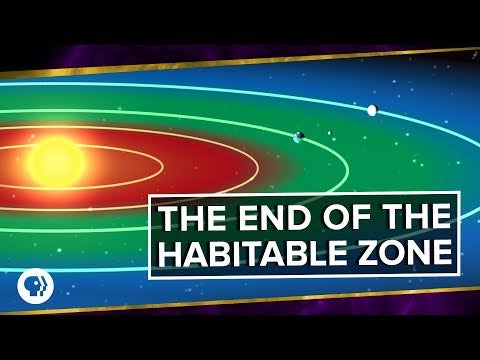
Viewers like you help make PBS (Thank you ) . Support your local PBS Member Station here: https://to.pbs.org/DonateSPACE Uploaded 24-01-18 Learn through active problem-solving at Brilliant: https://brilliant.org/SpaceTime/ The Sun is getting brighter and the planets in our solar system that are habitable are changing. Check out Infinite Series at https://www.youtube.com/channel/UCs4aHmggTfFrpkPcWSaBN9g You can further support us on Patreon at https://www.patreon.com/pbsspacetime Get your own Space Time tshirt at http://bit.ly/1QlzoBi Tweet at us! @pbsspacetime Facebook: facebook.com/pbsspacetime Email us! pbsspacetime [at] gmail [dot] com Comment on Reddit: http://www.reddit.com/r/pbsspacetime Help translate our videos! https://www.youtube.com/timedtext_cs_panel?tab=2&c=UC7_gcs09iThXybpVgjHZ_7g (https://www.youtube.com/timedtext_cs_panel?c=UC7_gcs09iThXybpVgjHZ_7g&tab=2) Previous Episode: Horizon Radiation https://www.youtube.com/watch?v=bG-xu5H6plk&t=1s (https://www.youtube.com/watch?t=1s&v=bG-xu5H6plk) The Sun is slowly burning through its fuel. Hydrogen is fused into helium in the Sun’s core, producing energy that keeps it shining, and keeping the Earth warm and hospitable to life. But that fuel WILL run out, after which the Sun will swell into a red giant and flash-fry the Earth. But in fact that frying – well, slow-roasting – will begin much earlier. See, the Sun is getting brighter even now. This has complex, and for the most part terrible implications for life. The end of the world will come sooner than you think. Hosted and written by Matt O'Dowd Produced by Rusty Ward Graphics by Kurt Ross Assistant Editing and Sound Design by Mike Petrow and Meah Denee Barrington Made by Kornhaber Brown (www.kornhaberbrown.com) Special thanks to our Patreon Big Bang, Quasar and Hypernova Supporters: Big Bang Anton Lifshits CoolAsCats Faisal Saud David Nicklas Quasar Tambe Barsbay Mayank M. Mehrota Mars Yentur Mark Rosenthal Dean Fuqua Roman Pinchuck Hypernova Edmund Fokschaner Matthew O’Connor Eugene Lawson Barry Hatfield Martha Hunt Joseph Salomone Chuck Zegar Craig Peterson Jordan Young Ratfeast John Hofmann Shaun Williams Thanks to our Patreon Gamma Ray Burst Supporters: Greg Allen Ryan Griggs Brandon Cook Denys Ivanov Nick Virtue Alexey Eromenko Nicholas Rose Scott Gossett Mark Dykstra Mark Vasile Patrick Murray Sultan Alkhulaifi Alex Seto Michal-Peanut Karmi Erik Stein Daniel Lyons Kevin Warne JJ Bagnell J Rejc Amy Jie Avi Goldfinger John Pettit Shannan Catalano Florian Stinglmayr Benoit Pagé-Guitard Nathan Leniz Jessica Fraley Loro Lukic Brandon Labonte David Crane Greg Weiss
Episode information is provided by the publisher. Listening takes place on the publisher’s service.
Where on Earth did life begin? Explore the hydrothermal vents in Earth’s crust as simple compounds gave way to complex life. Uploaded 26-08-19 -- Billions of years ago, simple organic compounds assembled into more complex coalitions that could grow and reproduce. At the time, Earth had widespread volcanic activity and a hostile atmosphere that made it almost devoid of a suitable environment for living things. So where did life begin? Luka Wright searches for the cradle of life that gave rise to the billions of species that inhabit our planet. Lesson by Luka Seamus Wright, directed by Nick Hilditch. Sign up for our newsletter: http://bit.ly/TEDEdNewsletter Support us on Patreon: http://bit.ly/TEDEdPatreon Find us on Twitter: http://bit.ly/TEDEdTwitter Peep us on Instagram: http://bit.ly/TEDEdInstagram View full lesson: https://ed.ted.com/lessons/the-mysterious-origins-of-life-on-earth-luka-seamus-wright Thank you so much to our patrons for your support! Without you this video would not
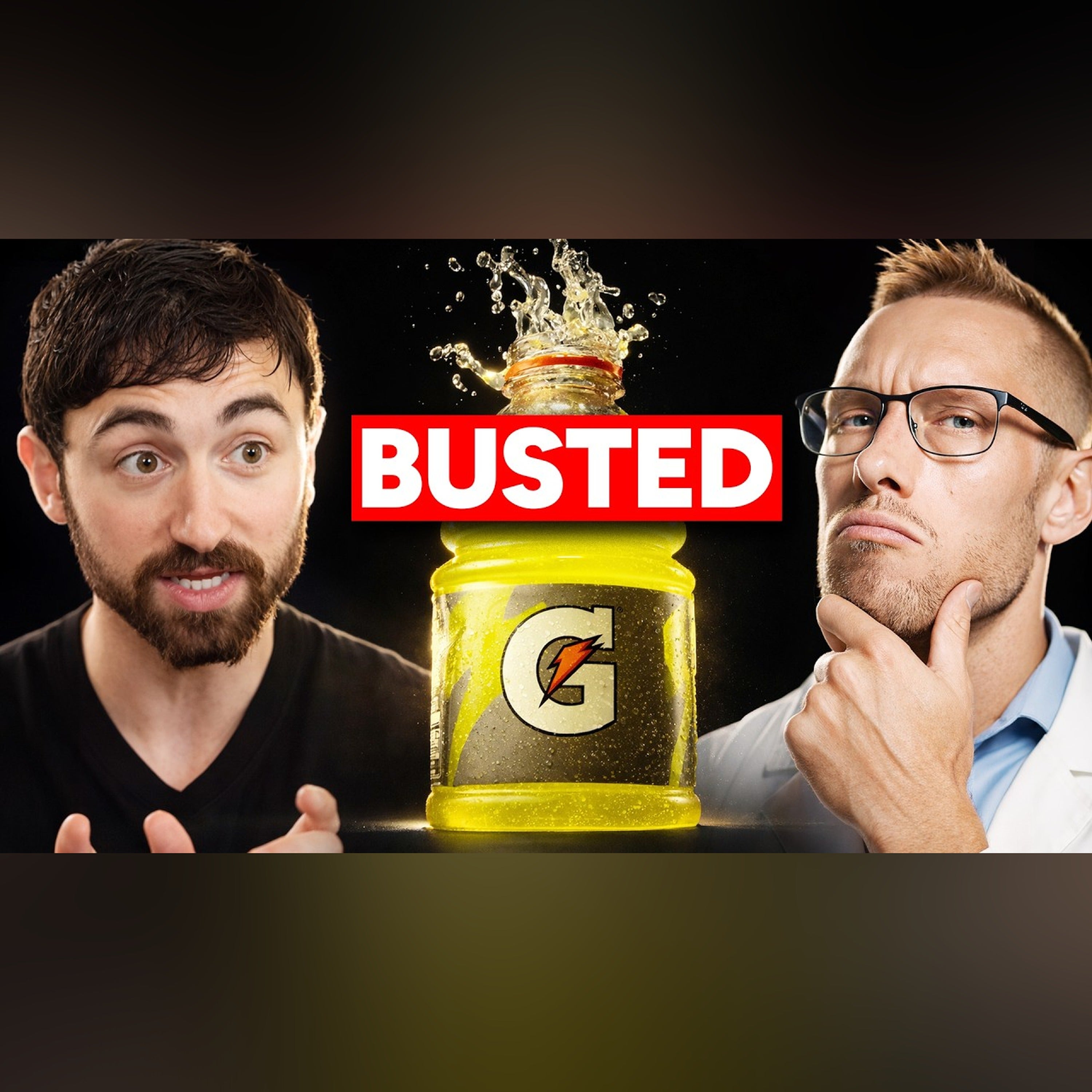
For a written breakdown and key references, see the associated letter: https://open.substack.com/pub/staycuriousmetabolism/p/the-carb-loading-myth-is-finally?r=40ekz2&utm_campaign=post&utm_medium=web&showWelcomeOnShare=true (https://open.substack.com/pub/staycuriousmetabolism/p/the-carb-loading-myth-is-finally?r=40ekz2&showWelcomeOnShare=true) Paper: https://academic.oup.com/edrv/advance-article/doi/10.1210/endrev/bnaf038/8432248?login=false Description: Do you really need to carb-load for peak performance, or is that just sports nutrition inertia? In this conversation, Nick sits down with Dr. Andrew Koutnik to break down a new meta-analysis of randomized controlled trials challenging the classic “you need carbs for performance” narrative. The key twist is that the strongest predictor of fatigue across studies isn’t muscle glycogen, but a subtle drop in blood glucose and overall brain fuel. You’ll learn where the carb-loading doctrine came from, what the original studies missed, why gl
On 4th March 2023, UN member states agreed a historic treaty that had been over fifteen years in the making. The High Seas Treaty is the first ever treaty to protect the world’s oceans outside national boundaries. The aim is to meet the 30 by 30 biodiversity target, protecting 30% of the world’s oceans by the year 2030. Also known as the open sea or international waters, the high seas begin at the limit of countries’ exclusive economic zones. That means up to 370km, or 200 nautical miles, from the coastline. They account for 64% of the world’s oceans, and have been referred to as the last true wilderness, given how much mystery still lies within. Why is protecting the oceans so important? What measures are expected to come from the treaty? In under 3 minutes, we answer your questions! To listen to the last episodes, you can click here: How to make the most out of a rental property? (https://originals.bababam.com/do-you-really-know/202303090400-how-make-most-out-rental-property) What is
What if you're already a meditator and just don't know it yet? In this conversation, Sage Robbins and Mary B talk about meditation and mindfulness in the most human way possible, one a devoted practitioner, the other a self-described skeptic who "still hasn't started." Together they take the pressure off: meditation isn't about emptying your mind, achieving a result, or doing it "right." It's a practice of noticing of catching the simple, precious moments that busyness makes us miss. Uploaded 12-08-26 Along the way they explore why you can't "effort" your way into stillness, how thoughts are like clouds drifting across a clear sky (a nod to Michael Singer's The Untethered Soul), why your body being breathed is a quiet miracle, and how even ten seconds of presence counts. Sage also shares simple, no-rules ways to begin starting with just one or two minutes, shaking out the body, letting sound and breath move energy and the gratitude and "coming home to now" that meditation has opened fo
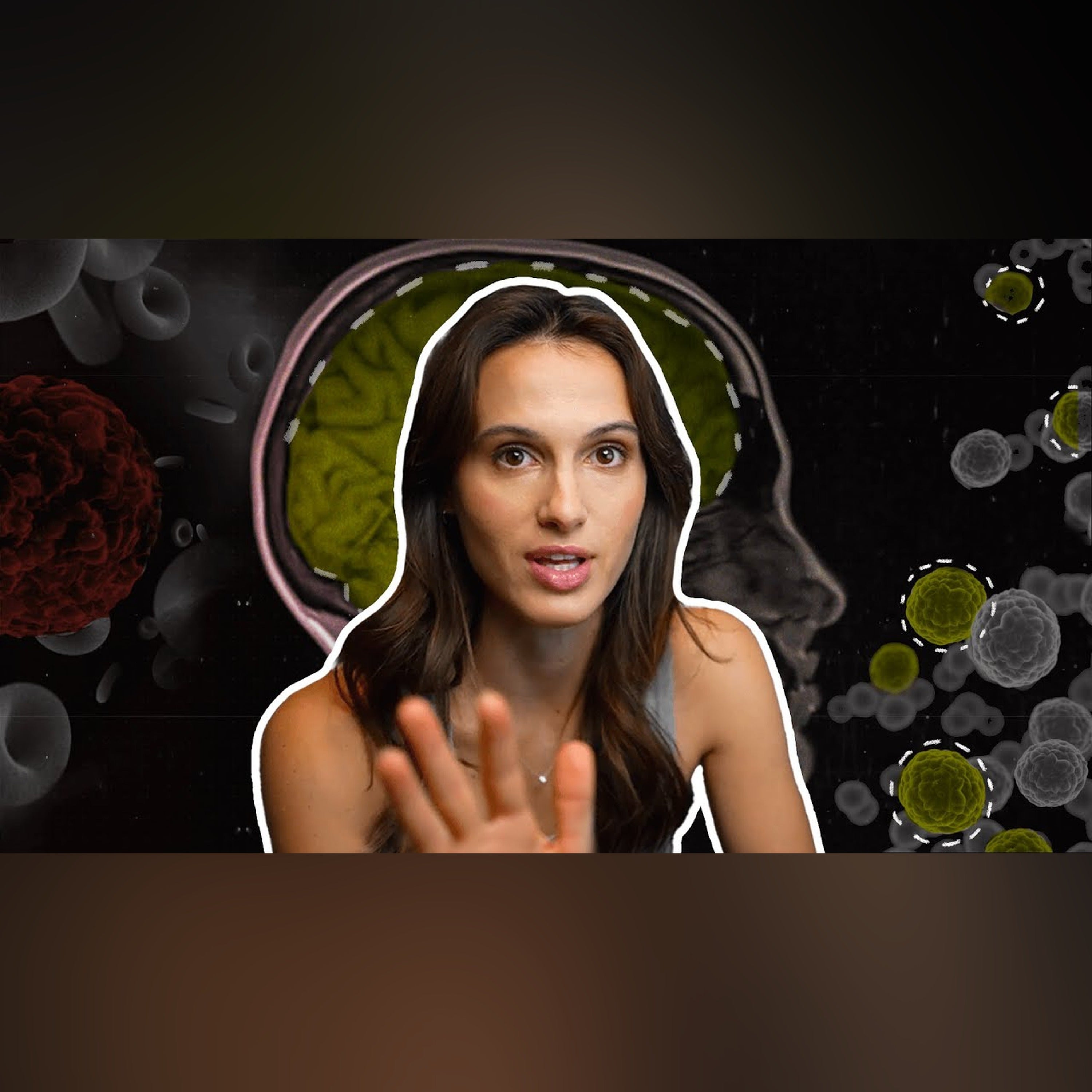
"Curing cancer," explained. We’re not looking for a “cure for cancer” anymore. Cancer is hundreds of diseases, so we’re really in a multi front fight against all of them. Cancer is a problem for us today in a way it wasn’t for previous generations. But, luckily, we also have more and more ways to fight back. I started this episode with endless questions: What is cancer? What causes it? How do we treat cancer? What are the symptoms? Why are some cancers easier to treat than others? Why is cancer so hard to cure? Why do so many people die of cancer? What I found is an incredible, complex, inspiring effort to treat and stop an insidious killer. In this video, we dive deep into how we treat cancer today. But I also found that we may not be helping the greatest number of people we can. In this episode of Huge If True, I want to make the case that while we have made enormous strides in the fight against cancer we have also largely ignored one of the single best ways to save the most lives. I
In this calm and sleepy facts episode, we spend eight peaceful hours exploring some of the quietest wonders of the natural world. We begin beneath a gathering thunderstorm, following warm air as it rises into towering clouds and learning how a single flash of lightning can briefly heat the air to several times the temperature of the surface of the Sun. From there we settle into the hidden world of hibernation, where animals slow their breathing and their heartbeats to just a few beats a minute and wait out the long winter in stillness. Next, we wander among the trees, discovering how they lift water hundreds of feet into the air without a single moving part and quietly record each passing year in rings of wood. Finally, we cross the deserts, where the heat of the day gives way to cold, clear nights and some dunes hum softly as the sand slides down their slopes. Each story unfolds slowly and gently, with no sudden sounds, so the whole night can pass in calm and quiet wonder. Let these c
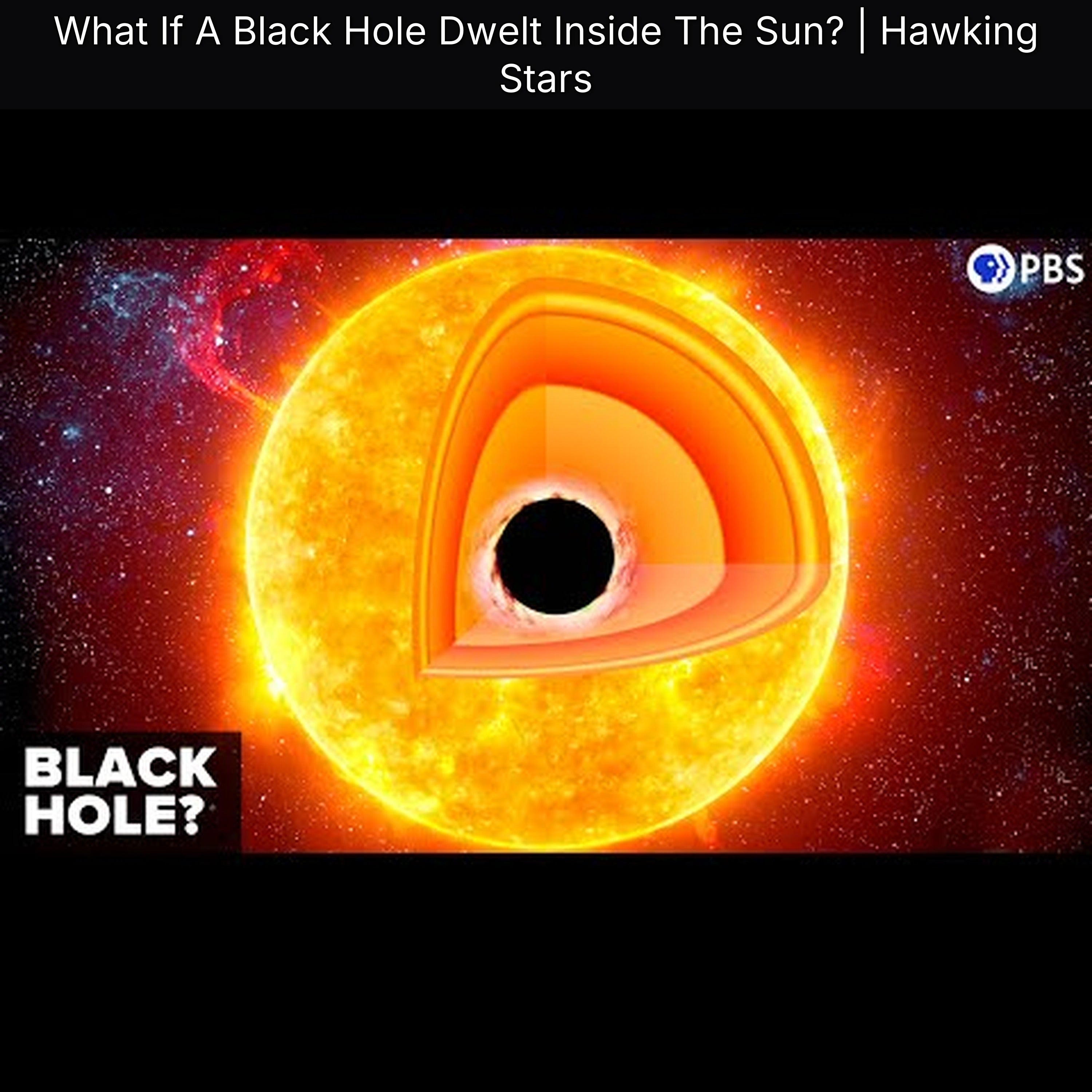
PBS Member Stations rely on viewers like you. To support your local station, go to:http://to.pbs.org/DonateSPACE Sign Up on Patreon to get access to the Space Time Discord! A fun nightmare sci-fi scenario is the sun being consumed by a black hole. Fortunately the chance of a black hole randomly wandering into our solar system is pretty tiny. That’s good news. But what if it’s already here, hiding in the core of the Sun and slowly eating it from the inside out? Hawking Stars Journal Papers: Search the Entire Space Time Library Here: https://search.pbsspacetime.com/ Hosted by Matt O'Dowd Written by Matt Caplan & Matt O'Dowd Post Production by Leonardo Scholzer, Yago Ballarini & Stephanie Faria Directed by Andrew Kornhaber Associate Producer: Bahar Gholipour Executive Producers: Eric Brown & Andrew Kornhaber Executive in Charge for PBS: Maribel Lopez Director of Programming for PBS: Gabrielle Ewing Assistant Director of Programming for PBS: John Campbell Spacetime is produced by Kornhaber
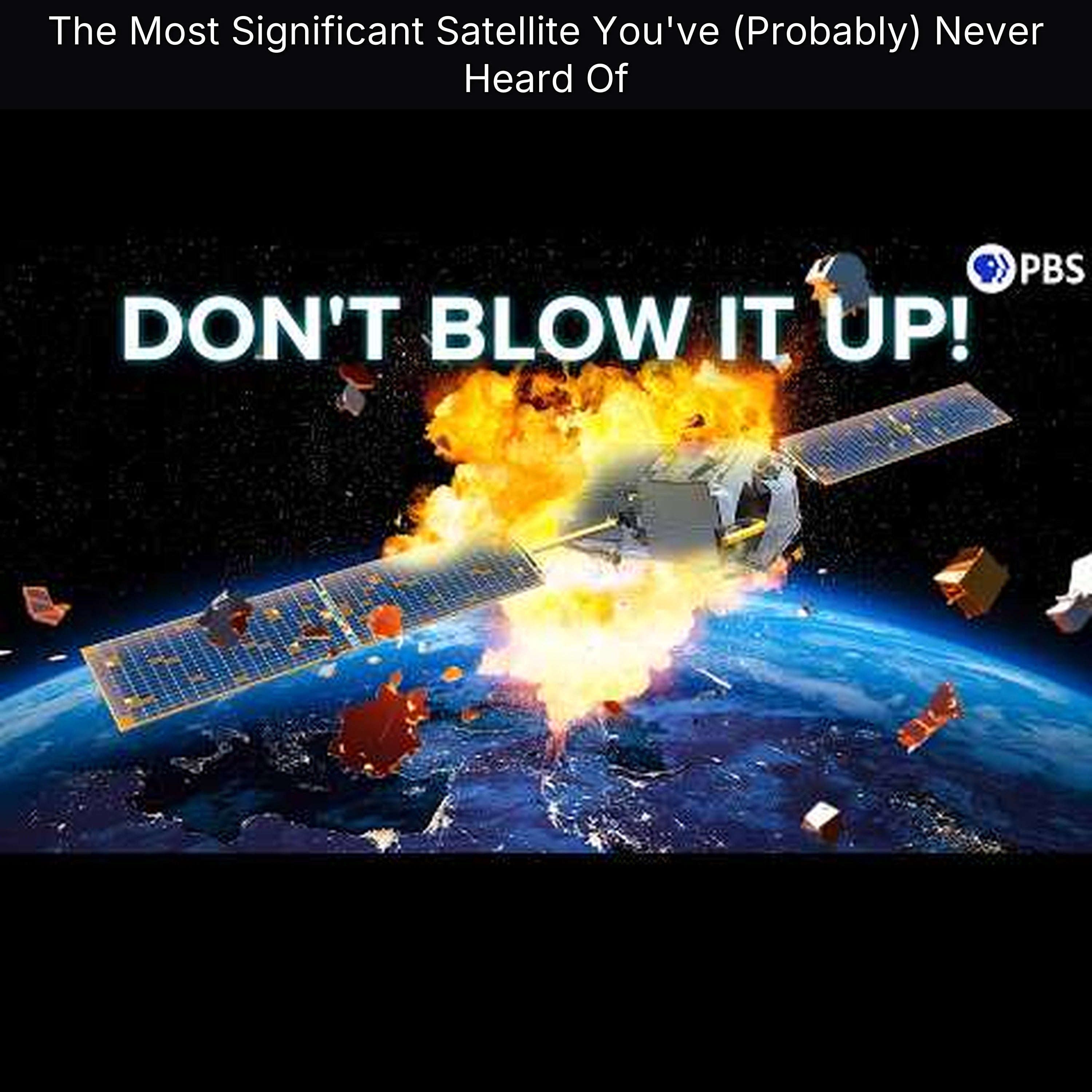
Remove your personal information from the web at https://joindeleteme.com/SPACETIME One of the most important reasons we go to space is to know our own planet better. Today I'm going to tell you about an orbiting facility that literally watches Earth's biosphere breath and grow and die with incredible resolution. I'll talk about its profound existential and economic importance, and about why it's in danger of being lost. PBS Member Stations rely on viewers like you. To support your local station, go to:http://to.pbs.org/DonateSPACE Sign Up on Patreon to get access to the Space Time Discord! Check out the Space Time Merch Store Pale Blue Dot By Carl Sagan Search the Entire Space Time Library Here: https://search.pbsspacetime.com/ Hosted by Matt O'Dowd Written by Fernando Franco Félix & Matt O'Dowd Post Production by Leonardo Scholzer, Yago Ballarini & Stephanie Faria Directed by Andrew Kornhaber Associate Producer: Bahar Gholipour Executive Producer: Andrew Kornhaber Executive in Charge
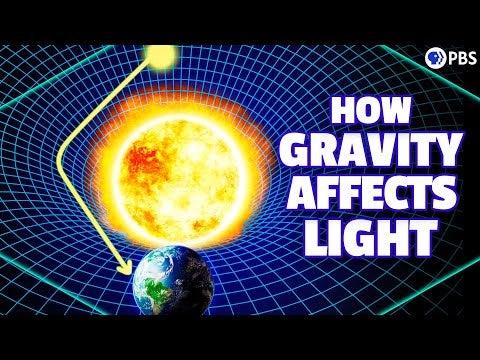
PBS Member Stations rely on viewers like you. To support your local station, go to: http://to.pbs.org/DonateSPACE ↓ More info below ↓ Uploaded 09-03-21 We know that gravity exerts its pull on light, and we have an explanation for why. Actually, we have multiple explanations that all predict the same thing. And at first glance, these explanations seem to describe completely different causes. So what is the true connection between light and gravity, or is truth, in fact, entirely relative? Sabine Hossenfelder's episode "Do we travel through time at the speed of light?" Check out the Space Time Merch Store Hosted by Matt O'Dowd Written by Matt O'Dowd Graphics by Leonardo Scholzer, Yago Ballarini, Pedro Osinski, Adriano Leal and Stephanie Faria GFX Visualizations: Katherine Kornei Directed by Andrew Kornhaber Assistant Producer: Setare Gholipour Executive Producers: Eric Brown and Andrew Kornhaber "FREE GMC Motorhome reimagined low poly" (https://skfb.ly/6XxAN) by Karol Miklas is licensed
Household living standards are a better measure of economic success than overall growth alone.
Share your view, then see how readers voted. No sign-in required. This poll is shared across stories.
Do you agree or disagree?
Common Quandary
A Common Quandary to discuss
Another conversation to explore, separate from this news story.
The touchscreen asks for a 25% tip while the cashier watches. What do you press?
At a counter-service shop, you place your own order, collect it, and clear the table. The payment screen suggests a twenty-five percent tip while an employee watches you choose.
When does a voluntary custom become an unfair social demand?