The Government Just Changed How Much You Can Invest In 2027
65 min
Listen through the publisher, then discuss the episode here or arrange an in-person Roundtable. Your city determines where to meet.
Roundtables are designed for groups of four, with a shared subject and room for everyone to speak. Come for discussion, with no dating expectation.
The IRS has announced new 2027 retirement contribution limits, including a higher 401(k) limit of $25,500! But how much can you actually invest in 2027, and what do these changes mean for your retirement? Brian and Bo break down the updated 401(k), 403(b), 457, and IRA contribution limits, including catch-up contributions for investors over 50. We'll explore how individuals and married couples can maximize their tax-advantaged retirement savings and how investing more could impact long-term wealth. Whether you're building your first retirement portfolio or trying to max out your accounts, here's what you need to know before 2027.
Episode information is provided by the publisher. Listening takes place on the publisher’s service.
Free INTENSIVE behavior science training: https://nci.university/opt-in-page-808244 Uploaded 13-12-25 Link to original paper: https://www.cell.com/cell/fulltext/S0092-8674(25)01305-4 A neuroscience paper published in Cell just days ago answers a question researchers have been trying to solve for years: what actually changes in the brain during a psilocybin experience—and why those changes can last. Using a genetically modified rabies virus as a neural tracer, researchers were able to map—cell by cell—how psilocybin alters brain connectivity. This allowed them to see, for the first time, which brain regions gain connections, which lose them, and how those changes depend on what the brain is doing during the experience itself. The findings help explain long-standing observations discussed by neuroscientists, psychiatrists, and researchers often referenced on platforms like Huberman Lab: • Why psilocybin can reduce depression and anxiety • Why the default mode network quiets during psyche
Explore the Social Security Administration's efforts toward transparency and new identity verification processes. We discuss the SSA's initiatives, potential challenges, and the impact on benefit recipients. Learn about proving your identity and preventing fraud in government operations. Stay informed about these crucial changes! #SocialSecurityUpdates #SocialSecurity #SSA #GovernmentTransparency #IdentityVerification #BenefitUpdates #FraudPrevention #ElderlyProtection #DisabilityBenefits #FinancialSecurity #GovernmentAccountability
We’re about to time travel into the future Sam Altman is building… I interviewed Sam Altman, the CEO of OpenAI, the company behind ChatGPT. They’re trying to build a “superintelligence” that could far exceed humans in almost every field – and they just released their most powerful tool yet, GPT-5. A few years ago, that would’ve sounded like science fiction! Not anymore. In fact, they’re not alone. We’re in the middle of the most high stakes global race any of us have ever seen. Hundreds of billions of dollars and an unbelievable amount of human work… It’s a profound moment. Most people never see a huge technological shift like this in their lives and it’s happening all around us right now. So in this conversation, I’m going to try to time travel into the future with Sam Altman, to see what he’s trying to build… so you and I can really understand what’s coming. Welcome to HUGE* Conversations. Chapters: 0:00 What future are we headed for? 2:06 What can GPT-5 do that GPT-4 can’t? 6:57 Wha
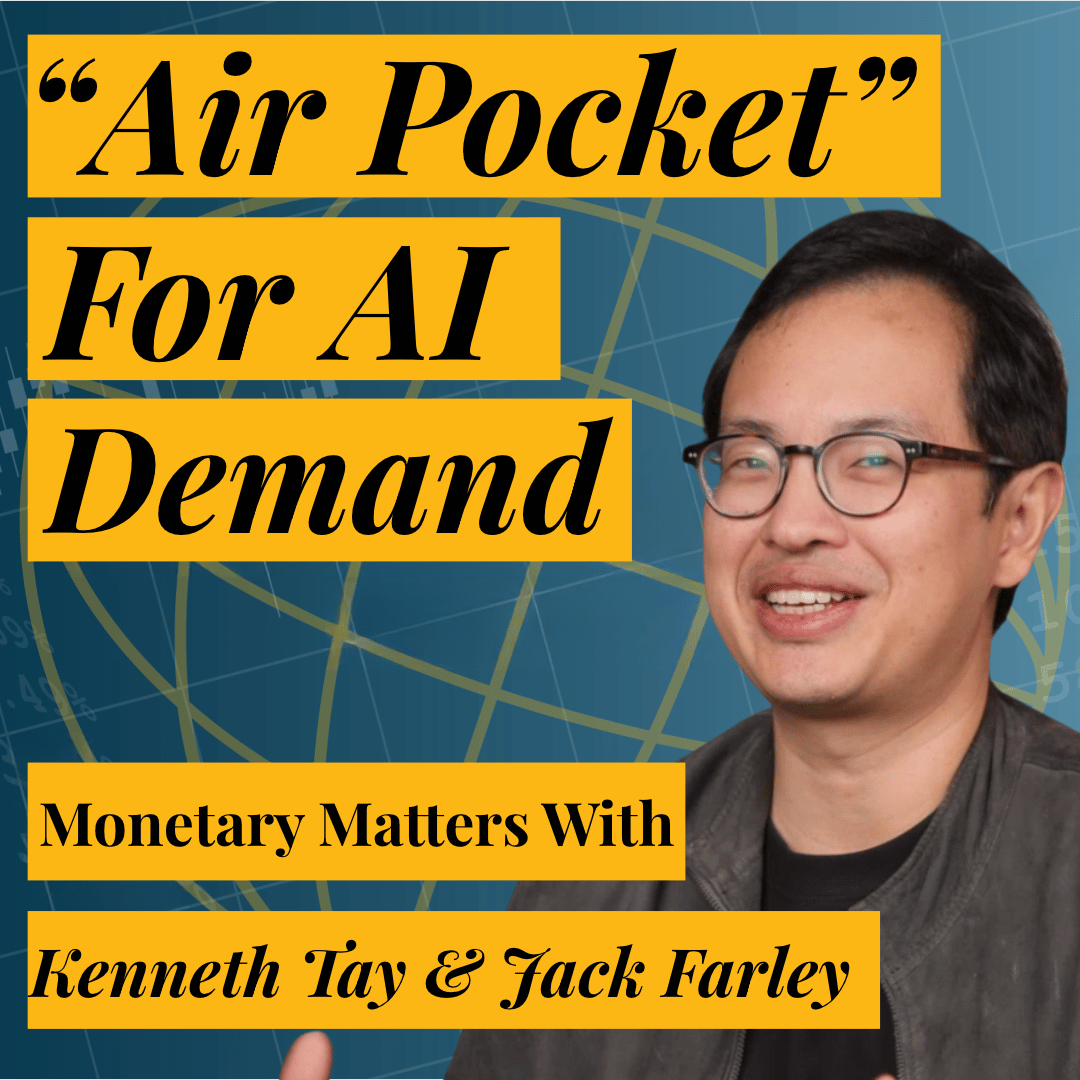
This episode is brought to you by Sarmaya Partners. Learn more about Sarmaya’s LENS ETF, their full data and comparison, including performance here: Recorded at the TomorrowX Summit, Jack sits down with Kenneth Tay, head of content at Funda, the Singapore-based research firm whose analysts call companies around the world to ask what they're really spending on AI. Kenneth explains why Funda's surveys turned the firm cautious: enterprise AI budgets for 2027 aren't growing fast enough to justify what the market expects from frontier-lab revenues, and the scramble for forward-deployed engineers suggests AI is hard to roll out inside large companies. They discuss whether coding alone can carry AI demand, why Funda sees cybersecurity incumbents like CrowdStrike as beneficiaries rather than casualties, and where token prices are headed. Kenneth explains why investors in China and the rest of Asia turned bearish before New York and the Bay Area, and how they spotted shortages in NAND memory an
Most people wait for the year to be good to them. They hope. They resolve. They set intentions in January and abandon them in February. And then they wonder why the next December looks exactly like the last one. Uploaded 25-09-26 But the year didn't fail them. They lived it the same way they lived the one before. And a year lived the same way produces the same result. That's not bad luck. That's just arithmetic. Here is the truth: there is a small set of habits that, once you build them, quietly make every year better than the one that came before. Not dramatically. Not overnight. But steadily, so that after five years you're standing somewhere the old version of you could never have reached. This seminar walks through 10 things you must understand about the habits that make every year climb instead of repeat. CHAPTERS 0:00 Intro — a year lived the same way 1:07 The invisible arithmetic underneath every year 5:00 #1 — Review the year before you plan the next 5:24 #2 — Learn one new thi
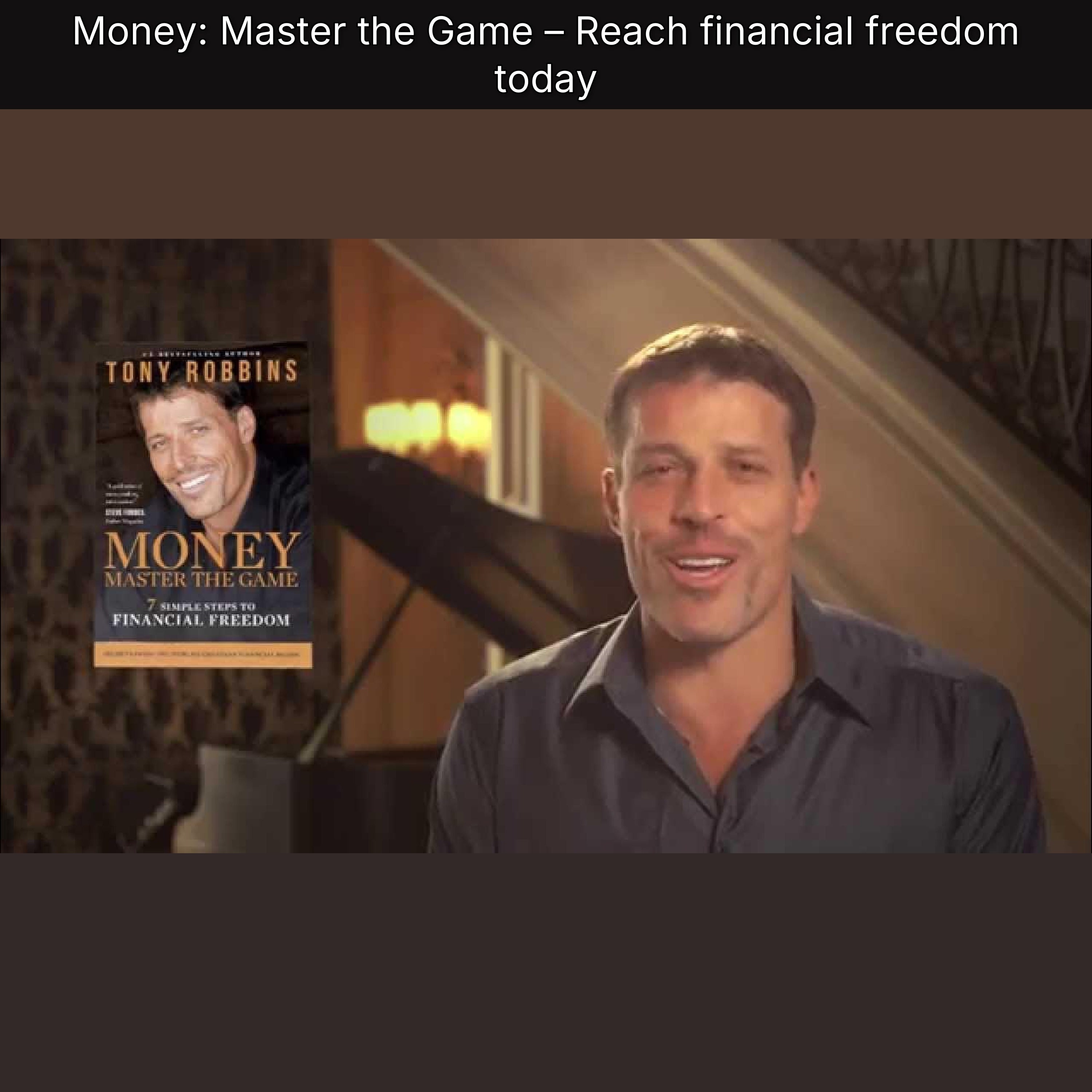
Do you want to achieve financial freedom? Financial freedom is the ultimate dream. It’s the ability, as Tony Robbins says, “to do what you want, when you want, with whom you want, as much as you want.” It’s living the fulfilling life you deserve. It’s a big promise, but this book delivers. When it was first written, Money: Master the Game was Tony’s first book in two decades. It was a passion project, because Tony knew that it could truly transform lives. He spent more than four years interviewing 50 of the most brilliant minds in the financial world, and their advice is all here, including: Carl Icahn, a legend of investing who has delivered his clients 1600% return over 14 years. Jack Bogle, the founder of Vanguard, with 64 years in the financial business. Ray Dalio, the da Vinci of investing, who before retirement required $5 billion to even start investing with him. Tony has taken all of their advice and distilled it into a step-by-step plan anyone can use to achieve financial free
Huge shout out to Brad for collaborating with us on this episode! You can check out his content here: https://www.youtube.com/channel/UCHYSw4XKO_q1GaChw5pxa-w This episode brought to you by Abound Wealth. Take the relationship to the next level and become a client: https://moneyguy.com/become-a-client/ What happens when a successful YouTuber becomes a millionaire but still has financial blind spots? Brad Rodriguez, creator of Fix This Build That, joins Brian and Bo on Making a Millionaire to reveal how he left a six-figure corporate career, built a thriving YouTube business, and accumulated more than seven figures in cash. But is holding that much cash costing him opportunities to build wealth? Brian and Bo examine Brad's investing strategy, retirement accounts, business finances, real estate goals, and the challenges of scaling a successful business. From backdoor Roth IRAs to financial independence, they uncover what comes next when you've already achieved your biggest financial goal
Before 2026 ends, there are 8 important money moves you should review to prepare your finances for 2027. From maximizing your 401(k) and Roth IRA contributions to taking advantage of new tax rules, some financial planning opportunities are worth addressing before December 31. Brian and Bo walk through their year-end financial checklist, including emergency funds, high-interest debt, HSA contributions, retirement savings, charitable giving, and planning for future expenses. Don't let another year end without reviewing your financial plan. Find out what you might be missing and how to finish 2026 strong!
The American Dream now costs $5.3 million in 2026, according to a new Investopedia analysis. But is that really how much money you need to afford a home, raise a family, buy cars, and retire comfortably? Brian and Bo break down the eight major expenses behind the American Dream, explain why the retirement calculation may be misleading, and show how investing and compound growth can dramatically change the numbers. From housing affordability and the cost of raising children to retirement savings and financial independence, discover why the American Dream may be more attainable than the headlines suggest.
Teams owe supporters honest explanations during long periods of poor results.
Share your view, then see how readers voted. No sign-in required. This poll is shared across stories.
Do you agree or disagree?
Common Quandary
A Common Quandary to discuss
Another conversation to explore, separate from this news story.
A stranger is sitting at your usual café table. Can you ask them to move?
You visit the same café every Saturday and always write at one particular table. Today a first-time customer is sitting there while several other tables remain open. The staff recognize you but there is no reservation policy.