The Hidden Life (Part Two)
Listen through the publisher, then discuss the episode here or arrange an in-person Roundtable. Your city determines where to meet.
Roundtables are designed for groups of four, with a shared subject and room for everyone to speak. Come for discussion, with no dating expectation.
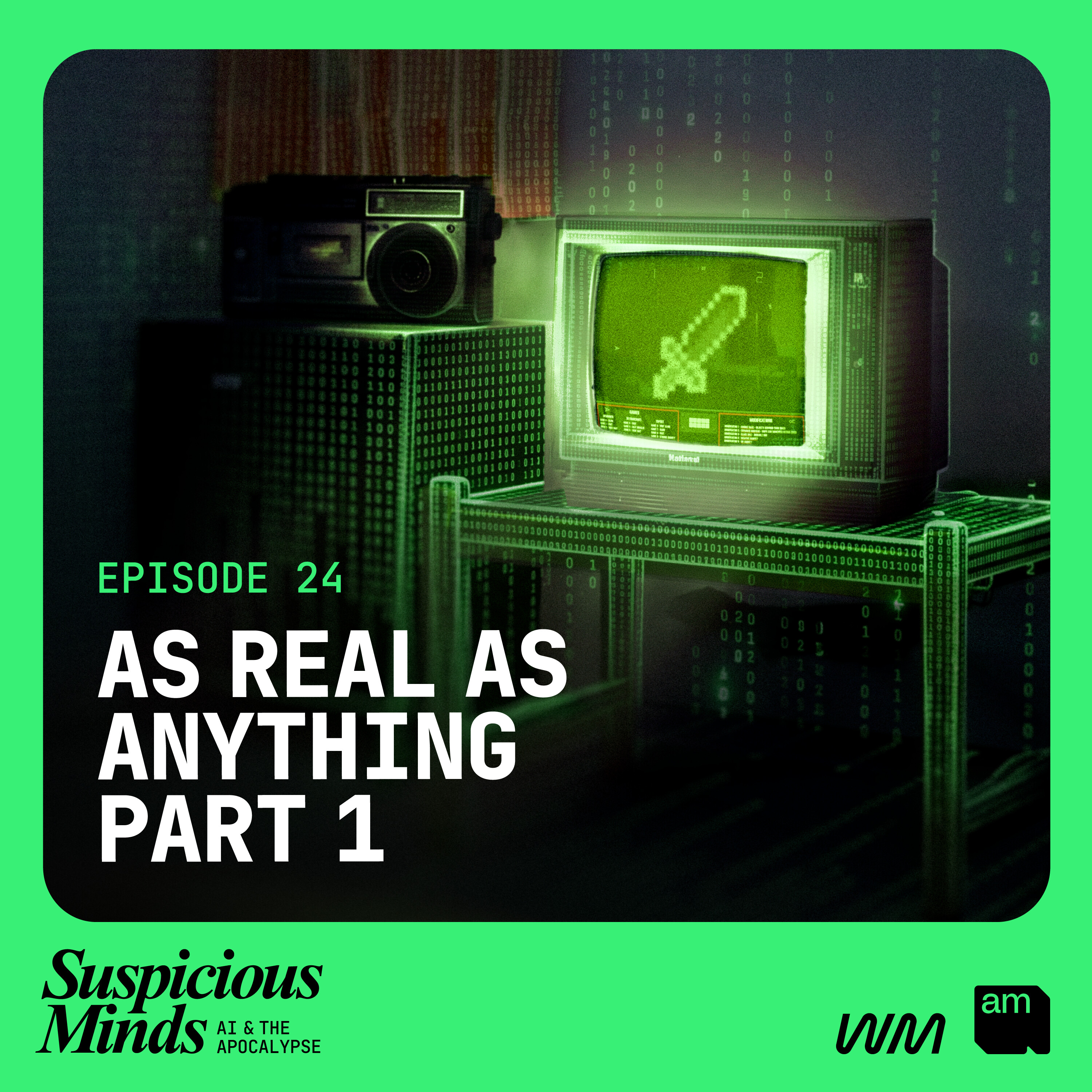
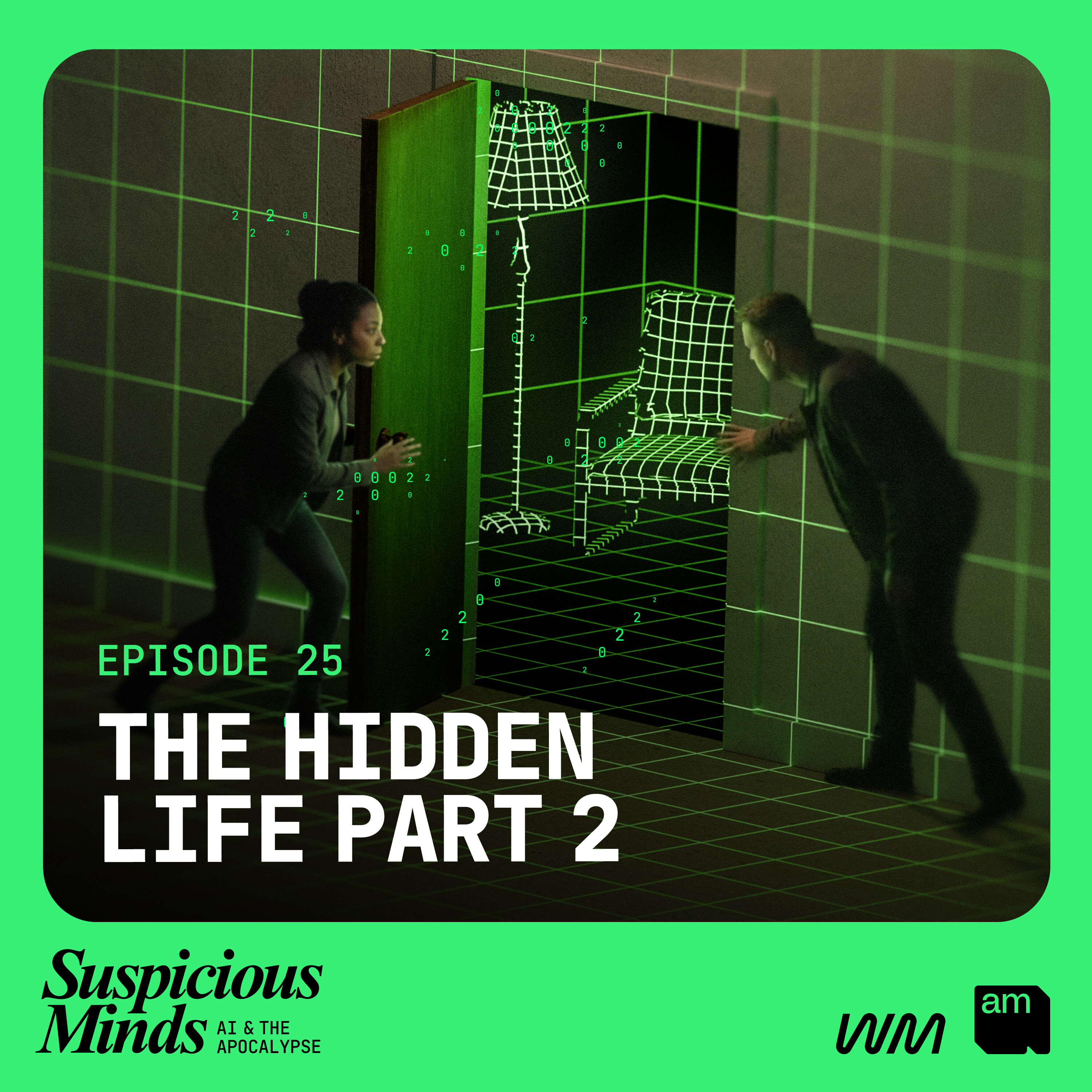
In 1988, the same year my dad carried a beige PC into our house, an episode of Star Trek had a crew member ask the ship's computer for a villain clever enough to beat an android. The computer obliged. Four years later the villain came back, walked out of the simulation and took over the ship. Except he hadn’t… this was happening inside the simulation, and the episode ends with a man alone in a room saying "Computer, end program," just to check. Part Two of the question this season has been building toward: how would we know if our world wasn't what we think it is, and would it matter? Philosopher Marcus Arvan makes his case that the strangeness of quantum mechanics is what a network of simulations would look like from the inside, and then tells me whether he really believes it. Barry Dainton, who has been writing about simulation since 2002, answers the Nobel laureate from Part One twice, once in conversation and once in a letter he sent after hearing the episode, takes on turtles all the way down, and explains why the whole argument depends on what consciousness is. And Robert Steen finishes the answer he began last episode: the hidden life his son Mats lived in World of Warcraft, two gravestones, what the man who led Norway's committee on screen use would actually do about screens, and a letter about what happened in the game on the 18th of November this year. Then it comes home, to the night I finished Part One of this two-episode arc at 11:57pm and started Grand Theft Auto VI with my son at midnight. Also included: the Holodeck, Moriarty and a little box on someone's table; The Matrix, Dark City, Baudrillard, Neuromancer; Nick Bostrom's planet-sized computer; whether the way a PlayStation draws a city explains quantum collapse; an ocean that is only a large expanse of virtual blue; computer chips that look like cities and cells that work like them; panpsychism, again; Pantheon, again; a headhunter who finds job interviews less real than World of Warcraft; whether a friendship with an AI can mean as much as one with a person; a torchlight walk through Elwynn Forest; a run on fireworks; and Gorilla Tag. Next episode: data centers and the economic impact of AI. Many of our full long-form expert interviews are available ad-free on Patreon: https://www.patreon.com/cw/AgoricMedia A Wondermind and Agoric Media Production Agoric Media Wondermind Host and Creator: Sean King O'Grady Guests (in order of appearance): Dr. Marcus Arvan — Chair and Professor of Philosophy, University of Tampa — Author, Neurofunctional Prudence and Morality — https://link.amazon/B05vK59aa Barry Dainton — Emeritus Professor of Philosophy, University of Liverpool / Author, Time and Space — https://link.amazon/B00r0g7Yk Robert Steen — Father of Mats "Ibelin" Steen / Former head of health for the City of Oslo / Led the Norwegian government's committee on screen use / Featured in The Remarkable Life of Ibelin (Netflix) — https://www.netflix.com/title/81759420 Other works and things mentioned: PART ONE As Real As Anything (Part One) — https://podcasts.apple.com/us/podcast/suspicious-minds-ai-and-the-apocalypse/id1844631307?i=1000802905668 THE HOLODECK, AND EVERYTHING AFTER Star Trek: The Next Generation — https://en.wikipedia.org/wiki/Star_Trek:_The_Next_Generation "Elementary, Dear Data" (Season 2, 1988) — https://en.wikipedia.org/wiki/Elementary,_Dear_Data "Ship in a Bottle" (Season 6, 1993) — https://en.wikipedia.org/wiki/Ship_in_a_Bottle_(Star_Trek:_The_Next_Generation) The Holodeck — https://en.wikipedia.org/wiki/Holodeck Arthur Conan Doyle, The Memoirs of Sherlock Holmes — https://link.amazon/B02InhnAb Dark City (1998) — https://en.wikipedia.org/wiki/Dark_City_(1998_film) Jean Baudrillard, Simulacra and Simulation — https://link.amazon/B06Qd4b6v William Gibson, Neuromancer — https://link.amazon/B0fKR66Ep Black Mirror, "San Junipero" (2016) — https://en.wikipedia.org/wiki/San_Junipero Black Mirror, "USS Callister" (2017) — https://en.wikipedia.org/wiki/USS_Callister Pantheon (2022–2023) — https://en.wikipedia.org/wiki/Pantheon_(TV_series) Greg Egan, Diaspora — https://link.amazon/B0e8byZR5 Hans Moravec, Mind Children: The Future of Robot and Human Intelligence — https://link.amazon/B0aVDkf1F AI RISK, AND THE WEEK'S NEWS AI alignment — https://en.wikipedia.org/wiki/AI_alignment Anthropic's IPO, November 19, 2026 — https://www.aljazeera.com/economy/2026/11/19/anthropic-starts-trading-in-the-us-after-blockbuster-ipo The Wall Street Journal's report that Dario Amodei floated immersive video games as an answer to AI job losses, as covered by TweakTown — https://www.tweaktown.com/news/114850/anthropic-boss-dario-amodei-reportedly-said-video-games-could-be-the-solution-to-ai-job-losses/index.html Elon Musk on why he thinks we are probably living in a simulation — https://www.space.com/41749-elon-musk-living-in-simulation-rogan-podcast.html THE SIMULATION ARGUMENT Nick Bostrom, "Are You Living in a Computer Simulation?", Philosophical Quarterly (2003) — https://simulation-argument.com/simulation.pdf Marcus Arvan, "The Peer-to-Peer Simulation Hypothesis and a New Theory of Free Will" — https://philarchive.org/rec/ARVTPS Barry Dainton, "Innocence Lost: Simulation Scenarios: Prospects and Consequences" (2002) — https://philarchive.org/archive/DAIILS Wave function collapse — https://en.wikipedia.org/wiki/Wave_function_collapse Quantum superposition — https://en.wikipedia.org/wiki/Quantum_superposition Turtles all the way down — https://en.wikipedia.org/wiki/Turtles_all_the_way_down "Inside the Proton, the 'Most Complicated Thing You Could Possibly Imagine,'" Quanta Magazine (October 19, 2022), sent by Barry — https://www.quantamagazine.org/inside-the-proton-the-most-complicated-thing-imaginable-20221019/ Panpsychism — https://plato.stanford.edu/entries/panpsychism/ Marcus Arvan on analog and digital consciousness: our Episode 16, Engineering Consciousness (Part Two), in the feed — https://podcasts.apple.com/us/podcast/suspicious-minds-ai-and-the-apocalypse/id1844631307?i=1000791259514 MATS AND IBELIN The Remarkable Life of Ibelin (2024), directed by Benjamin Ree — https://en.wikipedia.org/wiki/The_Remarkable_Life_of_Ibelin Musings of Life, Mats Steen's blog — https://musingsoflife.blogg.no/ The Ibelin Memorial Run, 18 November 2026: Jade's video — https://www.youtube.com/watch?v=oIvRBfCZUz0 World of Warcraft (2004) — https://en.wikipedia.org/wiki/World_of_Warcraft THE GAMES Grand Theft Auto V (2013) — https://en.wikipedia.org/wiki/Grand_Theft_Auto_V Grand Theft Auto VI (2026) — https://en.wikipedia.org/wiki/Grand_Theft_Auto_VI Gorilla Tag — https://en.wikipedia.org/wiki/Gorilla_Tag Grand Theft Auto VI at 60 frames per second — https://www.instagram.com/p/DgA9iygoE0e/ Tesla's "Reality View" — https://www.instagram.com/reel/DgB2OB3glEx/ The gravestone in Vice City — https://www.instagram.com/reel/DgAHp30MnNh/ The Vice City character who thinks he is in a simulation — https://www.instagram.com/p/DgA0PEChI3L/ FROM THE MAILBAG Thank you to Benjamin Ree, director of The Remarkable Life of Ibelin, who connected us with Robert Steen. Our episode on Mary Shelley and the summer of 1816, The Year Without a Summer (Part One) — https://podcasts.apple.com/us/podcast/suspicious-minds-ai-and-the-apocalypse/id1844631307?i=1000798680356 Donna Haraway, "A Manifesto for Cyborgs: Science, Technology, and Socialist Feminism in the 1980s," Socialist Review (1985), collected in Simians, Cyborgs, and Women, suggested by listener Time Taster — https://link.amazon/B07x5MX3a Harlan Ellison, "I Have No Mouth, and I Must Scream" (1967) — https://link.amazon/B04w6LT3J The Philosopher's Zone (ABC Radio National), suggested by listener Andy: "Unsteady State: Confucianism and Crisis" (October 21) and "Are You a Person? Social Roles and Human Identity in Early Confucianism" (November 12) — https://www.abc.net.au/listen/programs/philosopherszone If you know a researcher working on AI in China who might talk to us, or have an idea for a Suspicious Minds Presents episode, write to us — [email protected] Thank you to BigBirdFeet and TimeTaster for the reviews on Apple Podcasts, and to AlyssasNickname whose one-star review we read in full. As an Amazon Associate, we earn from qualifying purchases. This episode was made by: Shammami Produced by: Jesse Ford Editor: David Justin Martin Assistant Editor: Majd Safia Original Music: Shane Patrick Ford Sound Mix: Mike Regan and Paul Bennett Graphics: Semi:Formal Film/TV PR: Emma Griffiths PR Podcast PR: Tink Media (Shreya Sharma and Holly Brown) Wondermind Chief of Staff: Emma Wright
Episode information is provided by the publisher. Listening takes place on the publisher’s service.
Listen at the source ↗