Listen through the publisher, then discuss the episode here or arrange an in-person Roundtable. Your city determines where to meet.
Roundtables are designed for groups of four, with a shared subject and room for everyone to speak. Come for discussion, with no dating expectation.
Discover what led American colonists in 1773 to toss tea into the Boston Harbor in what became known as the Boston Tea Party. -- Before the Revolutionary War, American colonists were taxed heavily for importing tea from Britain. The colonists, not fans of "taxation without representation", reacted by dumping tea into the Boston Harbor, a night now known as the Boston Tea Party. Ben Labaree gets into the nitty-gritty of that famous revolutionary act. Lesson by Ben Labaree, animation by Nick Fox-Gieg Animation. Sign up for our newsletter: http://bit.ly/TEDEdNewsletter Support us on Patreon: http://bit.ly/TEDEdPatreon Find us on Twitter: http://bit.ly/TEDEdTwitter Peep us on Instagram: http://bit.ly/TEDEdInstagram View full lesson: https://ed.ted.com/lessons/the-story-behind-the-boston-tea-party-ben-labaree
Episode information is provided by the publisher. Listening takes place on the publisher’s service.
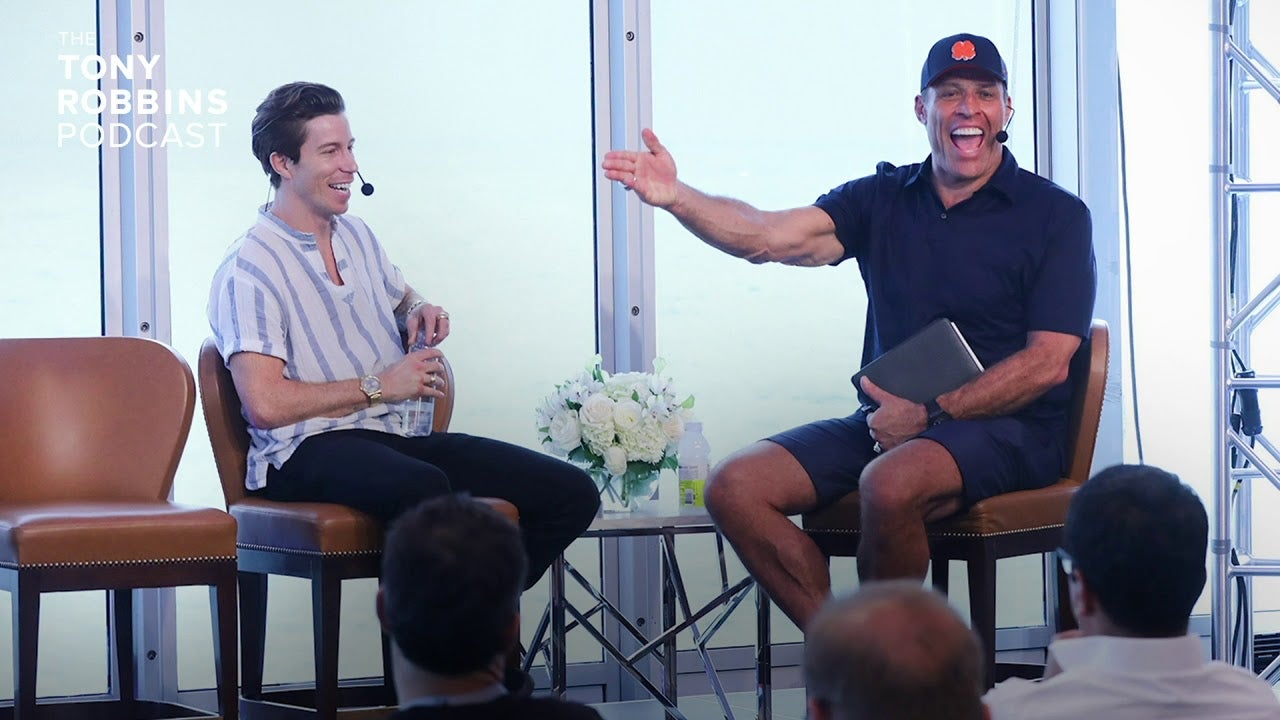
Tony Robbins uncovers the art – and science – of the comeback in this interview with snowboard legend Shaun White. As a three-time Olympic gold medalist and world record holder, Shaun knows a thing or two about success. He turned snowboard pro at 13 and skateboard pro at 16. He has the most wins of anybody in the history of the extreme sports event the X Games. Uploaded 29-06-20 His phenomenal wins didn’t come without a fight. How can you take those hits and come back? The answer lies in a deep sense of self-belief. Shaun started life with asthma and a heart defect that required surgery, but his parents never put boundaries on what he could accomplish. He says, “From the get go I believed I could do it. I saw the pros and I knew I could get to that point.” You too can create this deep belief in yourself using the tips at https://www.tonyrobbins.com/building-confidence/how-to-believe-in-yourself. Shaun also used his failures as fuel. Instead of being defeated, losing drove his desire to
Join NCI University today to master human behavior and influence: Uploaded 20-10-22 What if we were made to believe something so strange that it would change the fabric of society? These two lies are the two most powerful forces that marketing and medicine....and even politics seem to sell us. 1️⃣ LIE ONE: Focus on symptoms and not causes. 2️⃣ LIE TWO: Pleasure is the same as happiness. In this video, I'll explore with you, the causes of some of these deceptions, and I hope you'll come to see that our culture is almost rooted in these two deceptions. From marketing and sales to medicine and politics, these LIES seem to be interwoven in the fabric of our culture as a whole. Knowing them and being aware of them will make you start seeing these EVERYWHERE you look. DOWNLOAD THE APP: https://team.chasehughes.com/share/Sxaxa8CW58Q_4sKk?utm_source=manual (https://team.chasehughes.com/share/Sxaxa8CW58Q_4sKk) THE FATE MODEL: https://www.youtube.com/watch?v=PbEJ_y7tscY&feature=share&utm_source=
The Fair Work Tribunals edition of Wednesday 25 November 2026 (39 decisions, two with headnotes), with the Fair Work Tribunals edition of Tuesday 24 November 2026 (228 decisions, three with headnotes) alongside it. A Full Bench on why the Black Coal award's redundancy relief clause runs through the dispute procedure and not compulsory arbitration; another on appealing a refusal to reinstate and counting the anticipated period; and three rulings where generative AI did some of the drafting: costs and fictitious authorities, an AI-drafted agreement that made a worker an employee, and an AI-prepared witness statement. Fair Work Desk: relief from retrenchment pay goes through the dispute procedure (opening story). R2S Medical & Emergency Response Pty Ltd v Peter Quirk and Others [2026] FWCFB 291 (https://jade.io/article/1307378) - Gibian VP, Dobson and Slevin DP, 5 November 2026. Signal Doctrine and Practice & Procedure. Black Coal Mining Industry Award 2020 cll 32, 34.4, 34.6; Fair Work A
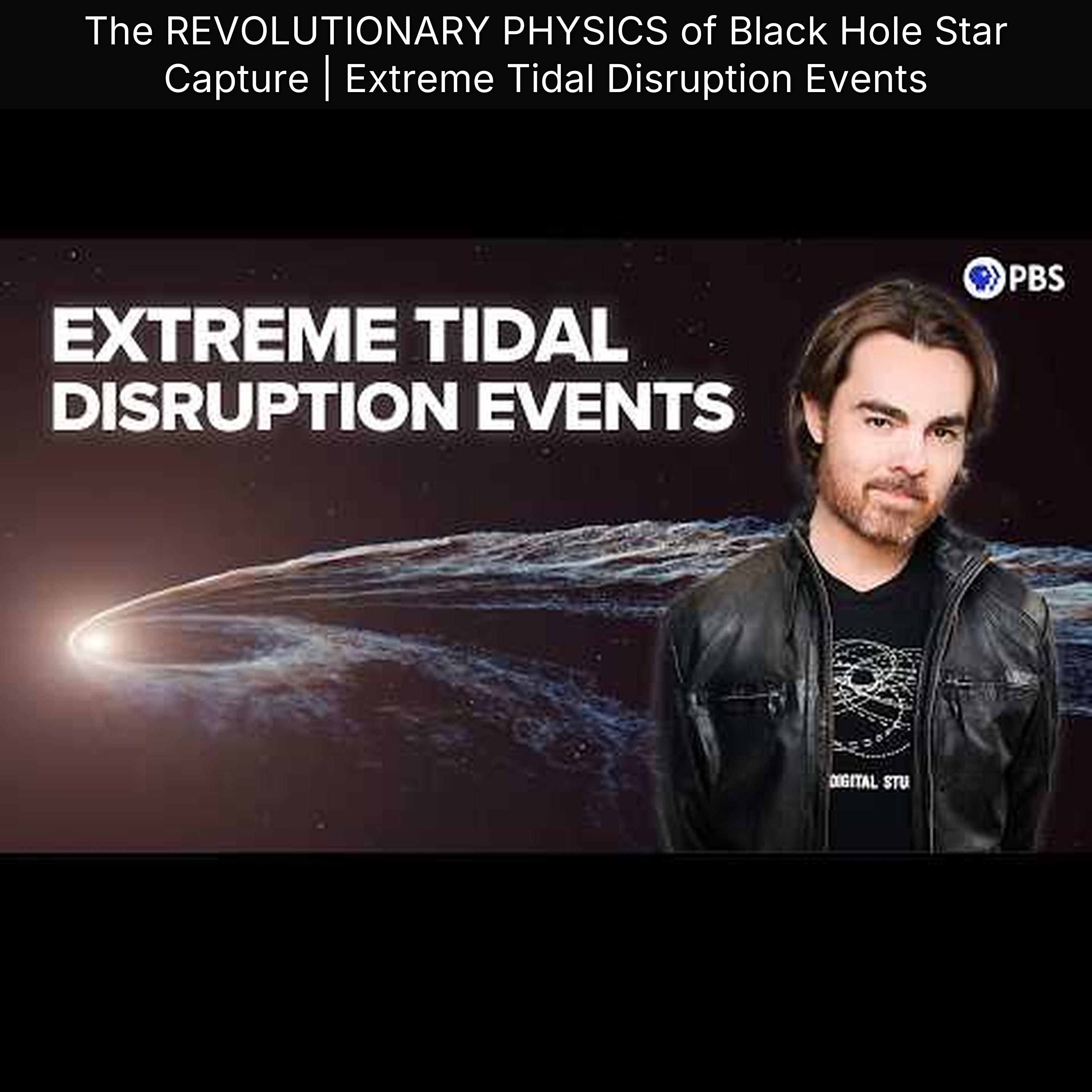
PBS Member Stations rely on viewers like you. To support your local station, go to:http://to.pbs.org/DonateSPACE Sign Up on Patreon to get access to the Space Time Discord! If you track the motion of individual stars in the ultra-dense star cluster at the very center of the Milky Way you’ll see that they swing in sharp orbits around some vast but invisible mass—that’s the Sagittarius A* supermassive black hole. These are perilous orbits, and sometimes a star wanders just a little too close to that lurking monster, leading to its utter destruction in the spectacular phenomenon known as a tidal disruption event. We’ve never seen a TDE in the Milky Way, but we’ve seen them in distant galaxies—and we now know how to spot stellar destructions so extreme that they reveal properties of the black hole itself. Check out the Space Time Merch Store Sign up for the mailing list to get episode notifications and hear special announcements! Search the Entire Space Time Library Here: https://search.pb
The fight for the future of car racing has begun... If you want more optimistic stories about technology, subscribe to support our show! You already know about Formula 1. The car racing sport is famous around the world and is skyrocketing in popularity in the US in part because of the Netflix series Drive To Survive. But Formula 1 has a problem. More and more the cars that we drive are going fully electric, and the cars that they drive… aren’t. That matters, because the real reason F1 gets all this money and attention is that big companies are investing in and advertising their cutting edge tech. If that tech gets outdated, it loses the point - and the extra investment. What is the future of car racing? If it’s electric, does F1 change? Or is someone else going to get there first? Enter Formula E, the all-electric Formula 1. In this video, we explore the future of car racing, explain Formula E’s amazing tech and wild rules, and break down the drama within one of the world’s most popula
In 1956, a teenage girl in Battersea, London, received a mysterious package containing a small silver key. Nobody knew who had sent it or what it was supposed to unlock. But shortly afterward, strange things began happening in her family's home. At first, there were unexplained knocks and scratching sounds. Then objects reportedly began moving, furniture shifted, and the disturbances became increasingly difficult to ignore. As the activity continued, journalists and paranormal investigators took an interest in the family, and what they encountered raised even more questions. Eventually, the family began receiving what appeared to be messages from an unseen presence that claimed to have a name, a personality, and a particular interest in their teenage daughter. The experiences reportedly continued for twelve years. Was the family dealing with an unusually persistent poltergeist—or was there another explanation for one of Britain's most extensively investigated hauntings? #RealGhostStori
Dig into the slippery slope fallacy, which assumes that one step will lead to a series of events that lead to an extreme— often bad— scenario. Uploaded 19-08-21 -- It’s 1954. Vietnamese nationalists are on the verge of securing an independent Vietnam under communist leader Ho Chi Minh. U.S. President Eisenhower claims that by virtue of the "falling domino principle," communist control of Vietnam would lead to the global spread of authoritarian communist regimes. Can you spot the problem with this argument? Elizabeth Cox explores the slippery slope fallacy. Lesson by Elizabeth Cox, directed by TOGETHER. Support Our Non-Profit Mission ---------------------------------------------- Support us on Patreon: http://bit.ly/TEDEdPatreon Check out our merch: http://bit.ly/TEDEDShop ---------------------------------------------- Connect With Us ---------------------------------------------- Sign up for our newsletter: http://bit.ly/TEDEdNewsletter Find us on Twitter: http://bit.ly/TEDEdTwitter Pe
View full lesson: http://ed.ted.com/lessons/how-do-we-measure-distances-in-space-yuan-sen-ting Uploaded 09-10-14 When we look at the sky, we have a flat, two-dimensional view. So how do astronomers figure the distances of stars and galaxies from Earth? Yuan-Sen Ting shows us how trigonometric parallaxes, standard candles and more help us determine the distance of objects several billion light years away from Earth. Lesson by Yuan-Sen Ting, animation by TED-Ed.
As machines take on more jobs, many find themselves out of work or with raises indefinitely postponed. Is this the end of growth? No, says Erik Brynjolfsson -- it's simply the growing pains of a radically reorganized economy. A riveting case for why big innovations are ahead of us ... if we think of computers as our teammates. Be sure to watch the opposing viewpoint from Robert Gordon. Uploaded 30-08-13 Talk by Erik Brynjolfsson.
People should receive a clear explanation before consenting to personal-data use.
Share your view, then see how readers voted. No sign-in required. This poll is shared across stories.
Do you agree or disagree?
Common Quandary
A Common Quandary to discuss
Another conversation to explore, separate from this news story.
The company allows an $80 dinner. Is ordering the lobster fair game?
During work travel, company policy permits an expensive dinner. A modest option is nearby, but colleagues choose the nicest restaurant because the company can easily afford it and everyone is within the stated limit.
Is following a rule enough when you are spending someone else's money?