Listen through the publisher, then discuss the episode here or arrange an in-person Roundtable. Your city determines where to meet.
Roundtables are designed for groups of four, with a shared subject and room for everyone to speak. Come for discussion, with no dating expectation.
Synopsis In his autobiographical sketch, A Mingled Chime, British conductor Thomas Beecham offered this assessment of British composer Ethel Smyth: “Ethel Smyth is without question the most remarkable of her sex that I have been privileged to know,” and added that he admired her “fiery energy and unrelenting fixity of purpose.” Born in 1858, she became a composer against her family’s wishes, and it took dogged determination to get her large-scale choral and operatic works performed in an era when most in the music business did not take female composers seriously. That was before they met Smyth, who convinced legendary conductors like Arthur Nikisch, Bruno Walter and Beecham, who realized her music had merit. Her opera The Wreckers had its premiere performance in Leipzig on today’s date in 1906 and was championed in England by Beecham, who thought it her masterpiece. It remains, wrote Beecham in 1944, the year of her death, “one of the three or four English operas of real musical merit and vitality written in the past 40 years.” Music Played in Today's Program Ethyl Smyth (1858-1944): The Wreckers; Soloists and BBC Philharmonic; Odaline de la Martinez, conductor; Conifer 51250
Episode information is provided by the publisher. Listening takes place on the publisher’s service.
Written by Rob Hirst, and completed by his daughter Lex, the new book, World Is Almost At Peace, moves through the many songs Rob wrote and recorded and shares remarkable detail about the writing of a lifetime of music. Lex Hirst and Rob’s wife, Lesley Holland join Andy to share their memories of Rob and their reflections on his life and his music. Hana Stretton’s first album, Soon, was a response to isolation - with Covid and Australian bushfires looming in its background. On her latest, tiarn (https://hanastretton.bandcamp.com/album/tiarn-2), Hana has been folding ever more into her compositions: more voices, more instruments, more ideas, but it retains much of that shimmering, distant sound and remains inspired by the natural world around her. Hana is performing 8 Dec at Phoenix Central Park, Sydney; 9 Dec at Lansdowne Hotel, Sydney; 10 Dec at Thornbury Theatre, Melbourne; 11 Dec at Oregon Hall, Beechworth; 13 Dec at Meredith Music Festival Music heard in this program: Title: StoveA
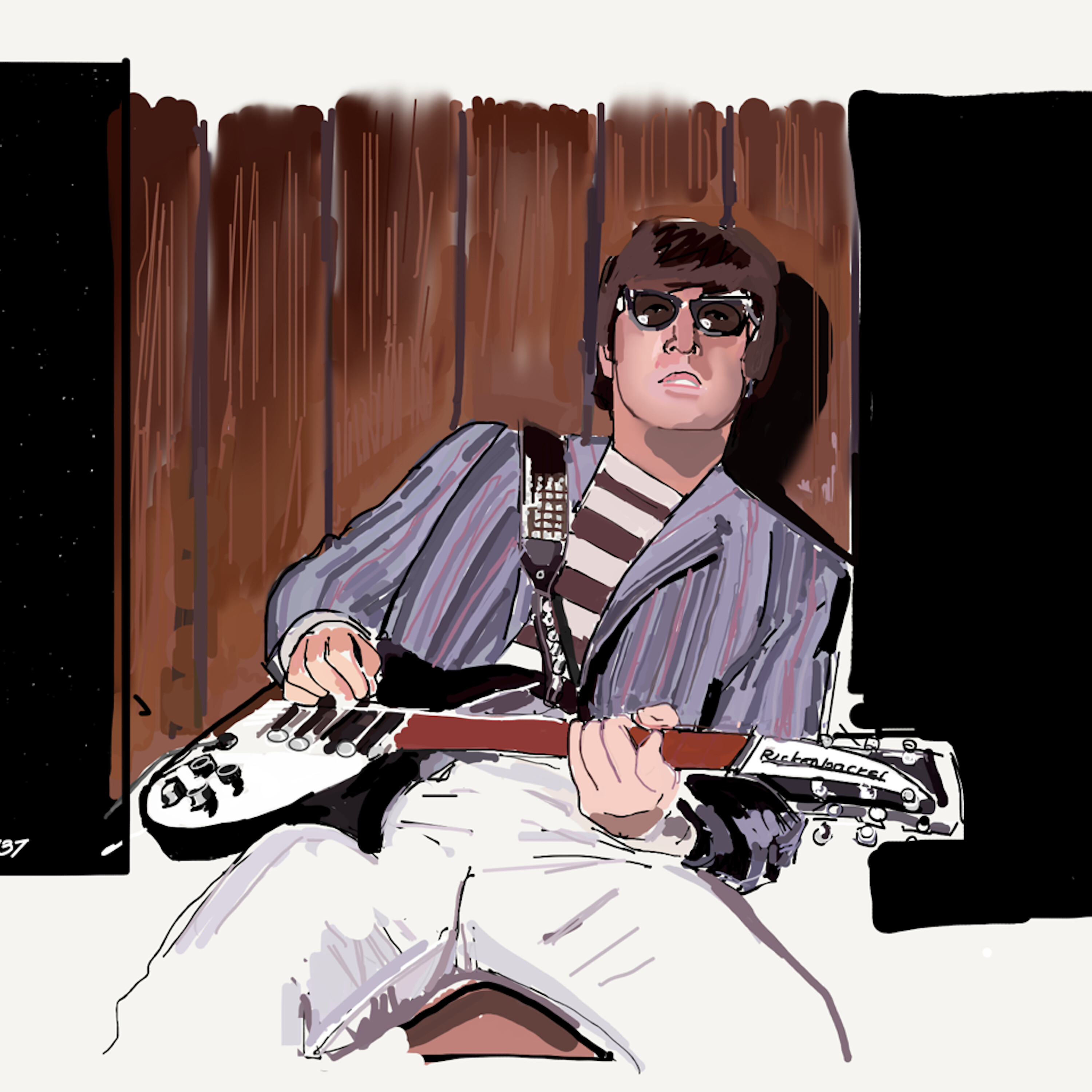
Is John Lennon the peace-loving saint in the white suit, or the villain some social media posts make him out to be? Biographer Jude Southerland Kessler says neither: "He's just a person." In Episode 336 of Something About The Beatles, host Robert Rodriguez talks with Jude about The John Lennon Series. She planned one book. It is now nine, probably ten, and she footnotes nearly every sentence. They cover why she tells John's life as narrative nonfiction, how she settles conflicting Beatles accounts, and what really happened with the Maureen Cleve interview in 1966. They also look at why John spun yarns about his own past, and how his tragedies turned into the songs that changed our lives. In this episode: • Why one planned book became nine, and the question that keeps it growing: "What day would you leave out?" • How John wrote I'm Only Sleeping on the back of an overdue car-phone bill • The ADT myth: why Jude left it out of her Tomorrow Never Knows chapter • Sweater or blanket? Even on
Heavy metal has always been built on pure adrenaline, raw talent, and unvarnished attitude, but the digital age is threatening to tear down everything the genre stands for. From artificial intelligence invading the songwriting process to the complete collapse of physical album sales and streaming payouts, the modern music business is pushing real musicians to the absolute brink. Can authentic heavy metal survive when technology takes over the creative process, or are fans witnessing the final curtain call for real, unscripted music? If you are hunting for the absolute best heavy metal content on the planet, look no further because this is the ultimate destination to satisfy your heaviest classic metal cravings! From hard-hitting album breakdowns to aggressive industry debates, we deliver pure power straight to your screen every single week. MYSTIC PROPHECY - IN METAL https://amzn.to/4zmliw0 Get commercial free and uncensored episodes without any delays, bonus posts and episodes, and TH
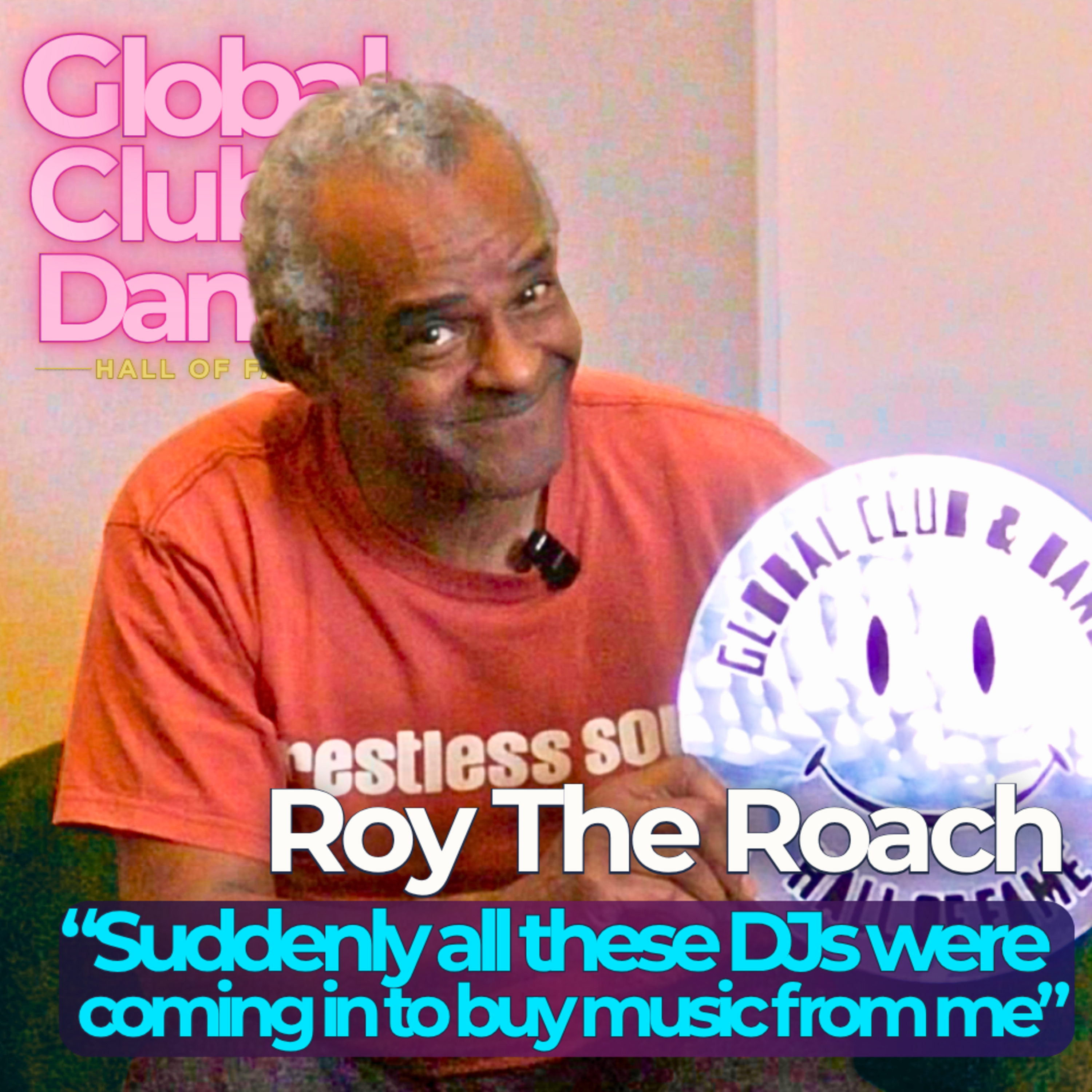
London club culture pioneer and DJ Roy The Roach joins Clara and Big Al on the Global Club & Dance Hall Of Fame to reflect on more than four decades at the heart of Britain's underground dance music scene, from the soul and jazz-funk movement to rare groove, acid house and the explosion of rave culture. Roy recalls his early days as a passionate young clubber, discovering London's vibrant soul scene before unexpectedly finding himself behind the decks at Ronnie Scott's. He shares the story of opening the legendary Quaff Records in the mid-1980s, a tiny record shop that became an essential destination for DJs including Giles Peterson, Jazzie B, Trevor Nelson, Coldcut, Danny Rampling, Paul Oakenfold, Judge Jules and many others, supplying the rare American funk, soul and early house records that helped shape a musical revolution. The conversation explores London's emerging warehouse party culture, the influential Dance Wicked events and the extraordinary community of DJs, promoters and c
FROM THE VAULT: On this day in 1946, legendary rock and blues guitarist Duane Allman was born in Nashville, Tennessee. Alongside his younger brother Gregg, he founded the Allman Brothers Band in 1969, helping pioneer the sound of Southern rock before his life was tragically cut short in a motorcycle accident just two years later. In this classic episode of Professor of Rock, we explore the remarkable story of two brothers who lost their father as toddlers, found their passion for music, and built one of the most influential bands in rock history. Just as the Allman Brothers Band was on the verge of a major breakthrough, tragedy struck with Duane's sudden death. Devastated but determined to carry on, Gregg Allman, Dickey Betts, and their surviving bandmates channeled their grief into the music, eventually creating their biggest pop hit, "Ramblin' Man." It's a powerful story of brotherhood, heartbreak, resilience, and the enduring legacy of a Southern rock legend.
Twenty years after the release of Back To Black, Amy Winehouse’s seminal record is more influential than ever. On songs like “Rehab,” “Me and Mr Jones,” and “Tears Dry On Their Own,” Winehouse crafted a tapestry of old-school pop music that’s firmly lodged in the 21st century and has made an indelible impact on several generations. On this episode of Switched On Pop, Charlie and Nate go back to Back To Black, bringing in British singer-songwriter Rachel Chinouriri to talk about everything that made Winehouse’s work stand the test of time. CREDITS Reanna Cruz: Producer Iris Gottlieb: Illustrator Charlie Harding: Host, Executive Producer Dion Lee: Art Director Brandon McFarland: Audio Engineer Nick Ripps: Video Editor Nate Sloan: Host Lissa Soep: Editor Zach Tenorio & Jocie Adams: Theme Composers Links: Newsletter (https://switchedonpop.substack.com/) Songs discussed: Amy Winehouse – Rehab Donny Hathaway – Someday We’ll All Be Free Ray Charles – Don’t You Know Ray Charles – What’d I Say,
Synopsis In August, 2019, thousands of women took to the streets of Mexico City to protest the outrageous police indifference to violent crimes against women, which largely went unpunished. Their protest became known as the “revolución diamantina” (glitter revolution), since they showered Mexico City’s security chief with pink glitter during their inaugural demonstration. Their protest inspired Mexican composer Gabriela Ortiz to collaborate with her compatriot, Pulitzer Prize-winning Mexican author Cristina Rivera Garza, in the creation of a ballet score that would chronicle their history and honor their action. The result of their collaboration was Revolución Diamantina, a 42-minute work of surprising power and beauty. Ortiz said, “It was up to me to imagine the music by using not only aesthetic languages already known to me, but by taking risks, learning, and experimenting with new tools. In this ballet, it has been my hope that the audience will explore different pathways that radic
Synopsis In 1974, St. Petersburg was still called Leningrad and still part of what we now call the former Soviet Union. Back then, the most famous living Soviet composer was Dmitri Shostakovich, whose health was rapidly failing from the cancer that would claim his life the following year. On today’s date in 1974, Shostakovich’s String Quartet No. 15, his final, was given its premiere performance by the Taneyev Quartet. The work was supposed to have been premiered by the Beethoven Quartet, but its cellist died unexpectedly, and, mindful of his own mortality, Shostakovich was reluctant to postpone the scheduled premiere. After all, he might not be around by the time the Beethoven Quartet found a replacement cellist. When his String Quartet No. 1 had premiered in 1938, Shostakovich had described that work as “joyful, merry, lyrical” and “springlike.” His String Quartet No. 15, on the other hand, is obviously a “winter work,” written by someone who knows he might never see another spring.
Synopsis On today’s date in 1922, the British Broadcasting Corporation began daily radio transmissions from London, at first offering just news and weather — the latter read twice, in case anyone wanted to take notes. The following month, on Dec. 23, 1922, the BBC broadcast its first orchestral concert. Over time, the BBC became affectionately nicknamed “the Beeb,” or, less affectionately “Auntie,” due to the upper-middle class, slightly patronizing tone of its music announcers in the 1940s and ‘50s. That said, Auntie has proven to be hip in one aspect: The BBC has been a major commissioner of and advocate for new music by a wide range of composers — and not just British ones. In 2007, for example, the BBC Symphony premiered the Doctor Atomic Symphony, by American composer John Adams, live on-air at a BBC Proms Concert at the Royal Albert Hall. And it’s not just famous, big-name composers who get an airing on the Beeb either. Each year, BBC Radio 3 hosts a competition for teenage compo
Environmental commitments should be judged by measured outcomes rather than announced targets.
Share your view, then see how readers voted. No sign-in required. This poll is shared across stories.
Do you agree or disagree?
Common Quandary
A Common Quandary to discuss
Another conversation to explore, separate from this news story.
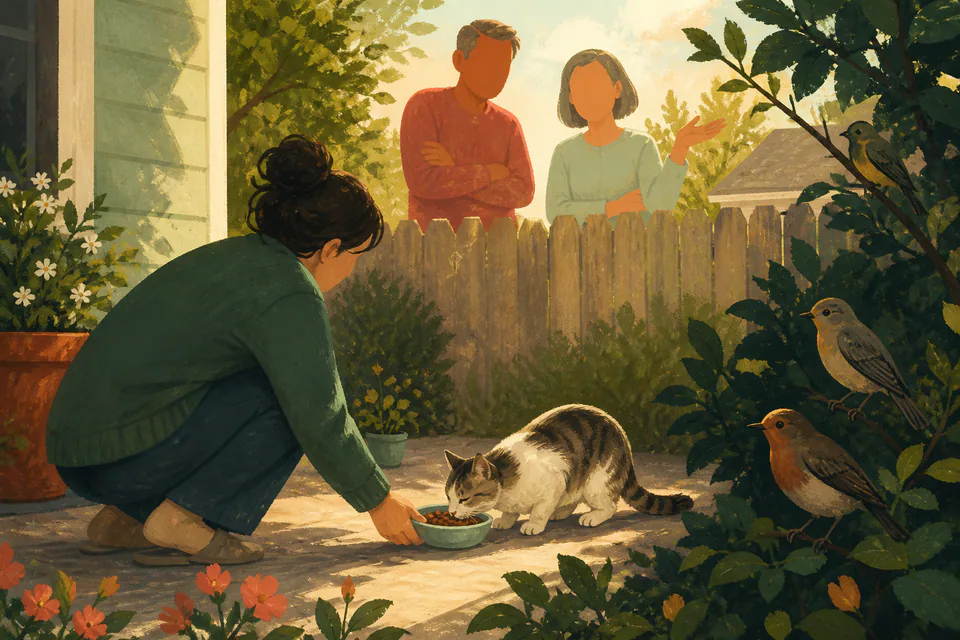
A stray cat adopts you—and starts killing birds. Do you keep feeding it?
A stray cat visits your yard daily and appears to depend on the food you leave out. Neighbors complain that outdoor cats kill birds and say feeding it encourages the problem without taking responsibility for the animal.
Does caring for one visible animal excuse harm to less visible ones?