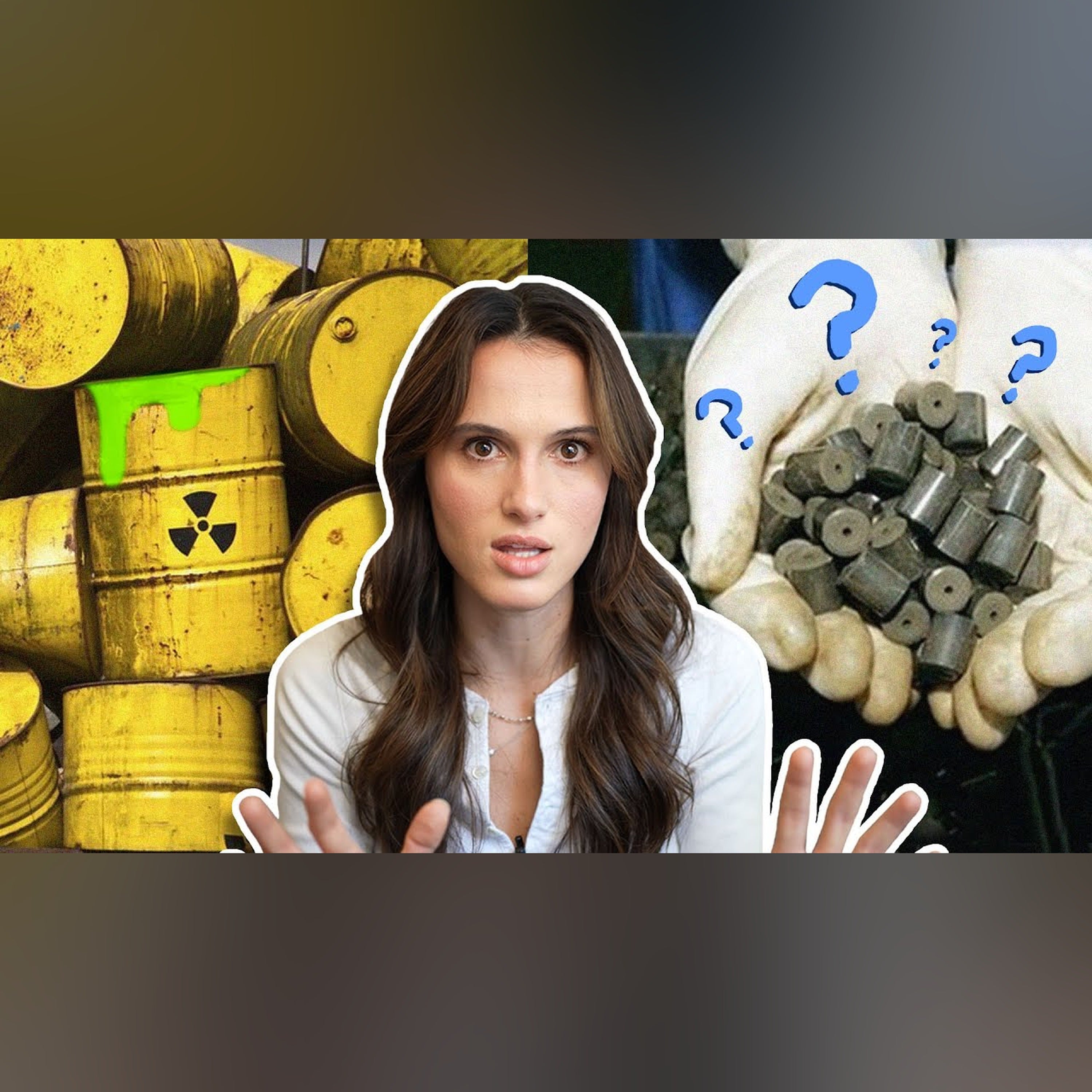
What if we could actually USE nuclear waste? Watch Johnny’s explainer on nuclear power here - and subscribe to his channel! https://youtu.be/QzTgZ6kOEM8 Nuclear waste is scary. Maybe you’ve seen it as glowing green goop in The Simpsons, or as a radioactive threat on the news. Either way, you likely know it has been a major block to the use and improvement of nuclear power. Over the last few decades, experts, politicians and the public have had heated debates over what to do with this radioactive material created by nuclear power plants. But what if there were a way to not just store nuclear waste, but actually USE it? This video is about the effort to make electricity out of nuclear waste. Really. It turns out, we developed the tools to do this decades ago. This story is about a technology we left behind and the people who want to bring it back. For this video, I had the privilege of visiting one of the largest and oldest research centers in the US, the Argonne National Laboratory. I’m
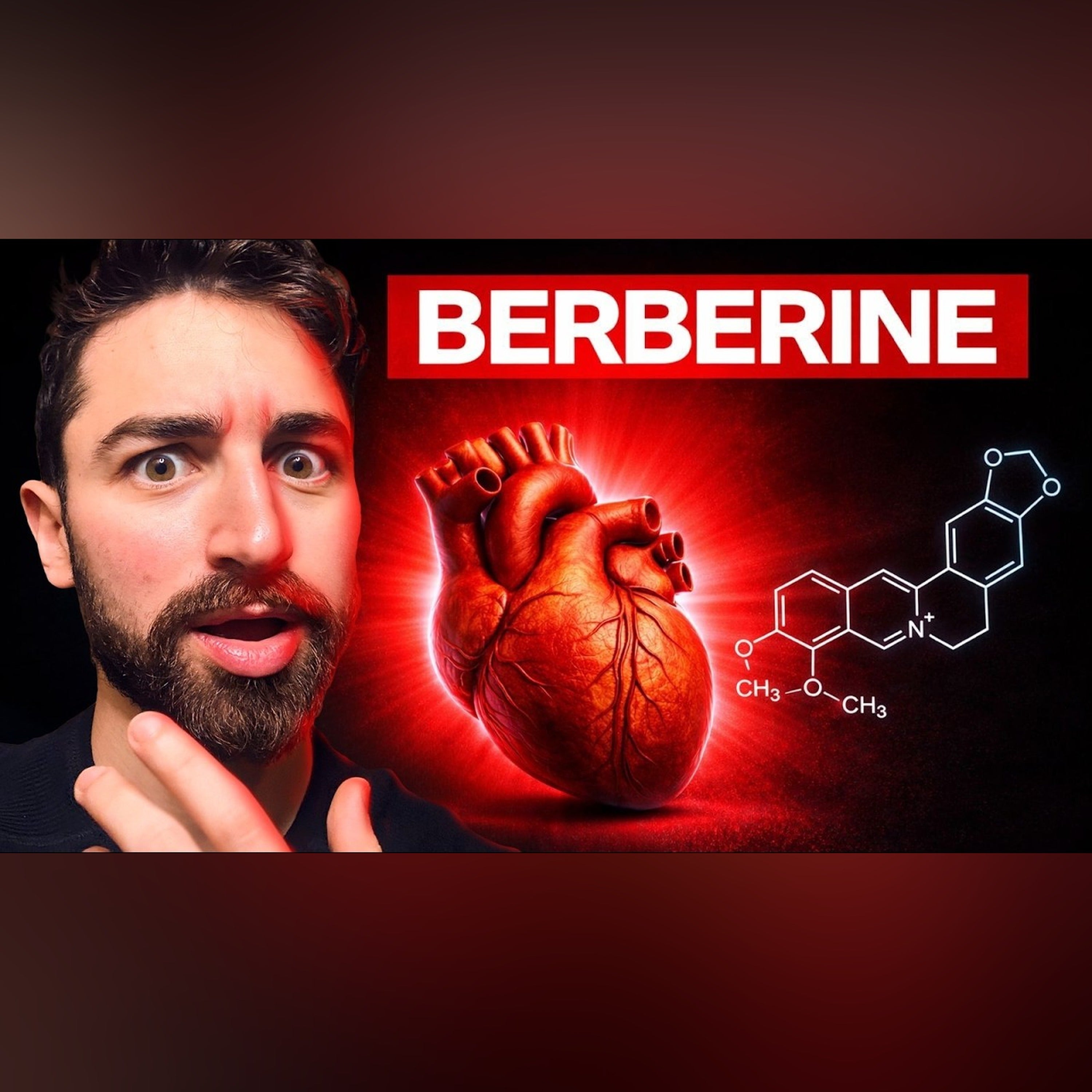
For extra nuances, all the references and early access to data like these, see the best-selling science letter: https://staycuriousmetabolism.substack.com/p/how-berberine-lowers-cholesterol?r=40ekz2 In this video, we unpack the stunning mechanism behind berberine, the yellow plant alkaloid that increases LDL receptors not by starving the liver of cholesterol, but by stabilizing the blueprint that cells use to builds them. It’s a twist in human biochemistry that reshaped how I think about cholesterol manipulation — and it might reshape how you do too. Then I’ll take you inside my own high-stakes N=1 experiment Hundred Health Link: https://www.hundred.com/STAYCURIOUS Discount Code: STAYCURIOUS50 knocks $50 off membership As a scientific advisor at Hundred Health, I candidly hold a small equity stake in the company. I’ve chosen to partner with Hundred Health because I genuinely believe it has the potential to be a disruptive force for good in personalized healthcare. It’s a tool unlike an
Struggling to find happiness in life? Tony Robbins shares his best secrets for how to be happy in any situation plus how you can remove negative thoughts to find deeper happiness and fulfillment in life, regardless of your current circumstances. Uploaded 04-08-24 Watch more videos like this Prime Your Brain to STOP Stress, Anxiety and Fear INSTANTLY: https://youtu.be/60ROjGMqXUQ 2 KEY SKILLS To Master If You Want An EXTRAORDINARY Life: https://youtu.be/CMF7H9OX5NQ #1 Best SIMPLE Technique to Overcome Fear and Anxiety Quickly: https://youtu.be/Q2sixA1vPKk The Tony Robbins Podcast: https://www.youtube.com/playlist?list=PLYTXvUDQT5pWkFiK1Yal1WtPcMrVbmjzA Follow Tony Robbins: Facebook: https://www.facebook.com/TonyRobbins Instagram: https://instagram.com/tonyrobbins/ TikTok: https://www.tiktok.com/@UC-12kRMQjK1LiQKRrT2zXcQ Twitter: https://twitter.com/tonyrobbins LinkedIn: https://www.linkedin.com/in/officialtonyrobbins Website: https://www.tonyrobbins.com/ Tony Robbins is a #1 New York Ti
Megyn Kelly looks back at her past interviews in the archives on AI, including a Nick Bostrom interview from more than 5 years ago, a deep dive with Tristan Harris, and a fascinating conversation with AI whistleblower Jacob Coxon. Follow The Megyn Kelly Show on all social platforms: YouTube: https://www.youtube.com/MegynKelly Twitter: http://Twitter.com/MegynKellyShow (http://twitter.com/MegynKellyShow) Instagram: http://Instagram.com/MegynKellyShow (http://instagram.com/MegynKellyShow) Facebook: http://Facebook.com/MegynKellyShow (http://facebook.com/MegynKellyShow) Find out more information at: Hosted by Simplecast, an AdsWizz company.
Today, Mel is taking 58 years of hard-earned life lessons and is packing them into under an hour, to save you some of the time, frustration, and worry it took her to learn them the hard way. In this episode, Mel is fielding real questions from listeners around the world. From making friends and bouncing back from rejection to feeling stuck in life and wondering if it's all going to work out, Mel is sharing the advice she wishes she'd known sooner. And she's not holding back. You'll hear Mel get personal about her own setbacks, and what she's learned about starting over, going after what you want, and trusting yourself when life doesn't go according to plan. You'll learn: -How to stop worrying about the future when nothing feels certain -How to make big life decisions, including whether or not to have kids -How to make new friends as an adult -What to do when you get rejected from your dream job -What to do when a friend ghosts you -How to stop procrastinating and finally follow through
This week, Kate is joined by her friend and fellow solo podcaster Madi Murphy of The Bad Broadcast. They get into how 45 minutes on the internet unraveled her Mormon upbringing, thought-stoppers like "doubt your doubts," Molly Mormons vs. Jack Mormons, and what it's like to watch the church relax the rules on the shoulders you spent your whole girlhood covering. Plus: Secret Lives of Mormon Wives OC, from the slicked-back buns to the self-proclaimed "emasculated" husbands, the lost art of complaining, and a Love/Hate featuring one toddler life hack you'll want to steal immediately. Enjoy! PRE-ORDER (https://www.google.com/url?q=https%3A%2F%2Fstatic.macmillan.com%2Fstatic%2Fsmp%2Fshe-let-herself-go-9781250434968%2F&sa=D&source=calendar&usg=AOvVaw0jHgJi17ziwPR4kj1rl89v&ust=1795461647781770) Kate's upcoming book, She's Let Herself Go (https://www.google.com/url?q=https%3A%2F%2Fstatic.macmillan.com%2Fstatic%2Fsmp%2Fshe-let-herself-go-9781250434968%2F&sa=D&source=calendar&usg=AOvVaw0jHgJi17
The majority of the universe is made up of a currently mysterious entity that pervades space: dark energy. We don’t know exactly what it is, but we do know that dark energy accelerates the expansion of space. We think this means the Universe will expand forever, even as our view of it shrinks while space expands faster all the time. Check out the Crash Course Astronomy solar system poster here: http://store.dftba.com/products/crashcourse-astronomy-poster If you want to learn more about the creation and death of the universe, watch Crash Course Big History here: https://youtube.com/playlist?list=PL8dPuuaLjXtMczXZUmjb3mZSU1Roxnrey -- Chapters: Introduction: The Expanding Universe 00:00 The Expansion of Space is Accelerating 2:17 What is Dark Energy? 4:19 Will the Universe Expand Forever? The Geometry of the Universe 5:20 The Cosmic Horizon of the Observable Universe 6:50 Review 10:20 -- GEOMETRY OF THE UNIVERSE RESOURCES Geometry: Expanding faster than light: General expansion: -- PBS Di
Have you ever wondered where cured meats like salami or pepperoni get their bright red color? Of course its from organic chemistry! A chemical called nitric acid gives them that bright color, while also increasing their shelf. It's also involved in some other interesting reactions. In this episode of Crash Course Organic Chemistry we'll see how nitrous acid reacts with primary amines to form diazonium salts, we'll learn about alkyldiazonium salts and aryldiazonium salts, and see what conditions are necessary for nucleophilic aromatic substitutions. Series Sources: Brown, W. H., Iverson, B. L., Ansyln, E. V., Foote, C., Organic Chemistry; 8th ed.; Cengage Learning, Boston, 2018. Bruice, P. Y., Organic Chemistry, 7th ed.; Pearson Education, Inc., United States, 2014. Clayden, J., Greeves, N., Warren., S., Organic Chemistry, 2nd ed.; Oxford University Press, New York, 2012. Jones Jr., M.; Fleming, S. A., Organic Chemistry, 5th ed.; W. W. Norton & Company, New York, 2014. Klein., D., Organ
Like a trendy dance, a fighting combo, or a secret handshake, organic reactions can be broken down into simpler steps. In this episode of Crash Course Organic Chemistry, we’ll specifically be looking at alkene addition reactions, and with each new reaction ask ourselves three questions to help us puzzle through the mechanism and understand what’s going on. Episode Sources: Le Couteur, P, Burreson, J. Napoleon’s Buttons: 17 molecules that changed history., Penguin, New York, 2004, Chapter 1. Whipps, H., “How the Spice Trade Changed the World,” https://www.livescience.com/7495-spice-trade-changed-world.html Last accessed, 3/28/2020. Henriques, Martha, “How spices changed the ancient world,” http://www.bbc.com/future/bespoke/made-on-earth/the-flavours-that-shaped-the-world/ Last accessed, 3/28/2020. Hashimoto, K., Yaoi, T., Koshiba, H., Yoshida, T., Maoka, T., Fujiwara, Y., Yaamoto, Y, Mori, K., “Photochemical Isomerization of Piperine, a Pungent Constituent of Pepper”, Food Sci. Technol.
Research announcements should give uncertainty as much attention as promising findings.
Share your view, then see how readers voted. No sign-in required. This poll is shared across stories.
Do you agree or disagree?
Common Quandary
A Common Quandary to discuss
Another conversation to explore, separate from this news story.
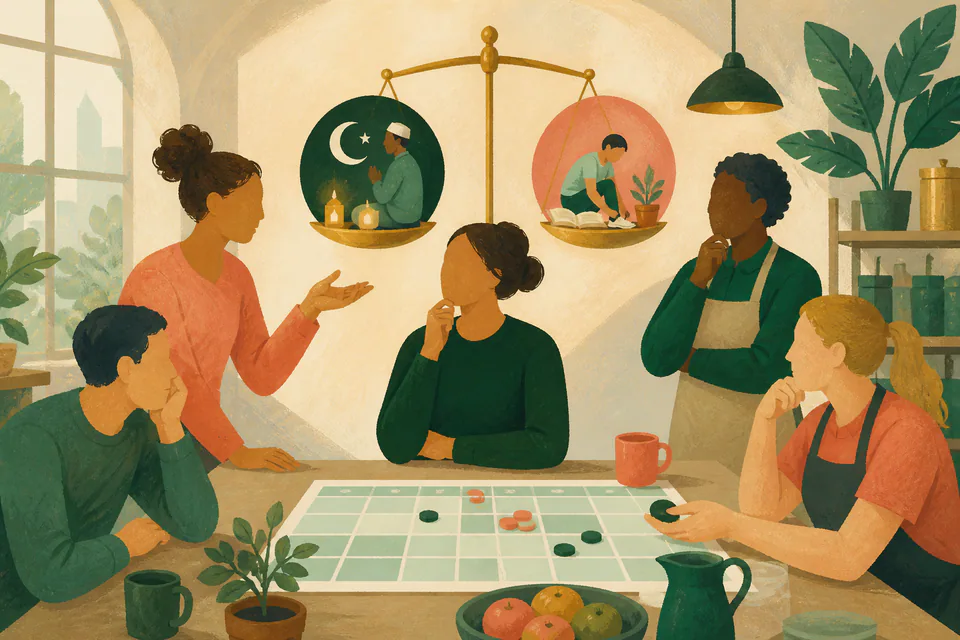
Your coworker's religious holiday means you work the unpopular shift again. Is that fair?
A workplace accommodates religious observances by asking other employees to cover unpopular shifts. One coworker objects that nonreligious commitments can be equally meaningful but receive less formal protection.
Does equal respect require treating every kind of commitment identically?