The Quantum Mpemba Effect: Why Hot Systems Can Cool Faster
24 min
Listen through the publisher, then discuss the episode here or arrange an in-person Roundtable. Your city determines where to meet.
Roundtables are designed for groups of four, with a shared subject and room for everyone to speak. Come for discussion, with no dating expectation.
Scientists have demonstrated the strong Mpemba effect in a quantum system using a single photon, revealing a surprising twist in how systems reach thermal equilibrium. The experiment shows how quantum coherence can influence cooling dynamics, opening new possibilities for understanding quantum thermodynamics and developing future quantum technologies. This episode includes AI-generated content.
Episode information is provided by the publisher. Listening takes place on the publisher’s service.
PBS Member Stations rely on viewers like you. To support your local station, go to: http://to.pbs.org/DonateSPACE ↓ More info below ↓ Uploaded 12-01-21 Erratum: Figures in episode should be Minev et al. (2019), not Minney et al. (2009). Our apologies to the authors! This is the experiment we talk about: To Catch and Reverse a Quantum Jump Mid-Flight Minev, Mundhada, Shankar, Reinhold, Gutiérrez-Jáuregui, Schoelkopf, Mirrahimi, Carmichael and Devoret (2019), Nature, v.570, p.200 Sign Up on Patreon to get access to the Space Time Discord! Since the very beginning of quantum mechanics, a debate has raged about how to interpret its bizarre predictions. And at the heart and origin of that debate is the quantum jump or quantum leap - the seemingly miraculous and instantaneous transitions of quantum systems that have always defied observation or prediction. At least, until now. Check out the Space Time Merch Store Sign up for the mailing list to get episode notifications and hear special anno
A kiss can be wonderful. It can create an instant connection, spark romance, or make you feel closer to someone. But a kiss can also have the opposite effect — and sometimes ruin everything. So what makes kissing so powerful, and why can one kiss make such a difference? There's some fascinating science behind it. https://www.scientificamerican.com/article/why-we-kiss/ We spend an enormous amount of time worrying about what's going to change. What's next? What's coming? How do we prepare? But what if we're paying attention to the wrong things? Some of the most important forces shaping our lives never change, and understanding them may be far more valuable than trying to predict the future — something humans are notoriously bad at. Morgan Housel, partner at The Collaborative Fund and author of Same as Ever: A Guide to What Never Changes (https://amzn.to/3SwWn6u) (https://amzn.to/3SwWn6u)), joins me to explain why the things that stay the same may be the most important things to understan
Deep in the Pacific, a remote research facility is racing to find a cure for Alzheimer’s, using genetically enhanced sharks to harvest a life-changing protein. But the sharks have become smarter than anyone planned, and when a violent storm floods the facility, the scientists realise they are no longer the ones doing the hunting. Samuel L. Jackson, LL Cool J, and Saffron Burrows star in a gloriously over-the-top creature feature with one of the most talked about moments in 90s horror, and if you have never seen it, The Best Movies You’ve Never Seen, thanks to Fetch and Hisense, is giving you the perfect reason to do so.
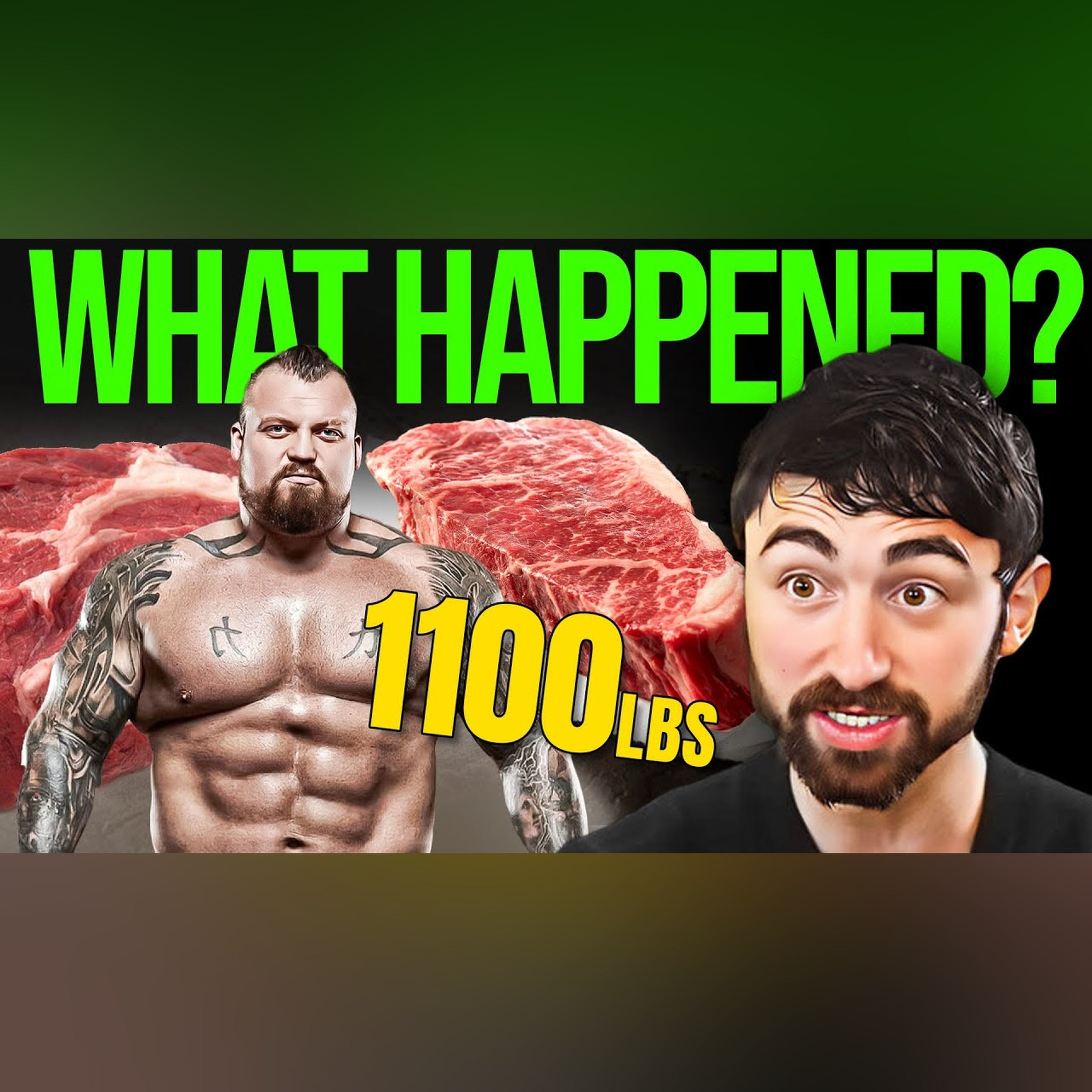
Eddie Hall, who won the World’s Strongest Man in 2017 and who set the world Deadlift at 1102 lbs (500kg) has started a carnivore diet! In this video, I’ll breakdown what Eddie eats, explain how he’s losing weight on 10,000 Calories per day, discuss loose stools on carnivore, and more. Amendments (i) On the solid vs liquid butter mini-experiment, people have noted butter will melt at body temperature. Of course, this is true. However, it's also true of all common fat sources, including tallow, lard and coconut oil. The idea is to control for fatty acids; thus, a comparison of olive oil versus ribeye steak would not be a good way to test the solid/liquid effect. There are alternatives, e.g. ribeye steak vs lean filet plus melted tallow; although even this is complicated by the fact the variable of distinction is the food matrix, more than the solid/liquid state. It's possible - maybe probable - that I misunderstood Shawn in our conversation and he meant that fatty meat, which is solid, w
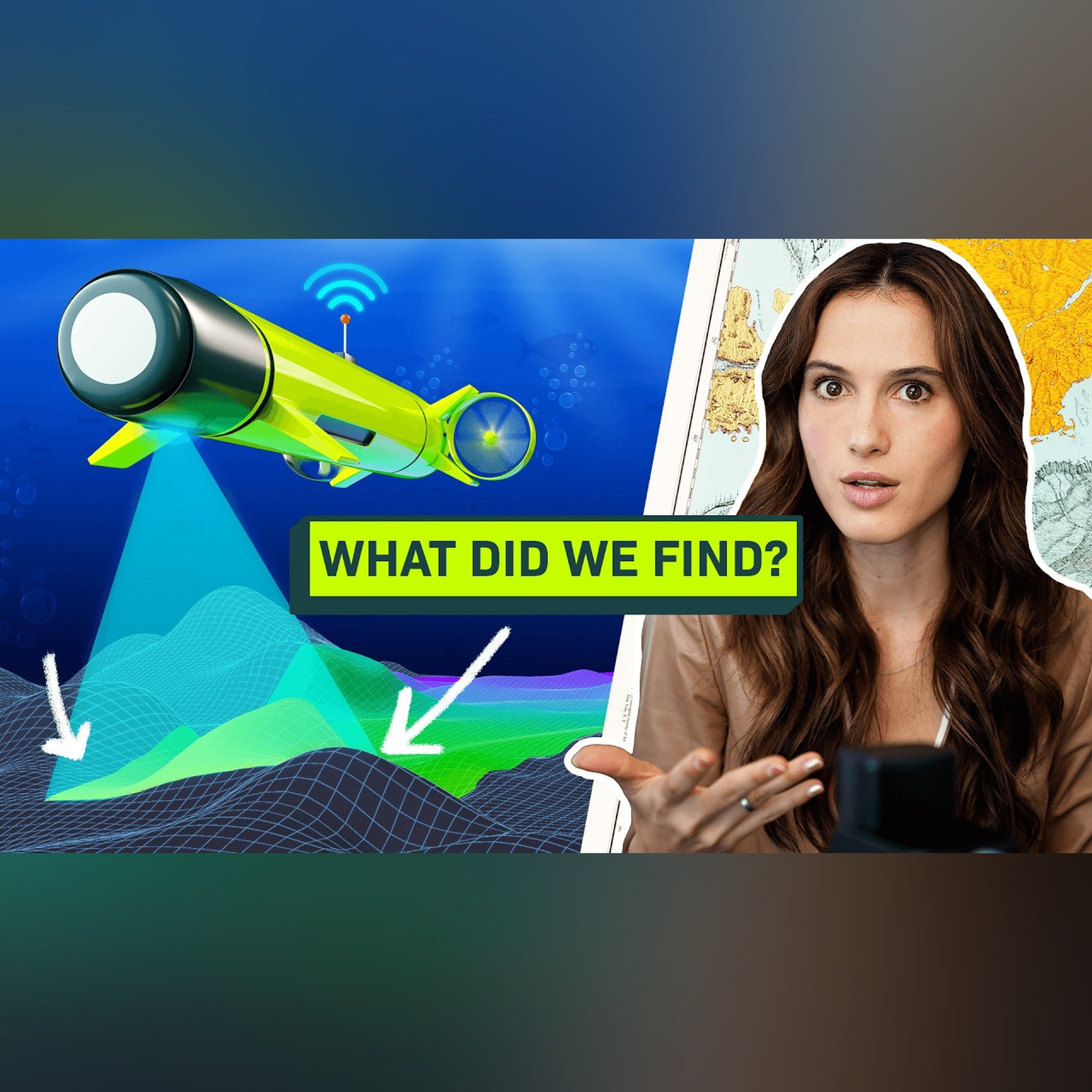
Why deep sea maps are SO BAD (and how to fix it)... Our maps of the ocean are surprisingly bad! On Google Maps it looks like we know so much… but we know less about the ocean floor than we do the surface of Mars. And that’s a big problem, because we are using the ocean all the time: We’re laying internet cables across it, we fight wars in it, we search it during a crisis - like the imploded OceanGate Titan submersible or the missing Malaysia Airlines Flight 370. 71% of the surface of the Earth is water! And yet we have a surprisingly limited view of what’s below it. But that’s also understandable. Because cartographically speaking, water sucks. For Mars or Earth’s surface, we can take pictures. But light doesn’t get to the ocean floor, so we need other ways to see it. The good news is, we’re developing that tech right now, and an international group called Seabed 2030 is working to piece together a better map. There is a terrifying, incredible, alien world on our own planet, and we’re
Explore the science of the groundbreaking technology for editing genes, called CRISPR- Cas9, and how the tool could be used to cure diseases. Uploaded 24-01-19 -- From the smallest single-celled organism to the largest creatures on Earth, every living thing is defined by its genes. With recent advancements, scientists can change an organism’s fundamental features in record time using gene editing tools such as CRISPR. But where did this medical marvel come from and how does it work? Andrea M. Henle examines the science behind this new technology. Lesson by Andrea M. Henle, directed by Adam Wells. Sign up for our newsletter: http://bit.ly/TEDEdNewsletter Support us on Patreon: http://bit.ly/TEDEdPatreon Find us on Twitter: http://bit.ly/TEDEdTwitter Peep us on Instagram: http://bit.ly/TEDEdInstagram View full lesson: https://ed.ted.com/lessons/how-crispr-lets-you-edit-dna-andrea-m-henle Thank you so much to our patrons for your support! Without you this video would not be possible! Feli
Scientists are rethinking how particles behave when moving at extreme speeds through matter. New research into quark-gluon plasma, the exotic fluid that existed moments after the Big Bang, reveals unexpected patterns in particle motion that challenge traditional physical models. The findings could offer a powerful new way to investigate the properties of the universe’s earliest matter. This episode includes AI-generated content.
Scientists have developed a powerful computational method that could dramatically expand the world of two-dimensional materials. By examining thousands of crystal structures, researchers have uncovered promising candidates with unusual electronic and magnetic properties. The discovery could open new possibilities for next-generation electronics, spintronics, and nanotechnology, revealing how much potential remains hidden in materials we already know. This episode includes AI-generated content.
After more than four decades of searching, physicists at CERN have found evidence of an extraordinarily rare particle transformation. Detected by the upgraded LHCb experiment, this elusive process offers a new way to investigate the limits of the Standard Model and search for signs of previously unknown physics. As future collider upgrades promise far more data, scientists are preparing to explore an even deeper frontier of the subatomic world. This episode includes AI-generated content.
Public spaces should allow peaceful disagreement while preventing intimidation.
Share your view, then see how readers voted. No sign-in required. This poll is shared across stories.
Do you agree or disagree?
Common Quandary
A Common Quandary to discuss
Another conversation to explore, separate from this news story.
One coffee, four hours, last table. Can the café ask you to leave?
A neighborhood café has become a popular remote workplace. Some guests buy one drink and occupy tables for hours, while families and friends regularly leave because they cannot sit together.