Listen through the publisher, then discuss the episode here or arrange an in-person Roundtable. Your city determines where to meet.
Roundtables are designed for groups of four, with a shared subject and room for everyone to speak. Come for discussion, with no dating expectation.
Bird Merch (https://birdmerch.com/) — Get yourself some bird shirts! ~~~ In Episode 141 of The Science of Birds, host Ivan Phillipsen explores the biology and mystique of the Snowy Owl (Bubo scandiacus). From prehistoric Ice Age cave art to modern pop culture icons, this striking Arctic predator has captivated humans for millennia. Discover what makes this heavy, ground-dwelling owl so uniquely adapted to life at the frigid top of the world—including why it breaks the nocturnal mold, how its famous white plumage evolves over time, and the surprising truth behind its periodic winter "irruptions" into southern latitudes. Along the way, Ivan unpacks the bird's evolutionary family tree, its conservation status, its calls, its hunting tactics, and its dramatic, boom-and-bust relationship with lemmings. Links of Interest The Snowy Owls of Logan Airport (https://www.youtube.com/watch?v=H3xKx0DAxQw) [VIDEO] Snowy Owl: Bird in the Spotlight (https://www.youtube.com/watch?v=vp638yxLgts) [VIDEO] Snowy Owls' Commitment to Parenthood | Animal Super Parents (https://www.youtube.com/watch?v=_2LYyoIZI_w) [VIDEO] Bird Merch - 11 New Shirt Designs! (https://birdmerch.com/collections/new-shirts-for-autumn-2026)
Episode information is provided by the publisher. Listening takes place on the publisher’s service.
☀️ HARNESSING THE POWER OF THE SUN — THE SCIENCE BEHIND C60 EVO! What happens when scientists recreate extraordinary, sun-like temperatures inside a laboratory to produce one of the most fascinating carbon molecules ever studied? Michael Jaco welcomes Patty Greer and Chris Burres back to Unleashing Intuition for a fascinating behind-the-scenes look at C60 Evo, the technology used to produce ESS60, and the science behind this unique carbon molecule. Chris takes us inside the laboratory to explain the intense temperatures, specialized production methods, and purification processes involved in creating ESS60 — C60 Evo's proprietary form of Carbon 60. The conversation explores the relationship between antioxidants, mitochondria, cellular energy, and oxidative stress, along with why C60 Evo combines ESS60 with carefully selected extra virgin olive oil. Patty and Chris also share their perspectives on wellness, personal experiences, and the growing interest in carbon-based technology. Inside
A kiss can be wonderful. It can create an instant connection, spark romance, or make you feel closer to someone. But a kiss can also have the opposite effect — and sometimes ruin everything. So what makes kissing so powerful, and why can one kiss make such a difference? There's some fascinating science behind it. https://www.scientificamerican.com/article/why-we-kiss/ We spend an enormous amount of time worrying about what's going to change. What's next? What's coming? How do we prepare? But what if we're paying attention to the wrong things? Some of the most important forces shaping our lives never change, and understanding them may be far more valuable than trying to predict the future — something humans are notoriously bad at. Morgan Housel, partner at The Collaborative Fund and author of Same as Ever: A Guide to What Never Changes (https://amzn.to/3SwWn6u) (https://amzn.to/3SwWn6u)), joins me to explain why the things that stay the same may be the most important things to understan
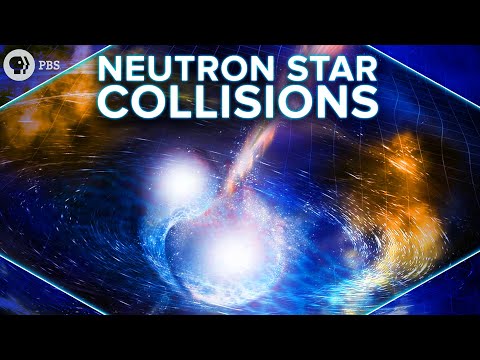
PBS Member Stations rely on viewers like you. To support your local station, go to: http://to.pbs.org/DonateSPACE ↓ More info below ↓ Uploaded 06-06-19 Carl Sagan’s famous words: “We are star stuff” refers to a mind-blowing idea – that most atomic nuclei in our bodies were created in the nuclear furnace and the explosive deaths of stars that lived in the ancient universe. In recent years it’s become clear that the truth is even more mind-blowing. Many heavy elements - includes most precious metals - were produced in an even more spectacular event: the collision of neutron stars. In fact, according to a recent study most of the Earth’s supply of these elements was created in a single neutron star merger that took place near our Sun’s birth nebula 80 million years ago before Earth formed. Check out the new Space Time Merch Store! Support Space Time on Patreon #theuniverse #astrophyics #spacetime Hosted by Matt O'Dowd Written by Matt O'Dowd Graphics by Leonardo Scholzer Directed by Andrew
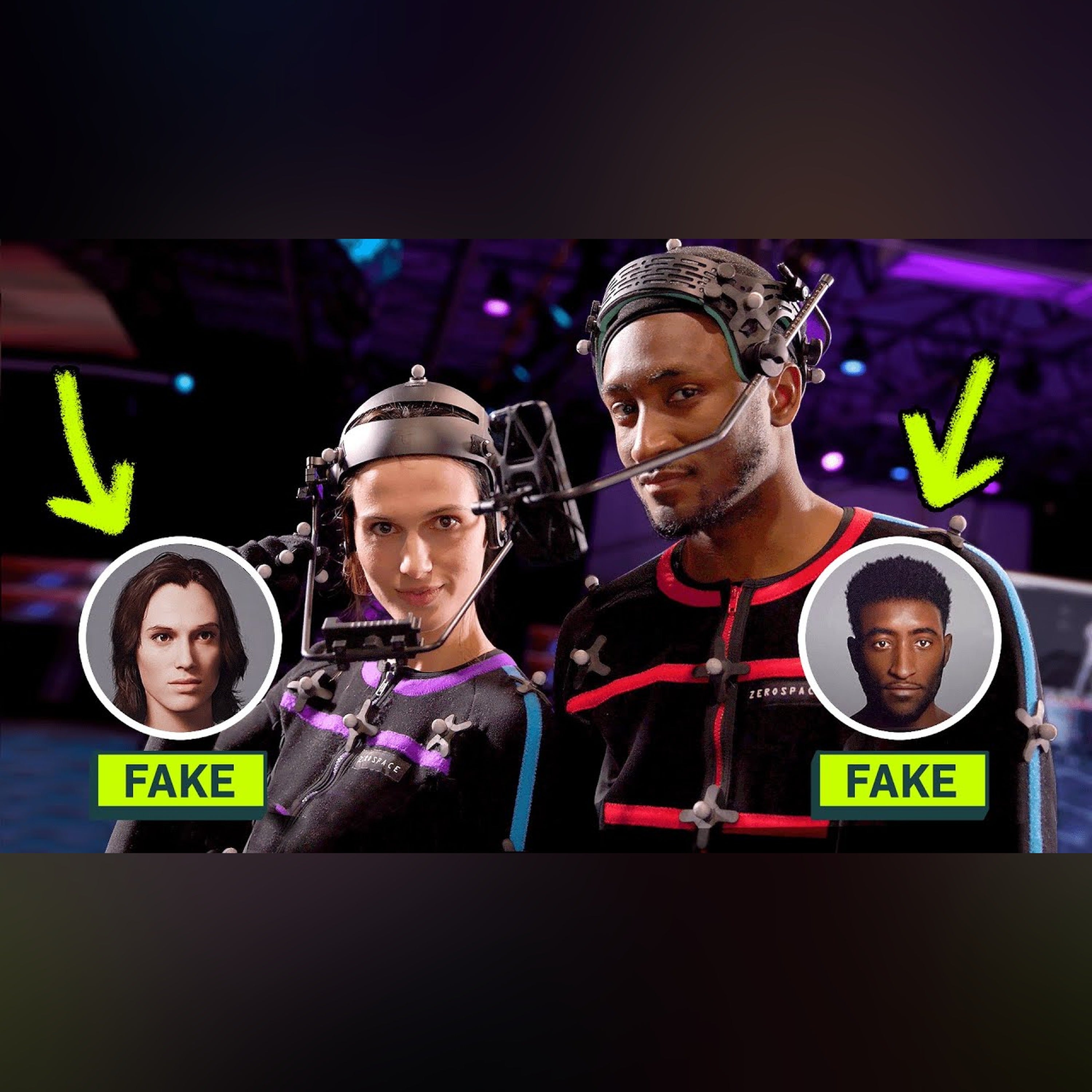
This new tech is changing how movies get made. So @mkbhd and I tested it out... Watch MKBHD's video: https://youtu.be/RM7SobH8ZO0 I’ve been obsessed with sci-fi movies since I was a kid. I love being transported to another world. But lately, I’ve been wondering: How do those worlds look so… REAL? The tech behind movies has exploded in complexity and realism, changing how stories come to life on screen. Luckily, at the same time, those tools are becoming more and more available to more people telling stories. It’s not just blockbusters like Avatar 2 or Avengers or Dune. It’s also smaller budget films like Everything Everywhere All at Once or even… YouTube creators? In this video, Marques Brownlee and I test out 3 movie-making tools that are changing how movies, shows, and maybe even YouTube videos (??) get made. We’re at ZeroSpace Studios in New York to show you how each of these crazy technologies work - and how you might be able to use them. Along the way, we hit big questions like: W
Discover what factors helped Leonardo da Vinci’s “Mona Lisa” become the world’s most famous painting. Uploaded 04-01-22 -- More than 500 years after its creation, Leonardo da Vinci’s “Mona Lisa” is arguably the world’s most famous painting. Many scholars consider it an outstanding work of Renaissance art— but history is full of great paintings. So, how did this particular portrait skyrocket to unprecedented fame? Noah Charney explores the factors that helped create a worldwide sensation. Lesson by Noah Charney, directed by Avi Ofer. Support Our Non-Profit Mission ---------------------------------------------- Support us on Patreon: http://bit.ly/TEDEdPatreon Check out our merch: http://bit.ly/TEDEDShop ---------------------------------------------- Connect With Us ---------------------------------------------- Sign up for our newsletter: http://bit.ly/TEDEdNewsletter Find us on Twitter: http://bit.ly/TEDEdTwitter Peep us on Instagram: http://bit.ly/TEDEdInstagram ----------------------
In Brought to You By: How Corporations Warped the Truth, Conned the Public, and Broke Democracy (https://bookshop.org/a/12343/9781639736331), Amy Westervelt exposes the plot hidden within the familiar story of science denial. Over the last century, Big Industry has built a vast apparatus of think tanks, lobbyists, sponsored university labs, and obliging news networks to con the public and fool decision-makers, poisoning the informational ecosystem and warping the nature of truth along the way. With her signature wit and incisiveness, Westervelt introduces the masterminds of corporate misinformation: Herb Schmertz, the public relations pioneer who made Mobil “the thinking man's oil company;” Richard Edelman, the PR guy who helped the dairy industry vilify oat milk; David Petraeus, the disgraced spy chief using counter-insurgency tactics to discredit climate science; and many more. She shows how these company men have worked to usher in an era of unprecedented corporate control. Only by
A rule should not be introduced unless it can be enforced fairly.
Share your view, then see how readers voted. No sign-in required. This poll is shared across stories.
Do you agree or disagree?
Common Quandary
A Common Quandary to discuss
Another conversation to explore, separate from this news story.
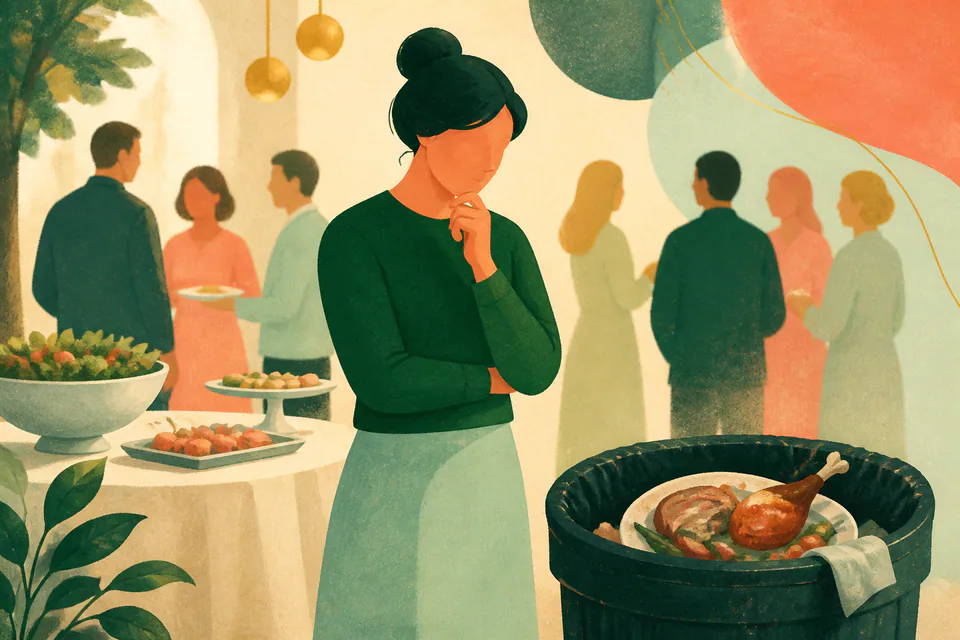
You are vegetarian, but the leftover steak is headed for the trash. Do you eat it?
A vegetarian avoids buying meat because of animal welfare concerns. At work events, untouched meat is routinely thrown away, and eating it would neither increase demand nor cause another animal to be harmed.
Should a moral practice be judged by its consequences or its consistency?