Listen through the publisher, then discuss the episode here or arrange an in-person Roundtable. Your city determines where to meet.
Roundtables are designed for groups of four, with a shared subject and room for everyone to speak. Come for discussion, with no dating expectation.
This year, as well as walks with interesting guests, we’re doing something a little different on A Life More Wild. Working with our charity partner Campaign for National Parks, we’re creating bonus episodes with seasonal soundscapes from some of the UK’s most precious green spaces. This time we're taking you to Dartmoor, to squelch around in peat bogs. UK peat stores as much carbon as all the forests in the UK, France, and Germany combined, yet between 70% and 80% of UK peatlands are damaged. They are the most important thing you’ve probably never thought about. In the company of Laura Hopes, artist, researcher and creator of Bogwitches, a storytelling project which guides some of her work, you’ll take an autumnal walk on the moors, revelling in its subtle sounds as you explore a lesser known facet of the landscape which has been shaped by us and shaped our stories in return.
Episode information is provided by the publisher. Listening takes place on the publisher’s service.
In this conversation I’m speaking to Rebecca Olive. Rebecca is a feminist cultural studies researcher whose work explores how everyday sport and leisure are shaped by cultural politics, relationships between humans and non-humans, environmental wellbeing, and social media. My understanding of her research is she looks very closely at why people do things that make up a culture, and the meaning of everyday practices in people’s lives. We chatted about why people are drawn to the ocean in the first place and what keeps us coming back. How swimming and surfing becomes more than recreation, and into an emotional relationship that shapes how we understand risk, shark risk, and our place in it. She also discusses how storytelling, social media and drone footage may influence our perception of danger and coexistence. Apologies, I’m a Bit under the weather in this one and in the opening couple of minutes, probably would have been a good idea to have the microphone turned on. Recorded at 3pm on
Electric planes are already here. But they don't look like I thought... If you want more optimistic stories about technology, subscribe to support our show! Are electric planes possible? And if so, when are they coming?? Turns out, they’re already here. For this episode of Huge If True, I went to visit an electric plane company called Beta. Before the shoot, I thought the weight of batteries basically meant electric planes weren’t that useful, and wouldn’t be for a long time. What I learned is that in the last 10 years, we’ve gotten a lot better at making batteries (look at your phone!). Those gains mean electric planes are starting to do more. And that’s a big deal - for carbon emissions and climate change, but also for redesigning how planes look and fly. The future of aviation will look very different than the planes you take today. I couldn’t fly in one of the electric planes (trust me, I tried!), but I did get up in the air another way… To support Huge If True, please consider sub
In the winter of 1944, as Nazi Germany was losing ground on every front, Hitler launched one final attempt to turn the war around. Through the dense forests of the Ardennes, German forces launched a massive surprise attack against the Allied armies, triggering one of the largest and most dramatic battles of World War II. Discover why the Allies were caught off guard, explore the harsh winter conditions that shaped the fighting, and follow the events surrounding the desperate defense of Bastogne. Learn about the German strategy, the Allied response, and the soldiers who endured weeks of uncertainty, snow, and exhaustion. Uncover how the Ardennes Offensive unfolded, why the German advance ultimately failed, and how this battle weakened Germany's ability to continue the war in Western Europe. Boring History for Sleep — Soft stories about forgotten battles, extraordinary events, and the people who shaped history.
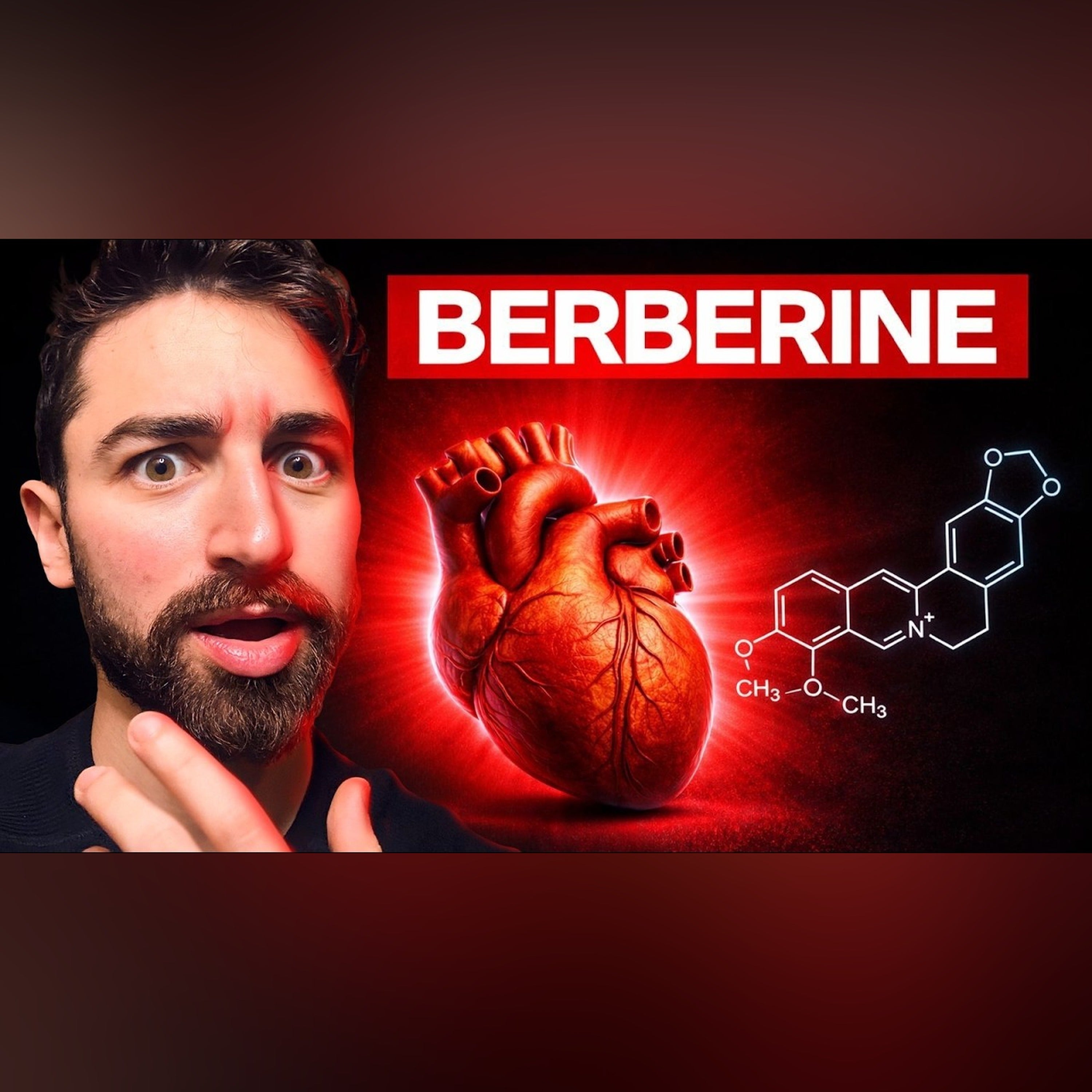
For extra nuances, all the references and early access to data like these, see the best-selling science letter: https://staycuriousmetabolism.substack.com/p/how-berberine-lowers-cholesterol?r=40ekz2 In this video, we unpack the stunning mechanism behind berberine, the yellow plant alkaloid that increases LDL receptors not by starving the liver of cholesterol, but by stabilizing the blueprint that cells use to builds them. It’s a twist in human biochemistry that reshaped how I think about cholesterol manipulation — and it might reshape how you do too. Then I’ll take you inside my own high-stakes N=1 experiment Hundred Health Link: https://www.hundred.com/STAYCURIOUS Discount Code: STAYCURIOUS50 knocks $50 off membership As a scientific advisor at Hundred Health, I candidly hold a small equity stake in the company. I’ve chosen to partner with Hundred Health because I genuinely believe it has the potential to be a disruptive force for good in personalized healthcare. It’s a tool unlike an
When she was just five years old, a little girl began receiving terrifying nighttime visits from a mysterious man dressed in a dark cape and top hat. His face was completely hidden in darkness, and he would stand over her bed, watching her as she struggled to scream. The visits continued for years. Even moving to a different home didn't stop them. And when her mother finally witnessed the figure herself, she took action, hoping to put an end to whatever had been tormenting her daughter. Eventually, the encounters stopped. But when the young woman was eighteen, she met someone with whom she shared an extraordinary coincidence. And something she discovered during that meeting brought back every frightening memory of the dark man. Had she been haunted by something that was also visiting someone else? #RealGhostStoriesOnline #TrueGhostStories #TheHatMan #ShadowPeople #DarkMan #ChildhoodHauntings #GhostlyApparitions #ParanormalEncounters #ShadowFigures #UnexplainedMysteries Love real ghost
Read: Romans 5:10; 1 Corinthians 15:57-58; 16:13-14 (https://www.biblegateway.com/passage/?search=Romans+5%3A10%3B+1+Corinthians+15%3A57-58%3B+16%3A13-14) “I’m done trying to be nice to Josh!” Eli told his mom. “He’s so mean! When I asked if he wanted to be my lab partner in science today, he laughed and said he wouldn’t be caught dead with a—well, I won’t repeat what he called me.” Eli flung his backpack into the hallway closet. “I was just trying to reach out to him because he doesn’t have any friends. Now I know why—he doesn’t want any!” Mom was about to respond when a sharp yip followed by a howl of pain came from outside. “That’s Mitsy!” Eli shot out the back door. He found his puppy crouched on the ground, her paw caught underneath the fence. Every time she moved, a sharp barb of wire jabbed her flesh. Eli knelt beside her and reached for the trapped paw. “Grrrr!” Mitsy growled, baring her teeth. Eli drew back in surprise. “Mitsy! Why are you growling at me? I only want to help y
Institutions should publicly explain how they respond to research misconduct.
Share your view, then see how readers voted. No sign-in required. This poll is shared across stories.
Do you agree or disagree?
Common Quandary
A Common Quandary to discuss
Another conversation to explore, separate from this news story.
You are vegetarian, but the leftover steak is headed for the trash. Do you eat it?
A vegetarian avoids buying meat because of animal welfare concerns. At work events, untouched meat is routinely thrown away, and eating it would neither increase demand nor cause another animal to be harmed.
Should a moral practice be judged by its consequences or its consistency?