Listen through the publisher, then discuss the episode here or arrange an in-person Roundtable. Your city determines where to meet.
Roundtables are designed for groups of four, with a shared subject and room for everyone to speak. Come for discussion, with no dating expectation.
What makes a horse truly wild? Isabella discovers the fine line that divides domesticated from wild horses with Rina Quinlan, Knepp safari guide, founder of the Large Herbivore Working Group and queen of the equines. Understanding the social dynamics of Knepp’s Exmoor pony herds has changed the way Rina manages her own horses and livery – insights she hopes to communicate to other horse owners. But keeping the Exmoors wild is challenging, too – their wellbeing and the dynamics of the rewilding project depend on it. Again, it’s people’s behaviour that needs to change. Isabella Tree is co-founder of Knepp rewilding project. Her latest book ‘White Stork – restoring a missing bird to Britain’ will be published on 1 April 2027. Send us a message or leave a comment (https://www.buzzsprout.com/1125281/fan_mail/new) Find out more about Knepp on our website (https://knepp.co.uk/) and why not follow us on Instagram (https://www.instagram.com/kneppwilding)?
Episode information is provided by the publisher. Listening takes place on the publisher’s service.
For some reason, it did not stop him.Now I just want to ask you something real quick to put you in the mind of a bear. If you found some of your favorite food just left out and you somehow, like me most of the time, just couldn’t resist the temptation. Bears live and eat by what is detected by their noses, so logically, after eating its fill, a proper expectation would be that the bear would go sleep off a large meal upwind of where its food was cached. The wind carries both scent and sound to the bear as it rests and acts as an alarm to it to defend its cache. The hide was still up in the birch, untouched. He dropped his packboard at the base of the tree and glanced up to see where he would need to climb. Movement in the brush, some three hundred feet away, caught his eye. Two bears, roughly thirty feet apart, moved through the brush. From their color and build, he identified them as grizzlies, also called coastal brown bears.Up to that day, every bear he had met in the wild had chose
For the references, deeper nuances, and additional content the StayCurious Metabolism letter: https://staycuriousmetabolism.substack.com/p/can-visceral-fat-cause-depression?r=40ekz2 Hidden in this letter is a secret — a scientific breakthrough more than 75 years in the making. By the end of this video, I’ll show you exactly what’s inside it. But before we get there, understand this: I mean it literally. Scientists have just discovered that fat cells send secret letters to the brain — and the messages encoded inside them control your hunger, your energy, your metabolism, and potentially the root cause of obesity itself. These letters determine whether your brain feels satisfied and energized… or hungry, sluggish, and metabolically broken. Here’s the shocking part: if your biology writes the right message, you stay lean and healthy almost effortlessly. If it writes the wrong one, your brain goes blind to satiety, your metabolism slows, and your body enters a hormonal state that drives we
Check out the Space Time Merch Store In 1974 we sent the Arecibo radio message towards Messier 13, a globular cluster near the edge of the Milky Way, made up of a few hundred thousand stars. The message was mostly symbolic; we weren’t really expecting a reply. Yet surely other civilisations out there are doing the same thing. So, why haven’t we heard anything? What if the silence from the stars is a hint that we shouldn’t be so outgoing? What if aliens are deliberately keeping quiet for fear that they might be destroyed? Sign Up on Patreon to get access to the Space Time Discord! PBS Member Stations rely on viewers like you. To support your local station, go to:http://to.pbs.org/DonateSPACE Search the Entire Space Time Library Here: https://search.pbsspacetime.com/ Hosted by Matt O'Dowd Written by Richard Dyer & Matt O'Dowd Post Production by Leonardo Scholzer, Yago Ballarini & Stephanie Faria Directed by Andrew Kornhaber Associate Producer: Bahar Gholipour Executive Producers: Eric Br
One evening, a mother was putting her three-year-old son to bed, just as she'd done countless times before. She read him a story, rubbed his back, and waited for him to fall asleep. But for no apparent reason, she suddenly became overwhelmed by sadness. The feeling was so intense that she began to cry. Later that night, she woke to the unmistakable sounds of someone playing with her son's favorite building blocks. When she went to investigate, she found him sound asleep and his toys put away. But something in the room wasn't quite as she'd left it. Over the following nights, that same unexplained sadness returned. It wasn't until she thought about the time of year, and a heartbreaking loss she'd experienced a decade earlier, that she began to wonder whether these strange occurrences might be connected. Could someone she'd lost have found a way to visit? #RealGhostStoriesOnline #TrueGhostStories #SpiritVisitations #AfterDeathCommunication #SignsFromBeyond #ChildSpirit #ParanormalEncount
The fight for the future of car racing has begun... If you want more optimistic stories about technology, subscribe to support our show! You already know about Formula 1. The car racing sport is famous around the world and is skyrocketing in popularity in the US in part because of the Netflix series Drive To Survive. But Formula 1 has a problem. More and more the cars that we drive are going fully electric, and the cars that they drive… aren’t. That matters, because the real reason F1 gets all this money and attention is that big companies are investing in and advertising their cutting edge tech. If that tech gets outdated, it loses the point - and the extra investment. What is the future of car racing? If it’s electric, does F1 change? Or is someone else going to get there first? Enter Formula E, the all-electric Formula 1. In this video, we explore the future of car racing, explain Formula E’s amazing tech and wild rules, and break down the drama within one of the world’s most popula
Dig into the animal kingdom’s capacity for generosity, and find out how cooperation between animals may contribute to their survival. -- Charles Darwin introduced the notion of “survival of the fittest,” where the fittest animals are those who can survive long enough to produce healthy offspring. The fittest animal can also be the most stealthy, resourceful, or even the most cooperative. So what exactly does cooperation look like in the wild? Ashley Ward digs into the animal kingdom's capacity for generosity. Lesson by Ashley Ward, directed by Sharon Colman. Support Our Non-Profit Mission ---------------------------------------------- Support us on Patreon: http://bit.ly/TEDEdPatreon Check out our merch: http://bit.ly/TEDEDShop ---------------------------------------------- Connect With Us ---------------------------------------------- Sign up for our newsletter: http://bit.ly/TEDEdNewsletter Find us on Twitter: http://bit.ly/TEDEdTwitter Peep us on Instagram: http://bit.ly/TEDEdInstag
A tradition can remain authentic while changing with the community that practices it.
Share your view, then see how readers voted. No sign-in required. This poll is shared across stories.
Do you agree or disagree?
Common Quandary
A Common Quandary to discuss
Another conversation to explore, separate from this news story.
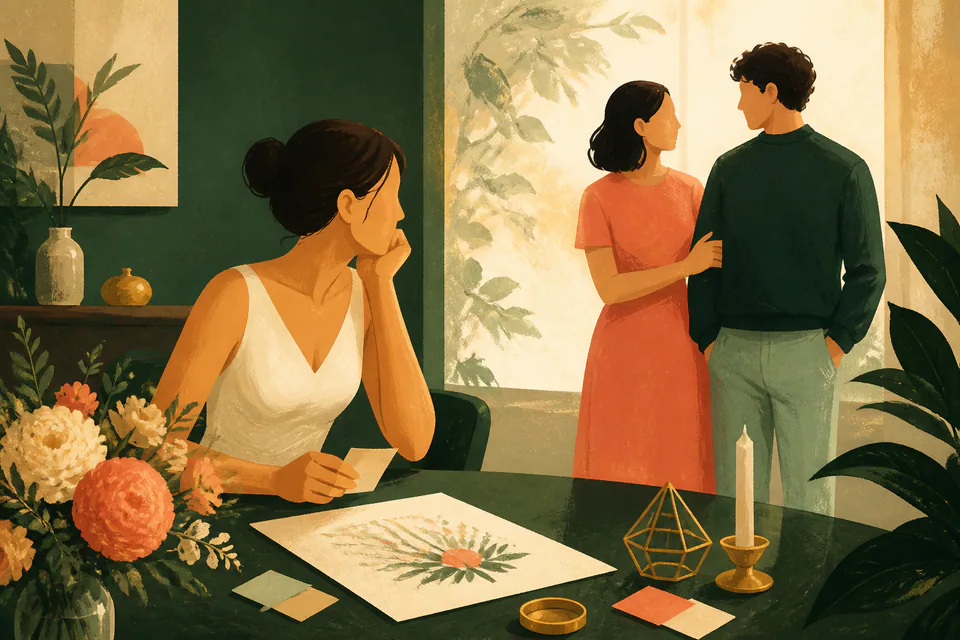
You cannot stand your friend's partner. Do they still get a wedding invitation?
You are planning a small wedding and strongly dislike the person your longtime friend has been dating. Inviting them would make you uncomfortable, but excluding only that partner would embarrass your friend.
Whose comfort should govern a celebration centered on you?