Listen through the publisher, then discuss the episode here or arrange an in-person Roundtable. Your city determines where to meet.
Roundtables are designed for groups of four, with a shared subject and room for everyone to speak. Come for discussion, with no dating expectation.
Today we revisit an episode first aired in 2019. In it we ask a question: When an animal disappears in the winter, where does it go? Oddly enough, this question completely stumped European scientists for thousands of years. And even today, the more we learn about the comings and goings of the animals, the deeper the mystery seems to get. We visit a Bavarian farm with an 11 year old, follow warblers and wildebeests around the world, and get a totally new kind of view of the pulsing flow of animals across the globe. LATERAL CUTS: Have kids? Or, are you just one at heart? Do any of those kids want to know more about Monarchs? Check out a whole episode from our sister program, Terrestrials. The Hideout: A Monarch Butterfly Mystery (https://www.wnycstudios.org/podcasts/radiolab-kids/articles/the-hideout-a-monarch-butterfly-mystery) (https://zpr.io/r6w6WwSZMun8) EPISODE CREDITS: Reported by - Robert Krulwich and Jackson Roach Produced by - Pat Walters Original music and sound design contributed by - Jeremy Bloom Sign up for our newsletter!! It includes short essays, recommendations, and details about other ways to interact with the show. Signup (https://radiolab.org/newsletter) (https://radiolab.org/newsletter)! Radiolab is supported by listeners like you. Support Radiolab by becoming a member of The Lab (http://members.radiolab.org/) (https://members.radiolab.org/) today. Follow our show on Instagram (http://instagram.com/radiolab), Twitter (http://twitter.com/radiolab) and Facebook (http://facebook.com/radiolab) @radiolab, and share your thoughts with us by emailing [email protected]. Leadership support for Radiolab’s science programming is provided by the Simons Foundation and the John Templeton Foundation. Foundational support for Radiolab was provided by the Alfred P. Sloan Foundation. Hosted by Simplecast, an AdsWizz company. See pcm.adswizz.com (https://pcm.adswizz.com/) for information about our collection and use of personal data for advertising.
Episode information is provided by the publisher. Listening takes place on the publisher’s service.
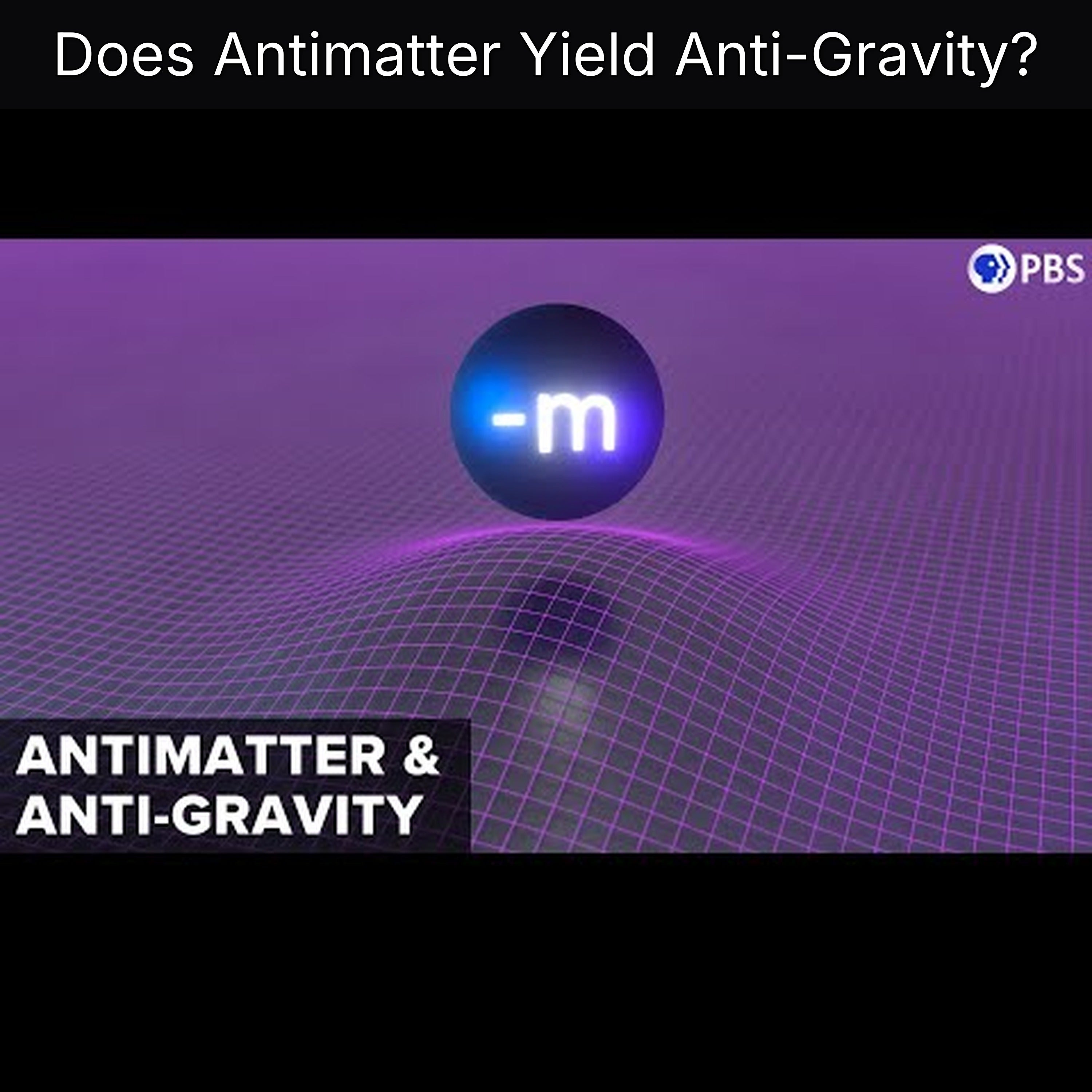
Learn More About 80,000 Hours at: https://www.80000hours.org/spacetime PBS Member Stations rely on viewers like you. To support your local station, go to:http://to.pbs.org/DonateSPACE Sign Up on Patreon to get access to the Space Time Discord! From hoverboards to flying cars to cloud cities, anti-gravity is a staple of science fiction and our dream of a less Earth-bound future. But in the real universe gravity appears to be a purely attractive force. Feels like its main MO is keeping us stuck to the surface of this lonely rock. But maybe if we science hard enough we can remove the fiction from science fiction. For the sake of our flying cars we should at least try. And for many years, physicists have wondered whether a certain well-known exotic material may experience gravitational repulsion from the Earth. That material is antimatter, and physicists at CERN have just completed a very long and very difficult experiment to answer a seemingly simple question: does antimatter fall down, o
Today, Mel is doing something she's never done before on The Mel Robbins Podcast. She's bringing members of her team into the studio for live coaching with world-renowned communications expert Vinh Giang. Vinh is known for teaching millions of people online how to stop sounding insecure, speak more clearly, and get people to listen when you talk. And when you hear him coaching today, it will be like he’s coaching you. One person freezes when they're put on the spot. Another can't stop interrupting people. Someone else has great ideas but stays quiet because they're afraid of being judged. Does any of that sound familiar? And Vinh isn't just giving advice. He's coaching real people through practical exercises, right there in the studio, so you can hear the difference and start making those same changes in your own life. As Mel says, put yourself in their shoes. As Vinh works with each person, you'll recognize things you struggle with, too. You'll learn: -What to do when your mind goes b
Giving Tuesday is coming, so we revisit some of our favorite ideas for giving back, including one you’ll want to put on the calendar. Episode Highlights Rethink Black Friday as a day to put your values into action [10:19] Be a source of opportunity by making introductions, sharing recommendations, mentoring and more [02:11] Schedule an “empower hour” [06:29] Help others to feel happier yourself [11:41] Mentioned in this Episode Giving Tuesday (https://www.givingtuesday.org/) Bottom Line (https://www.bottomline.org/) Interior States by Meghan O’Gieblyn (Amazon (https://link.amazon/B08alGUgz), Bookshop (https://bookshop.org/a/15926/9780525562702)) White Fragility by Robin DiAngelo (Amazon (https://link.amazon/B08GwDuzX), Bookshop (https://bookshop.org/a/15926/9780807047415)) The Happiness Project by Gretchen Rubin (Amazon (https://link.amazon/B07mv6SzH), Bookshop (https://bookshop.org/a/15926/9780062888747)) Connect with Us: Email: [email protected] Website: gretchenrubin.com Ins
Dive into the incredible diversity of animal pupils, and how the different shapes indicate the animal’s role in an ecosystem. Uploaded 13-01-22 -- Peering into the eyes of different animals, you’ll see some extraordinarily shaped pupils. House cats, for one, are twilight hunters with vertically elongated pupils. Many grazing animals, like goats, have rectangular pupils. Other animals have crescent- or heart-shaped pupils. So, what’s going on? Why are there so many different pupil shapes? Emma Bryce digs into the science of animal vision. Lesson by Emma Bryce, directed by Bálint Gelley, CUB Animation Ltd. Support Our Non-Profit Mission ---------------------------------------------- Support us on Patreon: http://bit.ly/TEDEdPatreon Check out our merch: http://bit.ly/TEDEDShop ---------------------------------------------- Connect With Us ---------------------------------------------- Sign up for our newsletter: http://bit.ly/TEDEdNewsletter Find us on Twitter: http://bit.ly/TEDEdTwitter
When should artists get paid in a world with AI music? Artificial intelligence is changing how music gets made - and how musicians get paid. AI is letting people clone artists’ voices, create completely new songs as fake collaborations, generate lyrics in seconds, even produce full tracks just by typing in a few words. It’s all causing some to say AI will be “the death of music.” Technology causes turning points in history. And I think we’re in one right now for music. The stakes are high: If we get this wrong, we could jeopardize how human musicians make money and art. But if we get it right, we have an opportunity to leap ahead in how we as humans get to express ourselves. To really understand what’s happening with AI music, you need to understand how the music industry ALREADY works - and how it could be changing. In this video, I took a deep dive into that topic with the help of two people right in the thick of it: The artist Grimes and CEO of Spotify Daniel Ek. Chapters: 00:00 Wha
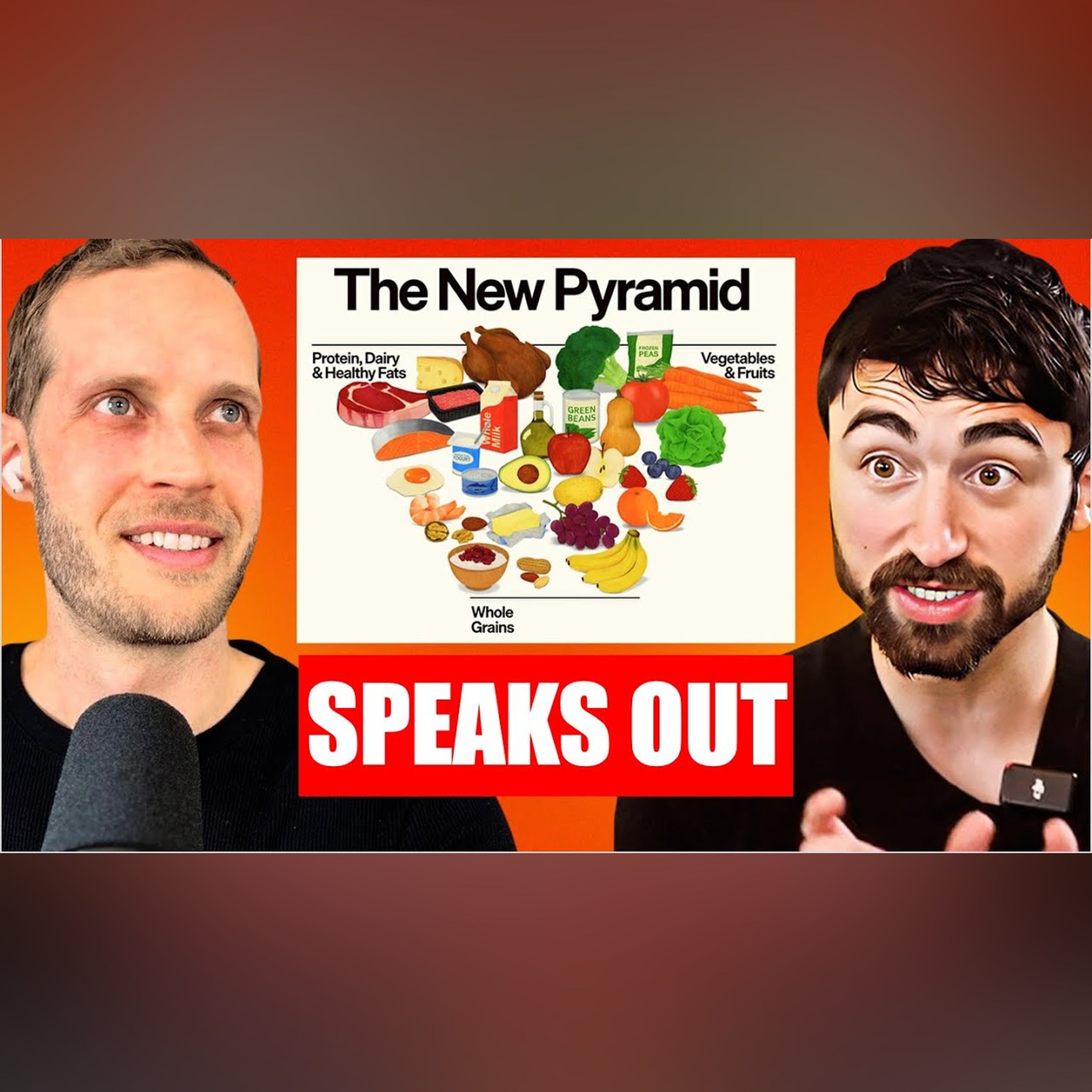
For a written digest on the guidelines, see the StayCurious Metabolism Letter: https://staycuriousmetabolism.substack.com/p/the-new-dietary-guidelines-actually?r=40ekz2 The 2025–2030 Dietary Guidelines are being marketed as a major reset with a simple message: put “real food” back at the center of the American diet. And in a lot of ways, they do represent progress. But when you actually read what’s written, some of the most important details raise real questions. For example, the document still states that saturated fat should not exceed 10% of total daily calories. To separate signal from spin, I’m joined by Dr. Ty Beal PhD, who worked on the evidence review side of the Guidelines process, to explain what the scientific background documents actually say, what happens after scientists submit reviews, and why the final public-facing document can end up with compromises, inconsistencies, or imprecise terminology. If you want a clear, good-faith breakdown—what’s genuinely better, what sti
This week, we’re replaying the inaugural episode of More Perfect (first aired in 2016) we explore three little words embedded in the 8th Amendment of the U.S. Constitution: “cruel and unusual.” America has long wrestled with this concept in the context of our strongest punishment, the death penalty. A majority of “we the people” (61 percent, to be exact) are in favor of having it, but inside the Supreme Court, opinions have evolved over time in surprising ways. And outside of the court, the debate drove one woman in the UK to take on the U.S. death penalty system from Europe. It also caused states to resuscitate old methods used for executing prisoners on death row. And perhaps more than anything, it forced a conversation on what constitutes cruel and unusual punishment. In this episode, we also include a new conversation with Harvard law professor Carol Steiker and former death-row inmate Damien Nichols about the moment the death penalty finds itself in now. After the botched executio
Food labels should explain environmental and ethical claims in verifiable terms.
Share your view, then see how readers voted. No sign-in required. This poll is shared across stories.
Do you agree or disagree?
Common Quandary
A Common Quandary to discuss
Another conversation to explore, separate from this news story.
Your family connection could get your child into their dream school. Do you use it?
A university argues that considering family ties builds loyalty and encourages donations that fund scholarships. Critics say the preference preserves inherited advantage and takes places from stronger applicants.
Can benefits to the whole institution justify an unequal admissions advantage?