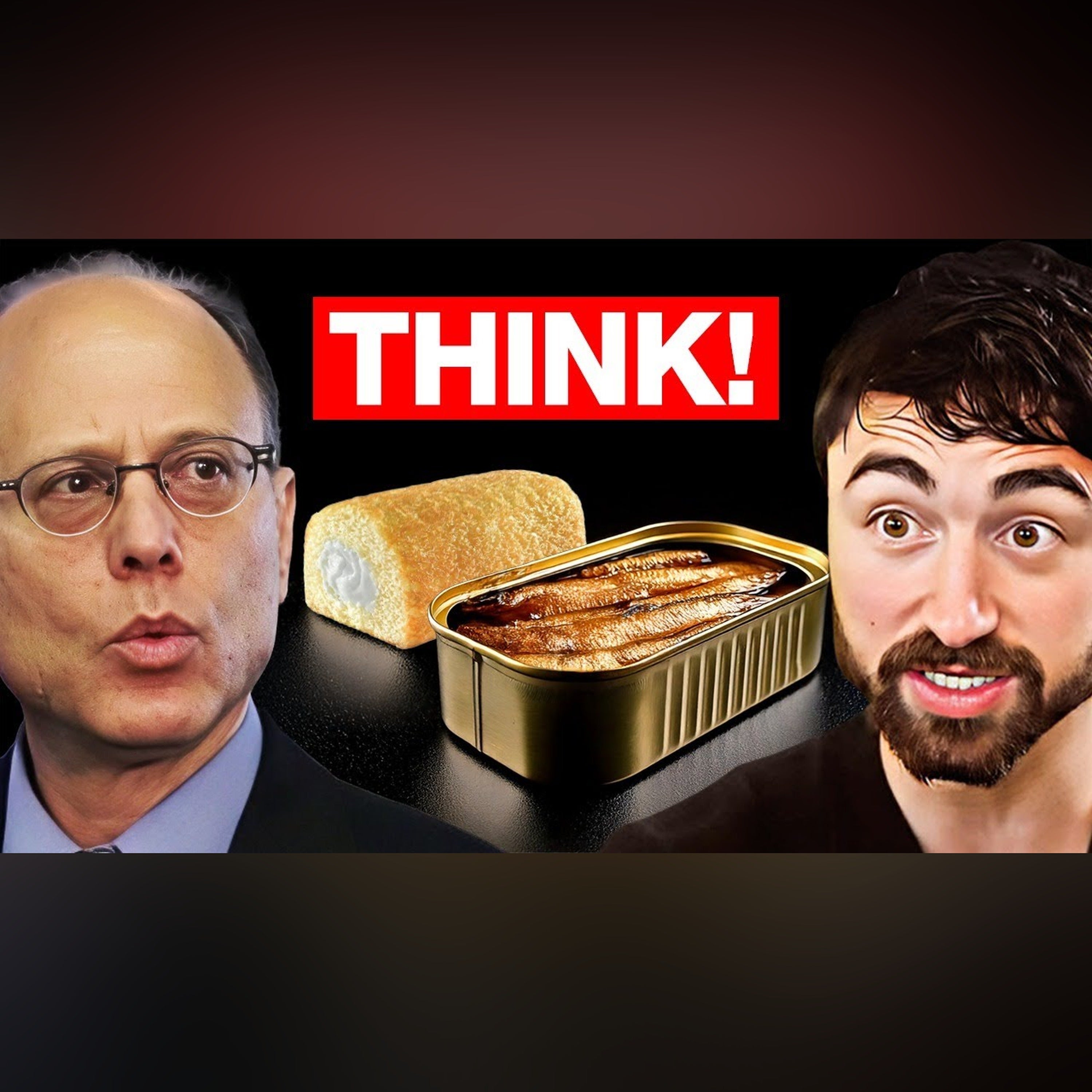
Ultra-processed food - Chris van Tulleken explains how diet impacts your brain
41 min
Listen through the publisher, then discuss the episode here or arrange an in-person Roundtable. Your city determines where to meet.
Roundtables are designed for groups of four, with a shared subject and room for everyone to speak. Come for discussion, with no dating expectation.
Chances are you’ve eaten something ultra-processed already today, but should you be worried? Many of us have a sense that ultra-processed food could be harming our bodies, but what impact does it have on our brains? In this episode of Change Your Mind with New Scientist health Journalists Helen Thomson and Cat de Lange ask whether the food we eat is damaging our mental health, increasing our risk of dementia or even making us age prematurely. With help from doctor, broadcaster and researcher Chris van Tulleken they explore how ultra-processed food really impacts the brain and whether we should be making changes to our own diets. Produced by Emily Bird Get in touch at [email protected] Find out more about Ultra-processed foods at New Scientist: https://www.newscientist.com/article/2519704-how-worried-should-you-be-about-ultra-processed-foods/ Sources: Calories from UPF: https://www.ucl.ac.uk/news/2024/oct/toddlers-get-nearly-half-their-calories-ultra-processed-foods Daniel Lieberman interview: https://www.youtube.com/watch?v=puRaNQpwW6U
Episode information is provided by the publisher. Listening takes place on the publisher’s service.
Today’s guest is David Ludwig, MD, PhD, an endocrinologist, pediatrician, and international thought leader in obesity medicine and metabolic health. He’s also a treasured mentor of mine from my time at Harvard Medical School. In this episode, we discuss his new paper in the New England Journal of Medicine on ultra-processed foods and why “simple” is the enemy of metabolic health. We explore the science of nutrition, weight loss, and food quality, challenging conventional wisdom about diet and metabolism. If you’re courageous enough to listen all the way through, this conversation will expand your perspective, change the way you think about food, and inspire a healthier relationship with eating. New England Journal of Medicine Article: https://www.nejm.org/doi/full/10.1056/NEJMp2508694 David Ludwig MD PhD’s Medium Blog (No Paywall): https://davidludwigmd.medium.com/ultra-processed-food-retold-by-hc-andersen-7a3d2ae60f39 Chapters 0:00 – Meet Harvard Endocrinologist David Ludwig MD PhD 1:
Keto Consult #13: This week Jennifer and I talk all about Food on Keto. We talk about Glucose Testing and how we can use Glucose Testing to biohack ourselves and figure out which Foods on Keto are good and which Foods on Keto are not so good. Amongst Food on Keto we get really into the Keto Diet and Cholesterol and debunk some of the common misunderstandings about Food on Keto and the Keto Diet and Cholesterol. Carbs on Keto, Glucose Testing, Keto Diet and Cholesterol, Food on Keto. We also discuss What is C Reactive Protein?, Why beginning the Keto Diet may make your Liver Enzymes High, Learning How to Fast, Igniting Autophagy and everything you need to know about the Dr. Boz Ratio! Thanks for tuning into my channel. Read more about this topic on my blog: https://bozmd.com/understanding-keto-food-pyramid/ BOOK-LINK - ANYWAY YOU CAN. AUDIBLE: https://adbl.co/2SLLfS1 PAPERBACK= (Affilate link) https://amzn.to/2JqglxS The two most common questions I get ... 1) "Doc, what BLOOD METER do y
Explore how pulling an all-nighter can impact your cognitive function, and find out what happens to your brain when you don't sleep. -- You’re just one history final away from a relaxing spring break. But you still have so much to study! You decide to follow in the footsteps of many students before you, and pull an all-nighter. So, what happens to your brain when you stay up all night? And does cramming like this actually help you prepare for a test? Anna Rothschild explores how a sleepless night impacts your cognitive function. Lesson by Anna Rothschild, directed by Biljana Labović. Animation by Noam Sussman & Ali Kellner, Homework Studio. This video made possible in collaboration with the Bezos Family Foundation Learn more about how TED-Ed partnerships work: https://bit.ly/TEDEdPartner A special thanks to Dr. Mathias Basner, Andrew Fuligni, Adriana Galván, and UCLA Center for the Developing Adolescent who provided information and insights for the development of this video. Support Ou
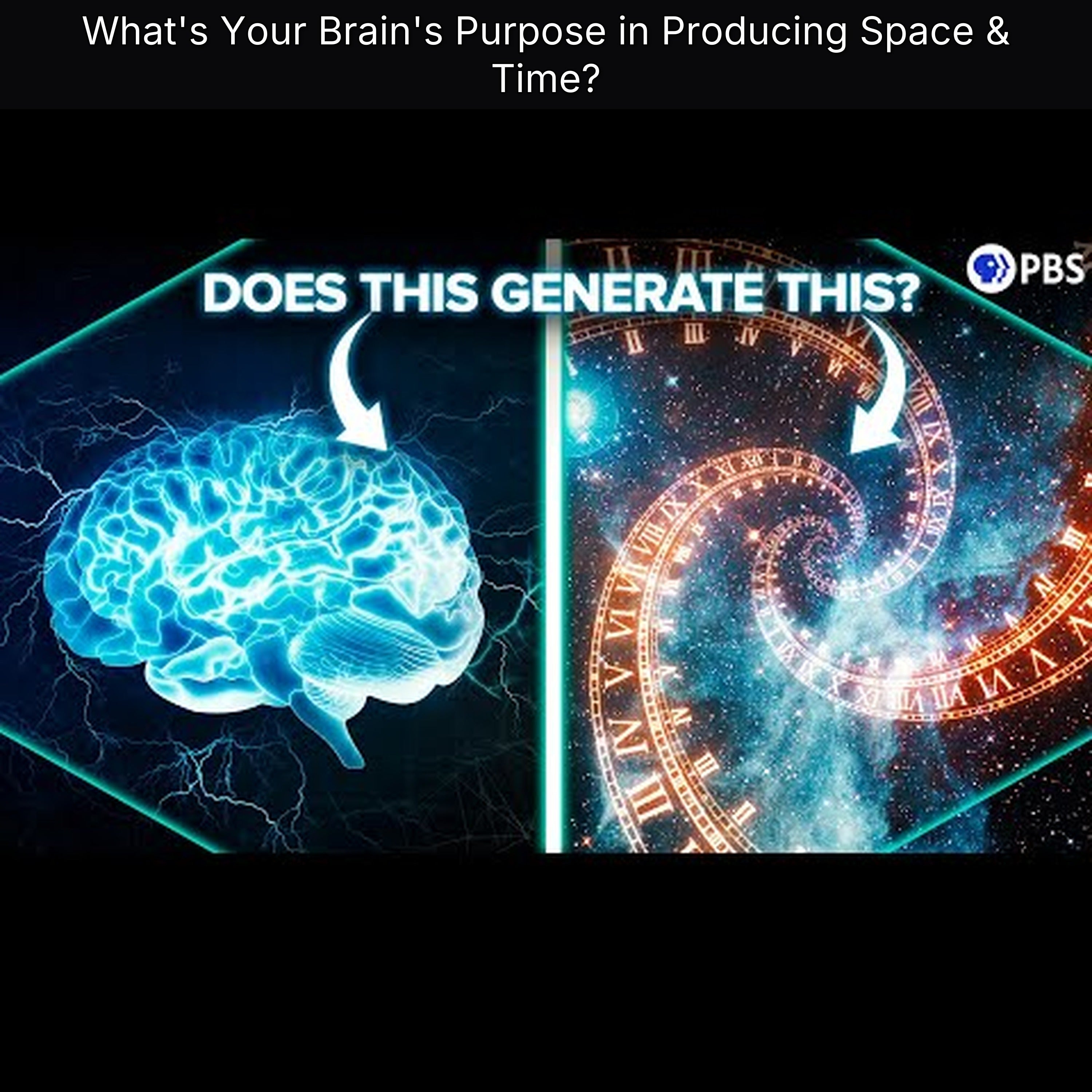
PBS Member Stations rely on viewers like you. To support your local station, go to:http://to.pbs.org/DonateSPACE Sign Up on Patreon to get access to the Space Time Discord! Physics is the business of figuring out the structure of the world. So are our brains. But sometimes physics comes to conclusions that are in direct conflict with concepts fundamental to our minds, such as the realness of space and time. How do we tell who’s correct? Are time and space objective realities or human-invented concepts? Episode Companion Playlist Check out the Space Time Merch Store Search the Entire Space Time Library Here: https://search.pbsspacetime.com/ Hosted by Matt O'Dowd Written by Bahar Gholipour & Matt O'Dowd Post Production by Leonardo Scholzer, Yago Ballarini, Pedro Osinski, Caique Oliveira, Adriano Leal & Stephanie Faria Directed by Andrew Kornhaber Associate Producer: Bahar Gholipour Executive Producers: Eric Brown & Andrew Kornhaber Executive in Charge for PBS: Maribel Lopez Director of P
Happy Sunday! Welcome to Heal Squad’s The Sunday Set Up. Life lessons to help you start the week. How much of success comes down to simply showing up? This week, we talk keeping an open mind, taking chances, and recognizing the doors that open along the way. From Olympic athletes appearing on national television alongside Mercedes Moné to performers who keep showing up week after week hoping for their big break, we explore why success isn't always about talent or luck. Sometimes it's about making connections, putting in the effort, and being willing to try without knowing what we'll get in return. We talk knowing when to stop investing time in people who aren't willing to help themselves, and why even experiences that don't work out can teach us something valuable. The takeaway: don't wait for the perfect moment or expect someone else to make things happen. Be willing to take a chance, walk through the doors that open, and remember that half of life is just showing up. Plus, a little b
Does your relationship feel like home, or does it feel like standing on the edge of something you might lose? In Part 3 of our Relationship Anxiety series, clinical hypnotherapist and former paramedic Martin Hewlett guides you through the process of teaching your nervous system that love doesn't have to hurt to be real. We explore the physical manifestations of anxiety—the tight chest, the 2:00 AM racing mind, and the "stomach drop" when a text takes too long—and provide the tools to "turn down the alarm" of your internal survival response. If you are ready to stop "cherry-picking" evidence of disaster and start building a foundation of trust, this session is for you. In This Episode, We Cover: The Science of Safety: Understanding how your nervous system confuses love with danger. Guided Visualization: A journey into your own "safe room" where you are already enough. Rewiring the Brain: Moving from worst-case disaster reels to the reality of small, daily kindnesses. Breaking the Cycle:
Migraine is much more than a headache. It can bring visual disturbances, sensitivity to light and sound, nausea and days of brain fog, and its unpredictability can make everyday life difficult. In this episode of Change Your Mind with New Scientist, health journalists Cat de Lange and Helen Thomson explore what happens in the brain during a migraine. Joined by Professor Peter Goadsby, a leading migraine researcher, they discuss the condition’s neurological basis, the role of hormones, and the new treatments targeting CGRP. In this episode we also unpack Cat’s own experience with Migraine and sort fact from fiction to tackle some of the internet’s favourite home remedies. Produced by Emily Bird We want to hear from you, get in touch at [email protected] Find out more about migraine at New Scientist https://www.newscientist.com/article/2516371-fresh-understanding-of-the-causes-of-migraine-reveals-new-drug-targets/
Have you noticed that ADHD seems to be everywhere these days? More and more people are talking about it, and diagnoses are on the rise. But does that mean more of us are actually developing ADHD, or are we simply getting better at recognising something that has always been there? We often associate ADHD with childhood hyperactivity, but the condition is more complex, and growing awareness is prompting more people to seek a diagnosis. So what distinguishes ADHD from everyday traits, and what’s happening in the brain? In this episode of Change Your Mind, health journalists Cat de Lange and Helen Thomson explore the science of ADHD. They discuss how it can affect attention, motivation and emotional regulation, why it may be missed in girls and women, and how hormonal changes could influence symptoms. Joining them is neuroscientist Professor Ellie Dommett of King’s College London. Together, they look at what research can tell us about ADHD, the role of medication, and what evidence suggest
Polluters should pay cleanup costs even when the damage occurred many years ago.
Share your view, then see how readers voted. No sign-in required. This poll is shared across stories.
Do you agree or disagree?
Common Quandary
A Common Quandary to discuss
Another conversation to explore, separate from this news story.
Your roommate's partner sleeps over six nights a week. Are they now a roommate?
Your roommate's partner stays almost every night, showers daily, and keeps food in the kitchen. They are pleasant and spend weekends elsewhere, but pay no rent or utilities. The lease limits overnight guests.
When does welcome presence become an obligation to contribute?