Utilizing Personal Projects as a Marketing Channel with Jean Stoffer and Grace Start
67 min
Listen through the publisher, then discuss the episode here or arrange an in-person Roundtable. Your city determines where to meet.
Roundtables are designed for groups of four, with a shared subject and room for everyone to speak. Come for discussion, with no dating expectation.
Season 10 of The Interior Collective Podcast is brought to you by Materio (https://materio.co/interior-collective). Welcome back to The Interior Collective. I'm your host, Anastasia Casey, and today two of my favorite people are back. Jean Stoffer joined us in Season 5 to talk about building a family legacy in design, and it was such an impactful conversation. If you have not listened to it, go back and start there. Today we are picking up where we left off, but going somewhere completely new. Jean and Grace were also keynote speakers at Design Camp last fall, and if you were in the room that day you already know what an extraordinary conversation it was. It’s a privilege to have them back. Here is what I have been thinking about since we last spoke. The Madison, the 10,000 square foot Greek Revival home that started as a flip and ended with Jean and her husband moving in, is widely credited as the moment that put Jean Stoffer Design on the international map. The photos went viral on Instagram, the Magnolia Network came calling. And everything changed. Jean is now doing it again with the Reeds Lake house, a major renovation being documented on YouTube as a monthly series. And Grace has built her own deeply engaged following by sharing the story of the Log Cabin, her family home that started as a vacation rental, across The Established Home, Instagram, and YouTube. What is fascinating to me is that neither of them is doing this casually. There is a real multi-channel strategy behind how these personal projects are shared. Today we are digging into this concept, because personal projects may be the most underutilized marketing tool available to designers at every stage.
Episode information is provided by the publisher. Listening takes place on the publisher’s service.
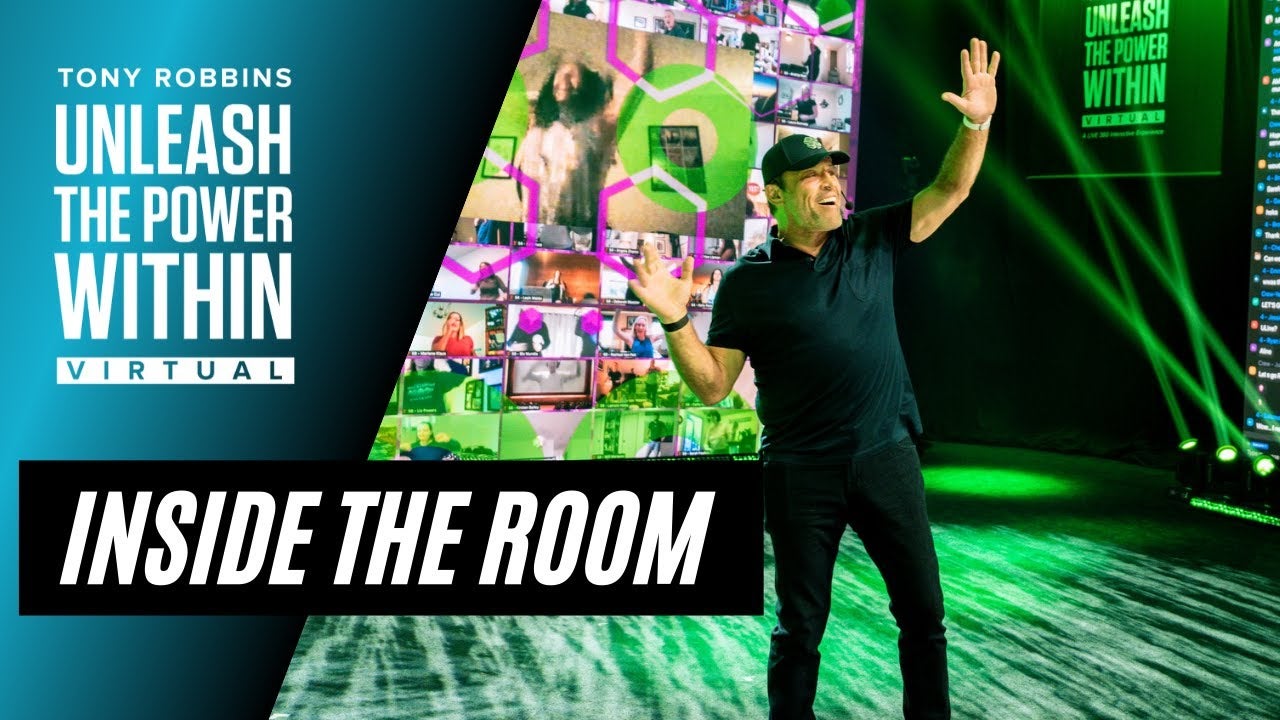
The FIRST Unleash the Power Within of 2022 just wrapped and we had 26,000 households from 151 countries around the world STEP UP and JOIN TOGETHER for one of our largest events in history! Uploaded 23-03-22 Here are some highlights from the week. Enjoy this video for a peek inside our virtual stadium It’s such a privilege to spend time with such DRIVEN, COMMITTED, LOVING SOULS all coming here with a hunger to GROW. For me, getting to hear your goals and witness each of you creating a unique life for yourselves, your loved ones, and your communities is deeply moving. We grow so we have MORE to GIVE, and the truth is, the world is a better, more beautiful and kind place because of people like YOU. If you’ve never experienced an Unleash the Power Within, it can be hard to imagine the HUMAN POTENTIAL and the RAW ENERGY⚡️ that converge over these four days and nights. It's electrifying to feel people from every walk of life, every background, every stage of life UNITE to find a deeper meani
What if your AI agent could find the people you should know before you even start looking? Cosign is building a professional network around reputation and trusted recommendations, and now agents can use that network too. MTS host Sophia Dew sits down with a16z’s David Booth and Cosign’s Bella Nazzari to discuss what they’ve learned since launching Cosign, why traditional profiles often miss the operators doing the most important work, and how the Cosign Awards are surfacing talent through the people willing to vouch for them. They also explore an emerging behavior: people connecting their agents to Cosign to continuously find relevant people, lists, and opportunities, and what professional networking could look like when both humans and their agents participate. Resources: Follow David Booth: https://x.com/davidbooth Follow Bella Nazzari: https://x.com/nazzari Follow Sophia Dew: https://x.com/sophiadew Learn more about Cosign:https://cosign.co/ Connect your agent to Cosign:https://cosi
Force Yourself to Take Control and Organize Your Life – Jim Rohn Motivation | Jim Rohn Fan Academy #jimrohn #motivation #selfdiscipline #organization #success #mindset ► Speaker: Jim Rohn (AI Voiceover by Jim Rohn Fan Academy) Disclaimer: This video is for motivational and educational purposes only. The AI-generated voice is inspired by Jim Rohn’s legendary wisdom on discipline, structure, and personal responsibility. The real Jim Rohn has no affiliation with this channel—this is a fan-created educational project dedicated to spreading his teachings. Uploaded 23-11-25 Your life won’t change until you change it. In this powerful message, Jim Rohn breaks down why taking control of your life is not a suggestion—it’s a requirement for success. Most people stay overwhelmed because they refuse to create order, structure, and discipline. But the moment you force yourself to organize your mind, your habits, your time, and your environment, everything begins to shift. This video will guide you
Europe's Little Anarchy: The Rise and Fall of Neutral Moresnet (https://bookshop.org/a/12343/9781501788147)(Cornell UP, 2026) uncovers the history of Neutral Moresnet: a once-forgotten space without borders, nationalism, or a recognized government. Between 1815 and 1919, this square mile of land wedged between Belgium, the Netherlands, and Germany was home to thousands of people living off the grid, free of taxation and oversight. But they also had no political status, police, legal currency, proper law courts, or government presence in sectors like public health, infrastructure maintenance, or education. Meanwhile, practical control over Neutral Moresnet lay in the hands of the local industry: a for-profit, multinational mining company that, because it owned rights to the land, also held a near monopoly on the supply of high-quality zinc to the rest of the world. Dr. Steven Press explores how the residents of Neutral Moresnet sought to improve their quality of life, appealing to Germa
Adam Grant is one of the most sought after organisational psychologists in the world. He has provided expert advice to many of the world’s greatest business leaders, including Bill Gates and Sheryl Sandberg, equipping them with the mental tools to find motivation and meaning, rethink assumptions, and achieve greatness in their business and personal lives. In January 2024 Grant came to the Intelligence Squared stage for a rare, exclusive London event where he shared his revolutionary framework for how we can all exceed the expectations and aspirations we have set for ourselves. Drawing on his new book Hidden Potential he explained that despite living in a world that tends to admire people who start out with innate talent, there is clear scientific evidence that we can all bridge the biology gap and improve ourselves dramatically. In conversation with economist and FT columnist Tim Harford, Grant wove together groundbreaking evidence, surprising insights, and vivid story telling to take
Wild turkey has a reputation for drying out—and both recipes in this episode are built to beat that. Chef Gavin Jobe of Meribo Restaurant (https://www.meribopizza.com/) stuffs a butterfly-cut breast with a buttery rice-and-pecan roulade and finishes it sous vide. Meanwhile, up in West Virginia, Chris Ellis of Timney Triggers (https://timneytriggers.com/) and Jack Ellis spatchcock a fall bird brined in pickle juice and finish it with homemade turkey neck bone gravy. Together, they crack the code on one of hunting’s toughest table fare challenges. This Gun Talk Hunt is brought to you by Smith & Wesson (https://www.smith-wesson.com/), ZEISS (https://www.zeiss.com/corporate/us/home.html), Shooting Sports Life (https://www.shootingsportslife.com/), Savage Arms (https://savagearms.com/), and Range Ready Studios (https://rangereadystudios.com/). About Gun Talk Hunt Gun Talk Media's Gun Talk Hunt (http://guntalk.com/gun-talk-hunt), with Kevin “KJ” Jarnagin, pairs decades of experience with tod
Season 10 of The Interior Collective Podcast is brought to you by Materio (https://materio.co/interior-collective). Welcome back to The Interior Collective. I'm your host, Anastasia Casey, and I'm so excited to have Heidi Caillier on for another conversation. If you have not listened to her previous episode, go back to Season 2, Episode 1 and start there. It is one of the most listened-to episodes in the show's history for good reason. Heidi is an AD100 designer known for her confident use of pattern, color, and nostalgic detail. Her work is layered, deeply personal, and rooted in a love of vintage, antiques, and handcrafted things. And she has built a business model that blew my mind when I first heard it in detail at Design Camp. Here is the short version: Heidi presents an entire home all at once. Every hard finish, every soft finish, every fixture, every piece of furniture, including the vintage. One presentation. A month of revisions. Then procurement begins and the design is done
New owners should honor commitments to people who already depend on a business or property.
Share your view, then see how readers voted. No sign-in required. This poll is shared across stories.
Do you agree or disagree?
Common Quandary
A Common Quandary to discuss
Another conversation to explore, separate from this news story.
Your best friend is an AI that profits when you stay lonely. Is the friendship real?
A lonely adult considers an AI companion their closest confidant. The service is always patient and supportive, but the company profits when users spend more time engaged with it.
Does a comforting system have a duty to make itself less necessary?