Listen through the publisher, then discuss the episode here or arrange an in-person Roundtable. Your city determines where to meet.
Roundtables are designed for groups of four, with a shared subject and room for everyone to speak. Come for discussion, with no dating expectation.
Have you ever felt a heavy pit in your stomach when you missed a fun birthday party or a trip to the park? That terrible feeling is called FOMO, or the Fear Of Missing Out! But why does our brain do this to us? Join Mira and Finn on Philosophy is Not Boring as they uncover the wild psychological secrets behind FOMO! Did you know this anxious feeling actually comes from ancient cavemen? Thousands of years ago, early humans had to stick with their tribe to survive saber-toothed tigers, so being left out felt like real danger! Fast forward to 1954, and psychologist Leon Festinger discovered that we naturally compare ourselves to others like a built-in thermometer. We even learn about a Harvard student named Patrick McGinnis who actually invented the word "FOMO" in 2004! But don't worry, you don't have to feel left out forever. Discover the amazing superpower of JOMO—the Joy Of Missing Out! Find out how putting on comfy pajamas and enjoying the present moment can turn that fear into total happiness. Tune in and learn how to master your own mind!
Episode information is provided by the publisher. Listening takes place on the publisher’s service.
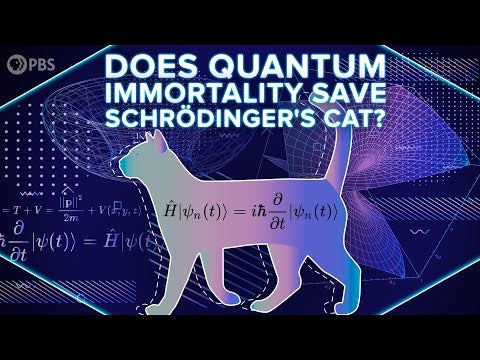
PBS Member Stations rely on viewers like you. To support your local station, go to: http://to.pbs.org/DonateSPACE ↓ More info below ↓ Uploaded 03-03-20 Check out Antarctic Extremes on PBS Terra: https://www.youtube.com/watch?v=EvRAuy1ZmTc Sign Up on Patreon to get access to the Space Time Discord! Sign up for the mailing list to get episode notifications and hear special announcements! Check out the Space Time Merch Store To quote eminent scientist Tyler Durden: "On a long enough timeline, the survival rate for everyone drops to zero." Actually… not necessarily true. If the quantum multiverse is real there may be a version of you that lives forever. Hosted by Matt O'Dowd Written by Matt O'Dowd Graphics by Leonardo Scholzer, Yago Ballarini, and Pedro Osinski Directed by: Andrew Kornhaber Executive Producers: Eric Brown and Andrew Kornhaber End Credits Music by J.R.S. Schattenberg: https://www.youtube.com/channel/UCRl6-nb4iOnsij-vnpAjp0Q If we can’t ever peer into these other realities t
When we choose to be right, we so often sacrifice connection with the people we love most. In this practice, Sage Robbins explores the quiet but powerful shift from rightness to openness especially in the moments we're hurting, feeling stuck, or wanting to prove our point. She shares how our own need to be right can become a kind of prison, and how each of us already holds the key to open it: our willingness to catch ourselves, to soften, and to simply say, "I missed. I'm sorry. I can only imagine what that felt like for you." Uploaded 19-07-26 This is an invitation to loosen the grip of righteousness, to allow the people in our lives to be all of who they are, and to return home to connection, intimacy, and our own true nature. A gentle reflection to sit with: • What situation, or person, have I been defending? • What story have I been protecting? • Who am I being asked to be, and what becomes possible as I soften my lens? Notice what comes up. Honor your own timing. And afterward, yo
Can you rewire your brain to turn down chronic pain? Your pain is real, but your brain decides how loud that pain feels and new science shows that self-hypnosis may offer a new route to pain relief. One that goes beyond relying on pills alone. In today’s episode, Stanford psychiatrist Dr. David Spiegel, who has spent decades researching pain, explains how the brain controls pain. You’ll learn why chronic pain can be worsened by fear, anxiety and poor sleep. David explains how pain signals travel from your body to your brain, and why the brain can turn them up or down. He also shares how tools like hypnosis can help with pain management. By the end of the episode, you’ll have a simple 7-step self-hypnosis exercise for drug-free pain relief you can try at home. Build healthy habits. Download the ZOE app today Join ZOE (https://zoe.com/buymembership) Follow ZOE onInstagram (https://www.instagram.com/zoe/). Timecodes 00:00 Intro 01:49 Is your pain really in your brain? 09:07 Can't sleep? H
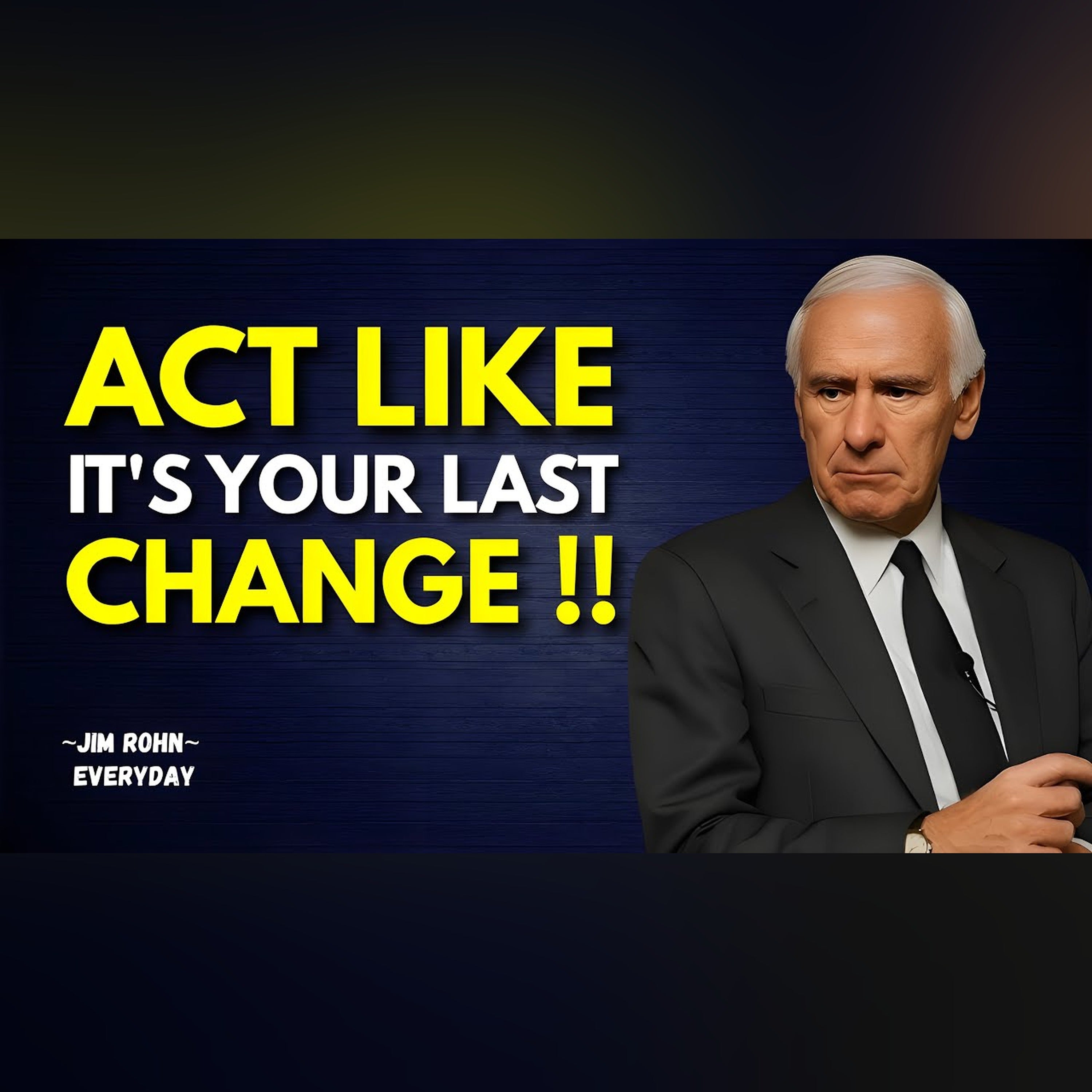
Live As If Today Is Your Last, But Build As If You'll Never Stop | Jim Rohn Motivation Life is short—but your legacy can last forever. In this powerful Jim Rohn motivational video, you’ll discover the perfect balance between living fully in the present and building relentlessly for the future. Uploaded 12-10-25 Jim Rohn teaches that true success comes from urgency and vision combined — living every day with purpose, gratitude, and action, while never losing sight of the bigger picture. When you embrace both, you stop wasting time, start creating momentum, and live each day with meaning. In this video, you’ll learn: How to live intentionally and appreciate every moment. Why long-term vision is the foundation of lasting success. How to balance daily joy with disciplined growth. The mindset that helps you make every day count. Why consistency is the key to building something that endures. Key Topics ● ● Purpose – Live with intention and build a life that matters. ● Discipline – Stay focus
Immerse yourself in 10 minutes of the best calming meditation music, designed to help you find focus and tranquility. As you listen to this soothing composition, allow the gentle melodies and serene tones to guide you into a state of deep relaxation and heightened awareness. Close your eyes, take a deep breath, and let go of any distracting thoughts or external worries. Allow the music to create a peaceful atmosphere, where your mind can find stillness and clarity. With each note and melody, feel the tension melting away from your body and mind. Let the music wash over you, bringing a sense of calm and centeredness. Allow it to anchor your attention, enabling you to focus on the present moment. As you tune in to the subtle nuances of the music, feel your mind becoming more attuned and receptive. Notice how your breathing naturally slows down, guiding you into a more relaxed and peaceful state. During these 10 minutes, let the calming meditation music become your refuge, a sanctuary of
Get the 200+ Page Optimal Living Daily Workbook (PDF) - Free. Want to turn today's episode into an actionable plan? Episode 4238: Karl Staib explains microgratitude, the practice of setting up a grateful mindset before an interaction and looking back on it with appreciation afterward. He shares five small ways to feel it each day, from appreciating something about a person before greeting them to smiling at everyday things, and how a gratitude journal helps the habit stick. Read along with the original article(s) here: Quotes to ponder: "The idea of microgratitude is to set yourself up for gratitude before you even enter a situation." "If you can plant little seeds of gratitude and positivity throughout your day, you'll have a better time and get so much more out of each experience." "It's all about looking at small things in life and seeing all the amazing opportunities they offer if you are willing to appreciate them." We spend so much of our lives caught up in our thoughts... that w
Have you ever seen a wobbly puppy or a smiling human baby and felt an overwhelming urge to squeeze their chubby cheeks? You aren't just being nice—your brain is being mathematically hacked! In 1943, an animal researcher named Konrad Lorenz made an incredible discovery. He realized that human babies, puppies, and kittens all share the exact same physical traits: giant oversized heads, huge round eyes placed low on the face, and clumsy, wobbly movements! He named this scientific blueprint the "Kindchenschema," or baby schema. But why does this matter? Evolutionary psychologists discovered that this is actually an ancient survival trick! When you see these specific "cute" features, your brain releases a feel-good chemical called dopamine. This evolutionary superpower acts like mind control, forcing grown-ups to protect, cuddle, and take care of vulnerable babies! Today, animators, toy designers, and cartoonists use these exact mathematical rules to create beloved characters (even Mickey M
Have you ever wondered what love actually is? Is it a kind of magic, or is it a recipe you can learn? Step back in time to 17th-century Amsterdam to meet a brilliant philosopher named Baruch Spinoza! By day, Spinoza had the super cool job of grinding glass lenses for early microscopes and telescopes. But in his quiet room, he spent his time polishing amazing ideas to help humans see themselves more clearly! Spinoza believed that our feelings weren't just random monsters that attack us, but things that make sense like math or science. In his famous book Ethics, he wrote a mind-blowing formula: love is simply joy caused by something outside of us! Whether it's your pet dog, a warm chocolate chip cookie, or a huge hug, they give you joy, and your mind naturally loves them for it! But what about hate? Spinoza taught that hate shrinks our world and drains our battery. His amazing secret weapon to defeat it? Understanding! Discover how acting like a scientist with your emotions can help you
Have you ever wondered what it would take to be the most respected teacher in an entire ancient city? Meet Hypatia of Alexandria! Born over 1,600 years ago in Roman Egypt, Hypatia learned maths and astronomy from her father Theon, then outshone him to become the city's leading teacher, lecturing in public in a philosopher's cloak. Students travelled from all over the Mediterranean to hear her teach that studying maths and the stars lifts your mind toward the truth. She even helped one of them, Synesius, design an astrolabe, a star-mapping instrument, and he loved her so much he called her his mother, his sister and his teacher. Join Mira and Finn on Philosophy's Not Boring as they explore the life of one of history's greatest thinkers, and why the world still remembers her today.
Public funding for a small group can be justified when the wider community also benefits.
Share your view, then see how readers voted. No sign-in required. This poll is shared across stories.
Do you agree or disagree?
Common Quandary
A Common Quandary to discuss
Another conversation to explore, separate from this news story.
A new email address earns another free month. How many free trials are too many?
A streaming service offers a free month to every new account and makes cancellation deliberately confusing. You discover that slightly different email addresses let you repeat the trial indefinitely without lying about your identity.
Must customers respect the spirit of rules designed to manipulate them?