Listen through the publisher, then discuss the episode here or arrange an in-person Roundtable. Your city determines where to meet.
Roundtables are designed for groups of four, with a shared subject and room for everyone to speak. Come for discussion, with no dating expectation.
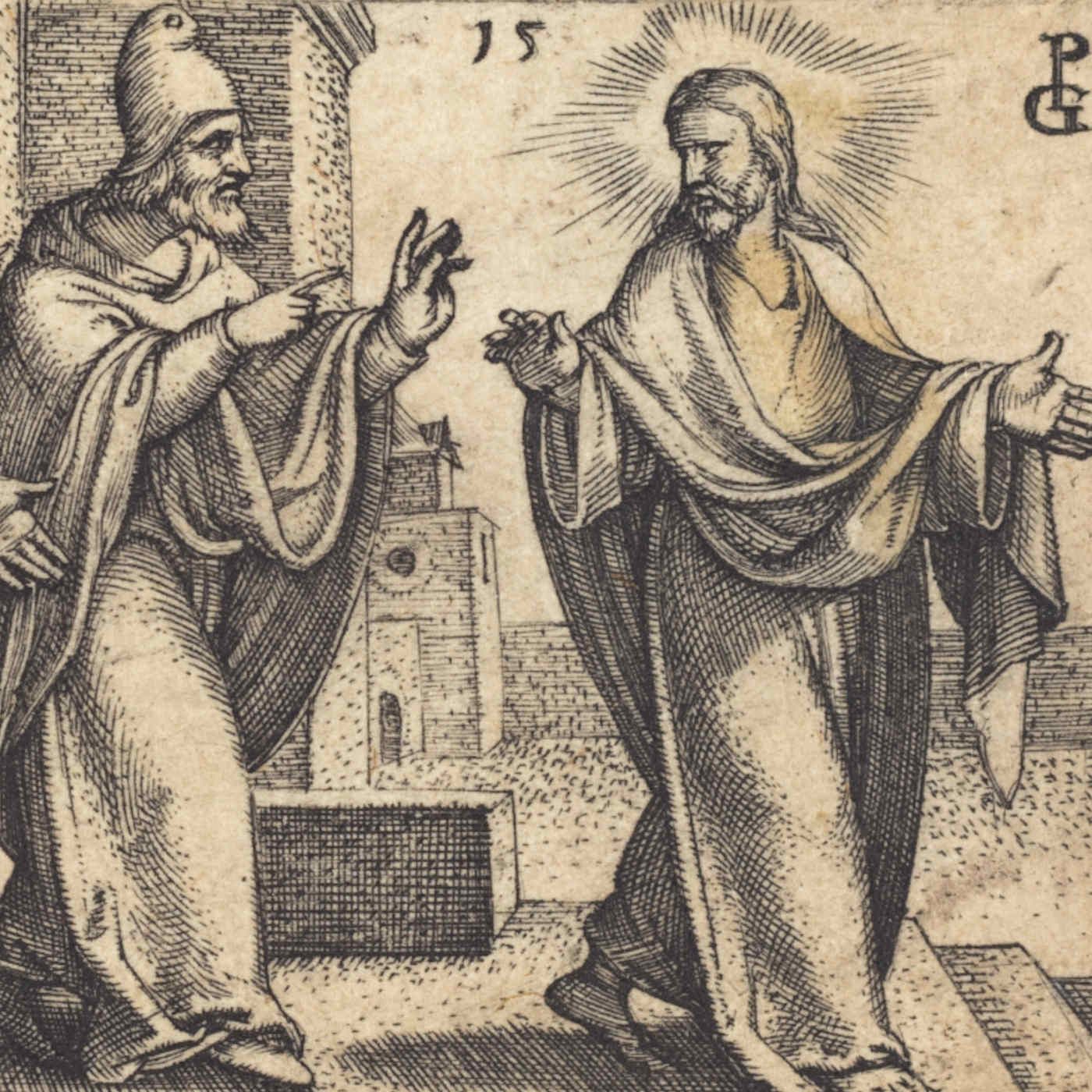
In this powerful study of Galatians, Gary explores Paul's uncompromising defense of the Gospel of Grace and the dramatic disagreements that challenged the early Christian Church. Why did Paul insist that his Gospel came directly from Jesus Christ? What happened when Jewish traditions collided with the freedom offered through Christ? And what can the Jerusalem Council teach us about salvation, grace, and the dangers of adding requirements to the Gospel?
Episode information is provided by the publisher. Listening takes place on the publisher’s service.
The great message of Christianity is that Christians are not only saved from their sin and made right before a holy God, but they are made new creatures as the first fruits of the new creation in Christ. In this sermon on Ephesians 5:3–5 titled “Distinct Roles of Church and State,” Dr. Martyn Lloyd-Jones demonstrates how Scripture undercuts all doctrines of antinomianism, because by the power of the Holy Spirit all who are true believers are renewed and transformed daily through God’s grace. For it is the gospel that truly transforms fallen men and women; it alone can overcome the depravity of fallen human nature and make them new in Christ. This is why all attempts to make people moral without the gospel fail to address the deepest need of humanity. When the church becomes more concerned with moralism than the gospel, it loses the focus of its mission. This has often happened throughout the history of the church, and today many are repeating this error. The remedy to this is to see th
As soon as someone says “generosity,” you probably think money. But according to the Bible, generosity is more radical than money. The Bible teaches that generosity should be pervasive in all parts of our lives. Money is only part of it. It’s possible to be financially generous and not radically generous. Because radical means the radix. It means the heart. It means the depth. We’re going to ask three things about this passage in Luke: 1) what is the source of radical generosity? 2) what is the sign of radical generosity? and 3) what is the key to becoming radically generous? This sermon was preached by Dr. Timothy Keller at Redeemer Presbyterian Church on September 30, 2012. Series: Generosity: Studies from the Gospel of Luke. Scripture: Luke 18:9-17.
Read Online (https://catholic-daily-reflections.com/2026/11/20/questioning-god/) Questioning God Some Sadducees, those who deny that there is a resurrection, came forward and put this question to Jesus, saying, “Teacher, Moses wrote for us, If someone’s brother dies leaving a wife but no child, his brother must take the wife and raise up descendants for his brother. Now there were seven brothers…” Luke 20:27–29 After entering Jerusalem for the Passover and cleansing the Temple, Jesus returned each day to teach within its courts. The people warmly received Him, hanging on His every word. Yet the religious leaders, fearful of His influence, deliberately and methodically sought to trap Him, discredit Him, and destroy Him. First, the chief priests, scribes, and elders challenged His authority, questioning His right to drive out the moneychangers and those selling animals for sacrifice. He declared they had turned His Father’s house into a den of thieves. When that ploy failed, the leaders
The debate over Christian nationalism raises some uncomfortable questions about faith, politics, and the role of government. Al, Zach, John Luke, and Christian examine how Christianity transformed the Roman Empire and why the early church flourished despite intense persecution. The guys also revisit the Garden of Eden, questioning whether Adam's failure to protect Eve was the first sin and what his actions reveal about responsibility and obedience. They consider what history teaches us about the dangers of unchecked power and why Christians must put their allegiance to God's kingdom above any earthly government. In this episode: Genesis 2, verses 15–17; Genesis 3, verses 1–7; Daniel 2; John 1, verses 4–5; Matthew 5, verses 27–30; Matthew 28, verses 18–20; John 11, verses 49–52; Luke 23, verses 6–12; Galatians 3, verse 28; 1 Timothy 2, verses 11–14; Romans 13, verses 1–7 Today’s conversation is about Lesson 6 of Western Heritage: From the Book of Genesis to John Locke taught by various
Ephesians E2 — The great surprise of the Gospel is that Jesus is not just the messianic king of ancient Israel but the savior and Lord of all humanity. So as the apostle to the Gentiles, Paul saw it as his job to create communities of people following Jesus who were intentionally multi-ethnic and diverse in every sense of the word. In this second teaching of a five-part series, Tim teaches from Ephesians 3, where Paul explores the new people group that has come into existence because of Jesus’s life, death, and resurrection. Tim gave this message at Door of Hope Church in Portland, Ore., on October 20, 2013. OFFICIAL EPISODE TRANSCRIPT View this episode’s official transcript. (https://d1bsmz3sdihplr.cloudfront.net/media/emsb-ephesians-e2-final-transcript.pdf) REFERENCED RESOURCES SHOW MUSIC “Nob Hill Instrumental” by Drexler SHOW CREDITS Aaron Olsen edited and remastered today's episode. JB Witty writes our show notes. Powered and distributed by Simplecast. Hosted by Simplecast, an Ads
Luke 20: 27-40 - 'In God all men are alive.' Catechism of the Catholic Church Paragraphs: - 330 (In 'Who are Angels'?) - As purely spiritual creatures angels have intelligence and will: they are personal and immortal creatures, surpassing in perfection all visible creatures, as the splendor of their glory bears witness. - 575 (In 'Jesus and Israel') - Many of Jesus’ deeds and words constituted a “sign of contradiction,” but more so for the religious authorities in Jerusalem, whom the Gospel according to John often calls simply “the Jews,” than for the ordinary People of God. To be sure, Christ’s relations with the Pharisees were not exclusively polemical. Some Pharisees warned him of the danger he was courting; Jesus praises some of them, like the scribe of Mark 12:34, and dines several times at their homes. Jesus endorses some of the teachings imparted by this religious elite of God’s people: the resurrection of the dead, certain forms of piety (almsgiving, fasting, and prayer), the c
In Esther Chapter 6, we witness one of the most remarkable reversals in the Bible. As Haman prepares to destroy Mordecai, King Xerxes discovers an overlooked act of loyalty that sets God's extraordinary plan into motion. What follows is a stunning lesson in pride, humility, divine providence, and God's perfect timing. The very man Haman wanted to destroy is publicly honored, while Haman is forced to lead the celebration!
The Bible was banned. Copies were burned. Men were imprisoned and executed. Yet God's Word survived. How did the Bible make its way through centuries of persecution, political power struggles, and religious controversy to become the book we hold in our hands today? Gary Stearman welcomes filmmaker Chris Pinto to discuss his documentary, A Lamp in the Dark: The Untold History of the Bible.
What led J.B. Hixson from a young boy discovering his faith to becoming one of the most recognizable voices in Bible prophecy? In this episode of Signs and Seasons with Karen, JB shares the story behind his ministry, his years as a pastor and seminary professor, and the experiences that transformed his understanding of Bible prophecy and world events.
Security claims about important digital products should face independent testing.
Share your view, then see how readers voted. No sign-in required. This poll is shared across stories.
Do you agree or disagree?
Common Quandary
A Common Quandary to discuss
Another conversation to explore, separate from this news story.
Someone reserves the best gym machine with a towel. When may you move it?
At a crowded gym, a towel has occupied the most popular machine for fifteen minutes while its owner chats across the room. Gym rules prohibit reserving equipment, but everyone occasionally steps away between sets.
How long may convenience masquerade as continued use?