What light can teach us about the universe - Pete Edwards
6 min
Listen through the publisher, then discuss the episode here or arrange an in-person Roundtable. Your city determines where to meet.
Roundtables are designed for groups of four, with a shared subject and room for everyone to speak. Come for discussion, with no dating expectation.
View full lesson: http://ed.ted.com/lessons/what-light-can-teach-us-about-the-universe-pete-edwards Uploaded 31-07-14 Humanity has long been looking at the universe and asking the big questions: How did it begin? How will it end? Cosmologists are searching hard for the answers, but where do they even start? The answer is light. Pete Edwards outlines the six unique messages that light carries which, when put together, disclose a stunning amount of information to astronomers. Lesson by Pete Edwards, animation by Bevan Lynch.
Episode information is provided by the publisher. Listening takes place on the publisher’s service.
Thanks to Brilliant for supporting PBS. Learn more at: https://www.brilliant.org/spacetime Uploaded 02-12-19 PBS Member Stations rely on viewers like you. To support your local station, go to: http://to.pbs.org/DonateSPACE The universe is big, really, really big. Although according to a new paper, it may literally be infinitely smaller than we previously thought. Sign Up on Patreon to get access to the Space Time Discord! Check out the Space Time Merch Store Hosted by Matt O'Dowd Written by Matt O'Dowd Graphics by Leonardo Scholzer and Adriano Leal Directed by: Andrew Kornhaber Executive Producers: Eric Brown and Andrew Kornhaber End Credits Music by J.R.S. Schattenberg: https://www.youtube.com/channel/UCRl6-nb4iOnsij-vnpAjp0Q Every time you walk out the door, light from the Big Bang strikes your face, enters your eyes. This is the cosmic microwave background radiation - the left-over heat-glow from the very early universe. We can’t see this microwave light with our eyes, but we can ca
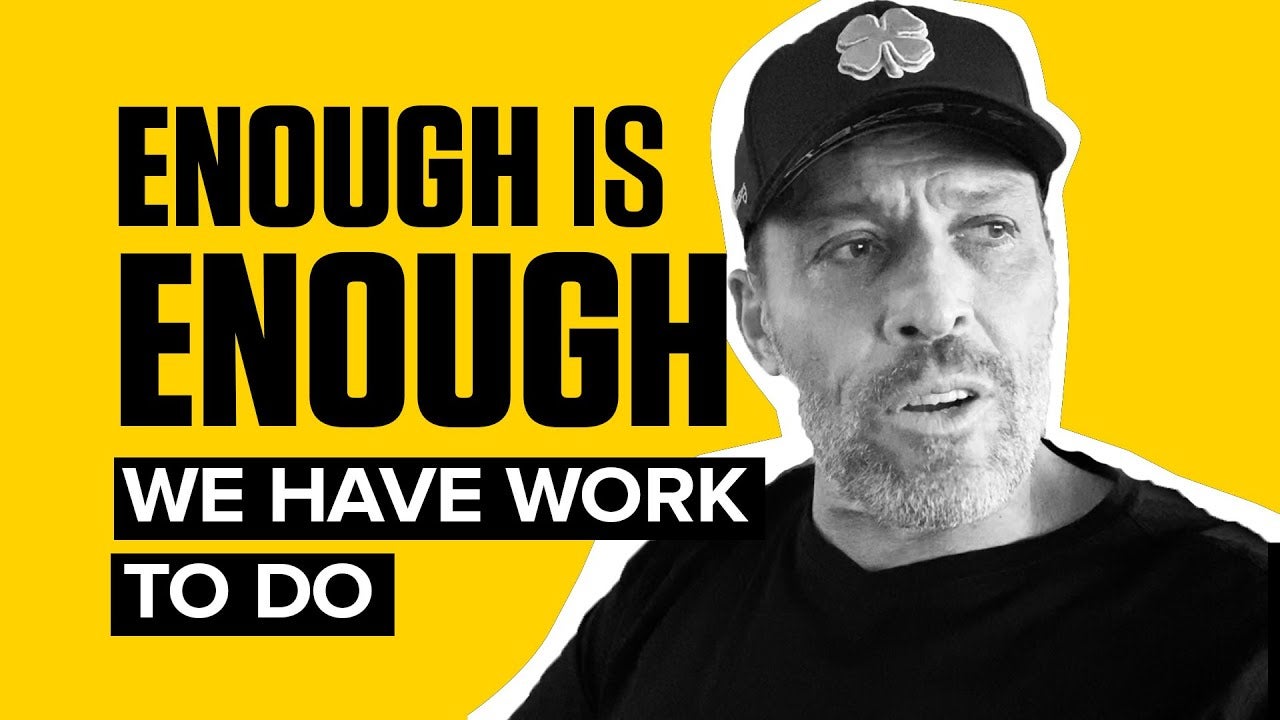
ENOUGH IS ENOUGH. WE HAVE WORK TO DO. Uploaded 04-06-20 Throughout my 40+ year career, I’ve been obsessed with helping people transform their quality of life. This can only be done when we realize: THINGS ONLY GET BETTER WHEN WE GET BETTER. Things only change when WE change. My call has ALWAYS been to RISE to the challenge that life brings to us. To find a way to do better, not only for ourselves and our own family, but for our communities, and the greatest good of our brothers and sisters on the planet. The unconscionable murder of George Floyd and countless others before him are an urgent call to ALL OF US in this country and all over the globe. I AM COMMITTED to doing all I can to be a part of the solution, and to help begin to put a STOP to racial injustice and violence, and the tragic loss of innocent life. If you’re reading this and are anything like me, you know the power of a TRUE COMMITMENT. ️ Join me now in this commitment to JUSTICE, HARMONY, COMPASSION, HIGHER TRUTH, LOVE,
At a concert, most listeners hear the melody. A trained singer hears the breath control that carries a difficult phrase. At a football match, the crowd follows the ball while a coach notices the defender who quietly closes off an attack. Knowing more changes who seems extraordinary. Audiences have traditionally borrowed that knowledge from commentators, critics, and friends, whose explanations help determine which achievements receive applause and which pass unnoticed. AI could make that guidance a routine part of watching almost anything. Tools already track players’ movements, analyze musical pitch and timing, and explain technical processes. As those abilities become integrated into broadcasts and personal assistants, viewers could ask what made a particular passage difficult or why a player chose one route over another. Instead of receiving occasional commentary, someone could explore an entire performance with detailed explanations tailored to their questions. The consequential sh
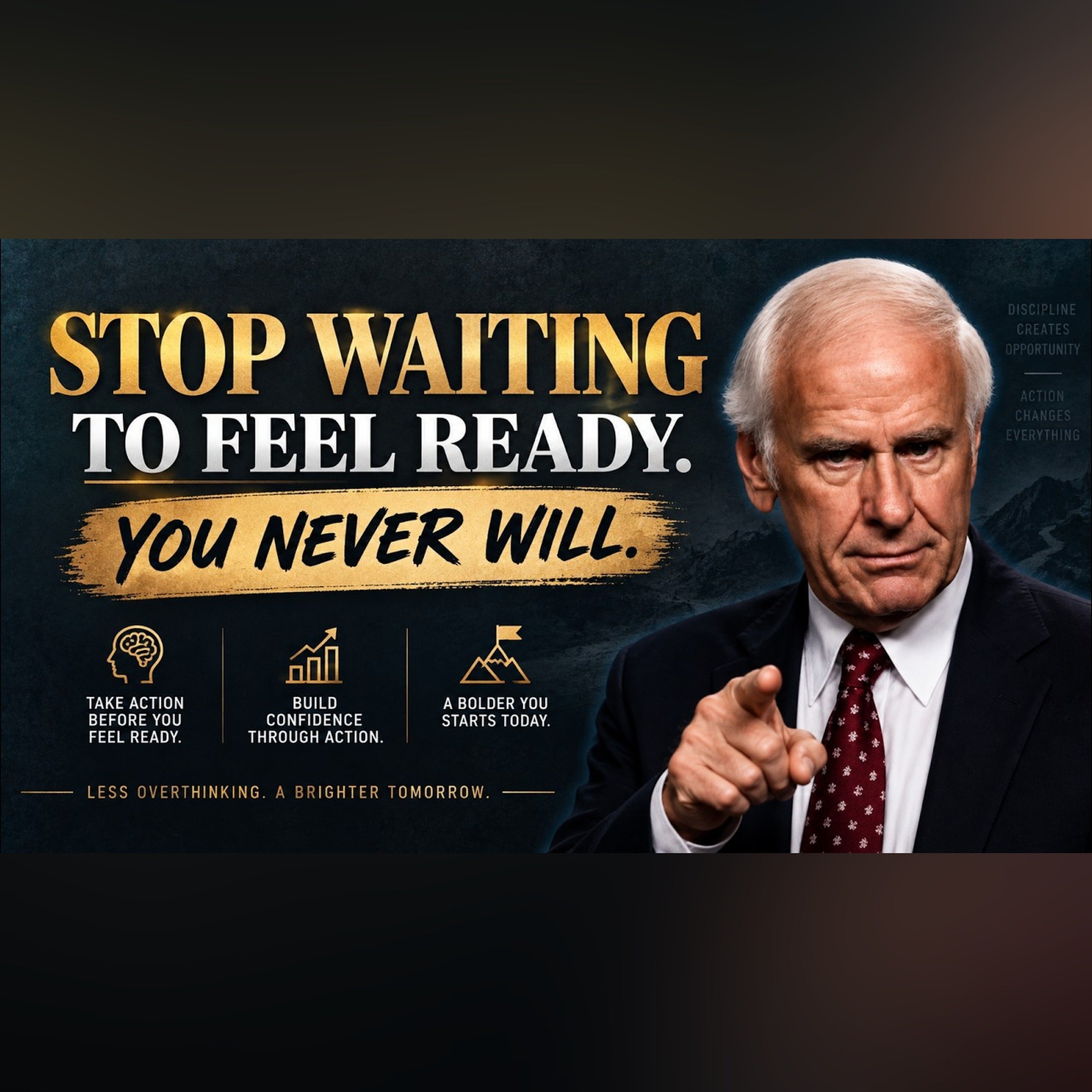
The gate doesn't have a lock. It doesn't have a key. There's nobody standing on the other side waiting to wave you through. Uploaded 09-09-26 The gate was open the whole time. You just couldn't see it, because you were staring at the ground, waiting for your feet to feel light. You've been standing there for years, warming up for a race you never run. Here is the truth: readiness is not a feeling you receive. It is a decision you make. The people who built the things you wish you'd built didn't feel more ready than you do — they just stopped waiting to feel it. This seminar unpacks the single mechanic behind why you never feel ready — and why willingness, not readiness, is what actually builds a life. CHAPTERS 0:00 Intro — The gate was open the whole time 2:04 The classroom lie: prepare, then perform 4:24 Fear wearing the mask of wisdom 6:36 Readiness is a quality you bring, not a state you arrive at 8:24 The glass never fills — skill comes from use 11:36 The cruel arithmetic of the wa
For some reason, it did not stop him.Now I just want to ask you something real quick to put you in the mind of a bear. If you found some of your favorite food just left out and you somehow, like me most of the time, just couldn’t resist the temptation. Bears live and eat by what is detected by their noses, so logically, after eating its fill, a proper expectation would be that the bear would go sleep off a large meal upwind of where its food was cached. The wind carries both scent and sound to the bear as it rests and acts as an alarm to it to defend its cache. The hide was still up in the birch, untouched. He dropped his packboard at the base of the tree and glanced up to see where he would need to climb. Movement in the brush, some three hundred feet away, caught his eye. Two bears, roughly thirty feet apart, moved through the brush. From their color and build, he identified them as grizzlies, also called coastal brown bears.Up to that day, every bear he had met in the wild had chose
What if the change you've been asking for is already knocking? In this best-of compilation from The Positive Mindset Podcast, Henry Lawrence pulls together his best moments on letting go and being restored to who God made you to be, from six episodes: the stirring you feel when it's time to change; an opening prayer for anyone who feels alone right now; why your higher self is the true you, the one designed by God, not a more productive version of you; the cast on a broken arm that protected you and now limits you; the old painted-over furniture that gets restored, not rebuilt; why so much of our tiredness comes from holding too tight; how God moves what you couldn't; why everything is borrowed; and choosing to keep believing when it feels like a war broke out around you. It includes a prayer near the start and closes with the rising tide, a blessing and a thank-you. In this episode: • "That stirring is the truth knocking on a door that you've been leaning on with your whole weight." •
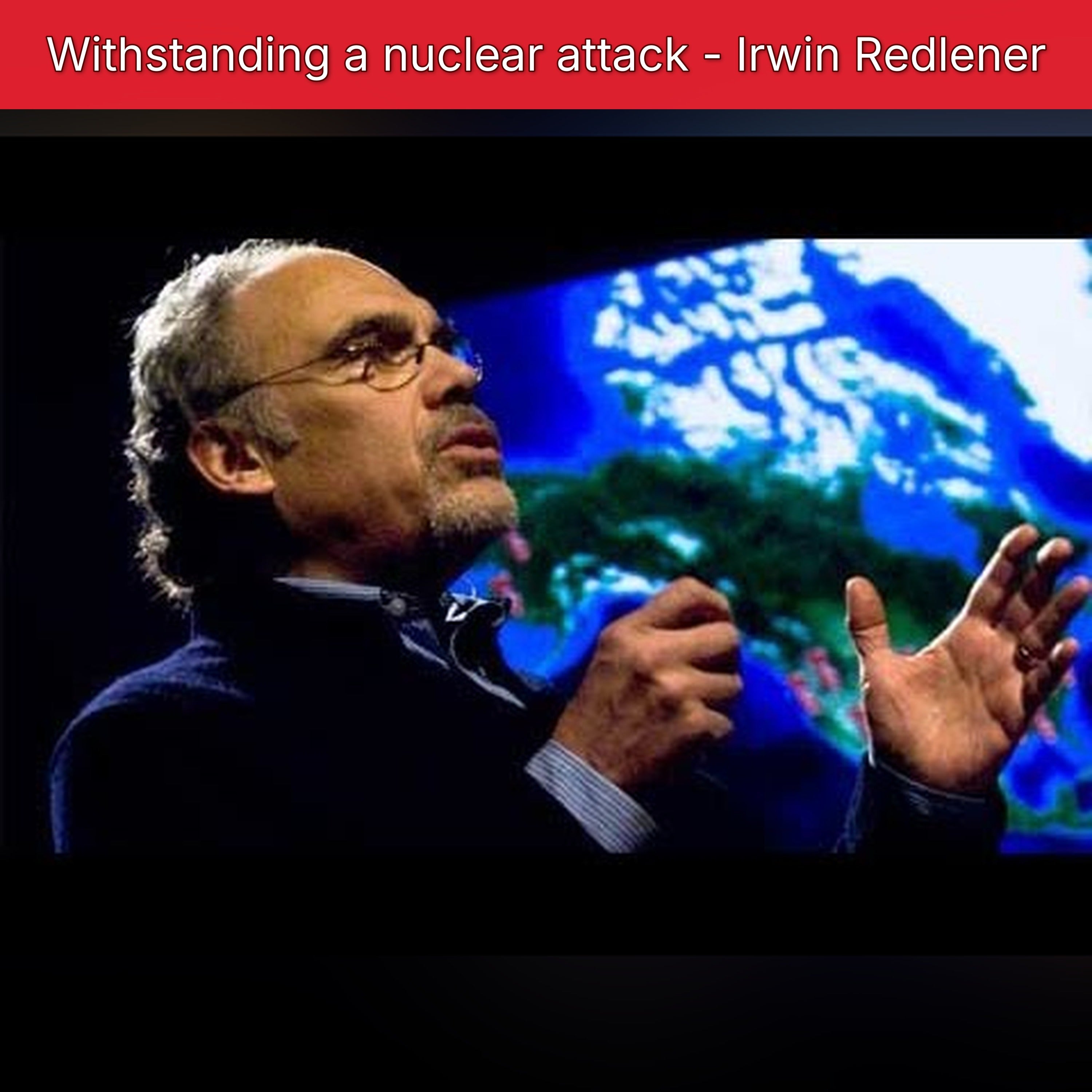
View full lesson: http://ed.ted.com/lessons/surviving-a-nuclear-attack-irwin-redlener The face of nuclear terror has changed since the Cold War, but disaster-medicine expert Irwin Redlener reminds us the threat is still real. He looks at some of history's farcical countermeasures and offers practical advice on how to survive an attack. Talk by Irwin Redlener.
Explore what makes polio so dangerous, what is causing the 21st century resurgence of cases, and how we can eradicate the disease. -- In 1952, polio was everywhere: killing or paralyzing roughly half a million people annually. Yet just 10 years later, paralytic polio cases in the US dropped by 96% and we were on track to get rid of polio for good. But in recent years, the virus started striking back. So, what’s behind these recent spikes? Explore the dangers of poliovirus and the possibility of eradicating this deadly disease. Directed by Anton Bogaty. This video made possible in collaboration with Gates Ventures Learn more about how TED-Ed partnerships work: https://bit.ly/TEDEdPartner A special thanks to Ananda Bandyopadhyay, Amber Zeddies, and Kathleen O'Reilly who provided information and insights for the development of this video. Support Our Non-Profit Mission ---------------------------------------------- Support us on Patreon: http://bit.ly/TEDEdPatreon Check out our merch: htt
Todd Humphreys forecasts the near-future of geolocation when millimeter-accurate GPS "dots" will enable you to find pin-point locations, index-search your physical possessions ... or to track people without their knowledge. And the response to the sinister side of this technology may have unintended consequences of its own. (Filmed at TEDxAustin.) Uploaded 26-06-13 Talk by Todd Humphreys.
Countries should consider serious effects on people abroad when setting domestic policies.
Share your view, then see how readers voted. No sign-in required. This poll is shared across stories.
Do you agree or disagree?
Common Quandary
A Common Quandary to discuss
Another conversation to explore, separate from this news story.
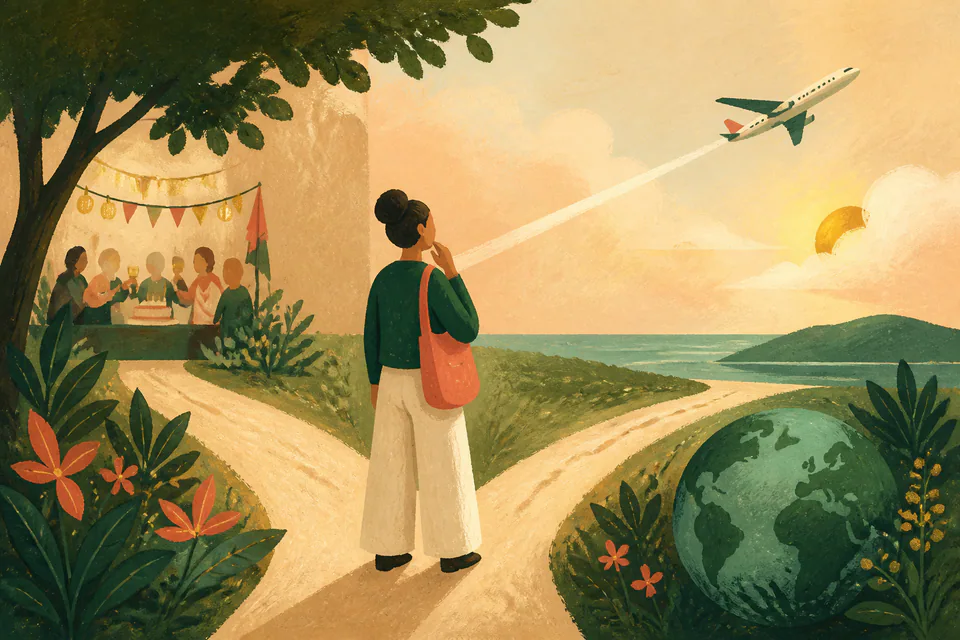
You lecture everyone about climate change—then get invited on a dream flight. Do you go?
A close friend living overseas invites you to an important celebration. Flying is affordable but carbon-intensive. Your individual decision will not determine whether the flight operates, yet it conflicts with commitments you publicly encourage others to make.
When is a small personal contribution to a large harm morally significant?