What we can learn from galaxies far, far away - Henry Lin
10 min
Listen through the publisher, then discuss the episode here or arrange an in-person Roundtable. Your city determines where to meet.
Roundtables are designed for groups of four, with a shared subject and room for everyone to speak. Come for discussion, with no dating expectation.
View full lesson: http://ed.ted.com/lessons/what-we-can-learn-from-galaxies-far-far-away-henry-lin Uploaded 27-02-14 In a fun, excited talk, teenager Henry Lin looks at something unexpected in the sky: galaxy clusters. By studying the properties of the universe's largest pieces, says the Intel Science Fair winner, we can learn quite a lot about our own world and galaxy. Talk by Henry Lin.
Episode information is provided by the publisher. Listening takes place on the publisher’s service.
In this calm and sleepy facts episode, we look up and explore the enormous, slowly turning galaxy that contains everything humanity has ever known. We begin with what the Milky Way actually is, a barred spiral galaxy roughly 100,000 light years across, home to somewhere between 100 and 400 billion stars, one of which is our own Sun, quietly orbiting about two thirds of the way out from the center. We trace the galaxy's structure from the dense central bulge and its bar of stars outward through the great spiral arms, past stellar nurseries where new stars are still being born in vast clouds of gas and dust, and into the faint stellar halo where ancient globular clusters orbit high above and below the galactic plane. At the very heart of it all sits Sagittarius A star, a supermassive black hole roughly four million times the mass of the Sun, hidden behind thick lanes of dust that block visible light but reveal themselves in infrared and radio waves. We explore the stellar population of t
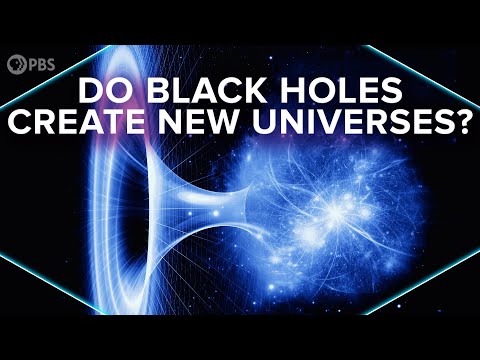
Thanks to Brilliant for supporting PBS. Learn more at: https://brilliant.org/spacetime Uploaded 17-12-19 PBS Member Stations rely on viewers like you. To support your local station, go to: http://to.pbs.org/DonateSPACE What if every single black hole that formed in our universe sparked the big bang of a new universe? Cosmological natural selection proposes exactly this - but even better, it claims to be able to test the hypothesis. Sign Up on Patreon to get access to the Space Time Discord! Sign up for the mailing list to get episode notifications and hear special announcements! Check out the Space Time Merch Store Physicists have been struggling for some time to figure out why our universe is so comfy. Why, for example, are the fundamental constants - like the mass of the electron or the strength of the forces - just right for the emergence of life? Tweak them too much and life, stars, galaxies, the universe as we know it wouldn’t exist. In recent episodes we explored one possible exp
What is being built and how do I join it? In this Afternoon Vibe from The Positive Mindset Podcast, Henry Lawrence talks about the bigger picture behind the season you're in. The life we live is an experience, and what we're experiencing is the creation of something more. Henry pictures a construction site where one worker pours concrete in his own corner while another goes to the one who drew the plan and asks where she's needed. He shares why a hard season isn't a punishment but soil, how one question can change the way you walk into every single day, and what starts to happen when your only goal is to get closer to the Creator: you learn to read the river, sense the wind and see that even volcanoes build. Surrender isn't needing to see it all. It's staying close to the One who does. In this episode: • "Show me what you're building. Where do you need me?" • "It's not a punishment, not failure, it's just soil." • "An interruption becomes an invitation. A delay becomes the design." • "
In this Jim Rohn Motivation speech, discover the power of designing your life with intention, not by default. Learn how reverse engineering your future leads to clarity, momentum, and lasting personal success. Key Topics From This Motivational speech: Why life gives you what you design, not what you want How to begin with the end in mind and build backward The importance of alignment between vision and habits Breaking success down into repeatable components How to refine, adapt, and execute a personal blueprint Jim Rohn teaches us that success is not accidental—it’s built with clarity, purpose, and precision. This video breaks down the step-by-step method of reverse engineering your dream life: from defining your end goal to mapping daily actions that align with it. If you want to gain control over your future, it starts with seeing the big picture and working backwards into actionable, measurable pieces. This Jim Rohn Motivational speech Is Perfect For: Anyone stuck in survival mode l
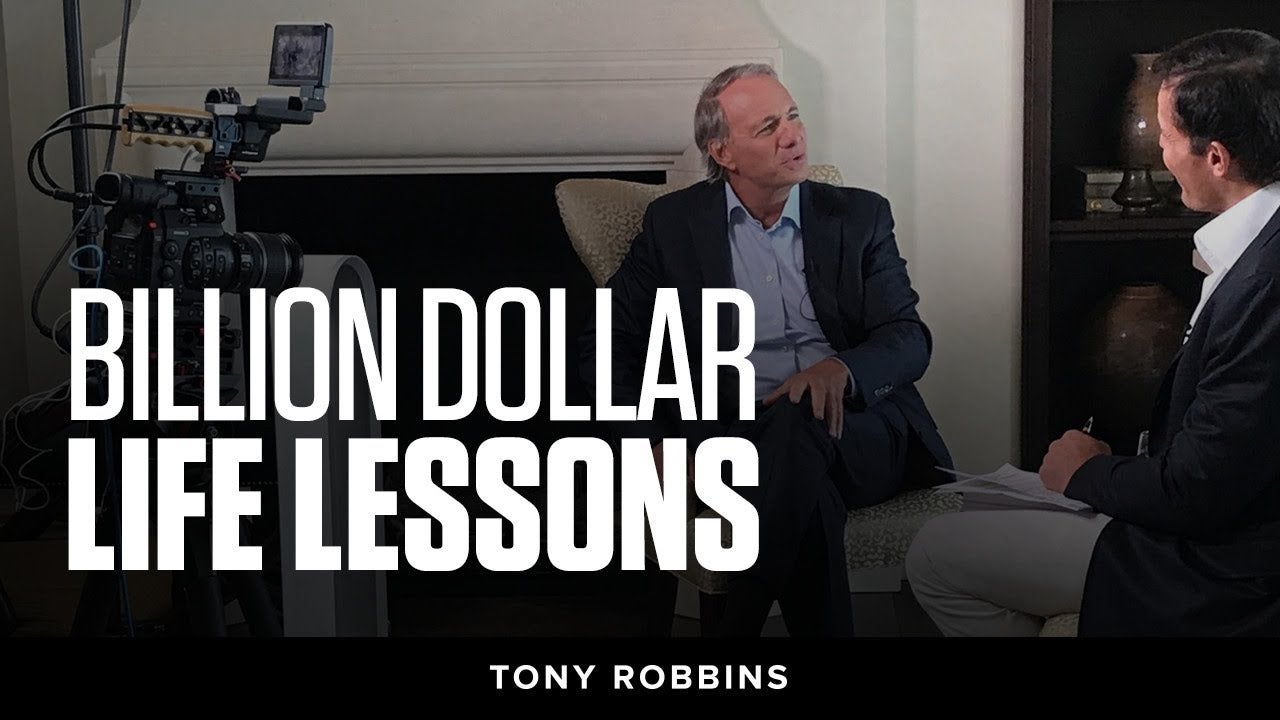
Where is the economy is today – is it growing? Flat? Declining? Uploaded 15-10-19 What about YOUR economy – your personal investments, your nest egg? How safe is it, and how likely it is to grow at the rate you want it to? When you think about your current investments, how do you feel? Secure, or are you half-panicked? For many, the recession of 2008 still lingers. Those who suffered are waiting, white-knuckled, holding on to their portfolios and still wondering what to do next. We have, after all, been in one of the longest bull markets in history and bull markets always come to an end at some point. So how do you protect yourself from the possibility of another 2008? And how can you start to take a more proactive, confident approach to your portfolio? When Tony wrote Money Master the Game, he had the unique privilege of sitting down with some of the most successful, masterful investors and financial gurus of all time – including the legendary Ray Dalio. Ray founded the investment man
Yannik Schrade says privacy is the prerequisite for sovereign artificial intelligence, and that your AI provider is now your competitor. In this conversation with Andy and Rob, he argues that whoever controls the models and the compute will fight the real battle for self-sovereignty, and that those rules have to be enforced with cryptography rather than promises. He describes Arcium as an encrypted supercomputer, not a chain: inference stays encrypted, no single processor can read a prompt, and privacy no longer has to mean a worse product. He also looks ahead to a world where breakout applications only reach the mainstream if they are private by default. Yannik Schrade is co-founder and CEO of Arcium. Live from the financial capital of the world. Timestamps: 00:00 Intro 01:45 Protectors Can Become The Threat 05:13 Your AI Provider Is Your Competitor 07:20 No Single Machine Reads Your Prompt 09:39 The Internet Is Being Rebuilt Encrypted 11:56 An Encrypted Supercomputer Not A Blockchain
Dig into the slippery slope fallacy, which assumes that one step will lead to a series of events that lead to an extreme— often bad— scenario. Uploaded 19-08-21 -- It’s 1954. Vietnamese nationalists are on the verge of securing an independent Vietnam under communist leader Ho Chi Minh. U.S. President Eisenhower claims that by virtue of the "falling domino principle," communist control of Vietnam would lead to the global spread of authoritarian communist regimes. Can you spot the problem with this argument? Elizabeth Cox explores the slippery slope fallacy. Lesson by Elizabeth Cox, directed by TOGETHER. Support Our Non-Profit Mission ---------------------------------------------- Support us on Patreon: http://bit.ly/TEDEdPatreon Check out our merch: http://bit.ly/TEDEDShop ---------------------------------------------- Connect With Us ---------------------------------------------- Sign up for our newsletter: http://bit.ly/TEDEdNewsletter Find us on Twitter: http://bit.ly/TEDEdTwitter Pe
View full lesson: http://ed.ted.com/lessons/how-do-we-measure-distances-in-space-yuan-sen-ting Uploaded 09-10-14 When we look at the sky, we have a flat, two-dimensional view. So how do astronomers figure the distances of stars and galaxies from Earth? Yuan-Sen Ting shows us how trigonometric parallaxes, standard candles and more help us determine the distance of objects several billion light years away from Earth. Lesson by Yuan-Sen Ting, animation by TED-Ed.
As machines take on more jobs, many find themselves out of work or with raises indefinitely postponed. Is this the end of growth? No, says Erik Brynjolfsson -- it's simply the growing pains of a radically reorganized economy. A riveting case for why big innovations are ahead of us ... if we think of computers as our teammates. Be sure to watch the opposing viewpoint from Robert Gordon. Uploaded 30-08-13 Talk by Erik Brynjolfsson.
Food labels should explain environmental and ethical claims in verifiable terms.
Share your view, then see how readers voted. No sign-in required. This poll is shared across stories.
Do you agree or disagree?
Common Quandary
A Common Quandary to discuss
Another conversation to explore, separate from this news story.
A $300 package lands at your door by mistake. Do you keep it?
A package containing expensive headphones arrives with your address but another person's name. The retailer says it has already replaced the order and does not ask you to return it.
If no one appears to lose, what still makes keeping it right or wrong?