English-language podcasts

History for Kids / History's Not Boring: The Kids History Podcast

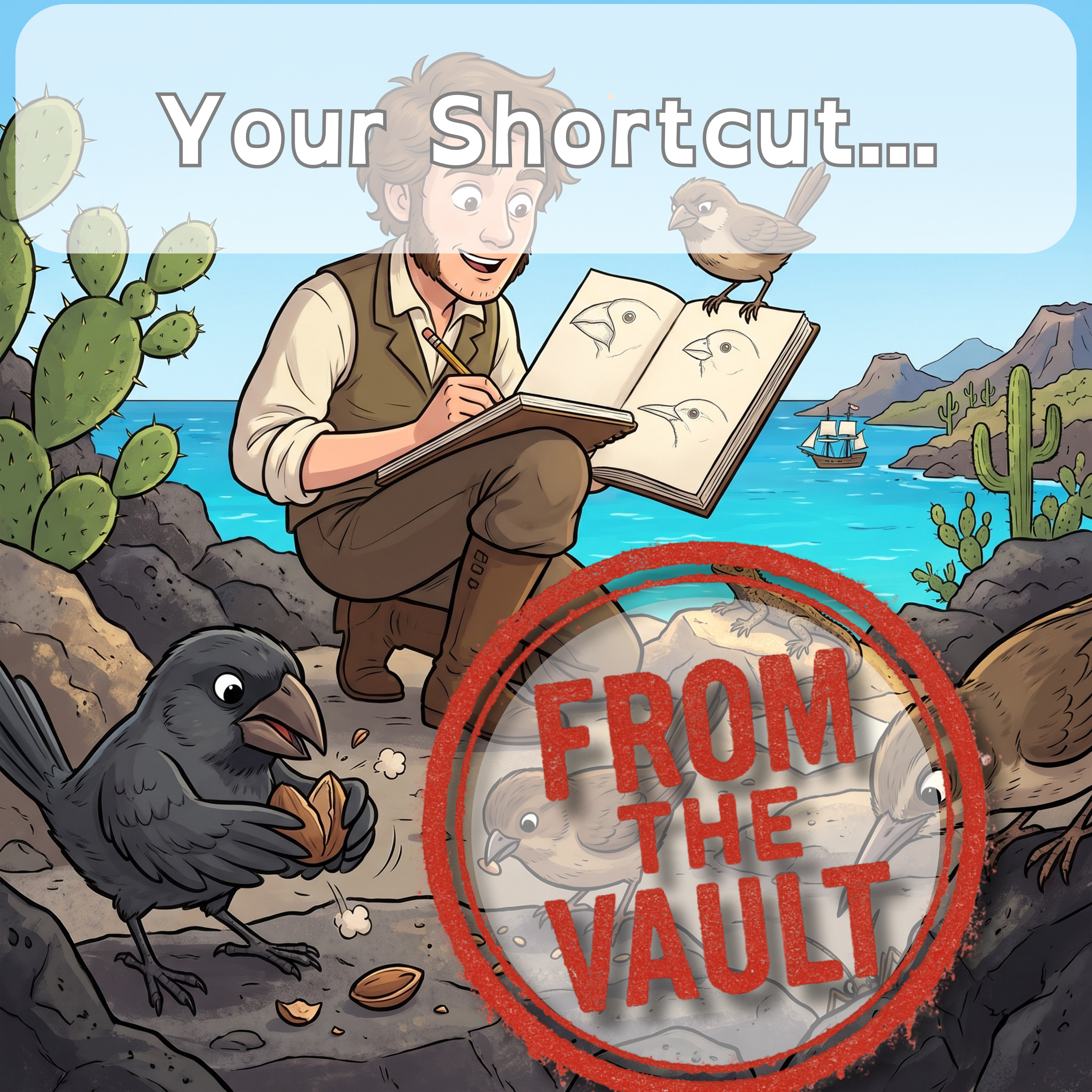
Who was Charles Darwin?

12 min

Listen through the publisher, then discuss the episode here or arrange an in-person Roundtable. Your city determines where to meet.

Roundtables are designed for groups of four, with a shared subject and room for everyone to speak. Come for discussion, with no dating expectation.

Did you know a young man who was supposed to be a doctor or a priest ended up changing how we understand all life on Earth? Join Mira and Finn on an epic 5-year sailing adventure around the globe with Charles Darwin aboard the tiny HMS Beagle! Discover how he squeezed into a cramped wooden ship, got horribly seasick, and explored the amazing Galapagos Islands. You won't believe the wild creatures he found—swimming iguanas, giant tortoises he actually tried to ride, and ordinary-looking finches that held a massive scientific secret! Learn how Darwin carefully studied his nature notebooks and waited over 20 years to share his world-changing idea of natural selection. But when a surprise letter from another explorer arrived in the mail, Darwin had to rush to publish his famous book, On the Origin of Species! Plus, get ready for some hilariously weird history facts! Find out why Darwin tried to eat an owl, accidentally ate a super rare ostrich-like bird for dinner, and tested if earthworms could hear by playing the piano to them!

Episode information is provided by the publisher. Listening takes place on the publisher’s service.

Listen at the source ↗

Featured places to meet in Palo Alto, CA

Explore these places and arrange a conversation through ThinkMatch.

City guide for Palo Alto, CA

More from History for Kids / History's Not Boring: The Kids History Podcast

History for Kids / History's Not Boring: The Kids History Podcast

What is Easter Island?

14 min

Have you ever seen pictures of giant stone heads sitting in the grass and wondered how they got there? Get ready for a mind-blowing adventure to one of the most remote places on Earth: Rapa Nui, also known as Easter Island! About 800 years ago, expert Polynesian sailors found this tiny island in the middle of the Pacific Ocean using only the stars and ocean currents to guide them. Once there, they carved nearly a thousand massive stone statues called moai! But here is the biggest surprise: these statues aren't just heads—they have full bodies buried underground! Some weigh as much as 40 cars, and the islanders moved them without wheels, cranes, or metal tools. How did they do it? The local legends say the statues literally walked to their places, waddling side to side with the help of ropes and incredibly smart human engineering! Join Mira and Finn as they uncover the secrets of the moai, find out how the island got its English name from a Dutch captain, and learn all about the giganti

Discuss this episode

History for Kids / History's Not Boring: The Kids History Podcast

Who invented breakfast cereal?

13 min

Did you know your favorite morning breakfast used to be a super-serious health food that could literally break your teeth? In the 1890s, Americans were eating huge, greasy breakfasts like half-pound steaks and heavy potatoes. People were getting terrible stomach aches! To fix this, doctors started creating healthy, meat-free alternatives. Enter the very first breakfast cereal: Granula! It was a food so rock-hard that you had to soak it overnight just to chew it! But the real magic happened in Battle Creek, Michigan, at a massive health spa. Dr. John Harvey Kellogg and his brother Will were trying to make plain health bread for their patients. One day, Will accidentally left a pot of boiled wheat out for hours. Instead of throwing it away, they rolled it out, and it magically formed hundreds of crispy flakes! The patients went wild! But Will and John had a massive fight over adding sugar, leading to a giant cereal war with rival inventors like C.W. Post! Join Mira and Finn as they crunc

Discuss this episode

History for Kids / History's Not Boring: The Kids History Podcast

What was the Inca Empire?

12 min

Imagine running an empire of ten million people without ever writing down a single word! Welcome to Tawantinsuyu, the massive Inca Empire hidden high up in the towering Andes Mountains! In 1438, a brilliant ruler named Pachacuti transformed the mountain town of Cusco into a glittering capital city shaped exactly like a giant puma. But how did they keep track of everything without pencils or paper? They used a genius math system made of colorful knotted strings called a quipu! To send important messages, they didn't use horses or wheels. Instead, they relied on superhuman relay runners called chasqui, who sprinted across scary woven grass suspension bridges and could travel 150 miles in a single day! They even built giant green staircase farms right into the steep mountainsides to grow huge amounts of freeze-dried potatoes. And guess what? They kept a very fluffy, squeaky pet in their kitchens for dinner—guinea pigs! Although the Spanish explorer Francisco Pizarro eventually brought dow

Discuss this episode

Community Poll

Preventive services deserve protected funding even when immediate needs are pressing.

Share your view, then see how readers voted. No sign-in required. This poll is shared across stories.

Do you agree or disagree?

Choose one answer

Common Quandary

A Common Quandary to discuss

Another conversation to explore, separate from this news story.

Your family connection could get your child into their dream school. Do you use it?

A university argues that considering family ties builds loyalty and encourages donations that fund scholarships. Critics say the preference preserves inherited advantage and takes places from stronger applicants.

Can benefits to the whole institution justify an unequal admissions advantage?

Explore this quandary