Why Gravitational Waves Stretch and Squeeze Space | Boring Science For Sleep
97 min
Listen through the publisher, then discuss the episode here or arrange an in-person Roundtable. Your city determines where to meet.
Roundtables are designed for groups of four, with a shared subject and room for everyone to speak. Come for discussion, with no dating expectation.
Fall asleep to this quiet science story. A Boring Science For Sleep episode about Why Gravitational Waves Stretch and Squeeze Space. Why Gravitational Waves Stretch and Squeeze Space Settle in for a quiet exploration of Why Gravitational Waves Stretch and Squeeze Space. This episode follows A Ring That Becomes Ellipses; Doubters, Referees and a Bead; Light Used as a Clock; Noise, Blips and September; Many Detectors, Squeezed Light. Listen closely or let the details drift past. If you enjoy this quiet science bedtime pace, you might also like Psalms for Sleep (https://open.spotify.com/show/7zd2RN8SMTCheFA2ifYK0m) on Spotify — same quiet rhythm, different night.
Episode information is provided by the publisher. Listening takes place on the publisher’s service.
Viewers like you help make PBS (Thank you ) . Support your local PBS Member Station here: https://to.pbs.org/DonateSPACE Uploaded 18-04-18 To find out more, visit: https://brilliant.org/SpaceTime Now that gravitational waves are definitely a thing, it’s time to think about some of the crazy things we can figure out with them. In some cases we’re going to need a gravitational wave observatory - in fact, we've already built one. You can further support us on Patreon at https://www.patreon.com/pbsspacetime Get your own Space Time t-shirt at http://bit.ly/1QlzoBi Tweet at us! @pbsspacetime Facebook: facebook.com/pbsspacetime Email us! pbsspacetime [at] gmail [dot] com Comment on Reddit: http://www.reddit.com/r/pbsspacetime Help translate our videos! https://www.youtube.com/timedtext_cs_panel?tab=2&c=UC7_gcs09iThXybpVgjHZ_7g (https://www.youtube.com/timedtext_cs_panel?c=UC7_gcs09iThXybpVgjHZ_7g&tab=2) Previous Episode: The Physics of Life (ft. It's Okay to be Smart and PBS Eons!) https://w
Explore how pulling an all-nighter can impact your cognitive function, and find out what happens to your brain when you don't sleep. -- You’re just one history final away from a relaxing spring break. But you still have so much to study! You decide to follow in the footsteps of many students before you, and pull an all-nighter. So, what happens to your brain when you stay up all night? And does cramming like this actually help you prepare for a test? Anna Rothschild explores how a sleepless night impacts your cognitive function. Lesson by Anna Rothschild, directed by Biljana Labović. Animation by Noam Sussman & Ali Kellner, Homework Studio. This video made possible in collaboration with the Bezos Family Foundation Learn more about how TED-Ed partnerships work: https://bit.ly/TEDEdPartner A special thanks to Dr. Mathias Basner, Andrew Fuligni, Adriana Galván, and UCLA Center for the Developing Adolescent who provided information and insights for the development of this video. Support Ou
Sleep better with Pillow: https://pillow.app/bettersleep Immerse yourself in gentle storm and flood sounds that create a soothing ambient backdrop perfect for sleep, meditation, and deep relaxation. Let calming rain and nature’s rhythm ease your mind, helping you unwind and find peaceful rest. This episode includes AI-generated content.
The Euclid space telescope has uncovered a remarkable collection of cosmic gravitational lenses, offering new opportunities to investigate some of the universe’s greatest mysteries. These natural magnifying glasses reveal distant galaxies through the distortion of light, providing astronomers with valuable clues about dark matter, cosmic structure, and the hidden architecture of the universe. This episode includes AI-generated content.
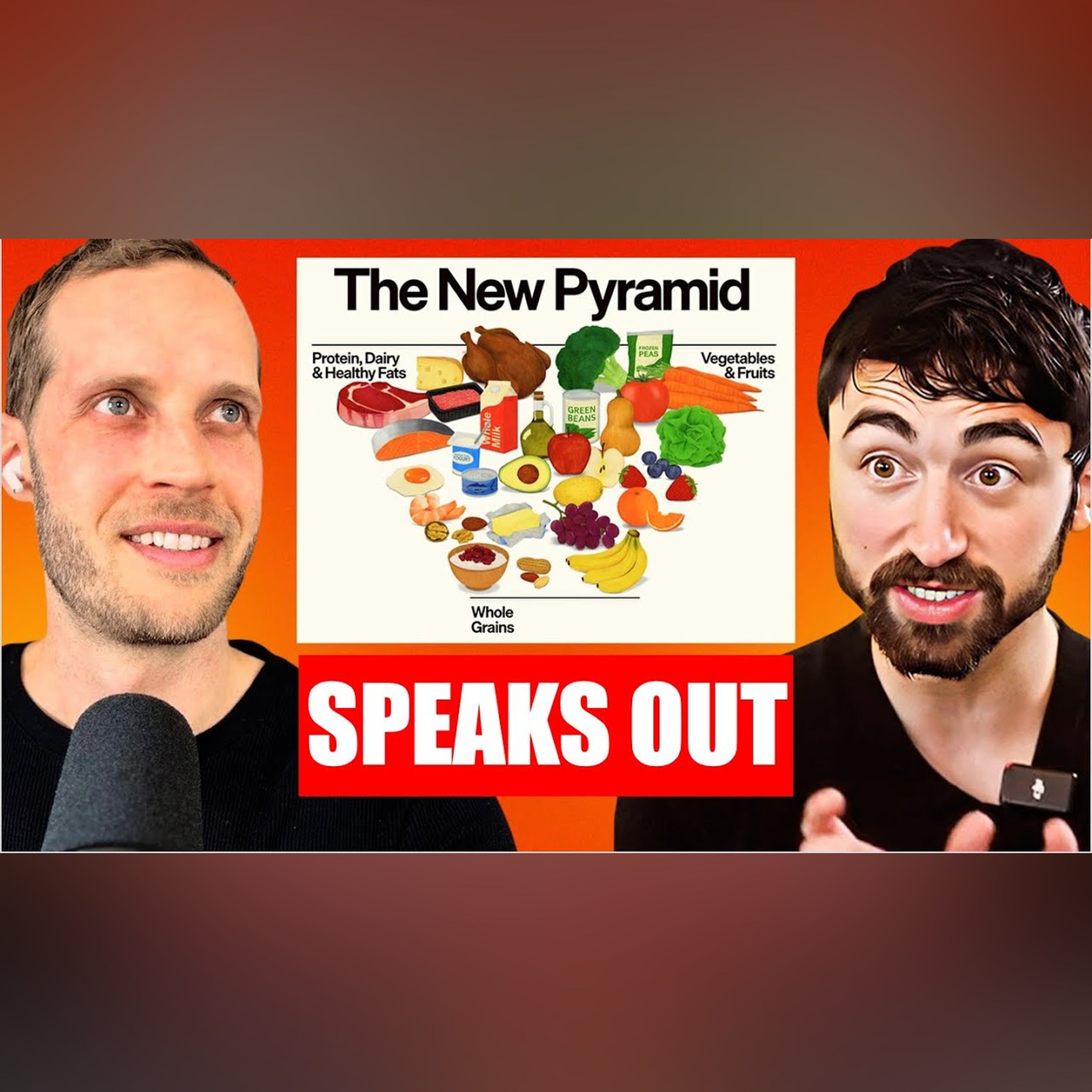
For a written digest on the guidelines, see the StayCurious Metabolism Letter: https://staycuriousmetabolism.substack.com/p/the-new-dietary-guidelines-actually?r=40ekz2 The 2025–2030 Dietary Guidelines are being marketed as a major reset with a simple message: put “real food” back at the center of the American diet. And in a lot of ways, they do represent progress. But when you actually read what’s written, some of the most important details raise real questions. For example, the document still states that saturated fat should not exceed 10% of total daily calories. To separate signal from spin, I’m joined by Dr. Ty Beal PhD, who worked on the evidence review side of the Guidelines process, to explain what the scientific background documents actually say, what happens after scientists submit reviews, and why the final public-facing document can end up with compromises, inconsistencies, or imprecise terminology. If you want a clear, good-faith breakdown—what’s genuinely better, what sti
Explore how the Hubble Space Telescope reveals the Universe, from iconic images to major discoveries, and how it complements the James Webb Space Telescope. "ASTROMAN: the Dark Sky Guardian" is a podcast channel that aims to explore popular science in multiple disciplines and research on interdisciplinary approaches, such as sustainability, dark-sky protection, astrophotography, space exploration, astronomy innovation, inclusive science communication, and STEAM Education by integrating science and arts. Exodus Chun-Long Sit, also known as the ASTROMAN, is a transmedia astronomy educator, popular science author, STEAM educator, and science communicator in Hong Kong. He is recently the National Astronomy Education Coordinator (Chair of Hong Kong, China) of the International Astronomical Union and President of Starrix. He was also an International Committee Member of the Dark Sky International, regularly organizing public lectures at the Hong Kong Space Museum and the Hong Kong Science Mu
Fall asleep to this quiet science story. A Boring Science For Sleep episode about How Mechanical Clocks Turn Gears Into Time. How Mechanical Clocks Turn Gears Into Time Settle in for a quiet exploration of How Mechanical Clocks Turn Gears Into Time. This episode follows A Bell Without a Face; Iron, Brass, Gut and Oak; Counting Teeth Into Hours; The Swing and the Sea; Towers, Tanks and Long Clocks. Listen closely or let the details drift past. Chapters 00:00:00 How Mechanical Clocks Turn Gears Into Time 01:30:53 Graphite Pencils and the Clay Inside the Core 04:02:09 Wood Screws and the Cutting of Spiral Threads If you enjoy this quiet science bedtime pace, you might also like Psalms for Sleep (https://open.spotify.com/show/7zd2RN8SMTCheFA2ifYK0m) on Spotify — same quiet rhythm, different night.
Fall asleep to this quiet science story. A Boring Science For Sleep episode about How Concrete Turns From Wet Paste Into Solid Stone. How Concrete Turns From Wet Paste Into Solid Stone Settle in for a quiet exploration of How Concrete Turns From Wet Paste Into Solid Stone. This episode follows Heat Inside Hoover Dam; Cement, Stone And Water; How The Paste Joins Up; Keeping The Water In; Knowing When It's Ready. Listen closely or let the details drift past. Chapters 00:00:00 How Concrete Turns From Wet Paste Into Solid Stone 01:23:01 Gramophone Records and the Pressing of Grooves 03:55:53 Woven Wire Sieves and the Sizing of the Mesh If you enjoy this quiet science bedtime pace, you might also like True Crime for Sleep (https://open.spotify.com/show/05dzYD65s7sflbCdBiKBty) on Spotify — same quiet rhythm, different night.
Fall asleep to this quiet science story. A Boring Science For Sleep episode about Why the Periodic Table Has Repeating Patterns. Why the Periodic Table Has Repeating Patterns Settle in for a quiet exploration of Why the Periodic Table Has Repeating Patterns. This episode follows A chart on canvas; Families, octaves and gaps; Electrons and their rooms; Wrong weights, new gases; The rows that kept growing. Listen closely or let the details drift past. Chapters 00:00:00 Why the Periodic Table Has Repeating Patterns 01:31:53 Why Neutron Stars Pack So Much Into So Little 04:00:42 Tennis Balls and the Stitching of Felt Covers If you enjoy this quiet science bedtime pace, you might also like Psalms for Sleep (https://open.spotify.com/show/7zd2RN8SMTCheFA2ifYK0m) on Spotify — same quiet rhythm, different night.
Sports eligibility rules should be based on transparent evidence and allow meaningful appeal.
Share your view, then see how readers voted. No sign-in required. This poll is shared across stories.
Do you agree or disagree?
Common Quandary
A Common Quandary to discuss
Another conversation to explore, separate from this news story.
Software says a student cheated with AI. Is that enough to fail the paper?
A teacher suspects several essays were written with AI. Detection software marks one student's work as highly likely to be generated, but the software is known to make mistakes and the student denies using it.
How should responsibility be assigned when evidence is powerful but unreliable?