English-language podcasts

TED-Ed

Why is "The Scream" crying out? - Noah Charney

9 min

Listen through the publisher, then discuss the episode here or arrange an in-person Roundtable. Your city determines where to meet.

Roundtables are designed for groups of four, with a shared subject and room for everyone to speak. Come for discussion, with no dating expectation.

Explore Edvard Munch’s masterpiece “The Scream,” and find out why this artwork became one of the world’s most famous paintings. -- An undulating sky melds into the landscape, two silhouettes move along a balustraded walkway, and a ghostly figure’s features extend in agony. Since Norwegian artist Edvard Munch created "The Scream" in 1893, it’s become one of the world’s most famous artworks. But why has its cry traveled so far and endured so long? Noah Charney shares the inspiration behind the dramatic and haunting masterpiece. Lesson by Noah Charney, directed by Martina Meštrović. Support Our Non-Profit Mission ---------------------------------------------- Support us on Patreon: http://bit.ly/TEDEdPatreon Check out our merch: http://bit.ly/TEDEDShop ---------------------------------------------- Connect With Us ---------------------------------------------- Sign up for our newsletter: http://bit.ly/TEDEdNewsletter Find us on Twitter: http://bit.ly/TEDEdTwitter Peep us on Instagram: http://bit.ly/TEDEdInstagram ---------------------------------------------- Keep Learning ---------------------------------------------- View full lesson: https://ed.ted.com/lessons/this-person-isn-t-actually-screaming-noah-charney Dig deeper with additional resources: https://ed.ted.com/lessons/this-person-isn-t-actually-screaming-noah-charney/digdeeper Animator's website: https://vimeo.com/martinamestrovic ---------------------------------------------- Thank you so much to our patrons for your support! Without you this video would not be possible! Rohan Gupta, Begum Tutuncu, Brian Richards, Jørgen Østerpart, Tyron Jung, Carsten Tobehn, Katie Dean, Ezgi Yersu, Gerald Onyango, alessandra tasso, Doreen Reynolds-Consolati, Manognya Chakrapani, Ayala Ron, Eunsun Kim, Phyllis Dubrow, Ophelia Gibson Best, Paul Schneider, Joichiro Yamada, Henrique Cassús, Karthik Cherala, Clarence E. Harper Jr., Vignan Velivela, Ana Maria, Exal Enrique Cisneros Tuch, Tejas Dc, Khalifa Alhulail, Martin Stephen, Jose Henrique Leopoldo e Silva, Mandeep Singh, Abhijit Kiran Valluri, Morgan Williams, Devin Harris, Pavel Zalevskiy, Karen Goepen-Wee, Filip Dabrowski, Barbara Smalley, Megan Douglas, Tim Leistikow, Ka-Hei Law, Hiroshi Uchiyama, Mark Morris, Misaki Sato, EdoKun, SookKwan Loong, Bev Millar, Lex Azevedo, Michael Aquilina, Jason A Saslow, Yansong Li and Cristóbal Moenne.

Episode information is provided by the publisher. Listening takes place on the publisher’s service.

Listen at the source ↗

Featured places to meet in Palo Alto, CA

Explore these places and arrange a conversation through ThinkMatch.

City guide for Palo Alto, CA

More from TED-Ed

TED-Ed

Why do we cry? The three types of tears - Alex Gendler

6 min

Uploaded 26-02-14 View full lesson: http://ed.ted.com/lessons/why-do-we-cry-the-three-types-of-tears-alex-gendler Whether we cry during a sad movie, while chopping onions, or completely involuntarily, our eyes are constantly producing tears. Alex Gendler tracks a particularly watery day in the life of Iris (the iris) as she cycles through basal, reflex and emotional tears. Lesson by Alex Gendler, animation by The Moving Company Animation Studio.

Discuss this episode

TED-Ed

Is telekinesis real? - Emma Bryce

9 min

Use the scientific method to investigate whether telekinesis — the ability to control objects with our minds — is really possible. Uploaded 30-09-14 -- Telekinesis, the ability to manipulate matter with the mind alone, is a trait exhibited by some of the most iconic fictional characters, including Neo, Yoda, and, of course, Carrie. But is this mind control actually possible in real life? Emma Bryce subjects telekinesis to the scientific method. Lesson by Emma Bryce, animation by Delphine Burrus. Support Our Non-Profit Mission ---------------------------------------------- Support us on Patreon: http://bit.ly/TEDEdPatreon Check out our merch: http://bit.ly/TEDEDShop ---------------------------------------------- Connect With Us ---------------------------------------------- Sign up for our newsletter: http://bit.ly/TEDEdNewsletter Find us on Twitter: http://bit.ly/TEDEdTwitter Peep us on Instagram: http://bit.ly/TEDEdInstagram ---------------------------------------------- Keep Learning

Discuss this episode

TED-Ed

The real history behind the legend of the 47 Rōnin - Adam Clulow

9 min

Dig into one of Japan’s most infamous stories about the 47 samurai who take revenge for the loss of their leader. -- Asano Naganori, lord of Akō domain, fixed his gaze on Kira Yoshinaka, a senior master of ceremony. Asano extended his short sword, charged through the castle, and struck Kira. While the wound wasn’t fatal, its consequences would be. What brought about this violent quarrel? And what would come of Asano and his samurai? Adam Clulow shares the legend of the 47 Rōnin and their quest for revenge. Lesson by Adam Clulow, directed by Arvind Singh Jeena, Anantha Krishnan, Totem Creative. Support Our Non-Profit Mission ---------------------------------------------- Support us on Patreon: http://bit.ly/TEDEdPatreon Check out our merch: http://bit.ly/TEDEDShop ---------------------------------------------- Connect With Us ---------------------------------------------- Sign up for our newsletter: http://bit.ly/TEDEdNewsletter Find us on Twitter: http://bit.ly/TEDEdTwitter Peep us on

Discuss this episode

Community Poll

Public bodies should publish the evidence behind important decisions.

Share your view, then see how readers voted. No sign-in required. This poll is shared across stories.

Do you agree or disagree?

Choose one answer

Common Quandary

A Common Quandary to discuss

Another conversation to explore, separate from this news story.

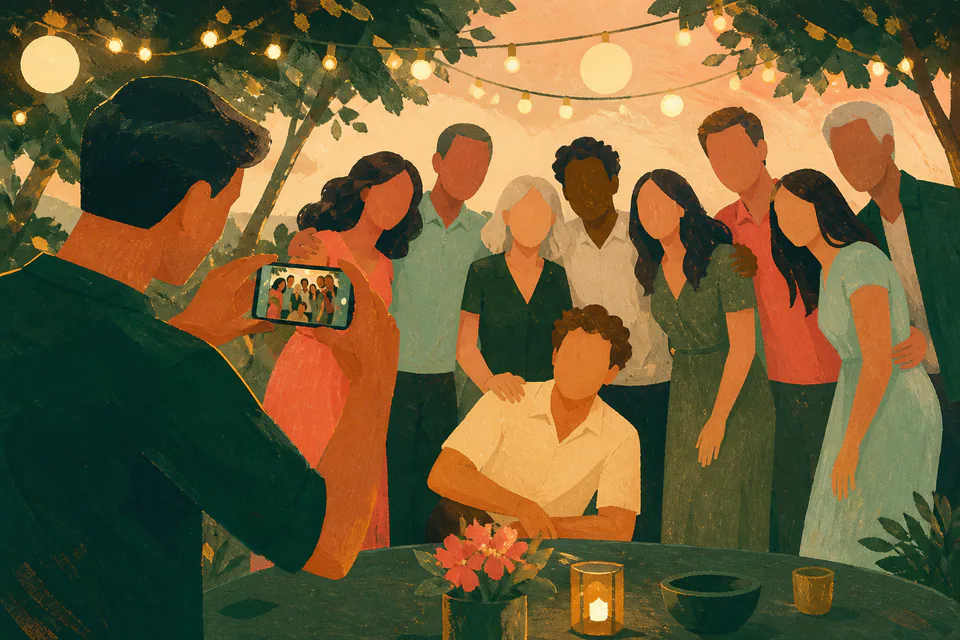
Everyone loves the group photo except you. Can you forbid them from posting it?

At a reunion, someone takes a joyful group photo that captures the night perfectly. Everyone looks wonderful except you, caught at an awful angle. The group wants to post it publicly and promises nobody else will care.

How much control should one person have over a memory shared by many?

Explore this quandary