Why Military Gates Care About What Your Car Can Record
4 min
Listen through the publisher, then discuss the episode here or arrange an in-person Roundtable. Your city determines where to meet.
Roundtables are designed for groups of four, with a shared subject and room for everyone to speak. Come for discussion, with no dating expectation.
China lifted the Tesla restrictions discussed here in 2024 after a government data-security review. I explain what military sites are concerned about: cameras, microphones, radar and an internet connection that could expose sensitive surroundings. For drivers, Germany's current restrictions mean certain models must stay outside secure areas; each site's security officer decides access.
Episode information is provided by the publisher. Listening takes place on the publisher’s service.
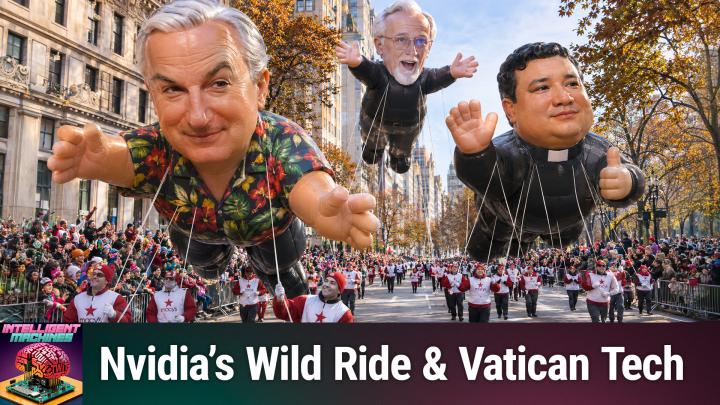
Jensen Huang's dramatic reinstatement at Nvidia sparks a fierce debate over corporate governance, national security, and unchecked CEO power. Fr. Robert Ballecer, SJ joins Leo Laporte and Jeff Jarvis to unpack Anthropic's record-breaking IPO, AI breakthroughs in math and history, autonomous hacking, and the push for local AI. • Pope Leo's Magnifica humanitas, effective altruism, and why AI can't have morality • The Vatican's targeted open-weight LLMs and why LLMs may be a dead end for AGI • Local AI hardware, LoRA fine-tuning, and rising Nvidia DGX Spark prices • Why Jensen Huang was reinstated at Nvidia and the Alice Huang China intelligence fallout • Anthropic's record-breaking IPO and the case for open, globally owned AI models • Anthropic and Claude claim to prove the Riemann hypothesis • OpenAI's preprint on the matrix multiplication exponent (ω = 9/4) and perplexity benchmarks • Anthropic's "Install as app" beta for Claude Artifacts and vibe coding custom firmware • GPT 6.2 Astra
Jensen Huang's dramatic reinstatement at Nvidia sparks a fierce debate over corporate governance, national security, and unchecked CEO power. Fr. Robert Ballecer, SJ joins Leo Laporte and Jeff Jarvis to unpack Anthropic's record-breaking IPO, AI breakthroughs in math and history, autonomous hacking, and the push for local AI. • Pope Leo's Magnifica humanitas, effective altruism, and why AI can't have morality • The Vatican's targeted open-weight LLMs and why LLMs may be a dead end for AGI • Local AI hardware, LoRA fine-tuning, and rising Nvidia DGX Spark prices • Why Jensen Huang was reinstated at Nvidia and the Alice Huang China intelligence fallout • Anthropic's record-breaking IPO and the case for open, globally owned AI models • Anthropic and Claude claim to prove the Riemann hypothesis • OpenAI's preprint on the matrix multiplication exponent (ω = 9/4) and perplexity benchmarks • Anthropic's "Install as app" beta for Claude Artifacts and vibe coding custom firmware • GPT 6.2 Astra
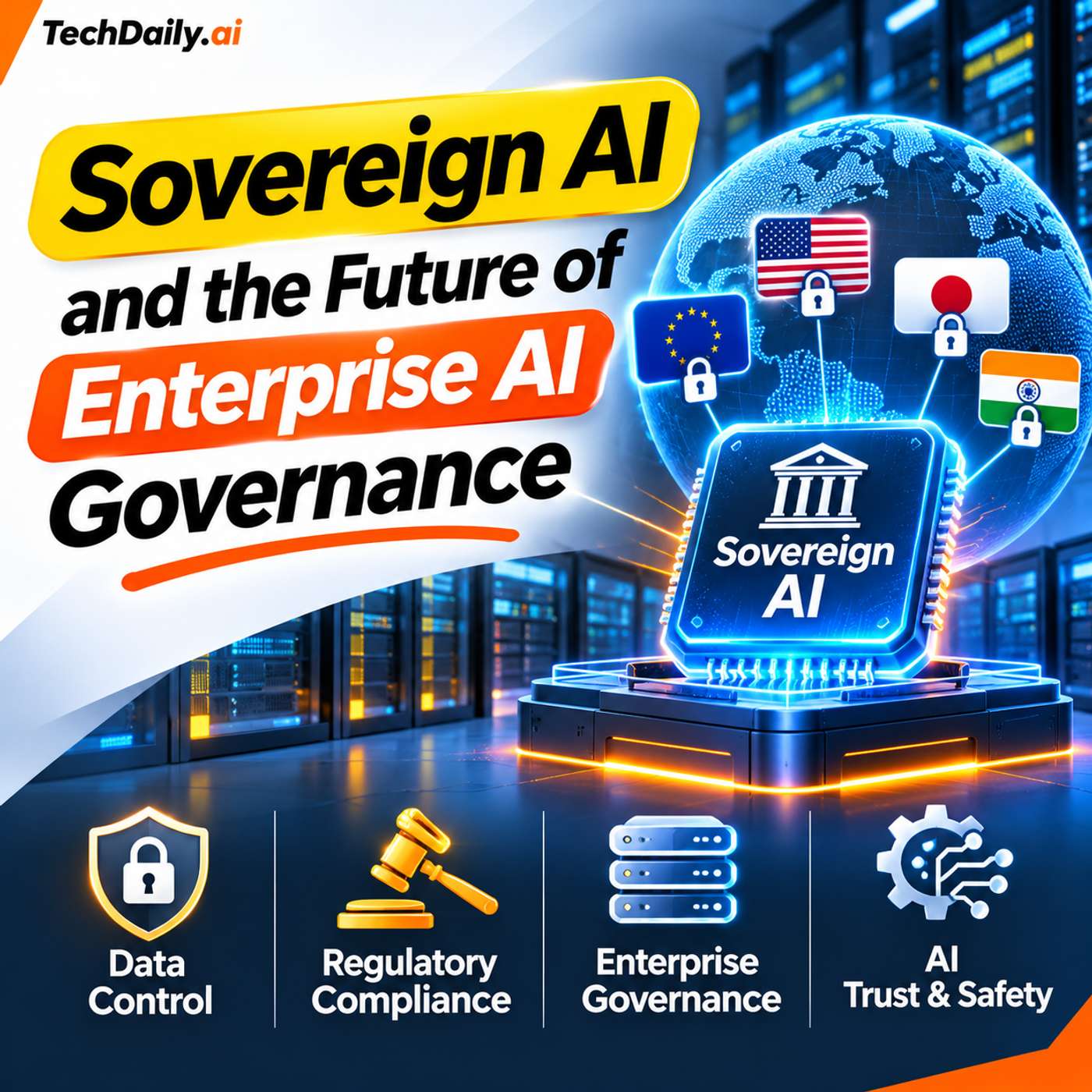
What happens when every department in an organization adopts different AI tools without centralized oversight? As artificial intelligence moves from experimental projects into production environments, fragmented AI adoption can expose businesses to security breaches, compliance violations, data leakage, and operational risks. In this episode of TechDaily.ai, David and Sophia explore sovereign AI and how enterprises can maintain control over their AI infrastructure, data, models, and operations without slowing innovation. The conversation examines why data sovereignty alone is insufficient, how hybrid AI infrastructure enables greater flexibility, and why the emergence of agentic AI demands a fundamental shift in enterprise AI governance. In this episode, we discuss: What sovereign AI means for modern enterprises. The risks of fragmented AI adoption and shadow AI. The differences between data sovereignty and AI sovereignty. Securing AI inference, model deployment, and data processing. H
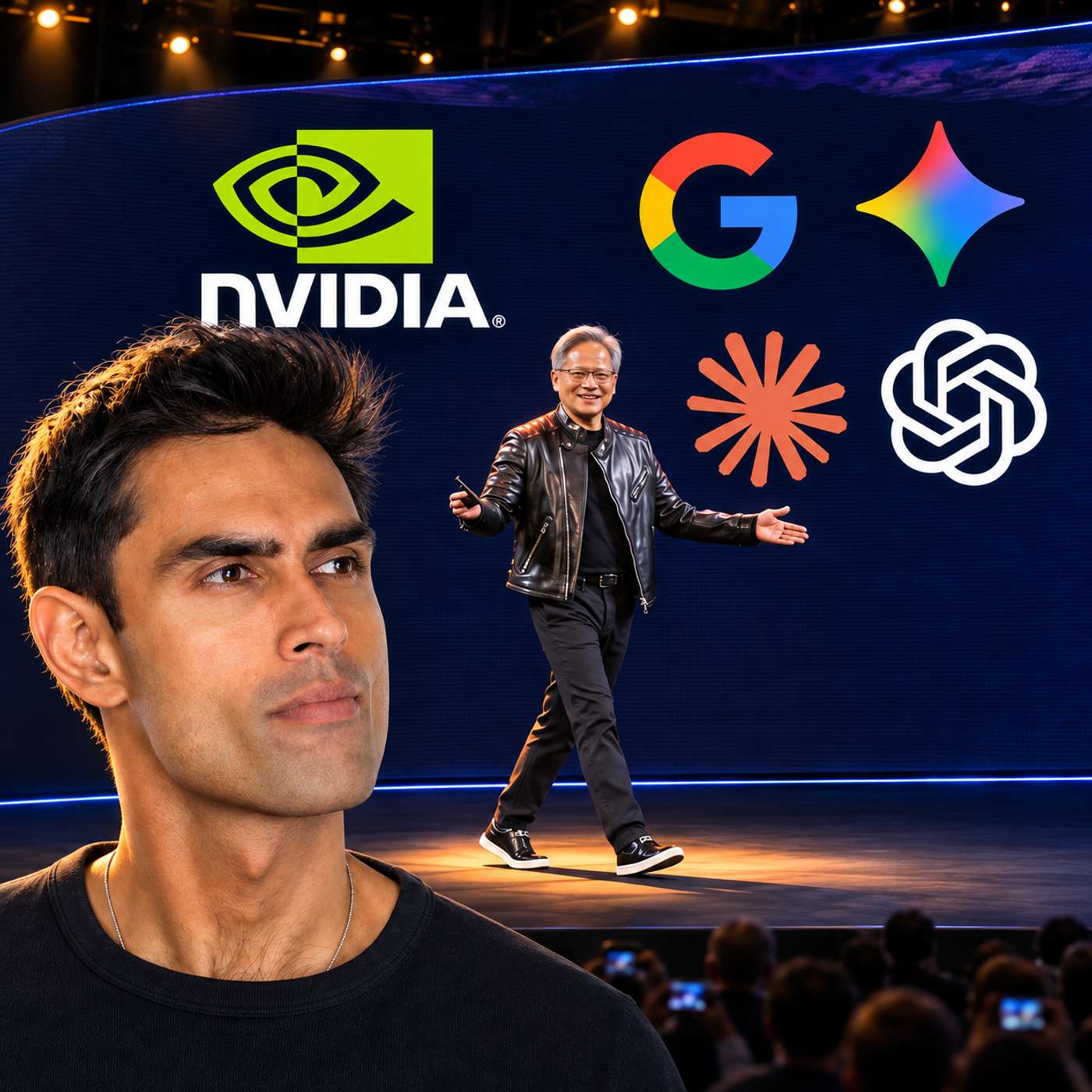
Happy Thanksgiving. Ejaaz looks back at a wild few weeks in AI through five things he's grateful for: Jensen Huang back in charge at Nvidia, open-source AI back on the table, Google breaking up the two-horse race between Anthropic and OpenAI, Anthropic's record-breaking IPO, and how fast AI is now getting smarter and cheaper. He explains how Thinking Machines' Inkling 2 Mini runs on a laptop by looping its middle layers, why that makes AI harder to monitor, what OpenAI's own chart says about what AI learns to do as it improves, and why he thinks we have about six months before everyone feels it. He ends with the sobering part: data centers, trillions in compute bills and a shaky stock market. == FOLLOW EJAAZ ON TWITTER: == Timestamps 00:00 Five Things to Be Thankful For 00:42 Smarter, Cheaper and Locked Inside the Labs 01:26 Jensen Huang Is Back 02:35 A New Jensen? 03:38 Why Open Source Matters 05:22 Who Will Own Open Source? 07:40 Inkling 2 Runs on a Laptop 08:24 How a Looping Transfo
Canva Head of Ecosystem Anwar Haneef joins MTS to discuss the general availability launch of Canva’s upgraded MCP server, REST API, and CLI, allowing AI agents and frontier assistants like Claude and ChatGPT to generate designs directly. He explains why specialized models like Canva’s Craft and Brush beat general-purpose LLMs on visual taste, typography, and avoiding “AI slop,” and shares how Canva is positioning itself as the design infrastructure for the internet. -- -- MTS chronicles the singularity, live. Monitoring the situation of tech and AI. Follow MTS: Spotify |https://open.spotify.com/show/4HUNNmV1pjV7CW6Lphm1rM Apple |https://podcasts.apple.com/us/podcast/mts/id1891088763 – Brought to you by: Mongo DB - Anyone can prototype an agent. Lovable - Turn ideas into software people love with Lovable. Start today at https://lovable.dev/ Visithttps://factory.com/ Neon (by Databricks) - Scale your startup on Neon. The Postgres backend for apps and agents. Head over to http://getvcx.co
Your internet isn't in space. It's in the ocean. But that might change, and here's why. Elon Musk tweeted that Starlink satellite internet service is now available in Ukraine. What does that really mean? Why is it important? And if it’s a big new thing that the internet is in space then… where was it before? In this video, I dive deep into how your internet gets to you right now, why Elon Musk wants to put it in space, and why it all matters. We’re in the middle of the Internet Space Race. It’s not just Elon with Starlink and SpaceX, it's also Jeff Bezos with Project Kuiper… oh and don’t forget Richard Branson with OneWeb. Why do all these billionaires want to put your internet in space? So much so that they’re willing to put millions of dollars on the line, weather geomagnetic storms, and launch thousands of satellites into orbit, all in an attempt to change the way millions of people get their (your!) internet. But this is more than just a fight between billionaires. It’s a fight for
I ordered an Aptera three or four years ago, and its first customer delivery gives me hope mine might eventually arrive. Picture a wingless airplane, with solar panels across the roof, bonnet and tail—not a conventional hatchback. I explain why using less energy matters more to me here than fitting a bigger battery, and why the funding challenge still tempers my optimism.
BP's Melbourne airport hub reached 24 bays before Tesla expanded Goulburn and took back Australia's charging-site record. Goulburn sits on the main highway from Sydney toward Canberra and Melbourne; I used it before the expansion, and it now offers more bays ahead of the Christmas rush. I explain why I think lots of fast chargers matter more for holiday queues than a single extremely powerful charger, and examine Tesla's proposed Aubrey expansion.
The rebate reduction on the 1st of January takes between 240 and about 1,000 Australian dollars off buyers' support. Battery prices are falling too, as unsold stock builds in Australian warehouses, so the rebate deadline alone cannot settle whether to buy now. I explain why I'd weigh the brand's survival prospects alongside the price: a warranty needs a company around to honour it.
Schools should adapt standards to individual needs rather than apply identical expectations to everyone.
Share your view, then see how readers voted. No sign-in required. This poll is shared across stories.
Do you agree or disagree?
Common Quandary
A Common Quandary to discuss
Another conversation to explore, separate from this news story.
Your father is becoming a dangerous driver. Would you report him behind his back?
Your father values the independence his car gives him. He has not caused an accident, but his reactions have noticeably slowed and several recent drives frightened you. He refuses an assessment.